

David Levering Lewis
Author of God's Crucible: Islam and the Making of Europe, 570-1215
About the Author
David Levering Lewis is the Martin Luther King Professor of History at Rutgers University & was recently awarded a MacArthur Fellowship. "W.E.B. Du Bois: Biography of a Race, 1868-1919" received the Bancroft, Parkman, & Pulitzer prizes, & was a finalist for the National Book Award & National Book show more Critics Circle Award. He also wrote "W.E.B. Du Bois: A Reader." (Bowker Author Biography) show less
Series
Works by David Levering Lewis
W. E. B. Du Bois, 1919-1963: The Fight for Equality and the American Century (2000) 357 copies, 1 review
A Small Nation of People: W. E. B. Du Bois and African American Portraits of Progress (2003) 64 copies
The Improbable Wendell Willkie: The Businessman Who Saved the Republican Party and His Country, and Conceived a New World Order (2018) 62 copies, 1 review
Associated Works
Black Reconstruction in America, 1860-1880 (1935) — Introduction, some editions — 1,020 copies, 5 reviews
Booknotes: America's Finest Authors on Reading, Writing, and the Power of Ideas (1997) — Contributor — 458 copies, 5 reviews
Chariot in the Sky: A Story of the Jubilee Singers (1951) — Foreword, some editions — 75 copies, 1 review
The Word: Black Writers Talk About the Transformative Power of Reading and Writing (2011) — Contributor — 35 copies, 2 reviews
Tagged
Common Knowledge
- Birthdate
- 1936-05-25
- Gender
- male
- Education
- Fisk University (BA|1956)
Columbia University (MA|1958)
London School of Economics and Political Science (PhD|1962) - Organizations
- American Historical Association
Society for French Historical Studies
American Association of University Professors
Organization of American Historians
African Studies Association
Southern Historical Association (show all 8)
Authors Guild
Phi Beta Kappa - Awards and honors
- National Humanities Medal (2009)
- Nationality
- USA
- Birthplace
- Little Rock, Arkansas, USA
- Places of residence
- Stanfordville, New York, USA
- Associated Place (for map)
- USA
Members
Reviews

An interesting new look at the famous Fashoda incident, which brought Britain and France to the brink of war.
However Lewis approaches it much more broadly, and indeed the Fashoda incident itself is only a hook on which he hangs an exploration of African resistance to colonial incursions, and the extent to which African rulers were able to manipulate the European invaders. Although they lost in the end, they were far from passive bystanders.
Lewis also suggests that Fashoda, rather than show more avenging Gordon or re-establishing Egyptian political and economic dominance over Sudan, was the main reason for Kitchener's rush to Omdurman and beyond. French attempts to establish an east-west route across Africa would have blocked Rhodes' ambitions for a Cape to Cairo route. Although I have read widely on Sudan, I think it is the first time I had realised the significance of Fashoda in this regard.
An excellent book in all respects. My only slight criticism would be of the maps. Main places are marked on the maps, but still the text refers to smaller places which are not marked. Irritating. show less
However Lewis approaches it much more broadly, and indeed the Fashoda incident itself is only a hook on which he hangs an exploration of African resistance to colonial incursions, and the extent to which African rulers were able to manipulate the European invaders. Although they lost in the end, they were far from passive bystanders.
Lewis also suggests that Fashoda, rather than show more avenging Gordon or re-establishing Egyptian political and economic dominance over Sudan, was the main reason for Kitchener's rush to Omdurman and beyond. French attempts to establish an east-west route across Africa would have blocked Rhodes' ambitions for a Cape to Cairo route. Although I have read widely on Sudan, I think it is the first time I had realised the significance of Fashoda in this regard.
An excellent book in all respects. My only slight criticism would be of the maps. Main places are marked on the maps, but still the text refers to smaller places which are not marked. Irritating. show less

This book is a welcome corrective to the standard Eurocentric account of the Middle Ages. Lewis writes the dense prose of a mandarin historian, with magisterial periods and ornate formulations, but James Reston Jr. was overly harsh when he spoke of "stilted academic prose" in his review in the Washington Post. However, God's Crucible, Lewis's first foray into pre-modern history, leaves something to be desired. The notes for this extraordinarily far-ranging work show that supporting show more documentation (largely secondary sources; journal articles are rare) is thin. Footnotes sometimes do not correspond to the text.
More disturbingly, Lewis often chooses an interpretation that hews to a predetermined narrative and does not deeply scrutinize the historical record or interpretative debates among historians. Lewis is, in fact, a traditionalist historian, not a 'mythistorian' at all, pace the title of Ch. 7. Though he decenters the narrative, he does not allow postmodernist indeterminacy to trouble the confident progress of his history, which depends on traditional political history and is intent on inventing a new myth, one that instructs Westerners about their indebtedness to Muslim civilization and about the ruthlessly blood-soaked origins of Christian Europe. A brutal, uncouth Charlemagne contrasts with an enlightened, suave 'Abd al-Rahman I.
Many reviewers have concluded that Lewis "overstates his case," as Ed Voves said in the California Literary Review, and it's true. Unpleasant traits of Frankish leaders are unrelentingly emphasized, those of Muslim leaders are universally softened or excused (e.g. "Crucifixions and expulsions were regrettable aspects of [al-Hakam's] nation-building. Enlightened despotism was the alternative to rule by the consensus of classes or rule by the oligarchy of affluent familes . . ." [311]).
Lewis has also produced a text bereft of historical consciousness to an extent that seems deliberate. His narrative is replete with anachronistic attributions of mental states and motivations. Lewis imagines premodern leaders were preoccupied with "grand strategy" (253, another anachronism). Lewis also has a taste for anachronistic metaphors as well—"speed bump," "conveyer belt," etc. All these devices are designed to reach the contemporary reader.
In short, Lewis is very much on a mission, and while it may be a laudable one, his methods do not always stand up to scrutiny. The book has, unsurprisingly, been skewered by critics on the right like "Fjordman," the anonymous but influential Norwegian Islamaphobe, who devoted a long critique to the book when it came out in mid-2008. Tim Rutten of the Los Angeles Times was also hard on the book, complaining that Lewis is "in thrall to an idealized Umayyad Spain." But Kwame Anthony Appiah gave the book a more favorable review in the New York Review of Books, calling it "rich and engaging" with an "uplifting message." show less
More disturbingly, Lewis often chooses an interpretation that hews to a predetermined narrative and does not deeply scrutinize the historical record or interpretative debates among historians. Lewis is, in fact, a traditionalist historian, not a 'mythistorian' at all, pace the title of Ch. 7. Though he decenters the narrative, he does not allow postmodernist indeterminacy to trouble the confident progress of his history, which depends on traditional political history and is intent on inventing a new myth, one that instructs Westerners about their indebtedness to Muslim civilization and about the ruthlessly blood-soaked origins of Christian Europe. A brutal, uncouth Charlemagne contrasts with an enlightened, suave 'Abd al-Rahman I.
Many reviewers have concluded that Lewis "overstates his case," as Ed Voves said in the California Literary Review, and it's true. Unpleasant traits of Frankish leaders are unrelentingly emphasized, those of Muslim leaders are universally softened or excused (e.g. "Crucifixions and expulsions were regrettable aspects of [al-Hakam's] nation-building. Enlightened despotism was the alternative to rule by the consensus of classes or rule by the oligarchy of affluent familes . . ." [311]).
Lewis has also produced a text bereft of historical consciousness to an extent that seems deliberate. His narrative is replete with anachronistic attributions of mental states and motivations. Lewis imagines premodern leaders were preoccupied with "grand strategy" (253, another anachronism). Lewis also has a taste for anachronistic metaphors as well—"speed bump," "conveyer belt," etc. All these devices are designed to reach the contemporary reader.
In short, Lewis is very much on a mission, and while it may be a laudable one, his methods do not always stand up to scrutiny. The book has, unsurprisingly, been skewered by critics on the right like "Fjordman," the anonymous but influential Norwegian Islamaphobe, who devoted a long critique to the book when it came out in mid-2008. Tim Rutten of the Los Angeles Times was also hard on the book, complaining that Lewis is "in thrall to an idealized Umayyad Spain." But Kwame Anthony Appiah gave the book a more favorable review in the New York Review of Books, calling it "rich and engaging" with an "uplifting message." show less
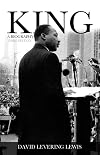
Acclaimed by leading historians and critics when it appeared shortly after the death of Dr. Martin Luther King Jr., this foundational biography wends through the corridors in which King held court, posing the right questions and providing a keen measure of the man whose career and mission enthrall scholars and general readers to this day. Updated with a new preface and more than a dozen photographs of King and his contemporaries, this edition presents the unforgettable story of King's life show more and death for a new generation. show less
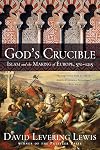
Excellent book, about a subject - dark ages Europe - which is little written on. It is a good look at how Europe developed - or didn't develop - after the collapse of the Roman empire, and how Islam came into being and expanded. Unfortunately, Mr. Lewis wrote what are in effect two books. The first, better one, covers the period up to just after the death of Charlemagne. The second, shorter, and not so good book, is a lightning-fast survey of the next 400 years. During these years, Islamic show more Spain declined, and Christian Europe inexorably rose, and we would like to know more about that. However, it appears that David Lewis is seduced by the cultural high tide of Islamic Spain during the 7- and 800s, and would like to forget the slow decline of Islam, both in Spain and elsewhere. In the end, the lasting cultural contribution of Al-Andalus consisted of moving a body of Indian, Greek, and Roman to the West, where it was put to good use, while Islam kept fighting itself and (contrary to received wisdom) its religious minorities, until it was culturally and politically irrelevant. One interesting feature is that despite the protestations of the author that Islam was tolerant of the other people of the book, Jews get massacred quite frequently, starting with Mohammed and moving on into North Africa and Spain. These massacres would do justice to pre-Reformation Catholicism, and tend to make me sceptical of Islamic "toleration."
Overall a book worth reading, mostly crisp, well written, and pitched at a level that does not insult the reader. show less
Overall a book worth reading, mostly crisp, well written, and pitched at a level that does not insult the reader. show less
Lists
Awards


You May Also Like


Associated Authors
Statistics
- Works
- 23
- Also by
- 8
- Members
- 3,727
- Popularity
- #6,796
- Rating
- 4.1
- Reviews
- 26
- ISBNs
- 78
- Languages
- 3
- Favorited
- 4