
Annette Gordon-Reed
Author of The Hemingses of Monticello: An American Family
About the Author
Annette Gordon-Reed grew up in east Texas. She majored in History at Dartmouth College, graduating in 1981, and then attended Harvard Law School. Gordon-Reed worked as an associate at Cahill Gordon & Reindel and was Counsel to the New York City Board of Corrections before becoming a professor of show more law at New York Law School in 1992. Gordon-Reed wrote the book Thomas Jefferson and Sally Hemings: An American Controversy after first becoming interested in the president as a child. She co-authored Vernon Can Read!: A Memoir and wrote Race on Trial: Law and Justice in American History. Gordon-Reed is the author of the New York Times bestseller The Hemingses of Monticello. (Bowker Author Biography) show less
Image credit: Courtesy of the Pulitzer Prizes.
Works by Annette Gordon-Reed
"Most Blessed of the Patriarchs": Thomas Jefferson and the Empire of the Imagination (2016) 330 copies, 3 reviews
Associated Works
Four Hundred Souls: A Community History of African America, 1619-2019 (2021) — Contributor — 1,156 copies, 25 reviews
A Slave in the White House: Paul Jennings and the Madisons (2012) — Foreword — 301 copies, 20 reviews
Know the Past, Find the Future: The New York Public Library at 100 (2011) — Contributor — 132 copies, 4 reviews
Black Writers of the Founding Era: A Library of America Anthology (2023) — Foreword — 60 copies, 1 review
Tagged
Common Knowledge
- Canonical name
- Gordon-Reed, Annette
- Legal name
- Gordon-Reed, Annette
- Birthdate
- 1958-11-19
- Gender
- female
- Education
- Dartmouth College
Harvard University (JD) - Occupations
- attorney
author
professor (Law, New York Law School, 1992- )
professor (History, Rutgers University, Newark, New Jersey) - Organizations
- New York Law School
Rutgers University - Awards and honors
- National Humanities Medal (2009)
- Nationality
- USA
- Birthplace
- Livingston, Texas, USA
- Places of residence
- Conroe, Texas, USA
Manhattan, New York, USA - Associated Place (for map)
- Texas, USA
Members
Reviews
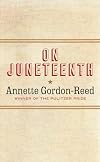
Gordon-Reed, Annette. On Juneteenth. Liveright, 2021.
Annette Gordon-Reed, best known for her monumental study of the Hemmings family of Monticello, has now written a short book that combines a history of racial relations in Texas and a memoir of her experience growing up in East Texas. Born in 1958, she was the first black student in her grade school. Her mother was a teacher in the black school system, and Gordon-Reed offers an insightful analysis of the mixed blessings of school show more integration and the failure to integrate black teachers along with their students. She also discusses Jim Crow era lynching and the racial and judicial practices that supported it. In discussing nineteenth-century Texas history, she is especially good at demythologizing the Alamo, pointing out that people of color are seldom included in its list of heroes, that Bowie was a conman and a slaveholder, and that Travis came to Texas to escape a charge of spousal abandonment. The whole war for Texas independence was also a war to ensure the rights of slaveholders in the new short-lived republic. Finally, she notes that “The Yellow Rose of Texas” was originally a minstrel show song, whose racial tropes were later sanitized. In fact, the image of Texas as primarily a cowboy state is part of a similar process of racial mythologizing. If Gordon-Reed ever writes a full history of early Texas, I will certainly read it. 4 stars because I wish there were more. show less
Annette Gordon-Reed, best known for her monumental study of the Hemmings family of Monticello, has now written a short book that combines a history of racial relations in Texas and a memoir of her experience growing up in East Texas. Born in 1958, she was the first black student in her grade school. Her mother was a teacher in the black school system, and Gordon-Reed offers an insightful analysis of the mixed blessings of school show more integration and the failure to integrate black teachers along with their students. She also discusses Jim Crow era lynching and the racial and judicial practices that supported it. In discussing nineteenth-century Texas history, she is especially good at demythologizing the Alamo, pointing out that people of color are seldom included in its list of heroes, that Bowie was a conman and a slaveholder, and that Travis came to Texas to escape a charge of spousal abandonment. The whole war for Texas independence was also a war to ensure the rights of slaveholders in the new short-lived republic. Finally, she notes that “The Yellow Rose of Texas” was originally a minstrel show song, whose racial tropes were later sanitized. In fact, the image of Texas as primarily a cowboy state is part of a similar process of racial mythologizing. If Gordon-Reed ever writes a full history of early Texas, I will certainly read it. 4 stars because I wish there were more. show less
On June 16, 1865, two years after Abraham Lincoln signed the Emancipation Proclamation, a Union General arrived in Galveston to proclaim the end of slavery and the Confederacy's defeat. Texans and others have celebrated June 19 or Juneteenth as marking the end of slavery. In 2021 Juneteenth was declared a national holiday.
Pulitzer Prize-winning historian Annette Gordon Reed's book, On Juneteenth, places the holiday in a historical context. The book consists of a series of essays that are show more part historical and part memoir and deals with issues of history and identity. Born at the end of the Jim Crow era, Reed was one of the first African Americans to integrate the schools in Conroe, Texas, which lies 50 miles north of Houston. In her essays, the Harvard historian provides a history of Texas that debunks many myths she learned in school. (The chapter on the Alamo is provocative and insightful!) She also documents the horrors of slavery and Jim Crow through to the present.
Throughout the text, Reed grapples with her identity as a Texan. Despite the horrific treatment of African- Americans, she loves Texas as it is the place she feels most at home. She states:
"Abstract notions of the United States, of Virginia--- of Texas--- for me at least, don't capture why places are worthy of love. When asked to explain what I love about Texas, given all that I know has happened there--- and is still happening there--- the best response I can give is that this is where my first family and connections were. It is where I lived with my mother, father, and brothers. It's where I rode back and forth to visit my grandparents, aunts, and cousins. In other words, Texas is where my mother's boundless dreams for me took place. It is also where I learned to think people could, and should try, in whatever way they can to make life better for others alive today and those to come.
About the difficulties of Texas, love does not require taking an uncritical stance toward the object of one's affection. We can't be of real service to the hopes we have for places and people, ourselves included, without a clear-eyed assessment of their (and our) strengths and weaknesses."
In this spirit, she provides a more critical and balanced history of her home state and the origins of this new national holiday that we all should celebrate. On Juneteenth is a short, heartfelt, and finely written text. I highly recommend it. show less
Pulitzer Prize-winning historian Annette Gordon Reed's book, On Juneteenth, places the holiday in a historical context. The book consists of a series of essays that are show more part historical and part memoir and deals with issues of history and identity. Born at the end of the Jim Crow era, Reed was one of the first African Americans to integrate the schools in Conroe, Texas, which lies 50 miles north of Houston. In her essays, the Harvard historian provides a history of Texas that debunks many myths she learned in school. (The chapter on the Alamo is provocative and insightful!) She also documents the horrors of slavery and Jim Crow through to the present.
Throughout the text, Reed grapples with her identity as a Texan. Despite the horrific treatment of African- Americans, she loves Texas as it is the place she feels most at home. She states:
"Abstract notions of the United States, of Virginia--- of Texas--- for me at least, don't capture why places are worthy of love. When asked to explain what I love about Texas, given all that I know has happened there--- and is still happening there--- the best response I can give is that this is where my first family and connections were. It is where I lived with my mother, father, and brothers. It's where I rode back and forth to visit my grandparents, aunts, and cousins. In other words, Texas is where my mother's boundless dreams for me took place. It is also where I learned to think people could, and should try, in whatever way they can to make life better for others alive today and those to come.
About the difficulties of Texas, love does not require taking an uncritical stance toward the object of one's affection. We can't be of real service to the hopes we have for places and people, ourselves included, without a clear-eyed assessment of their (and our) strengths and weaknesses."
In this spirit, she provides a more critical and balanced history of her home state and the origins of this new national holiday that we all should celebrate. On Juneteenth is a short, heartfelt, and finely written text. I highly recommend it. show less
"Most Blessed of the Patriarchs": Thomas Jefferson and the Empire of the Imagination by Annette Gordon-Reed
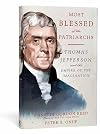
I’ll give it a three because the light it sheds on Jefferson’s character outweighs my dissatisfaction with it’s literary merit. The “Empire of the Imagination” of the subtitle seems to refer not only to the glorious republic that Jefferson imagined the new nation could become, but also to the self-image he cultivated, which was often at odds with reality. He extolled the virtues of home life, wherein, he thought were cultivated the spirit of fellowship and civility and moral values show more that would be the bedrock of the national comity. He often wrote about the central place that home played in his life. Yet he only spent a handful of years actually living in Monticello, and most of that time was in what he considered to be an illicit relationship with a slave. On that biggest question, that of slavery, he recognized its evil, yet came to an accommodation with it, thinking that he could ameliorate it with kindness, and wishfully thinking that his countrymen would quickly come to appreciate its corrosive effect on them and, thus, disavow it. He was a sensitive poet, who may have been out of place in politics, and I love him for his poetry, for his love and care for humanity, which has inspired us, but which, I suspect partly because of the excessive optimism he brought to bear on the practical matters of state, we have fallen short of. show less
Pulitzer Prize-winning author and historian Annette Gordon-Reed explores the history of Texas through the experiences of her family and the Black community in six short essays.
By title alone, I thought I was in for a very different book specifically about the history of Juneteenth and its celebration. What the book actually is, though, is a blend of memoir and history reflecting on the history of Texas as it pertained to slavery and Black Americans, and how that doesn't always line up with show more the origin stories of a nation that become almost mythic. Skillfully blending personal history with historical record, she touches on integration and how it affected her as the first Black student in a white school, the Alamo, and, yes, Juneteenth and the consequences (good and bad) from the proclamation. A fascinating account I would readily recommend to a wide variety of readers. show less
By title alone, I thought I was in for a very different book specifically about the history of Juneteenth and its celebration. What the book actually is, though, is a blend of memoir and history reflecting on the history of Texas as it pertained to slavery and Black Americans, and how that doesn't always line up with show more the origin stories of a nation that become almost mythic. Skillfully blending personal history with historical record, she touches on integration and how it affected her as the first Black student in a white school, the Alamo, and, yes, Juneteenth and the consequences (good and bad) from the proclamation. A fascinating account I would readily recommend to a wide variety of readers. show less
Lists
Awards


You May Also Like


Associated Authors
Statistics
- Works
- 11
- Also by
- 7
- Members
- 3,284
- Popularity
- #7,792
- Rating
- 4.0
- Reviews
- 71
- ISBNs
- 56
- Favorited
- 5