
Fawn Brodie (1915–1981)
Author of Thomas Jefferson : An Intimate History
About the Author
The late Fawn M. Brodie was professor of history at the University of California, Los Angeles, and author of several other noted biographies, including The Devil Drives: A Life of Sir Richard Burton, also published in Norton paperback.
Works by Fawn Brodie
The great Jefferson taboo 1 copy
Associated Works
The City of the Saints: Among the Mormons and Across the Rocky Mountains to California (1971) — Editor, some editions — 94 copies
The Word from Weber County. A Centennial Anthology of our Best Writers (1996) — Contributor — 6 copies
"The Skeleton in Grandpa's Barn": And Other Stories of Growing Up in Utah (2008) — Contributor — 1 copy
Dialogue: A Journal of Mormon Thought - Volume 14, Number 2 (Summer 1981) (1981) — Contributor — 1 copy
Tagged
Common Knowledge
- Canonical name
- Brodie, Fawn
- Legal name
- Brodie, Fawn McKay
- Other names
- Brodie, Fawn M.
- Birthdate
- 1915-09-15
- Date of death
- 1981-01-10
- Gender
- female
- Education
- Weber College
University of Utah (BA|1934)
University of Chicago (MA|1936) - Occupations
- historian
university professor
biographer - Organizations
- University of California, Los Angeles
The Church of Jesus Christ of Latter-day Saints (excommunicated 1946)
Utah State Historical Society (fellow) - Awards and honors
- Fellow of the Utah State Historical Society
- Relationships
- Brodie, Bernard (husband)
McKay, David O. (uncle) - Short biography
- Fawn McKay grew up in a devout Mormon family in Huntsville, Utah. She earned a B.A. in English literature from the University of Utah and an M.A. from the University of Chicago. In 1936, she married scholar Bernard Brodie, who became a noted expert in Cold War military strategy. Both families opposed the marriage. Fawn Brodie worked for a while at the Harper Library at the University of Chicago, where she began doing the lengthy research for a biography of Mormon founder Joseph Smith, eventually published as No Man Knows My History (1944). The book received wide critical acclaim, but the Mormon Church strenuously objected to it and excommunicated Fawn Brodie as a heretic. She went on to write works on Thaddeus Stevens, Sir Richard Burton, and Thomas Jefferson. The latter was a bestseller and the first to publicly prove that Jefferson had fathered children with the slave Sally Hemings. Fawn Brodie was also one of the first female professors of history at the University of California, Los Angeles.
- Cause of death
- lung cancer
- Nationality
- USA
- Birthplace
- Ogden, Utah, USA
- Places of residence
- Ogden, Utah, USA
Huntsville, Utah, USA
Los Angeles, California, USA - Place of death
- Santa Monica, California, USA
- Burial location
- ashes scattered over Santa Monica Mountains
- Associated Place (for map)
- USA
Members
Reviews
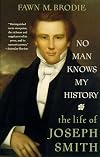
Uncharacteristic intuition (and even sympathy!) regarding religious experience from an academic and encyclopedic knowledge of primary sources combine perfectly to reconstruct the unbridled, fanatic ecstasy in which Joseph Smith spent his entire life. And not just Smith, but of frontier life of the second great awakening - when America was a land of men digging for cursed treasures, who saw angels around every corner, who felt so close to unraveling all the mysteries of existence through show more divine artifacts and prayer.
The 18th-century prophetic wave which began with Swedenborg and crested with Blake saw in Smith its culmination, for he was the last prophet to proclaim a love for the American project not just by words or divine decrees but in his very theology. At the same time William Miller eschewed the experiential in his sterile eschatological exegesis and Emerson shed all concept of received knowledge as insufficient, only Smith among the intellectual innovators of his day could perceive the promises of scripture realized in the world around him.
Brodie was the first to apply critical scrutiny not just to Mormon apologia, but also to a tradition nearly as old: anti-Mormon polemic (for Mormonism Unvailed was published only 1 year after Joseph Smith's first crude attempt at church history in the Book of Commandments). She finds that the traditional image among historians (when they think of him at all) of Joe Smith the simple huckster is as untenable as the guileless, pious teenager promulgated by Salt Lake City.
She shows him at his worst: a dilettante who rushes headfirst into matters far beyond his comprehension, occasionally destroying his followers' welfare (when he tried his hand at banking), their marriages, or even their lives (when he fancied himself a general). She shows an intemperate man who was unable or unwilling to distinguish between his appetites and the will of God, to the degree that he ensconced "a burning in your bosom" as the final test of divine authority in scripture. But she shows him at his most heroic, too: an unschooled youth who needed a miracle to reconcile his unchurched father and his relapsed Presbyterian mother after his brother Alvin's death. show less
The 18th-century prophetic wave which began with Swedenborg and crested with Blake saw in Smith its culmination, for he was the last prophet to proclaim a love for the American project not just by words or divine decrees but in his very theology. At the same time William Miller eschewed the experiential in his sterile eschatological exegesis and Emerson shed all concept of received knowledge as insufficient, only Smith among the intellectual innovators of his day could perceive the promises of scripture realized in the world around him.
Brodie was the first to apply critical scrutiny not just to Mormon apologia, but also to a tradition nearly as old: anti-Mormon polemic (for Mormonism Unvailed was published only 1 year after Joseph Smith's first crude attempt at church history in the Book of Commandments). She finds that the traditional image among historians (when they think of him at all) of Joe Smith the simple huckster is as untenable as the guileless, pious teenager promulgated by Salt Lake City.
She shows him at his worst: a dilettante who rushes headfirst into matters far beyond his comprehension, occasionally destroying his followers' welfare (when he tried his hand at banking), their marriages, or even their lives (when he fancied himself a general). She shows an intemperate man who was unable or unwilling to distinguish between his appetites and the will of God, to the degree that he ensconced "a burning in your bosom" as the final test of divine authority in scripture. But she shows him at his most heroic, too: an unschooled youth who needed a miracle to reconcile his unchurched father and his relapsed Presbyterian mother after his brother Alvin's death. show less

But he is not intentionally irreverent...he speaks the things that others think and hide"
By sally tarbox on 26 Feb. 2016
Format: Paperback
I started off deciding to just read a chapter a day, while focussing mainly on a great novel I was reading simultaneously.
But found myself unable to put down this wonderful account of the fascinating Richard Burton: fearless explorer, amazing linguist, soldier, anthropologist and writer. He went on a mission to look for gold. He published highly learned show more works and poetry, but also a book on bayonet exercises and the Kama Sutra. He was frequently out of favour with the establishment, who cold-shouldered him. And beside him all the way was his adoring wife Isabel, his polar opposite in character, being a highly proper devout Catholic - and the one who would burn great swathes of his diaries and final translation of 'The Perfumed Garden' shortly after his death, in an attempt to keep his name 'forever unsullied and without stain.'
This is an extremely compelling work and the author really brings the enigmatic Burton to life. show less
By sally tarbox on 26 Feb. 2016
Format: Paperback
I started off deciding to just read a chapter a day, while focussing mainly on a great novel I was reading simultaneously.
But found myself unable to put down this wonderful account of the fascinating Richard Burton: fearless explorer, amazing linguist, soldier, anthropologist and writer. He went on a mission to look for gold. He published highly learned show more works and poetry, but also a book on bayonet exercises and the Kama Sutra. He was frequently out of favour with the establishment, who cold-shouldered him. And beside him all the way was his adoring wife Isabel, his polar opposite in character, being a highly proper devout Catholic - and the one who would burn great swathes of his diaries and final translation of 'The Perfumed Garden' shortly after his death, in an attempt to keep his name 'forever unsullied and without stain.'
This is an extremely compelling work and the author really brings the enigmatic Burton to life. show less

A capital biography and, still, after about three-quarters of a century, the best biography of Joseph Smith and Brodie's magnum opus. Any unbiased look at Joseph Smith reveals that he was a charlatan of the highest rank, and that humankind was and always will be credulous. Brodie mined sources often ignored, especially by Mormon hagiographers, and her anti-Mormonism (she was a "lapsed Mormon," as it were) does not seep through (as it later would when it came to her acerbic Nixon bio). In show more all, she is fair. But, as I said, any unbiased look...
She locates Smith in his time, and offers educated guesses as to how and why he goes from scryer to book writer to prophet to church leader. As I have said elsewhere, his "revelations" are all self-serving. Sell land to the prophet, give land to the church, we should move to Missouri, I should get all your wives (and my real wife should be happy about it). I don't recall prophets in the Bible getting nice, cushy revelations such as this. (Jonah, Nineveh is too hard to convert. Go to Jerusalem.)
Still, Smith did create a religion, and his story is important to understand the Jacksonian era, the Second Great Awakening, and even the Civil War. Thus, I suggest this book be read first. Then turn to the other biographies of Smith, like Bushman's and Remini's. show less
She locates Smith in his time, and offers educated guesses as to how and why he goes from scryer to book writer to prophet to church leader. As I have said elsewhere, his "revelations" are all self-serving. Sell land to the prophet, give land to the church, we should move to Missouri, I should get all your wives (and my real wife should be happy about it). I don't recall prophets in the Bible getting nice, cushy revelations such as this. (Jonah, Nineveh is too hard to convert. Go to Jerusalem.)
Still, Smith did create a religion, and his story is important to understand the Jacksonian era, the Second Great Awakening, and even the Civil War. Thus, I suggest this book be read first. Then turn to the other biographies of Smith, like Bushman's and Remini's. show less
No Man Knows My History is well written and well documented. It is a scholarly work but readable by the average educated adult. Fawn M. Brodie was raised in an LDS family, but the work is not a hagiography. It is honest and realistic about the truth behind Joseph Smith. She does not believe that he had the visions or any golden plates, and she says as much. She gives rational explanations behind the devotion of his followers. For example, regarding the testimony of the three witnesses she show more says, "According to the local press of the time, the three witnesses all told different versions of their experience, a fact that makes it all the more likely that the men were not conspirators but victims of Joseph's unconscious but positive talent at hypnosis."
At times her own personal crises of faith show through. I believe this is what keeps her honest. On the one hand, she has an attitude of respect towards Joseph Smith and treats him as a victim of his own celebrity, whereas on the other hand she does not treat him as a prophet but a man embroiled in lies and scandal throughout his whole life. Truly, lies and deceit seem to follow Smith, what he does, and what others do to him. Testimonies and affidavits constantly contradict one another, and Smith and his supporters would lie to protect themselves when necessary. For example, when the issue of spiritual and plural wives became a problem with the non-Mormon community, she writes, "this and other public denials of spiritual wifism put a peculiar burden on his own wives and also on the leading Mormon men who were beginning to practice polygamy."
This book has caused controversy in the LDS church, and will continue to do so. Non-Mormons will come away believing that the early followers of Smith were both victims of outside oppression and their own foolishness, whereas Mormons today will not like it and many will reject it. It is definitely a book that needs to be addressed by believers. show less
At times her own personal crises of faith show through. I believe this is what keeps her honest. On the one hand, she has an attitude of respect towards Joseph Smith and treats him as a victim of his own celebrity, whereas on the other hand she does not treat him as a prophet but a man embroiled in lies and scandal throughout his whole life. Truly, lies and deceit seem to follow Smith, what he does, and what others do to him. Testimonies and affidavits constantly contradict one another, and Smith and his supporters would lie to protect themselves when necessary. For example, when the issue of spiritual and plural wives became a problem with the non-Mormon community, she writes, "this and other public denials of spiritual wifism put a peculiar burden on his own wives and also on the leading Mormon men who were beginning to practice polygamy."
This book has caused controversy in the LDS church, and will continue to do so. Non-Mormons will come away believing that the early followers of Smith were both victims of outside oppression and their own foolishness, whereas Mormons today will not like it and many will reject it. It is definitely a book that needs to be addressed by believers. show less
Lists
Awards


You May Also Like


Associated Authors
Statistics
- Works
- 9
- Also by
- 11
- Members
- 2,691
- Popularity
- #9,545
- Rating
- 4.0
- Reviews
- 35
- ISBNs
- 34
- Languages
- 3
- Favorited
- 1