
James Thomas Flexner (1908–2003)
Author of Washington: The Indispensable Man
About the Author
Image credit: Tilo Samter
Series
Works by James Thomas Flexner
The Traitor and the Spy: Benedict Arnold and John André (New York Classics) (1953) 92 copies, 1 review
That wilder image; the painting of America's native school from Thomas Cole to Winslow Homer (1970) 74 copies
History of American Painting: First Flowers of Our Wilderness American Painting the Colonial Period (1947) 66 copies
The Double Adventure of John Singleton Copley, First Major Painter of the New World (1969) 10 copies
American Paintings 1 copy
In the American Revolution 1 copy
Steamboats Come True 1 copy
Amerika Schildert 1 copy
MALERIET I AMERIKA 1 copy
Associated Works
Booknotes: America's Finest Authors on Reading, Writing, and the Power of Ideas (1997) — Contributor — 457 copies, 5 reviews
The Tavern Lamps Are Burning: Literary Journeys through Six Regions and Four Centuries of New York State (1964) — Contributor — 24 copies
Tagged
Common Knowledge
- Canonical name
- Flexner, James Thomas
- Legal name
- Flexner, James Thomas
- Birthdate
- 1908-01-13
- Date of death
- 2003-02-13
- Gender
- male
- Education
- Harvard College (AB|1929)
- Occupations
- journalist
historian
art historian
biographer - Organizations
- American Center of International P.E.N.
Society of American Historians
New York Public Library
Herald Tribune - Awards and honors
- American Academy of Arts and Letters (1976)
National Book Award for Biography (1973)
Pulitzer Prize (Special Citation, 1973)
American Academy of Arts and Letters Gold Medal for Biography (1988) - Relationships
- Flexner, Simon (father)
Flexner, Helen Thomas (mother) - Nationality
- USA
- Birthplace
- New York, New York, USA
- Places of residence
- New York, New York, USA
- Place of death
- New York, New York, USA
- Associated Place (for map)
- New York, New York, USA
Members
Reviews

I think I started reading Flexner's multi-volume biography of Washington shortly after the 2024 election. I could have gone with the more modern (and only one volume, if a long one) Ron Chernow but I had a strange feeling that something a little older, a more "traditional" approach would be what I needed at this weird, upsetting time in American history.
And Flexner does not disappoint. The first volume had some sleepy spots, I thought, though the material on the French and Indian War is show more pretty exciting. But things really work up to a lather with this volume, which details Washington's years as Commander-in-Chief of the usually-scruffy Continental Army. Hoo boy, is it detailed and exciting ... and true to his word, Flexner does not stint on describing Washington's many "warts." I am not well read enough in the period to know how to judge the accuracy of this portrait, but it is certainly a well-rounded one, and it does *not* diminish the stature of the legend, not one little bit (at least, that's what I thought/felt). You come away with a sense of a full human being, incredibly deserving of his exalted reputation but at the same time, engagingly human. Also -- to me a big plus -- he was not at all a bad writer! Writing wasn't his profession, but he was capable of energetic, thoughtful prose (I'd actually like to read more of it).
Washington had really never been much more for me than the face on the $1 bill & the profile on the American quarter dollar. Here, he is.
PS Benedict Arnold was one nasty sumbitch and I'm sorry he was not captured. ;) show less
And Flexner does not disappoint. The first volume had some sleepy spots, I thought, though the material on the French and Indian War is show more pretty exciting. But things really work up to a lather with this volume, which details Washington's years as Commander-in-Chief of the usually-scruffy Continental Army. Hoo boy, is it detailed and exciting ... and true to his word, Flexner does not stint on describing Washington's many "warts." I am not well read enough in the period to know how to judge the accuracy of this portrait, but it is certainly a well-rounded one, and it does *not* diminish the stature of the legend, not one little bit (at least, that's what I thought/felt). You come away with a sense of a full human being, incredibly deserving of his exalted reputation but at the same time, engagingly human. Also -- to me a big plus -- he was not at all a bad writer! Writing wasn't his profession, but he was capable of energetic, thoughtful prose (I'd actually like to read more of it).
Washington had really never been much more for me than the face on the $1 bill & the profile on the American quarter dollar. Here, he is.
PS Benedict Arnold was one nasty sumbitch and I'm sorry he was not captured. ;) show less

Flexner wrote a massive four volume biography of Washington, which he then condensed into this more approachable 400 page book. As the subtitle, The Indispensible Man indicates, Flexner places Washington in his keystone role in the history of America. Washington rose from the lower-ranks of the Virginia planter aristocracy through land speculation, and a minor military career in the French and Indian Wars. Snubbed by British officers, he focused on American independence in economic matters, show more and then when the Revolution occurred, became the leader of the Continental Army, and the first President, setting the traditions for the American republic.
Again and again, Washington's virtues are persistence and equanimity. At many points where others would have given up in despair, or resorted to personal attacks, Washington held firm to his course. He held the army together through desperate retreats and the bitter winter at Valley Forge. As President, he managed conflict between Hamilton's Federalists and Jefferson's Democratic-Republicans. Washington did not always choose wisely, and particularly in his old age, and following the break with Thomas Jefferson, he became more partisan, more paranoid, less able to unify the country and plot a wise course. In large part, he did what few others could, and well-earned his place in history.
Flexner deserves credit for earnestly engaging with the slavery issue at the end of the book, as I was waiting for it to come up. Washington was born into a slave society, but in Flexner's account, slowly turned against it. He wanted to end the slave system at Mount Vernor, but was constrained by the lack of alternatives. He freed what slaves he could, but many were property of Martha Washington (nee Custis), and would pass to the Custises. And while this is a good look at the man and the period, it lacks the vividness of a truly great biography. show less
Again and again, Washington's virtues are persistence and equanimity. At many points where others would have given up in despair, or resorted to personal attacks, Washington held firm to his course. He held the army together through desperate retreats and the bitter winter at Valley Forge. As President, he managed conflict between Hamilton's Federalists and Jefferson's Democratic-Republicans. Washington did not always choose wisely, and particularly in his old age, and following the break with Thomas Jefferson, he became more partisan, more paranoid, less able to unify the country and plot a wise course. In large part, he did what few others could, and well-earned his place in history.
Flexner deserves credit for earnestly engaging with the slavery issue at the end of the book, as I was waiting for it to come up. Washington was born into a slave society, but in Flexner's account, slowly turned against it. He wanted to end the slave system at Mount Vernor, but was constrained by the lack of alternatives. He freed what slaves he could, but many were property of Martha Washington (nee Custis), and would pass to the Custises. And while this is a good look at the man and the period, it lacks the vividness of a truly great biography. show less
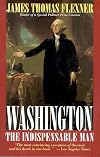
In his bibliography in the back, Flexner divides published biographies of Washington into "three major categories--the historically sound, the goody-goody, and the debunking." Flexner's four volume biography of George Washington won a Pulitzer Prize citation and a National Book Award. This one volume version of that work seems to strike a good balance between the critical and admiring and, based on primary sources, from what I can tell, deserves to be put among those "historically sound." show more It's certainly well-written, fascinating and made me appreciate why Flexner subtitled this biography of Washington "The Indispensable Man" and why he claimed in his Introduction Washington was a "great and good man."
I thought I knew fairly well the basic outline of George Washington's life and of the Revolutionary and Federal period, but this book gave me a new appreciation of all that is owed to Washington--not just by Americans, but by all who support a republican form of government. I had known that people urged Washington to become America's king and he refused. I knew he had defused an officers' rebellion that could have "groomed and saddled the horses of fascism" and I knew his refusal to accept a third term of office meant he ensured an orderly transition and republican form of succession rather than dying in office and creating a kind of elective monarchy--and that ever after his example of staying only two terms in office was followed by every American president thereafter until breached by Franklin Roosevelt--and that the limitation was then grafted unto the US Constitution so Washington's precedent couldn't again be violated. Presented here again and again are traps Washington avoided that could have destroyed the embryo republic. Among the things I didn't know was just how turbulent were Washington's two terms of office as he set precedents that put flesh onto the skeleton of the Constitution. Certainly Flexner's account doesn't reflect well on either Alexander Hamilton or Thomas Jefferson, each of whom formed around him the first nascent political parties.
From time to time you can tell this book's origins as a more succinct account gathered from Flexner's expansive four-volume biography. For instance, Flexner calls Washington's stepson John Parke Custis a "monster" but doesn't really give us the details to justify that statement. Some of the chapters definitely feel sketchy. As he says in his introduction, in this one-volume work he just wanted to hit the highlights, although this book is far more than an outline, and Washington's character and personality does come through, especially in frequent quotes from letters and diaries and other first-hand accounts. Although admiring on the whole, Flexner doesn't pass over the man's flaws. There is an entire chapter dealing with "Washington and Slavery" and Flexner depicts both Washington's foolish youthful mistakes and sad mental decline in his old age. My next reads are biographies of John Adams and Thomas Jefferson and it will be interesting to see how those books complicate the picture. show less
I thought I knew fairly well the basic outline of George Washington's life and of the Revolutionary and Federal period, but this book gave me a new appreciation of all that is owed to Washington--not just by Americans, but by all who support a republican form of government. I had known that people urged Washington to become America's king and he refused. I knew he had defused an officers' rebellion that could have "groomed and saddled the horses of fascism" and I knew his refusal to accept a third term of office meant he ensured an orderly transition and republican form of succession rather than dying in office and creating a kind of elective monarchy--and that ever after his example of staying only two terms in office was followed by every American president thereafter until breached by Franklin Roosevelt--and that the limitation was then grafted unto the US Constitution so Washington's precedent couldn't again be violated. Presented here again and again are traps Washington avoided that could have destroyed the embryo republic. Among the things I didn't know was just how turbulent were Washington's two terms of office as he set precedents that put flesh onto the skeleton of the Constitution. Certainly Flexner's account doesn't reflect well on either Alexander Hamilton or Thomas Jefferson, each of whom formed around him the first nascent political parties.
From time to time you can tell this book's origins as a more succinct account gathered from Flexner's expansive four-volume biography. For instance, Flexner calls Washington's stepson John Parke Custis a "monster" but doesn't really give us the details to justify that statement. Some of the chapters definitely feel sketchy. As he says in his introduction, in this one-volume work he just wanted to hit the highlights, although this book is far more than an outline, and Washington's character and personality does come through, especially in frequent quotes from letters and diaries and other first-hand accounts. Although admiring on the whole, Flexner doesn't pass over the man's flaws. There is an entire chapter dealing with "Washington and Slavery" and Flexner depicts both Washington's foolish youthful mistakes and sad mental decline in his old age. My next reads are biographies of John Adams and Thomas Jefferson and it will be interesting to see how those books complicate the picture. show less

Doctors on Horseback, Pioneers of American Medicine caught my attention for several reasons. It came to my attention while hunting for writings about Daniel Drake, one of the doctors written about in the book. However when I found this title I had already collected and read several biographies of Drake and much of his own writings so I did not expect to learn much from one chapter in a book over seventy years old. Although I had not read as much about some of the other names in the book, show more many of them associated with Drake in one way or another, the books age, in my opinion, meant it would not reveal very much. But there was the author to consider, James T. Flexner was a very well respected historian in his era and this was the first of many books he published. What I found most intriguing was his family. His father was a renowned microbiologist who found a cure for spinal meningitis and studied polio but it was who his uncle was that made me decide to read the book.
Abraham Flexner was an educator, like Drake he taught in Louisville Kentucky and worked to improve education. Flexner was concerned with education in general while Drake cared about medical education in particular. In 1908 Abraham Flexner was picked by the Carnegie Institute to lead a study on professional education in the United States. Although he had never attended or worked in a medical school he willingly took the assignment. Because the Carnegie Institute was best known for handing out large grants Flexner received full cooperation from the nation’s medical schools. The 1910 Flexner Report exposed the problems of “for profit” education and changed the landscape of medical education in the United States and the world. Flexner mentioned Drake in the report and adopted recommendations that Drake had made over a half century before. How, I wondered, would Abraham’s nephew treat Drake?
I should not have bothered. Like most US history written before the 1960’s this was simply another volume of uncritical WASP mythology. If you are interested in really learning about doctors on horseback look at Washington’s Medical Apartheid, Nuland’s The Doctors' Plague, Rothstein’s American Medical Schools and the Practice of Medicine, or Starr’s The Social Transformation of American Medicine. Don’t waste your time with this book. show less
Abraham Flexner was an educator, like Drake he taught in Louisville Kentucky and worked to improve education. Flexner was concerned with education in general while Drake cared about medical education in particular. In 1908 Abraham Flexner was picked by the Carnegie Institute to lead a study on professional education in the United States. Although he had never attended or worked in a medical school he willingly took the assignment. Because the Carnegie Institute was best known for handing out large grants Flexner received full cooperation from the nation’s medical schools. The 1910 Flexner Report exposed the problems of “for profit” education and changed the landscape of medical education in the United States and the world. Flexner mentioned Drake in the report and adopted recommendations that Drake had made over a half century before. How, I wondered, would Abraham’s nephew treat Drake?
I should not have bothered. Like most US history written before the 1960’s this was simply another volume of uncritical WASP mythology. If you are interested in really learning about doctors on horseback look at Washington’s Medical Apartheid, Nuland’s The Doctors' Plague, Rothstein’s American Medical Schools and the Practice of Medicine, or Starr’s The Social Transformation of American Medicine. Don’t waste your time with this book. show less
Lists
Awards


You May Also Like


Associated Authors
Statistics
- Works
- 53
- Also by
- 3
- Members
- 3,391
- Popularity
- #7,519
- Rating
- 4.1
- Reviews
- 24
- ISBNs
- 87
- Languages
- 3
- Favorited
- 3