
Hermione Lee
Author of Virginia Woolf
About the Author
Hermione Lee is the first woman Goldsmiths' Professor of English Literature at Oxford University.
Image credit: University of Oxford
Series
Works by Hermione Lee
The Secret Self 3 copies
Selected Writings of James Fitzjames Stephen: The Life of Sir James Fitzjames Stephen, by his brother Leslie Stephen (2017) 3 copies
To Pin Down the Moment with Date and Season (Annual Virginia Woolf Birthday Lectures) (2014) 2 copies
No title 1 copy
From the margins: Hermione Lee on Penelope Fitzgerald : [The Guardian, Saturday, 3 April 2010] 1 copy
Anita Brookner: Art and Life 1 copy
Associated Works
The Collected Stories of Eudora Welty (1980) — Introduction, some editions — 2,739 copies, 16 reviews
Everything That Rises Must Converge: Stories (1965) — Introduction, some editions — 2,642 copies, 55 reviews
A Room of One's Own / Three Guineas (1929) — Editor, introduction, some editions — 1,270 copies, 13 reviews
The Pleasure of Reading: 43 Writers on the Discovery of Reading and the Books That Inspired Them (2015) — Contributor — 104 copies, 2 reviews
Hyde Park Gate News: The Stephen Family Newspaper (2005) — Foreword, some editions — 100 copies, 1 review
Tagged
Common Knowledge
- Canonical name
- Lee, Hermione
- Birthdate
- 1948-02-29
- Gender
- female
- Education
- University of Oxford (St Hilda's College)
Lycée Français Charles de Gaulle, London
Queen's College, London
University of Oxford (St Cross)
City of London School for Girls - Occupations
- Emeritus Professor of English Literature
writer
reviewer
broadcaster - Awards and honors
- Honorary Doctorate (University of York | 2007)
British Academy (Fellow)
Royal Society of Literature (Fellow)
Order of the British Empire (Commander, 2003) - Agent
- Charles Walker (United Agents)
- Relationships
- Barnard, John (husband)
Lee, Benjamin (father) - Short biography
- Hermione Lee was born in Winchester, England, and grew up in London. She was educated at the Lycée Français Charles de Gaulle, City of London School for Girls, and Queen's College, London, before earning a First in English literature at Oxford University and then an MPhil degree. She began her academic career at The College of William and Mary in Virginia, USA, and went on to teach at Liverpool University, the University of York (1977-1998), and New College, Oxford, where she was the Goldsmiths' Chair of English Literature and the first female fellow. In 2008, she was elected President of Wolfson College at Oxford. She has written widely on women writers, American literature, and modern fiction. Prof. Lee's books include The Novels of Virginia Woolf (1977), Elizabeth Bowen: An Estimation (1981); Philip Roth (1982), Willa Cather: A Life Saved Up (1989), the biography Virginia Woolf (1996), and Penelope Fitzgerald: A Life (2013), winner of the James Tait Black Prize. She has also edited and introduced numerous editions and anthologies of Kipling, Trollope, Virginia Woolf, Stevie Smith, Elizabeth Bowen, Willa Cather, Eudora Welty, and Penelope Fitzgerald. She was one of the co-editors of the Oxford Poets Anthologies from 1999 to 2002.
She is also well known for her book reviews in The Guardian, The New York Review of Books, and other media. She served as jury chair for the Man Booker Prize for Fiction in 2006, and has judged many other literary prizes.
She is a Fellow of the Royal Society of Literature, and a Fellow of the British Academy and of the American Academy of Arts and Sciences. - Nationality
- UK
- Birthplace
- Winchester, Hampshire, England, UK
- Places of residence
- London, England, UK
Yorkshire, England, UK - Map Location
- England, UK
Members
Reviews

Penelope Fitzgerald was elusive and private. Novelist A.S. Byatt, who for a time was a teaching colleague of Fitzgerald, explained as much to biographer Hermione Lee:
Antonia Byatt found her contradictory. She could be sharp; she could appear vague and self-effacing; she was also knowledgeable, perceptive and generous. “She was interesting to know, but not easy to get to know well….” Byatt hugely admired her work, and gradually came to think of her as “one of the major writers of my show more time.” But remembering their period together as colleagues, she thought that Fitzgerald was “not a nice person. Geniuses are not nice people.”
Lee ably takes the reader through the sweep of Fitzgerald’s life. Born during WWI, Fitzgerald came from an accomplished family; her father was the editor of Punch magazine, one of her uncles was a member of the Bletchly Park team that conquered the Enigma machine during WWII. Known both as “The Blonde Bombshell” and as incredibly smart during her Oxford years (legend has it that Fitzgerald not only “got a First,” but that her papers were “…so outstandingly good they were kept and bound in vellum by her examiner…”), she eventually ended up as a BBC producer and scriptwriter during and after the second world war. Post-war, she married an Irish army officer, had three children, co-edited a literary magazine with him for three years (World Review) and then had it all crash down around her when his alcoholism and serious trouble with the law made them destitute. They lived for many years in council housing while the family scraped by largely on her teaching income (she taught for 26 years). Lee is especially good at contextualizing and exploring Fitzgerald’s work, influences and relationships (which were mainly with family members, but also those few friends with whom she became close, especially writers J.L. Carr, Stevie Smith, and later Penelope Lively).
I’m reading Fitzgerald in order so next up for me will be her third
book [Offshore], a story inspired by the time she and her family lived on a houseboat on the Thames because it was all that they could afford. (In real life, the boat sank, taking all of their possessions with it. She still showed up to teach on the day that it happened.)
Offshore was awarded the Booker Prize in a year where many thought V.S. Naipul would win for A Bend in the River. Lee describes a BBC program about the prize that year as being “breathtakingly condescending” toward Fitzgerald. Host Robert Robinson, “…evidently thrown by not having the big beasts he had expected, and by being presented a with a winner he had clearly never heard of, or read, steers the conversation, in his best patrician manner, with many jokey remarks…into a general discussion about literary prizes. He begins by proposing…that “the Booker judges had made the wrong choice” and that the “best book didn’t win….” Did she have a view of what a novel should be?
“That’s the scandal about novels, isn’t it?” she replies. “That they don’t have any classical models. But I would say it started as soon as people realized that it was dark as night—that it was dark outside. And they felt that they would like a story told them. And that’s what novels are for.”
Blankly uncomprehending, Robinson lumbers on: “But don’t you think it must deliver something of importance to everyone?” “No, I don’t,” she answers, just for a moment allowing sharpness through. “I think it’s that, for the time being, you forget that it’s dark outside.”” show less
Antonia Byatt found her contradictory. She could be sharp; she could appear vague and self-effacing; she was also knowledgeable, perceptive and generous. “She was interesting to know, but not easy to get to know well….” Byatt hugely admired her work, and gradually came to think of her as “one of the major writers of my show more time.” But remembering their period together as colleagues, she thought that Fitzgerald was “not a nice person. Geniuses are not nice people.”
Lee ably takes the reader through the sweep of Fitzgerald’s life. Born during WWI, Fitzgerald came from an accomplished family; her father was the editor of Punch magazine, one of her uncles was a member of the Bletchly Park team that conquered the Enigma machine during WWII. Known both as “The Blonde Bombshell” and as incredibly smart during her Oxford years (legend has it that Fitzgerald not only “got a First,” but that her papers were “…so outstandingly good they were kept and bound in vellum by her examiner…”), she eventually ended up as a BBC producer and scriptwriter during and after the second world war. Post-war, she married an Irish army officer, had three children, co-edited a literary magazine with him for three years (World Review) and then had it all crash down around her when his alcoholism and serious trouble with the law made them destitute. They lived for many years in council housing while the family scraped by largely on her teaching income (she taught for 26 years). Lee is especially good at contextualizing and exploring Fitzgerald’s work, influences and relationships (which were mainly with family members, but also those few friends with whom she became close, especially writers J.L. Carr, Stevie Smith, and later Penelope Lively).
I’m reading Fitzgerald in order so next up for me will be her third
book [Offshore], a story inspired by the time she and her family lived on a houseboat on the Thames because it was all that they could afford. (In real life, the boat sank, taking all of their possessions with it. She still showed up to teach on the day that it happened.)
Offshore was awarded the Booker Prize in a year where many thought V.S. Naipul would win for A Bend in the River. Lee describes a BBC program about the prize that year as being “breathtakingly condescending” toward Fitzgerald. Host Robert Robinson, “…evidently thrown by not having the big beasts he had expected, and by being presented a with a winner he had clearly never heard of, or read, steers the conversation, in his best patrician manner, with many jokey remarks…into a general discussion about literary prizes. He begins by proposing…that “the Booker judges had made the wrong choice” and that the “best book didn’t win….” Did she have a view of what a novel should be?
“That’s the scandal about novels, isn’t it?” she replies. “That they don’t have any classical models. But I would say it started as soon as people realized that it was dark as night—that it was dark outside. And they felt that they would like a story told them. And that’s what novels are for.”
Blankly uncomprehending, Robinson lumbers on: “But don’t you think it must deliver something of importance to everyone?” “No, I don’t,” she answers, just for a moment allowing sharpness through. “I think it’s that, for the time being, you forget that it’s dark outside.”” show less
Philip Roth at 80: A Celebration: (Remarks delivered on the occasion of Philip Roth's 80th birthday) (The Library of America) by Philip Roth

This is a collection of remarks delivered at a birthday tribute for Philip Roth in 2013. It was a bit of lagniappe through my Library of America subscription, and I read it to see what admirers from the world of literature and philosophy had to say about Roth's work. I came away with a grudging acceptance of the fact that I probably am missing something, that Roth's body of work is more significant than its individual parts might suggest...but not with any desire to read further of Zuckerman show more or Sabbath. Roth's own comments at the event, which concludes this slim volume, annoyed me as much as anything else of his I've read. He just isn't talking to me. So, as my beautiful 18-month-old grandniece is fond of saying, I am, as far as Roth is concerned, emphatically "Done!". I did learn that he loves Faulkner. Well, good.
Review written in 2014 show less
Review written in 2014 show less

Edith Wharton is one of my favorite authors, so when I came across this biography in a used bookshop, I snapped it up. And then it sat on my shelves for over a decade. So much for my fan-girl enthusiasm. I decided 2022 was the year to right this wrong. With more than 700 pages of text I knew I would need to pace myself, and spread my reading out over the first three months of the year.
Hermione Lee has built a reputation for solid, well-researched biographies of literary figures, and this show more book is no exception. Wharton’s life story is divided into three parts: from her birth in 1861 to World War I, the war years, and the post-war period until her death in 1937. Wharton came of age in New York society, and is known for novels set in that milieu. But her early career was focused on the decorative arts, bringing European style to America before making her name in fiction with The House of Mirth, published in 1905. Wharton made a disastrous marriage, which she escaped by moving to Paris and becoming part of a learned and literary set (divorce came years later, and only after her husband exhibited serious mental health issues). Wharton threw herself into the war effort by founding and operating a number of charities. Post-war she remained in Europe, ultimately owning two homes in France.
Lee delves deep both into Wharton’s literary career, and her personal life and relationships. She comes across as simultaneously sympathetic and complicated and difficult, a product of her time and class. There is no debate about her literary genius, but even there Lee shows how her reputation grew and then, around the time of her death, began to decline. In the late 20th century, Wharton’s work experienced a resurgence thanks to the 1990s film adaptation of The Age of Innocence and feminist publishers like Virago Press.
I have just two quibbles about this book. First, its length, requiring a genuine interest in Wharton to even attempt it. And second, Lee assumes readers have a basic command of French. Not surprisingly, much of Wharton’s correspondence was in French. Sometimes these passages are translated, but far too often they are not. This makes additional work for the non-fluent reader, and I found the inconsistency annoying. That said, I really enjoyed this deep dive into a favorite author’s life and would recommend it highly to any Edith Wharton fan. show less
Hermione Lee has built a reputation for solid, well-researched biographies of literary figures, and this show more book is no exception. Wharton’s life story is divided into three parts: from her birth in 1861 to World War I, the war years, and the post-war period until her death in 1937. Wharton came of age in New York society, and is known for novels set in that milieu. But her early career was focused on the decorative arts, bringing European style to America before making her name in fiction with The House of Mirth, published in 1905. Wharton made a disastrous marriage, which she escaped by moving to Paris and becoming part of a learned and literary set (divorce came years later, and only after her husband exhibited serious mental health issues). Wharton threw herself into the war effort by founding and operating a number of charities. Post-war she remained in Europe, ultimately owning two homes in France.
Lee delves deep both into Wharton’s literary career, and her personal life and relationships. She comes across as simultaneously sympathetic and complicated and difficult, a product of her time and class. There is no debate about her literary genius, but even there Lee shows how her reputation grew and then, around the time of her death, began to decline. In the late 20th century, Wharton’s work experienced a resurgence thanks to the 1990s film adaptation of The Age of Innocence and feminist publishers like Virago Press.
I have just two quibbles about this book. First, its length, requiring a genuine interest in Wharton to even attempt it. And second, Lee assumes readers have a basic command of French. Not surprisingly, much of Wharton’s correspondence was in French. Sometimes these passages are translated, but far too often they are not. This makes additional work for the non-fluent reader, and I found the inconsistency annoying. That said, I really enjoyed this deep dive into a favorite author’s life and would recommend it highly to any Edith Wharton fan. show less
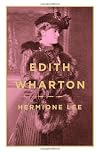
I was primed for this book, having read all Wharton's novels and fallen in love her prose.
tl;dr: Extremely thorough and well documented, and informative, but also exhausting.
Hermione Lee went through everything available on Wharton, including large chunks of letters newly available since the last major Wharton biography in the mid-1990's. We get her life, a fairly in-depth analysis of all her major works, and a view of what other people thought of her. We get the dirt - although it's not show more new here in this biography. We get all the details on Morton Fullerton, who she had an affair with while still married (although her marriage had collapsed and her husband had his own affairs). Fullerton secretly kept her letters, and they're now available. We get her unpublished autobiography, Life and I, where she is much more critical of her family than she ever was openly. And we get the erotic excerpt from [Beatrice Palmato], an incomplete and unpublished draft that includes a sexually explicit scene between a father and his married daughter, with the kind of details you find in contemporary pornography, the kind of stuff you might have wondered if she even knew about, based on her novels. All these details are fascinating because Wharton was so private and tried very hard to keep her personal life private. There is no hint in any of her published material of her childhood troubles, her affairs or anything about her sex life. Even her failed marriage and divorce are kept quiet enough that Lee found it difficult to know what actually was happening between husband and wife (although possibly never love). And they're fascinating because these are all just a tip of some unknown iceberg. We don't know anything about any other affair Wharton may have had during her long post-divorce years. We don't know anything about her relationship with Walter Berry, her closest friend who lived with her at times and who went over everything she wrote as she was writing it, with her, and helped her edit. Their letters were all destroyed. We do know that when Walter Berry died, Wharton was broken far more than any other loss and that she is buried next to him. (But not right next to him. There is a plot in between. !!)
But we read this book foremost because we love Wharton's writing. She was a masterful prose writer. She was incredibly well-read, including in philosophy and other non-fiction fields, and this all goes into her writing. She had extensive literary relationships, most famously with [[Henry James]]. This all also influenced her. She was considered Jamesian and tried very hard to get out of that characterization. But it took many posthumous decades. She is read more than James is today! Wharton was also famously wealthy. Born Edith Newbold Jones in 1862, she literally came from the family that is behind the phrase "keeping up with the Joneses". Although she was not as fabulously wealthy as some of the other Jones, she owned large homes, with large servant staffs. There were always cars, and a driver. She traveled extensively, once using half her and her husband's allotted annual income to charter a boat, with a crew, and sail the mediterranean. Allotted because she hadn't a published anything yet. Wharton published an immense amount of work, but published hardly anything until she was in her later 30's, in the latest 1890s. She would make a lot of money on these books, and she would need this income to maintain her lifestyle. [House of Mirth], published in 1905 was a bestseller, her first. [The Age of Innocence] (1920) and practically every book after that were also best sellers. When the Great Depression hit and her sales plummeted, she suffered financially. But not enough to changer her lifestyle...
So Wharton the prose master, Wharton the socialite. Add Wharton the conservative. She always leaned towards conservative friends, many repulsively conservative, including Walter Berry. She, herself, was not repulsively conservative, but hated communism, and derided Jews, African Americans and other minorities (although she supported Dreyfus, and had Jewish friends. And one of her closest friends, the ethically iffy art critic [[Benard Berenson]], converted to Catholicism, but was still viewed, derisively by many people, as Jewish). She adored her servants, many of whom served her their entire professional lives, but she derided the servant class as people unable to do better. And, Wharton never fully came to other side of World War I. Despite a life of cultivating literary relationships, she avoided the modernists. She liked [The Great Gatsby], but not [[F. Scott Fitzgerald]]. She wasn't interested in Bloomsbury or [[Virginia Woolf]], or [[Gertrude Stein]] or [[Ernest Hemingway]], or [[William Faulkner]], or [[James Joyce]], or even Shakespeare and Company, the famous bookstore in Paris that was a literary center in the 1920's.
So, that prose. Have you read her? You must. A couple fascinating things I learned here about her writing. She always had several writing projects going on at once. She would switch between them. And pursue what was working until it wasn't, then switch to something else. So, she left behind a whole lot of unfinished stories. Her story-lines were settled early, but her prose was constantly reworked. Her typists were typing the same pages over and over again. And she left pages and pages with edits actually pasted on. She might have three or four edits pasted over each other on the same line. This allowed Lee to see how her prose on individual works evolved. And it's quite fascinating. Her prose really does improve with each alteration, the final far smoother and evocative then the original.
One of my favorite lessons was learning how she brought [[John Keats]]'s poetry into her prose on [Ethan Frome] (1911). Frome is one of her most famous works, although it only sold moderately. It is a unique (and kind of perfect) novella, and strikingly not Jamesian. She actually wrote the first drafts in French. But, she, with Walter Berry, put a great deal of effort into the prose, and capturing the atmospheres, the framing story perspective and Ethan and Mattie and Zeena. She brought numerous literary influences into this novella, and acknowledged some of them, but not all. And, she and Walter read a lot of Keats and used this language. I just think that's beautiful. Beauty to beauty.
On the basic trajectory, Wharton was born in 1862, the youngest of three and the only girl. Her parents were from prominent wealthy New York families. Wharton spent many of her younger years in Europe, without a settled home. She would learn French, Italian, German and, I think, Spanish. She found comfort in Europe. She met Walter Berry young, but for some reason Berry sort of ran off. She married Teddy Wharton, from a wealthy Boston family. And settled in for many quiet years, with a whole lot of travel. Finally in the late 1890's she started to publish. She initiated a relationship with [[Henry James]] after she first began to get published. Her first major book, co-written with then-prominent interior decorator [[Ogden Codman]], was on interior decoration, [The Decoration of Houses], which had a sort of moral decoration code. (It sold!) Walter Berry had come back in her life and helped her write it. And in 1901 she built her famous house, The Mount, in Lennox, MA, designed by her, with gardens designed by her. While she lived here, [[Henry James]] famously wrote her, "Do New York". And she did, writing [House of Mirth], partially written with [[Henry James]] in the house writing his own book. That book, in 1905, was not her first successful book, but it marked her reputation. It was a bestseller and it's a terrific novel. Gorgeous prose and powerful story within a New York upper class book of manners.
From here, Wharton would arguably begin her full life trajectory. Now a full-time writer, she travelled, interacted, formed literary friendships, left New York and Massachusetts and Teddy, who had some serious mental problems, behind. By 1913 she was divorced, permanently situated in France, in Paris. She was building her French social world. During WWI she would use all her connections, in the United States, England and France, to organize and fund extensive charitable work for refugees and others needing assistance during the war. She also toured the front lines, often with Walter Berry. And she was awarded the French Legion of Honor.
But after the war the world changed. And Wharton really did not. Her most successful novel, [The Age of Innocence], marks a striking end to this world for her and her readers. No one was reading about WWI (her WWI books did not sell at all). But there was a cultural nostalgia, and [The Age of Innocence] is ultimately mainly a work of nostalgia, looking on the New York of her own childhood in the 1870's. The book glitters as her childhood eyes must have.
I feel that Wharton's post-war novels have lost something. They still have her prose. But they aren't as striking at her Old New York novels. And they aren't as creative as [Ethan Frome] or [Summer]. She is innovative, but in the 1920's other writers were far more innovative. As a personality, she became more set in her ways. Whereas her contemporaries consistently found her exhilarating to talk to, young people might find her proud and pompous. The younger world, including the literary critics, simply hadn't read what her contemporaries had. They were focused on different things and didn't always get what she was doing. (Through the 1920's, she oddly had terrific sales and mildly negative reviews).
The saddest part about Wharton is that she lived to see her reputation begin to fade. She had a lot less literary pull in the last two years of her life. And it wasn't temporary. No one read Edith Wharton in the 1940's or 1950s or much of the 1960's. It was not until that feminism movement around 1969 that scholars and readers started reading Wharton again. She was sort of rediscovered, and with pleasure.
She was truly a wonderful prose writer, first and foremost, to me. As a reader, I always find her work immediately captivating. She grabs the reader, and gets us thinking. There is energy and flow. Characters live. Their atmospheres live. Their problems and tragedies live. It's really not something we find in many authors. And it's, for me, the best reason why she should be read.
But, back to Lee. Hopefully the above illustrated how much I appreciate this biography. But, also, it's a lot. And doesn't always read well. Some chapter's feel like a list of documents and present an argument (as Lee was clearly in debate with earlier biographers). The chapter on Wharton's gardens in France was my low point. I didn't really care, and yet Lee persisted with precise details on what she planted and why, and on receptions from other skilled gardeners. At one point Lee listed an extensive wine list Wharton kept in her homes, for other people. She didn't drink. Do we need this list? There is also a lot of untranslated French. I think Lee had the option to trim a whole lot of this off, and make it a sleeker, better, faster book. But, for whatever reason, it seems she felt compelled to put it all in. Anyway, readers will be rewarded but will need to work for it.
2026
https://www.librarything.com/topic/378447#9148818 show less
tl;dr: Extremely thorough and well documented, and informative, but also exhausting.
Hermione Lee went through everything available on Wharton, including large chunks of letters newly available since the last major Wharton biography in the mid-1990's. We get her life, a fairly in-depth analysis of all her major works, and a view of what other people thought of her. We get the dirt - although it's not show more new here in this biography. We get all the details on Morton Fullerton, who she had an affair with while still married (although her marriage had collapsed and her husband had his own affairs). Fullerton secretly kept her letters, and they're now available. We get her unpublished autobiography, Life and I, where she is much more critical of her family than she ever was openly. And we get the erotic excerpt from [Beatrice Palmato], an incomplete and unpublished draft that includes a sexually explicit scene between a father and his married daughter, with the kind of details you find in contemporary pornography, the kind of stuff you might have wondered if she even knew about, based on her novels. All these details are fascinating because Wharton was so private and tried very hard to keep her personal life private. There is no hint in any of her published material of her childhood troubles, her affairs or anything about her sex life. Even her failed marriage and divorce are kept quiet enough that Lee found it difficult to know what actually was happening between husband and wife (although possibly never love). And they're fascinating because these are all just a tip of some unknown iceberg. We don't know anything about any other affair Wharton may have had during her long post-divorce years. We don't know anything about her relationship with Walter Berry, her closest friend who lived with her at times and who went over everything she wrote as she was writing it, with her, and helped her edit. Their letters were all destroyed. We do know that when Walter Berry died, Wharton was broken far more than any other loss and that she is buried next to him. (But not right next to him. There is a plot in between. !!)
But we read this book foremost because we love Wharton's writing. She was a masterful prose writer. She was incredibly well-read, including in philosophy and other non-fiction fields, and this all goes into her writing. She had extensive literary relationships, most famously with [[Henry James]]. This all also influenced her. She was considered Jamesian and tried very hard to get out of that characterization. But it took many posthumous decades. She is read more than James is today! Wharton was also famously wealthy. Born Edith Newbold Jones in 1862, she literally came from the family that is behind the phrase "keeping up with the Joneses". Although she was not as fabulously wealthy as some of the other Jones, she owned large homes, with large servant staffs. There were always cars, and a driver. She traveled extensively, once using half her and her husband's allotted annual income to charter a boat, with a crew, and sail the mediterranean. Allotted because she hadn't a published anything yet. Wharton published an immense amount of work, but published hardly anything until she was in her later 30's, in the latest 1890s. She would make a lot of money on these books, and she would need this income to maintain her lifestyle. [House of Mirth], published in 1905 was a bestseller, her first. [The Age of Innocence] (1920) and practically every book after that were also best sellers. When the Great Depression hit and her sales plummeted, she suffered financially. But not enough to changer her lifestyle...
So Wharton the prose master, Wharton the socialite. Add Wharton the conservative. She always leaned towards conservative friends, many repulsively conservative, including Walter Berry. She, herself, was not repulsively conservative, but hated communism, and derided Jews, African Americans and other minorities (although she supported Dreyfus, and had Jewish friends. And one of her closest friends, the ethically iffy art critic [[Benard Berenson]], converted to Catholicism, but was still viewed, derisively by many people, as Jewish). She adored her servants, many of whom served her their entire professional lives, but she derided the servant class as people unable to do better. And, Wharton never fully came to other side of World War I. Despite a life of cultivating literary relationships, she avoided the modernists. She liked [The Great Gatsby], but not [[F. Scott Fitzgerald]]. She wasn't interested in Bloomsbury or [[Virginia Woolf]], or [[Gertrude Stein]] or [[Ernest Hemingway]], or [[William Faulkner]], or [[James Joyce]], or even Shakespeare and Company, the famous bookstore in Paris that was a literary center in the 1920's.
So, that prose. Have you read her? You must. A couple fascinating things I learned here about her writing. She always had several writing projects going on at once. She would switch between them. And pursue what was working until it wasn't, then switch to something else. So, she left behind a whole lot of unfinished stories. Her story-lines were settled early, but her prose was constantly reworked. Her typists were typing the same pages over and over again. And she left pages and pages with edits actually pasted on. She might have three or four edits pasted over each other on the same line. This allowed Lee to see how her prose on individual works evolved. And it's quite fascinating. Her prose really does improve with each alteration, the final far smoother and evocative then the original.
One of my favorite lessons was learning how she brought [[John Keats]]'s poetry into her prose on [Ethan Frome] (1911). Frome is one of her most famous works, although it only sold moderately. It is a unique (and kind of perfect) novella, and strikingly not Jamesian. She actually wrote the first drafts in French. But, she, with Walter Berry, put a great deal of effort into the prose, and capturing the atmospheres, the framing story perspective and Ethan and Mattie and Zeena. She brought numerous literary influences into this novella, and acknowledged some of them, but not all. And, she and Walter read a lot of Keats and used this language. I just think that's beautiful. Beauty to beauty.
On the basic trajectory, Wharton was born in 1862, the youngest of three and the only girl. Her parents were from prominent wealthy New York families. Wharton spent many of her younger years in Europe, without a settled home. She would learn French, Italian, German and, I think, Spanish. She found comfort in Europe. She met Walter Berry young, but for some reason Berry sort of ran off. She married Teddy Wharton, from a wealthy Boston family. And settled in for many quiet years, with a whole lot of travel. Finally in the late 1890's she started to publish. She initiated a relationship with [[Henry James]] after she first began to get published. Her first major book, co-written with then-prominent interior decorator [[Ogden Codman]], was on interior decoration, [The Decoration of Houses], which had a sort of moral decoration code. (It sold!) Walter Berry had come back in her life and helped her write it. And in 1901 she built her famous house, The Mount, in Lennox, MA, designed by her, with gardens designed by her. While she lived here, [[Henry James]] famously wrote her, "Do New York". And she did, writing [House of Mirth], partially written with [[Henry James]] in the house writing his own book. That book, in 1905, was not her first successful book, but it marked her reputation. It was a bestseller and it's a terrific novel. Gorgeous prose and powerful story within a New York upper class book of manners.
From here, Wharton would arguably begin her full life trajectory. Now a full-time writer, she travelled, interacted, formed literary friendships, left New York and Massachusetts and Teddy, who had some serious mental problems, behind. By 1913 she was divorced, permanently situated in France, in Paris. She was building her French social world. During WWI she would use all her connections, in the United States, England and France, to organize and fund extensive charitable work for refugees and others needing assistance during the war. She also toured the front lines, often with Walter Berry. And she was awarded the French Legion of Honor.
But after the war the world changed. And Wharton really did not. Her most successful novel, [The Age of Innocence], marks a striking end to this world for her and her readers. No one was reading about WWI (her WWI books did not sell at all). But there was a cultural nostalgia, and [The Age of Innocence] is ultimately mainly a work of nostalgia, looking on the New York of her own childhood in the 1870's. The book glitters as her childhood eyes must have.
I feel that Wharton's post-war novels have lost something. They still have her prose. But they aren't as striking at her Old New York novels. And they aren't as creative as [Ethan Frome] or [Summer]. She is innovative, but in the 1920's other writers were far more innovative. As a personality, she became more set in her ways. Whereas her contemporaries consistently found her exhilarating to talk to, young people might find her proud and pompous. The younger world, including the literary critics, simply hadn't read what her contemporaries had. They were focused on different things and didn't always get what she was doing. (Through the 1920's, she oddly had terrific sales and mildly negative reviews).
The saddest part about Wharton is that she lived to see her reputation begin to fade. She had a lot less literary pull in the last two years of her life. And it wasn't temporary. No one read Edith Wharton in the 1940's or 1950s or much of the 1960's. It was not until that feminism movement around 1969 that scholars and readers started reading Wharton again. She was sort of rediscovered, and with pleasure.
She was truly a wonderful prose writer, first and foremost, to me. As a reader, I always find her work immediately captivating. She grabs the reader, and gets us thinking. There is energy and flow. Characters live. Their atmospheres live. Their problems and tragedies live. It's really not something we find in many authors. And it's, for me, the best reason why she should be read.
But, back to Lee. Hopefully the above illustrated how much I appreciate this biography. But, also, it's a lot. And doesn't always read well. Some chapter's feel like a list of documents and present an argument (as Lee was clearly in debate with earlier biographers). The chapter on Wharton's gardens in France was my low point. I didn't really care, and yet Lee persisted with precise details on what she planted and why, and on receptions from other skilled gardeners. At one point Lee listed an extensive wine list Wharton kept in her homes, for other people. She didn't drink. Do we need this list? There is also a lot of untranslated French. I think Lee had the option to trim a whole lot of this off, and make it a sleeker, better, faster book. But, for whatever reason, it seems she felt compelled to put it all in. Anyway, readers will be rewarded but will need to work for it.
2026
https://www.librarything.com/topic/378447#9148818 show less
Lists
Awards


You May Also Like


Associated Authors
Statistics
- Works
- 28
- Also by
- 35
- Members
- 2,999
- Popularity
- #8,504
- Rating
- 3.8
- Reviews
- 40
- ISBNs
- 90
- Languages
- 2
- Favorited
- 3