
Vita Sackville-West (1892–1962)
Author of All Passion Spent
About the Author
Poet and novelist Vita Sackville-West began writing as a child. Born at elegant Knole Castle, scene of Virginia Woolf's novel Orlando (1928), Sackville-West was educated in that 365-room dwelling. In 1913 she married Harold Nicolson (see Vol. 3), journalist, diplomat, and biographer. Despite show more Nicolson's homosexuality and her own lesbian affair with Violet Trefusis, this marriage survived. Poems of East and West, her first book, was published in 1917. She remained unknown except by a small group of literary connoisseurs until 1927, when she received the Hawthornden Prize for a second volume of poetry. At this time she lived in London and was part of the Bloomsbury group, which also included Lytton Strachey (see Vol. 3), E. M. Forster, John Maynard Keynes (see Vol. 3), and Woolf. Sackville-West published many novels and volumes of poetry, biography, and family history, and several books on gardening, as well as book reviews and criticism. All of her writings reflect the same unhurried approach, deep reflection, and brilliantly polished style. Her influence on other writers, especially Woolf, was perhaps greater than her own individual achievement. The Edwardians (1930) and All Passion Spent (1931) are her best-known novels. Sackville-West's son, Nigel Nicholson, recounted the close, but unconventional relationship of his parents in the memoir Portrait of a Marriage, published in 1973. (Bowker Author Biography) show less
Image credit: Philip Alexius de László d. 1937
Series
Works by Vita Sackville-West
Vita and Harold: The Letters of Vita Sackville-West and Harold Nicolson (1992) 168 copies, 2 reviews
A Note of Explanation: An Undiscovered Story from Queen Mary's Dollhouse (2017) 70 copies, 4 reviews
Daughter of France: The Life of Anne Marie Louise d'Orléans, Duchesse de Montpensier, 1627-1693, La Grande Mademoiselle (1959) 38 copies, 2 reviews
COLLECTED POEMS Collected Poems Including Fifty New Ones, by the Author of all Passion Spent (1934) 8 copies, 1 review
Selected poems (New Hogarth library) 7 copies
King's Daughter 6 copies
Poems of the Land Army: An Anthology of Verse by Members of the Women's Land Army (1944) — Foreword — 1 copy
Correspondance 1 copy
The Devil at Westease 1 copy
SFIDA 1 copy
Associated Works
Chloe Plus Olivia: An Anthology of Lesbian Literature from the 17th Century to the Present (1994) — Contributor — 482 copies, 1 review
What Did Miss Darrington See? An Anthology of Feminist Supernatural Fiction (1989) — Contributor — 126 copies
The New Decameron, the Third day — Contributor — 1 copy
Tagged
Common Knowledge
- Canonical name
- Sackville-West, Vita
- Legal name
- Sackville-West, Victoria Mary
- Birthdate
- 1892-03-09
- Date of death
- 1962-06-02
- Gender
- female
- Education
- privately educated
- Occupations
- poet
travel writer
gardener
columnist
author
novelist (show all 7)
Magistrate/Justice of the Peace - Organizations
- The Observer
- Awards and honors
- Order of the Companions of Honour (1946)
Veitch Memorial Medal (1955)
Royal Society of Literature (Fellow, 1947)
W. H. Heinemann Award (1946) - Relationships
- Nicolson, Harold (spouse)
Chaplin, Alvilde (lover)
Trefusis, Violet (lover)
Nicolson, Juliet (granddaughter)
Nicolson, Benedict (son)
Nicolson, Nigel (son) (show all 7)
Woolf, Virginia (lover) - Cause of death
- abdominal cancer
- Nationality
- UK
- Birthplace
- Knole House, Sevenoaks, Kent, England, UK
- Places of residence
- Knole House, Sevenoaks, Kent, England, UK
Constantinople, Ottoman Empire
Sissinghurst, Kent, England, UK
London, Middlesex, England, UK - Place of death
- Sissinghurst, Kent, England, UK
- Burial location
- Sackville Family Chapel, St. Michael and All Angels Church, Withyham, East Sussex, England, UK
- Map Location
- England, UK
Members
Discussions
British Author Challenge March 2023: Vita Sackville-West & Tariq Ali in 75 Books Challenge for 2023 (March 2023)
January Read: Vita Sackville West in Virago Modern Classics (January 2019)
Reviews

When 90-year-old Lord Slane dies, his six children and their spouses come to the home of their mother and condescendingly pat her hand while they plan her future. Ah, but Lady Slane has already made a different plan -- a plan of independence and solitude that she’s been dreaming of through the decades that she devoted to her husband, children and public service.
If you like English-literature classics (including Woolf’s A Room of One’s Own), you’ll like this 1931 novella. If you like show more quiet stories about aging (for example, Taylor’s Mrs. Palfrey at the Claremont and Pym’s Quartet in Autumn), you’ll like it. It called to my mind Kate Chopin’s short-short work, “The Story of an Hour” which captures in a brilliant flash the devastation of going-along vs pursuing one’s own interests. This novella captures it also, though the extended rumination dulls it a little.
(Review based on a copy of the book provided by the publisher.) show less
If you like English-literature classics (including Woolf’s A Room of One’s Own), you’ll like this 1931 novella. If you like show more quiet stories about aging (for example, Taylor’s Mrs. Palfrey at the Claremont and Pym’s Quartet in Autumn), you’ll like it. It called to my mind Kate Chopin’s short-short work, “The Story of an Hour” which captures in a brilliant flash the devastation of going-along vs pursuing one’s own interests. This novella captures it also, though the extended rumination dulls it a little.
(Review based on a copy of the book provided by the publisher.) show less

Sackville-West's love of gardening and nature is apparent in all her writing, even her books on gardening have a poetic quality. In this collection of poetry, seasons in the garden symbolize the seasons of life. Written in 1946, there remains the distinct shadow of war.
“Then will the fine-drawn branches of the Winter
Stretch fingers of a lean but generous hand
Against a morning sky of cloud where mingle
Doves and flamingoes, over pented roofs
Of clustered homestead with its barns and show more lichen
Green in the rain but golden in the sun;”
“Here leap the leaves, where none before were seen;
Swords of narcissus and of daffodil,
A sheaf of blades, too flexible, too green
(It seems) to thrust their points; yet they appear
From nowhere in a night and with the morn are here.
Likewise the iris, that had sunk to ground
In sodden mass of infelicity
Lifts up her grass-green spear,
And these are signs of spring, that spurious spring
That comes in February to astound
And, against reason, make our hearts believe.” show less
“Then will the fine-drawn branches of the Winter
Stretch fingers of a lean but generous hand
Against a morning sky of cloud where mingle
Doves and flamingoes, over pented roofs
Of clustered homestead with its barns and show more lichen
Green in the rain but golden in the sun;”
“Here leap the leaves, where none before were seen;
Swords of narcissus and of daffodil,
A sheaf of blades, too flexible, too green
(It seems) to thrust their points; yet they appear
From nowhere in a night and with the morn are here.
Likewise the iris, that had sunk to ground
In sodden mass of infelicity
Lifts up her grass-green spear,
And these are signs of spring, that spurious spring
That comes in February to astound
And, against reason, make our hearts believe.” show less

It seems that at one time this novel by Vita Sackville West was fairly neglected, and apparently even Vita herself wrote of it quite disparagingly. However as well as being a really good story – it a wonderful 1930’s exploration of the complexities of family life, relationships and society in an England on the brink of great change. West also seems to have quite a bit to say about love in this novel, romantic love, obsessional love of people and places and the difficulties when the show more lovers are mismatched in the eyes of society, alongside the perils of staking too much on one person.
Evelyn Jarrold is a beautiful, elegant woman, nearing forty a widow with a seventeen year old son at Eton. Her father in law is a self-made man, wealthy with a large country estate, he is proud of the coal industry which made his fortune. Living in a London flat Evelyn has kept close to this large family of sons, daughters and grandchildren since her husband died in the First World War. Evelyn is trusted and respected by her in-laws; her conduct has never been in question. The Jarrolds are a traditional family, hunting, shooting conservatives that Evelyn’s son Dan, his Grandfather’s heir, finds himself to be rather at odds with. Evelyn’s niece Ruth adores her glamorous aunt, visiting her and chatting to her at length – although Evelyn finds her adoration rather wearisome.
Miles Vane-Merrick is a twenty five year old rising Labour politician. He too is from a privileged background – a younger son he has no money, although he has a picturesque ruined castle and surrounding lands buried deep in the Kent countryside, where he lives much of the time with a couple of faithful old retainers. Miles’s home is an almost exact representation of Sissinghurst – the Nicolson family home that Vita herself loved so dearly and where in the 1930’s she created some spectacular gardens .
“The lane widened, and the fan of light showed up a group of oast-houses beside a great tiled barn; then it swung round on a long, low range of buildings with a pointed arch between two gables. Miles drove under the arch and pulled up. It was very dark and cold. The hard winter starlight revealed an untidy courtyard, enclosed by ruined walls, and, opposite, an arrowy tower springing up to a lovely height with glinting windows”
When Evelyn and Miles begin a passionate relationship they are flouting several social conventions and inequalities. Evelyn is a fashionably and expensively dressed woman right off the cover of a fashion magazine, used to a life of comfort, ease and idleness. Miles is an idealistic socialist working on an economics book; he loves the countryside and his castle almost obsessively. Evelyn and Miles strive to keep their relationship a secret – spending time together at Miles’s castle or at Evelyn’s flat while Dan finishes his year at Eton. Evelyn’s love for Miles is of the all-consuming variety, he becomes her reason for living, and yet she is concerned about how her son and family would re-act to her relationship. Evelyn is jealous of Mile’s work, of his bohemian friends who she dislikes. Dan meanwhile is delighted by Miles, hangs upon his every word, impressed by his ideologies he see in Miles all the things he aspires to – things the Jarrolds will never understand or approve.
“Love as Evelyn understood it was an entire absorption of one lover into the other. He wanted to retain his individuality, his activity, his time-table. He wanted to lead his own life, parallel with the life of love, separate, independent.”
There is a story (referred to in the introduction to my VMC edition) that Harold Nicolson read Family History during a train journey and wept the entire way. Throughout the story of Evelyn and Miles, the reader has the distinct impression that this love affair cannot survive the difficulties which each of these mismatched lovers place upon the other. Evelyn cares deeply about her beloved son, but outside of her relationship with Dan she is quite able to be spoilt, selfish, vain and dreadfully jealous – yet she is not unlikeable, there is a sympathetic vulnerability to Evelyn – she is conventional with few if any interests. Yet in idealist Miles – a man who likes his women “idle and decorative” and hates “clever women” I found much more to dislike. The ending is perhaps inevitable in one sense – yet Vita Sackville-West gives her readers an ending that is really very sad, but beautifully written. show less
Evelyn Jarrold is a beautiful, elegant woman, nearing forty a widow with a seventeen year old son at Eton. Her father in law is a self-made man, wealthy with a large country estate, he is proud of the coal industry which made his fortune. Living in a London flat Evelyn has kept close to this large family of sons, daughters and grandchildren since her husband died in the First World War. Evelyn is trusted and respected by her in-laws; her conduct has never been in question. The Jarrolds are a traditional family, hunting, shooting conservatives that Evelyn’s son Dan, his Grandfather’s heir, finds himself to be rather at odds with. Evelyn’s niece Ruth adores her glamorous aunt, visiting her and chatting to her at length – although Evelyn finds her adoration rather wearisome.
Miles Vane-Merrick is a twenty five year old rising Labour politician. He too is from a privileged background – a younger son he has no money, although he has a picturesque ruined castle and surrounding lands buried deep in the Kent countryside, where he lives much of the time with a couple of faithful old retainers. Miles’s home is an almost exact representation of Sissinghurst – the Nicolson family home that Vita herself loved so dearly and where in the 1930’s she created some spectacular gardens .
“The lane widened, and the fan of light showed up a group of oast-houses beside a great tiled barn; then it swung round on a long, low range of buildings with a pointed arch between two gables. Miles drove under the arch and pulled up. It was very dark and cold. The hard winter starlight revealed an untidy courtyard, enclosed by ruined walls, and, opposite, an arrowy tower springing up to a lovely height with glinting windows”
When Evelyn and Miles begin a passionate relationship they are flouting several social conventions and inequalities. Evelyn is a fashionably and expensively dressed woman right off the cover of a fashion magazine, used to a life of comfort, ease and idleness. Miles is an idealistic socialist working on an economics book; he loves the countryside and his castle almost obsessively. Evelyn and Miles strive to keep their relationship a secret – spending time together at Miles’s castle or at Evelyn’s flat while Dan finishes his year at Eton. Evelyn’s love for Miles is of the all-consuming variety, he becomes her reason for living, and yet she is concerned about how her son and family would re-act to her relationship. Evelyn is jealous of Mile’s work, of his bohemian friends who she dislikes. Dan meanwhile is delighted by Miles, hangs upon his every word, impressed by his ideologies he see in Miles all the things he aspires to – things the Jarrolds will never understand or approve.
“Love as Evelyn understood it was an entire absorption of one lover into the other. He wanted to retain his individuality, his activity, his time-table. He wanted to lead his own life, parallel with the life of love, separate, independent.”
There is a story (referred to in the introduction to my VMC edition) that Harold Nicolson read Family History during a train journey and wept the entire way. Throughout the story of Evelyn and Miles, the reader has the distinct impression that this love affair cannot survive the difficulties which each of these mismatched lovers place upon the other. Evelyn cares deeply about her beloved son, but outside of her relationship with Dan she is quite able to be spoilt, selfish, vain and dreadfully jealous – yet she is not unlikeable, there is a sympathetic vulnerability to Evelyn – she is conventional with few if any interests. Yet in idealist Miles – a man who likes his women “idle and decorative” and hates “clever women” I found much more to dislike. The ending is perhaps inevitable in one sense – yet Vita Sackville-West gives her readers an ending that is really very sad, but beautifully written. show less
Vita Sackville West is definitely someone who’s writing I feel I should know better. A few years ago I read All Passion Spent in a small ancient penguin paperback and thoroughly enjoyed it. Prior to that I had been fascinated by the hugely enjoyable memoir ‘Portrait of a marriage’ written by Vita’s son Nigel Nicolson of his parent’s marriage. Reading Violet Trefusis’ beautiful letters to Vita, in the collection called Violet to Vita, I found that Vita actually remains show more frustratingly elusive, as the letters are all Violet’s. I am determined now though, to read more of Vita’s work, especially having finally got around to reading this beautiful little story.
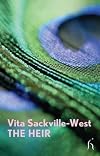
The Heir is a 1922 novella, attractively re-issued by Hesperus in 2008. Having read a couple of excellent reviews of it last year – I immediately wanted to read it.
Beautifully and sensitively written The Heir is the story of Mr Chase, a lonely insurance clerk from Wolverhampton, the heir of the title, who, upon the death of his aunt, has inherited an estate seemingly impractical and burdensome. It would appear its worth lying only in what its various parts can be sold for. Mr Chase; anxious to get back to his office; is, at first somewhat uncomfortable in the beautiful house of Blackboys Estate. Chase’s discomfort is not made any better by the frequent presence of Mr Nutley – one of the partners in the firm of solicitors and estate agents handling the forthcoming auction. Nutley is a wonderfully malevolent character, actually delighting in the distress of estate tenants under threat of losing their homes. In the weeks leading up to the sale, Chase spends more and more time at Blackboys, he starts to feel rather at home in the place, making friends with some of the local tenants and enjoying the company of an old greyhound and the peacocks that live in the grounds.
“And as his vision widened he saw that the house fused very graciously with the trees, the meadows, and the hills, grown there in place no less than they, a part of the secular tradition. He reconsidered even the pictures; not as the representation of meaningless ghosts, but as men and women whose blood had gone to the making of that now in his own veins. It was the land, the farms, the rickyards, the sown, the fallow, that taught him his wisdom. He learnt it slowly, and without knowing he learnt.”
The Heir is surprisingly emotional; Vita Sackville West apparently drew very much on her own experiences of inheritance and loss when she wrote it. She is said to have worried that the story was too sentimental when she was first approached for permission to reprint it nearly thirty years after first writing it. The Heir is not to my mind overly sentimental – it is though deeply poignant and I simply loved it.
This is a small book – which the reader cannot but help race through, anxious to know what will become of Chase and the Blackboys estate. It is certainly possible to read in one sitting, I read it in two, punctuated by a trip to the post office and pharmacy, and some other domestic chores. It made for a delightful afternoon read however, when I was able to sit down and read the majority of it quietly , delighting in the wonderful language and wishing more than anything that there was much more of it. I wanted to know Mr Chase better, follow his progress beyond the events of this beautiful little novella. Maybe it is better, that I imagine it all for myself instead. show less
The Heir is a 1922 novella, attractively re-issued by Hesperus in 2008. Having read a couple of excellent reviews of it last year – I immediately wanted to read it.
Beautifully and sensitively written The Heir is the story of Mr Chase, a lonely insurance clerk from Wolverhampton, the heir of the title, who, upon the death of his aunt, has inherited an estate seemingly impractical and burdensome. It would appear its worth lying only in what its various parts can be sold for. Mr Chase; anxious to get back to his office; is, at first somewhat uncomfortable in the beautiful house of Blackboys Estate. Chase’s discomfort is not made any better by the frequent presence of Mr Nutley – one of the partners in the firm of solicitors and estate agents handling the forthcoming auction. Nutley is a wonderfully malevolent character, actually delighting in the distress of estate tenants under threat of losing their homes. In the weeks leading up to the sale, Chase spends more and more time at Blackboys, he starts to feel rather at home in the place, making friends with some of the local tenants and enjoying the company of an old greyhound and the peacocks that live in the grounds.
“And as his vision widened he saw that the house fused very graciously with the trees, the meadows, and the hills, grown there in place no less than they, a part of the secular tradition. He reconsidered even the pictures; not as the representation of meaningless ghosts, but as men and women whose blood had gone to the making of that now in his own veins. It was the land, the farms, the rickyards, the sown, the fallow, that taught him his wisdom. He learnt it slowly, and without knowing he learnt.”
The Heir is surprisingly emotional; Vita Sackville West apparently drew very much on her own experiences of inheritance and loss when she wrote it. She is said to have worried that the story was too sentimental when she was first approached for permission to reprint it nearly thirty years after first writing it. The Heir is not to my mind overly sentimental – it is though deeply poignant and I simply loved it.
This is a small book – which the reader cannot but help race through, anxious to know what will become of Chase and the Blackboys estate. It is certainly possible to read in one sitting, I read it in two, punctuated by a trip to the post office and pharmacy, and some other domestic chores. It made for a delightful afternoon read however, when I was able to sit down and read the majority of it quietly , delighting in the wonderful language and wishing more than anything that there was much more of it. I wanted to know Mr Chase better, follow his progress beyond the events of this beautiful little novella. Maybe it is better, that I imagine it all for myself instead. show less
Lists
Awards


You May Also Like


Associated Authors
Statistics
- Works
- 99
- Also by
- 20
- Members
- 7,281
- Popularity
- #3,358
- Rating
- 4.0
- Reviews
- 192
- ISBNs
- 403
- Languages
- 12
- Favorited
- 28


