
Violet Trefusis (1894–1972)
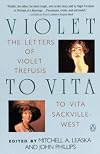
Author of Violet to Vita : The Letters of Violet Trefusis to Vita Sackville-West, 1910-1921
About the Author
Works by Violet Trefusis
Violet to Vita : The Letters of Violet Trefusis to Vita Sackville-West, 1910-1921 (1989) 173 copies, 4 reviews
Irène et Pénélope 1 copy
Prelude to Misadventure 1 copy
Tagged
Common Knowledge
- Canonical name
- Trefusis, Violet
- Legal name
- Trefusis, Violet
- Birthdate
- 1894-06-06
- Date of death
- 1972-02-29
- Gender
- female
- Occupations
- writer
novelist - Relationships
- Keppel, Sonia (sister)
Sackville-West, Vita (lover) - Nationality
- England (birth)
UK - Birthplace
- London, England, UK
- Places of residence
- London, England, UK
Umbria, Italy
Florence, Italy
France - Place of death
- Umbria, Italy
- Burial location
- Allori Cemetery, Galluzzo, Tuscany, Italy
Members
Reviews
Violet to Vita : The Letters of Violet Trefusis to Vita Sackville-West, 1910-1921 by Violet Trefusis
An Immortal Affair Brought to Life
For most Americans, Violet Trefusis doesn't ring a bell. Vita Sackville-West, if she has any fame here, it is probably for her short affair with Virginia Woolf that followed years after her affair with Violet.
Violet and Vita were accomplished writers: Vita before Violet, Violet mostly in French, one of several languages in which they shared fluency. As Vita gained fame as a writer and Violet struggled to discover what she might do with her life--she drew and show more dabbled in writing at the time, they became among the most famous, some might counter infamous, affairs of 20th Century England.
Both were highborn women, Violet the daughter of Alice Keppel, the mistress of the Prince of Wales, Edward VII after his coronation in 1901, a discreet woman respected by all society, including Queen Alexandria, who invited Alice to attend the King's deathbed. Vita's lineage extended back to Elizabeth I by way of the Queen's cousin, Thomas Sackville, then through the Earls and Dukes of Dorset and the Barons Sackville; Elizabeth granted Thomas Knole House, if not the largest, then among the largest of English homes. (Virginia Woolf, who wrote Orlando for and about Vita, set much of the novel at Knole, because it was synonymous with Vita and was her greatest love and its loss due to inheritance laws her greatest regret.)
Affairs within the upper class occurred. Discretion begat tolerance. Scandal arose when lovers stepped beyond the bounds of discretion. And so was the case with Violet and Vita. At the time of the affair that blazed across Europe from its beginning at Vita's home, Long Barn, in April 1918, to its slow, painful end by the close of 1921, society buzzed about the women while their mothers, cast from carbon steel, maneuvered to end it. Vita was a married woman with a diplomat husband, Harold, and two children. Violet, single at the start, found herself coerced into a marriage with Denys Trefusis, who agreed to Violet's outlandish requests and suffered from the lashings of her vituperative tongue.
Violet's letters to Vita present half of the affair. Vita's letters to Violet no longer exist; in a rage, a common emotional state for him during these years of their marriage, Denys destroyed them. Unfortunate, for they would immensely increase our understanding of what the two shared read side by side. For Vita's recounting of their affair, you can read her memoir composed at the end, with her son Nigel's clarifications, explanations, discussion, and defense of her long, loving, and unorthodox marriage to Harold Nicolson, as well as her relationship to himself and first son Benedict, in Portrait of a Marriage.
This volume of Violet's letters opens with a comprehensive overview written by Professor Mitchell A. Leaska. Leaska does an excellent job of explaining not only the events of the affair, but also adds insight regarding the women's family histories, as well as psychological perception about their actions.
Violet and Vita met as girls in 1904, when they were 10 and 12 respectively, at school. They visited each other's homes. In 1908, Violet accompanied Vita and Rosamund Grosvenor, Vita's love at the time, and their governesses to Italy. There, Violet first declared her love for Vita. In 1910, the two began a steady, almost daily, correspondence that continued through 1921.
Violet's letters chronicle their affair as it develops, strengthens, matures, and, finally, disintegrates after their fiery clash at Amiens in February 1920, with fed-up husbands and Violet's father adding to the drama. Violet's offense? Breaking her pledge never to have sex with her husband Denys, who, incredibly, had agreed to abstain as a condition of marriage! Vita, for her part, had ceased sexual relations with Harold soon after the birth of Nigel.
In their relationship, Violet assumed the role of passive lover; Vita, with pronounced masculine tendencies and a wish to have been born a boy, was the strong, controlling counterpart, sometimes dressing as her alter ego Julian. Violet continually played to Vita's desire, as well as her need always to be more than just Mrs. Harold Nicolson.
To whet your appetite, here are a few samples of Violet's writings:
"I tell you," she wrote in 1918, "there is a barbaric splendour about you that conquered not only me, but everyone who saw you. You are made to conquer ... not to be conquered."
Appealing to Vita's need for control and mastery, Violet wrote in June 1918: "I revel in your beauty, your beauty of form and feature. I exult in my surrender ... I love belonging to you -- I glory in it, that you alone ... have bent me to your will, shattered my self-possession, robbed me of my mystery, made me your, yours, so that away from you I am nothing but a useless puppet!"
As the affair intensified, she urged Vita to leave Harold and run away with her: "I think you now realize this can't go on, that we must once and for all take our courage in both hands, and go away together. What sort of life can we lead now? Yours, an infamous and degrading lie to the world, officially bound to someone you can't care for, perpetually with that someone, that in itself constitutes an outrage to me ..."
After the breakup at Amiens, Violet declared: "If you lead me to think you are never coming back to me, there is but one way out for me, and that is ... Death."
Once more, toward the close of 1920, she wrote: "For you I would commit any crime; for you I would sacrifice any other love. My love for you terrifies me."
But in the end, Violet conceded: "... I am dazed with grief ... You have chosen, my darling; you had to choose between me and your family, and you have chosen them. Of course, you are quite right. I do not blame you."
Recommended if two of the previous centuries most fascinating women intrigue you, and for a front row seat to an impassioned affair of two highly literate, expressive, and iconoclastic women who wanted to break the bounds of conventionality but ultimately found themselves bound by them for social and financial reasons. show less
For most Americans, Violet Trefusis doesn't ring a bell. Vita Sackville-West, if she has any fame here, it is probably for her short affair with Virginia Woolf that followed years after her affair with Violet.
Violet and Vita were accomplished writers: Vita before Violet, Violet mostly in French, one of several languages in which they shared fluency. As Vita gained fame as a writer and Violet struggled to discover what she might do with her life--she drew and show more dabbled in writing at the time, they became among the most famous, some might counter infamous, affairs of 20th Century England.
Both were highborn women, Violet the daughter of Alice Keppel, the mistress of the Prince of Wales, Edward VII after his coronation in 1901, a discreet woman respected by all society, including Queen Alexandria, who invited Alice to attend the King's deathbed. Vita's lineage extended back to Elizabeth I by way of the Queen's cousin, Thomas Sackville, then through the Earls and Dukes of Dorset and the Barons Sackville; Elizabeth granted Thomas Knole House, if not the largest, then among the largest of English homes. (Virginia Woolf, who wrote Orlando for and about Vita, set much of the novel at Knole, because it was synonymous with Vita and was her greatest love and its loss due to inheritance laws her greatest regret.)
Affairs within the upper class occurred. Discretion begat tolerance. Scandal arose when lovers stepped beyond the bounds of discretion. And so was the case with Violet and Vita. At the time of the affair that blazed across Europe from its beginning at Vita's home, Long Barn, in April 1918, to its slow, painful end by the close of 1921, society buzzed about the women while their mothers, cast from carbon steel, maneuvered to end it. Vita was a married woman with a diplomat husband, Harold, and two children. Violet, single at the start, found herself coerced into a marriage with Denys Trefusis, who agreed to Violet's outlandish requests and suffered from the lashings of her vituperative tongue.
Violet's letters to Vita present half of the affair. Vita's letters to Violet no longer exist; in a rage, a common emotional state for him during these years of their marriage, Denys destroyed them. Unfortunate, for they would immensely increase our understanding of what the two shared read side by side. For Vita's recounting of their affair, you can read her memoir composed at the end, with her son Nigel's clarifications, explanations, discussion, and defense of her long, loving, and unorthodox marriage to Harold Nicolson, as well as her relationship to himself and first son Benedict, in Portrait of a Marriage.
This volume of Violet's letters opens with a comprehensive overview written by Professor Mitchell A. Leaska. Leaska does an excellent job of explaining not only the events of the affair, but also adds insight regarding the women's family histories, as well as psychological perception about their actions.
Violet and Vita met as girls in 1904, when they were 10 and 12 respectively, at school. They visited each other's homes. In 1908, Violet accompanied Vita and Rosamund Grosvenor, Vita's love at the time, and their governesses to Italy. There, Violet first declared her love for Vita. In 1910, the two began a steady, almost daily, correspondence that continued through 1921.
Violet's letters chronicle their affair as it develops, strengthens, matures, and, finally, disintegrates after their fiery clash at Amiens in February 1920, with fed-up husbands and Violet's father adding to the drama. Violet's offense? Breaking her pledge never to have sex with her husband Denys, who, incredibly, had agreed to abstain as a condition of marriage! Vita, for her part, had ceased sexual relations with Harold soon after the birth of Nigel.
In their relationship, Violet assumed the role of passive lover; Vita, with pronounced masculine tendencies and a wish to have been born a boy, was the strong, controlling counterpart, sometimes dressing as her alter ego Julian. Violet continually played to Vita's desire, as well as her need always to be more than just Mrs. Harold Nicolson.
To whet your appetite, here are a few samples of Violet's writings:
"I tell you," she wrote in 1918, "there is a barbaric splendour about you that conquered not only me, but everyone who saw you. You are made to conquer ... not to be conquered."
Appealing to Vita's need for control and mastery, Violet wrote in June 1918: "I revel in your beauty, your beauty of form and feature. I exult in my surrender ... I love belonging to you -- I glory in it, that you alone ... have bent me to your will, shattered my self-possession, robbed me of my mystery, made me your, yours, so that away from you I am nothing but a useless puppet!"
As the affair intensified, she urged Vita to leave Harold and run away with her: "I think you now realize this can't go on, that we must once and for all take our courage in both hands, and go away together. What sort of life can we lead now? Yours, an infamous and degrading lie to the world, officially bound to someone you can't care for, perpetually with that someone, that in itself constitutes an outrage to me ..."
After the breakup at Amiens, Violet declared: "If you lead me to think you are never coming back to me, there is but one way out for me, and that is ... Death."
Once more, toward the close of 1920, she wrote: "For you I would commit any crime; for you I would sacrifice any other love. My love for you terrifies me."
But in the end, Violet conceded: "... I am dazed with grief ... You have chosen, my darling; you had to choose between me and your family, and you have chosen them. Of course, you are quite right. I do not blame you."
Recommended if two of the previous centuries most fascinating women intrigue you, and for a front row seat to an impassioned affair of two highly literate, expressive, and iconoclastic women who wanted to break the bounds of conventionality but ultimately found themselves bound by them for social and financial reasons. show less

My mum lent me a copy of Violet Trefusis' charmingly illustrated memoir, which is an entertaining glimpse into another world. It reminded me of an article I read in the London Review of Books about how the aristocracy functioned as a pan-European diplomatic corps of varying competence prior to, and to a lesser extent after, the First World War. In this book, we find that Violet gets a personal audience with Mussolini shortly before the outbreak of the Second World War, simply because she is show more a well-bred Englishwoman with contacts. Her upbringing seems totally extraordinary - as a child, her parents believe she isn't thriving in England, so send her to France, then Spain, then further East (I think to Singapore? I'm writing this without the actual book in front of me). She recounts her life in terms of journeys, beautiful buildings, and encounters with the rich and famous. There is never a sense of lacking money or opportunity, only the temporary inaccessibility of one or the other. It could easily have been an obnoxious narrative, but Trefusis has sufficient self-deprecation and sense of the absurd to avoid this peril. Indeed, she remains something of a mystery in her own story, as she devotes such a lot of time to pen portraits of her friends, family, and lovers. Her turns of phrase are often brilliant - I am particularly fond of her description of Tudor houses as 'like living under the furniture' (I paraphrase). This is incredibly accurate, from my experience of growing up in timber framed cottages. Although the tone is mostly frivolous, or at least chatty and anecdotal, her bond with her mother is movingly depicted. She reveals most of herself when discussing her love of living in France and her sadness at having to leave during WWII, I think. 'Don't Look Round' (which is presumably named ironically) rather resembles a historic chronicle, more of interest for what it says about the time than what it says about the writer. I hesitated between giving it three or four stars, then erred on the side of generosity because I was entertained by the writing and delighted by the illustrations. show less
Violet to Vita : The Letters of Violet Trefusis to Vita Sackville-West, 1910-1921 by Violet Trefusis
An Immortal Affair Brought to Life
For most Americans, Violet Trefusis doesn't ring a bell. Vita Sackville-West, if she has any fame here, it is probably for her short affair with Virginia Woolf that followed years after her affair with Violet.
Violet and Vita were accomplished writers: Vita before Violet, Violet mostly in French, one of several languages in which they shared fluency. As Vita gained fame as a writer and Violet struggled to discover what she might do with her life--she drew and show more dabbled in writing at the time, they became among the most famous, some might counter infamous, affairs of 20th Century England.
Both were highborn women, Violet the daughter of Alice Keppel, the mistress of the Prince of Wales, Edward VII after his coronation in 1901, a discreet woman respected by all society, including Queen Alexandria, who invited Alice to attend the King's deathbed. Vita's lineage extended back to Elizabeth I by way of the Queen's cousin, Thomas Sackville, then through the Earls and Dukes of Dorset and the Barons Sackville; Elizabeth granted Thomas Knole House, if not the largest, then among the largest of English homes. (Virginia Woolf, who wrote Orlando for and about Vita, set much of the novel at Knole, because it was synonymous with Vita and was her greatest love and its loss due to inheritance laws her greatest regret.)
Affairs within the upper class occurred. Discretion begat tolerance. Scandal arose when lovers stepped beyond the bounds of discretion. And so was the case with Violet and Vita. At the time of the affair that blazed across Europe from its beginning at Vita's home, Long Barn, in April 1918, to its slow, painful end by the close of 1921, society buzzed about the women while their mothers, cast from carbon steel, maneuvered to end it. Vita was a married woman with a diplomat husband, Harold, and two children. Violet, single at the start, found herself coerced into a marriage with Denys Trefusis, who agreed to Violet's outlandish requests and suffered from the lashings of her vituperative tongue.
Violet's letters to Vita present half of the affair. Vita's letters to Violet no longer exist; in a rage, a common emotional state for him during these years of their marriage, Denys destroyed them. Unfortunate, for they would immensely increase our understanding of what the two shared read side by side. For Vita's recounting of their affair, you can read her memoir composed at the end, with her son Nigel's clarifications, explanations, discussion, and defense of her long, loving, and unorthodox marriage to Harold Nicolson, as well as her relationship to himself and first son Benedict, in Portrait of a Marriage.
This volume of Violet's letters opens with a comprehensive overview written by Professor Mitchell A. Leaska. Leaska does an excellent job of explaining not only the events of the affair, but also adds insight regarding the women's family histories, as well as psychological perception about their actions.
Violet and Vita met as girls in 1904, when they were 10 and 12 respectively, at school. They visited each other's homes. In 1908, Violet accompanied Vita and Rosamund Grosvenor, Vita's love at the time, and their governesses to Italy. There, Violet first declared her love for Vita. In 1910, the two began a steady, almost daily, correspondence that continued through 1921.
Violet's letters chronicle their affair as it develops, strengthens, matures, and, finally, disintegrates after their fiery clash at Amiens in February 1920, with fed-up husbands and Violet's father adding to the drama. Violet's offense? Breaking her pledge never to have sex with her husband Denys, who, incredibly, had agreed to abstain as a condition of marriage! Vita, for her part, had ceased sexual relations with Harold soon after the birth of Nigel.
In their relationship, Violet assumed the role of passive lover; Vita, with pronounced masculine tendencies and a wish to have been born a boy, was the strong, controlling counterpart, sometimes dressing as her alter ego Julian. Violet continually played to Vita's desire, as well as her need always to be more than just Mrs. Harold Nicolson.
To whet your appetite, here are a few samples of Violet's writings:
"I tell you," she wrote in 1918, "there is a barbaric splendour about you that conquered not only me, but everyone who saw you. You are made to conquer ... not to be conquered."
Appealing to Vita's need for control and mastery, Violet wrote in June 1918: "I revel in your beauty, your beauty of form and feature. I exult in my surrender ... I love belonging to you -- I glory in it, that you alone ... have bent me to your will, shattered my self-possession, robbed me of my mystery, made me your, yours, so that away from you I am nothing but a useless puppet!"
As the affair intensified, she urged Vita to leave Harold and run away with her: "I think you now realize this can't go on, that we must once and for all take our courage in both hands, and go away together. What sort of life can we lead now? Yours, an infamous and degrading lie to the world, officially bound to someone you can't care for, perpetually with that someone, that in itself constitutes an outrage to me ..."
After the breakup at Amiens, Violet declared: "If you lead me to think you are never coming back to me, there is but one way out for me, and that is ... Death."
Once more, toward the close of 1920, she wrote: "For you I would commit any crime; for you I would sacrifice any other love. My love for you terrifies me."
But in the end, Violet conceded: "... I am dazed with grief ... You have chosen, my darling; you had to choose between me and your family, and you have chosen them. Of course, you are quite right. I do not blame you."
Recommended if two of the previous centuries most fascinating women intrigue you, and for a front row seat to an impassioned affair of two highly literate, expressive, and iconoclastic women who wanted to break the bounds of conventionality but ultimately found themselves bound by them for social and financial reasons. show less
For most Americans, Violet Trefusis doesn't ring a bell. Vita Sackville-West, if she has any fame here, it is probably for her short affair with Virginia Woolf that followed years after her affair with Violet.
Violet and Vita were accomplished writers: Vita before Violet, Violet mostly in French, one of several languages in which they shared fluency. As Vita gained fame as a writer and Violet struggled to discover what she might do with her life--she drew and show more dabbled in writing at the time, they became among the most famous, some might counter infamous, affairs of 20th Century England.
Both were highborn women, Violet the daughter of Alice Keppel, the mistress of the Prince of Wales, Edward VII after his coronation in 1901, a discreet woman respected by all society, including Queen Alexandria, who invited Alice to attend the King's deathbed. Vita's lineage extended back to Elizabeth I by way of the Queen's cousin, Thomas Sackville, then through the Earls and Dukes of Dorset and the Barons Sackville; Elizabeth granted Thomas Knole House, if not the largest, then among the largest of English homes. (Virginia Woolf, who wrote Orlando for and about Vita, set much of the novel at Knole, because it was synonymous with Vita and was her greatest love and its loss due to inheritance laws her greatest regret.)
Affairs within the upper class occurred. Discretion begat tolerance. Scandal arose when lovers stepped beyond the bounds of discretion. And so was the case with Violet and Vita. At the time of the affair that blazed across Europe from its beginning at Vita's home, Long Barn, in April 1918, to its slow, painful end by the close of 1921, society buzzed about the women while their mothers, cast from carbon steel, maneuvered to end it. Vita was a married woman with a diplomat husband, Harold, and two children. Violet, single at the start, found herself coerced into a marriage with Denys Trefusis, who agreed to Violet's outlandish requests and suffered from the lashings of her vituperative tongue.
Violet's letters to Vita present half of the affair. Vita's letters to Violet no longer exist; in a rage, a common emotional state for him during these years of their marriage, Denys destroyed them. Unfortunate, for they would immensely increase our understanding of what the two shared read side by side. For Vita's recounting of their affair, you can read her memoir composed at the end, with her son Nigel's clarifications, explanations, discussion, and defense of her long, loving, and unorthodox marriage to Harold Nicolson, as well as her relationship to himself and first son Benedict, in Portrait of a Marriage.
This volume of Violet's letters opens with a comprehensive overview written by Professor Mitchell A. Leaska. Leaska does an excellent job of explaining not only the events of the affair, but also adds insight regarding the women's family histories, as well as psychological perception about their actions.
Violet and Vita met as girls in 1904, when they were 10 and 12 respectively, at school. They visited each other's homes. In 1908, Violet accompanied Vita and Rosamund Grosvenor, Vita's love at the time, and their governesses to Italy. There, Violet first declared her love for Vita. In 1910, the two began a steady, almost daily, correspondence that continued through 1921.
Violet's letters chronicle their affair as it develops, strengthens, matures, and, finally, disintegrates after their fiery clash at Amiens in February 1920, with fed-up husbands and Violet's father adding to the drama. Violet's offense? Breaking her pledge never to have sex with her husband Denys, who, incredibly, had agreed to abstain as a condition of marriage! Vita, for her part, had ceased sexual relations with Harold soon after the birth of Nigel.
In their relationship, Violet assumed the role of passive lover; Vita, with pronounced masculine tendencies and a wish to have been born a boy, was the strong, controlling counterpart, sometimes dressing as her alter ego Julian. Violet continually played to Vita's desire, as well as her need always to be more than just Mrs. Harold Nicolson.
To whet your appetite, here are a few samples of Violet's writings:
"I tell you," she wrote in 1918, "there is a barbaric splendour about you that conquered not only me, but everyone who saw you. You are made to conquer ... not to be conquered."
Appealing to Vita's need for control and mastery, Violet wrote in June 1918: "I revel in your beauty, your beauty of form and feature. I exult in my surrender ... I love belonging to you -- I glory in it, that you alone ... have bent me to your will, shattered my self-possession, robbed me of my mystery, made me your, yours, so that away from you I am nothing but a useless puppet!"
As the affair intensified, she urged Vita to leave Harold and run away with her: "I think you now realize this can't go on, that we must once and for all take our courage in both hands, and go away together. What sort of life can we lead now? Yours, an infamous and degrading lie to the world, officially bound to someone you can't care for, perpetually with that someone, that in itself constitutes an outrage to me ..."
After the breakup at Amiens, Violet declared: "If you lead me to think you are never coming back to me, there is but one way out for me, and that is ... Death."
Once more, toward the close of 1920, she wrote: "For you I would commit any crime; for you I would sacrifice any other love. My love for you terrifies me."
But in the end, Violet conceded: "... I am dazed with grief ... You have chosen, my darling; you had to choose between me and your family, and you have chosen them. Of course, you are quite right. I do not blame you."
Recommended if two of the previous centuries most fascinating women intrigue you, and for a front row seat to an impassioned affair of two highly literate, expressive, and iconoclastic women who wanted to break the bounds of conventionality but ultimately found themselves bound by them for social and financial reasons. show less

A more sophisticated version of Thirkell's Ankle Deep, this lite version of Emma-Pygmalion gets away with it by having a more forthright protagonist. At least Caroline wasn't just the typical ingenue and went for what she wanted. The passion and desires here felt more grown-up and realistic, and we'll just ignore the usual gaping age-difference and the pathetic moping Nigel.
The characters themselves felt like they had first cameoed in some larger society novel (Caroline flourishing or Nigel show more forlornly in the background of some party), and someone whispered, "did you ever hear about ...", and then the author eventually writes this backstory. And I'm not complaining!
It was overall entertaining and satisfying, although I could've done with less of Nigel's perspective. The language and plot were exactly what I expected and want from a early-century, well-educated, upper-class woman writing one of these slim volumes that Virago loves to republish. show less
The characters themselves felt like they had first cameoed in some larger society novel (Caroline flourishing or Nigel show more forlornly in the background of some party), and someone whispered, "did you ever hear about ...", and then the author eventually writes this backstory. And I'm not complaining!
It was overall entertaining and satisfying, although I could've done with less of Nigel's perspective. The language and plot were exactly what I expected and want from a early-century, well-educated, upper-class woman writing one of these slim volumes that Virago loves to republish. show less
You May Also Like


Associated Authors
Statistics
- Works
- 14
- Members
- 532
- Popularity
- #46,803
- Rating
- 3.8
- Reviews
- 12
- ISBNs
- 33
- Languages
- 5
- Favorited
- 1
