

Charlotte Gordon
Author of Romantic Outlaws: The Extraordinary Lives of Mary Wollstonecraft and Her Daughter Mary Shelley
Works by Charlotte Gordon
Romantic Outlaws: The Extraordinary Lives of Mary Wollstonecraft and Her Daughter Mary Shelley (2015) 843 copies, 18 reviews
The Woman Who Named God: Abraham's Dilemma and the Birth of Three Faiths (2009) 126 copies, 14 reviews
Redgold 1 copy
Jack Earl: Modern Master 1 copy
Associated Works
Frankenstein or The Modern Prometheus: The 1818 Text (1818) — some editions — 5,893 copies, 104 reviews
Tagged
Common Knowledge
- Birthdate
- 1962
- Gender
- female
- Education
- Harvard University (B.A.)
Boston University (PhD) - Occupations
- Humanities professor, Endicott College
- Nationality
- USA
- Birthplace
- St. Louis, Missouri, USA
- Places of residence
- Gloucester, Massachusetts, USA
- Map Location
- USA
Members
Reviews
Romantic Outlaws: The Extraordinary Lives of Mary Wollstonecraft and Mary Shelley by Charlotte Gordon
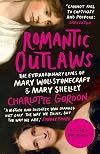
Two for one biographies, buy Mary Shelley and get her mother free (or the other way around!) I started with another account of Mary Shelley last year, but found it incredibly dry and then came across this epic tome, which is necessarily long but very engaging. Charlotte Gordon tells the story of both incredible women, in alternating chapters, starting with the birth of the daughter and the death of the mother. I did occasionally get lost as to which Mary did what, mainly because reading took show more over a week, but was fully immersed in both eras throughout.
Mary Wollstonecraft, author of A Vindication of the Rights of Woman, was born in London in 1759 and lived a life as unconventional, at the time, as her feminist philosophies. She helped her younger sister escape a violent marriage, set up a school with her best friend and sisters, moved to London and reviewed books for a prestigious journal while writing her own works, moved to France during the Revolution, met an American there and had a daughter out of wedlock, returned to London in search of her erstwhile lover, whose abandonment drove her to attempt suicide twice, and finally married political 'radical' William Godwin and gave birth to their daughter, also named Mary, but died soon after from puerperal fever.
I loved reading about Mary W. more than her daughter, I think! Such a modern thinker in a decidedly traditional era. She wrote a novel, Mary, in response to the 'trashy' sentimental novels of the day, giving her heroine an 'interior life' rather than just existing for 'the benefit of men'. Her pithy review of the novels she was trying to counteract also made me laugh, because this is how I feel about romance novels today: 'unnatural characters, improbable incidents, sad tales of woe rehearsed in an affected half-prose, half-poetical style, exquisite double-refined sensibility, dazzling beauty and elegant drapery', both absurd and harmful to young women's minds ('Women need to learn that there is more to life than romance, and men need to aspire to more than sexual conquest'). Her political works, primarily Woman, earned her a dangerous reputation as a 'hyena in petticoats' interfering in the male sphere, so to speak, but she was not trying to raise women above men, only encourage equality through education. For such strong words, however, she did rather depressingly betray her convictions over Gilbert Imlay, the father of her first daughter, who was really only out for a fling and preferred to be off making money than cooped up with Mary. As the author generously states, he was not a bad man but not a strong one. Although Wollstonecraft didn't suffer quite as many tragedies as her daughter, I was moved by the death of her half sister Fanny, who took her own life: 'a being whose birth was unfortunate and whose life has only been a series of pain to [others]'.
Daughter Mary Godwin later Shelley, whose birth (and the unwashed hands of the doctor) caused the death of her mother and was taught her letters from her mother's gravestone, had an equally lively and exceptional life, mainly as the lover/wife of poet Percy Shelley and one third of a ménage a trois with her sister, called the 'League of Incest and Atheism' in society! She was also an author of Frankenstein, named after a notorious castle in Germany, and also many other novels and essays, which I will have to look up, along with her mother's treatises. The author is also very understanding of Shelley, but wordsmith though he might have been, he was also a complete dick and Mary worked her magic, a lot like Jacqueline Kennedy and Camelot, to save his reputation after his dramatic death. (I actually cheered when he lost the custody battle for his two children after his wife killed herself.) Poor Mary lost two young children, as her sister Claire also suffered the death of her young daughter while in the 'care' of Byron, another poetic arsehole - she came to her senses about Byron and Shelley afterwards, claiming that the men only ever viewed women as 'a fresh dream, a wilder hope, or the redemption from his own suffering'. All of this while traipsing from villa to villa in Italy, in exile from London because of their 'amoral' lifestyle. Mary also faced the decidedly modern and recognisable fate of having her most famous work, Frankenstein, 'adapted' for the stage with no credit given to the original author ('Lo and behold, I found myself famous').
Both women were talented and principled, with many works and achievements to their names - more than I can squidge into this review, but I learned and loved so much about them. I think both would have terrified me in real life, but reading about them, in a modern and factual biography, fired my imagination. William Godwin acted as his late wife's 'Mrs Gaskell', determined to counter Wollstonecraft's reputation as radical and unfeminine, but at the expense of her reputation (and they were only married for 18 months!) Mary Shelley promoted a sanitised and saintly version of her husband. And Shelley's daughter in law destroyed a lot of 'incriminating' correspondence and diary entries after Mary's death to protect the family name - but enough is left to understand and praise mother and daughter.
I was paying enough attention throughout to pick up on a few dropped stitches - eighteenth century stays could not be laced too tightly and induce fainting, Dr Guillotin perfected but did not invent the guillotine, despite the name, and what the hell is a 'baronetess' (Ida Goring was the daughter of a baronet but would not have inherited his title.) That said, this is an amazing feat of research and readability and I feel I know both women, and the unfortunate men in their lives, so well now. show less
Mary Wollstonecraft, author of A Vindication of the Rights of Woman, was born in London in 1759 and lived a life as unconventional, at the time, as her feminist philosophies. She helped her younger sister escape a violent marriage, set up a school with her best friend and sisters, moved to London and reviewed books for a prestigious journal while writing her own works, moved to France during the Revolution, met an American there and had a daughter out of wedlock, returned to London in search of her erstwhile lover, whose abandonment drove her to attempt suicide twice, and finally married political 'radical' William Godwin and gave birth to their daughter, also named Mary, but died soon after from puerperal fever.
I loved reading about Mary W. more than her daughter, I think! Such a modern thinker in a decidedly traditional era. She wrote a novel, Mary, in response to the 'trashy' sentimental novels of the day, giving her heroine an 'interior life' rather than just existing for 'the benefit of men'. Her pithy review of the novels she was trying to counteract also made me laugh, because this is how I feel about romance novels today: 'unnatural characters, improbable incidents, sad tales of woe rehearsed in an affected half-prose, half-poetical style, exquisite double-refined sensibility, dazzling beauty and elegant drapery', both absurd and harmful to young women's minds ('Women need to learn that there is more to life than romance, and men need to aspire to more than sexual conquest'). Her political works, primarily Woman, earned her a dangerous reputation as a 'hyena in petticoats' interfering in the male sphere, so to speak, but she was not trying to raise women above men, only encourage equality through education. For such strong words, however, she did rather depressingly betray her convictions over Gilbert Imlay, the father of her first daughter, who was really only out for a fling and preferred to be off making money than cooped up with Mary. As the author generously states, he was not a bad man but not a strong one. Although Wollstonecraft didn't suffer quite as many tragedies as her daughter, I was moved by the death of her half sister Fanny, who took her own life: 'a being whose birth was unfortunate and whose life has only been a series of pain to [others]'.
Daughter Mary Godwin later Shelley, whose birth (and the unwashed hands of the doctor) caused the death of her mother and was taught her letters from her mother's gravestone, had an equally lively and exceptional life, mainly as the lover/wife of poet Percy Shelley and one third of a ménage a trois with her sister, called the 'League of Incest and Atheism' in society! She was also an author of Frankenstein, named after a notorious castle in Germany, and also many other novels and essays, which I will have to look up, along with her mother's treatises. The author is also very understanding of Shelley, but wordsmith though he might have been, he was also a complete dick and Mary worked her magic, a lot like Jacqueline Kennedy and Camelot, to save his reputation after his dramatic death. (I actually cheered when he lost the custody battle for his two children after his wife killed herself.) Poor Mary lost two young children, as her sister Claire also suffered the death of her young daughter while in the 'care' of Byron, another poetic arsehole - she came to her senses about Byron and Shelley afterwards, claiming that the men only ever viewed women as 'a fresh dream, a wilder hope, or the redemption from his own suffering'. All of this while traipsing from villa to villa in Italy, in exile from London because of their 'amoral' lifestyle. Mary also faced the decidedly modern and recognisable fate of having her most famous work, Frankenstein, 'adapted' for the stage with no credit given to the original author ('Lo and behold, I found myself famous').
Both women were talented and principled, with many works and achievements to their names - more than I can squidge into this review, but I learned and loved so much about them. I think both would have terrified me in real life, but reading about them, in a modern and factual biography, fired my imagination. William Godwin acted as his late wife's 'Mrs Gaskell', determined to counter Wollstonecraft's reputation as radical and unfeminine, but at the expense of her reputation (and they were only married for 18 months!) Mary Shelley promoted a sanitised and saintly version of her husband. And Shelley's daughter in law destroyed a lot of 'incriminating' correspondence and diary entries after Mary's death to protect the family name - but enough is left to understand and praise mother and daughter.
I was paying enough attention throughout to pick up on a few dropped stitches - eighteenth century stays could not be laced too tightly and induce fainting, Dr Guillotin perfected but did not invent the guillotine, despite the name, and what the hell is a 'baronetess' (Ida Goring was the daughter of a baronet but would not have inherited his title.) That said, this is an amazing feat of research and readability and I feel I know both women, and the unfortunate men in their lives, so well now. show less
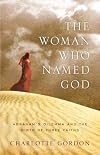
What a thought-provoking book! With meticulous research and a gift for story-telling, Charlotte Gordon adds color, context, and layers to three important figures in Islam, Judaism, and Christianity. I had never before heard of a "Midrash" - an early Jewish study of the Biblical stories which examines scripture in light of oral traditions. Ms. Gordon uses Midrashim as well as the Koran and Islamic teaching to tell the story of Abraham, Sarah, and Hagar beyond the stark details of the Biblical show more text. We know Abraham introduced Sarah to the Pharaoh as his sister and allowed the Pharaoh to take Sarah as a wife, but the Bible doesn't tell us whether Sarah was a willing accomplice or considered Abraham's actions a betrayal. When Sarah offered Hagar to Abraham, was she hoping he would refuse? Why didn't God intervene? These are questions that cannot be answered, but make for fascinating reading and humanize the threesome. I also enjoyed seeing how the story has developed under each religion. I had a few quibbles with her analysis: I felt like some things mentioned as conjecture earlier in the book were used as fact later to propel the story, and Sarah doesn't fare particularly well under Ms. Gordon's pen. All in all, an enjoyable read of an ancient story. show less
 This review was written for LibraryThing Early Reviewers.
Romantic Outlaws: The Extraordinary Lives of Mary Wollstonecraft and Her Daughter Mary Shelley by Charlotte Gordon

This extraordinary book is a dual biography of Mary Wollstonecraft (author, among many other things, of A Vindication of the Rights of Women) and her daughter, Mary Shelley (most famous for writing Frankenstein). Although they never met (Wollstonecraft died shortly after giving birth to Shelley) the mother had a profound influence on the daughter and there are many parallels between their lives as this book shows.
The book is written with alternating chapters focusing on each woman in turn show more and with each pair of chapters roughly representing equivalent periods or stages of their lives and careers. This constant switching can be confusing at times, especially as many characters, both major and minor, were significant to both women. But this is a minor issue and the structure magnificently serves to show how much they were alike and, especially, how each was treated by the men in their lives and the societies in which they lived.
Both women were intelligent, purposeful, capable and almost entirely constrained because they were women. In their literary careers both published work that was assumed not to have been written by a woman or was ignored or under appreciated because they were women. In their private lives, both suffered at the hands of men who automatically considered them and their ideas to be of less worth than those of a man. Both women had their reputations destroyed after their deaths and were all but forgotten until the rise of the feminist movement in the second half of the 20th century brought them to prominence again.
Charlotte Gordon has produced a wonderful book that takes us inside the world in which these women lived, inside their lives both personal and professional and inside their minds through their own writing and the observations of others. This is the best biography of any woman I have ever read. show less
The book is written with alternating chapters focusing on each woman in turn show more and with each pair of chapters roughly representing equivalent periods or stages of their lives and careers. This constant switching can be confusing at times, especially as many characters, both major and minor, were significant to both women. But this is a minor issue and the structure magnificently serves to show how much they were alike and, especially, how each was treated by the men in their lives and the societies in which they lived.
Both women were intelligent, purposeful, capable and almost entirely constrained because they were women. In their literary careers both published work that was assumed not to have been written by a woman or was ignored or under appreciated because they were women. In their private lives, both suffered at the hands of men who automatically considered them and their ideas to be of less worth than those of a man. Both women had their reputations destroyed after their deaths and were all but forgotten until the rise of the feminist movement in the second half of the 20th century brought them to prominence again.
Charlotte Gordon has produced a wonderful book that takes us inside the world in which these women lived, inside their lives both personal and professional and inside their minds through their own writing and the observations of others. This is the best biography of any woman I have ever read. show less
Romantic Outlaws: The Extraordinary Lives of Mary Wollstonecraft and Mary Shelley by Charlotte Gordon
I really enjoyed this dual biography of Mary Wollstonecraft and Mary Shelley. I knew Mary Wollstonecraft as the author of [The Vindication of the Rights of Women] and an early feminist, but I didn't know the extent of her political writings or how her lifestyle reflected her views of the need for feminine independence. Mary Shelley I really only knew about [Frankenstein] and that she was married to Percy Shelley, the poet.
This book beautifully illuminates both of their lives and the show more influence that Mary Wollstonecraft still had on Mary Shelley through her writing and reputation, despite the fact that she died a few days after giving birth to Shelley. Gordon alternates chapters in the women's lives so that you see them growing up in parallel. I both loved and hated this. It succeeds in that it keeps the focus on how Wollstonecraft's life influenced Shelley despite the lack of physical presence. But it also was confusing sometimes to keep the two lives straight, especially as some people are obviously present in both lives. In the end, I think I have it mostly straight in my mind and I think the format was an interesting and effective choice. show less
This book beautifully illuminates both of their lives and the show more influence that Mary Wollstonecraft still had on Mary Shelley through her writing and reputation, despite the fact that she died a few days after giving birth to Shelley. Gordon alternates chapters in the women's lives so that you see them growing up in parallel. I both loved and hated this. It succeeds in that it keeps the focus on how Wollstonecraft's life influenced Shelley despite the lack of physical presence. But it also was confusing sometimes to keep the two lives straight, especially as some people are obviously present in both lives. In the end, I think I have it mostly straight in my mind and I think the format was an interesting and effective choice. show less
Lists
Awards


You May Also Like


Associated Authors
Statistics
- Works
- 8
- Also by
- 2
- Members
- 1,149
- Popularity
- #22,348
- Rating
- 4.0
- Reviews
- 36
- ISBNs
- 22
- Languages
- 2
- Favorited
- 1
