
Miranda Seymour
Author of Mary Shelley
About the Author
Miranda Seymour is the author of many acclaimed and bestselling works of fiction and nonfiction, including biographies of Mary Shelley, Robert Graves, Henry James, and, most recently, the pioneer French racing driver Helle Nice. She lives in England.
Image credit: Miranda Seymour
Works by Miranda Seymour
In Byron's Wake: The Turbulent Lives of Lord Byron's Wife and Daughter: Annabella Milbanke and Ada Lovelace (2018) 92 copies, 3 reviews
Noble Endeavours: The Life of Two Countries, England and Germany, in Many Stories (2013) 49 copies, 6 reviews
Associated Works
Folio Magazine 2011 2 copies
Tagged
Common Knowledge
- Other names
- Seymour, Miranda Jane (birth name)
- Birthdate
- 1948-08-08
- Gender
- female
- Education
- Bedford College, University of London
- Occupations
- biographer
novelist
literary critic
university professor - Awards and honors
- Royal Society of Literature (fellow)
Royal Society of Arts (fellow) - Agent
- David Higham Agency
- Relationships
- Sinclair, Andrew (1st spouse)
Gottlieb, Anthony (2nd spouse) - Nationality
- UK
- Birthplace
- England, UK
- Places of residence
- Thrumpton Hall, Nottinghamshire, England, UK
England, UK
Corfu, Greece - Map Location
- England, UK
Members
Reviews
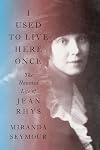
For years, I kept hearing about this Jean Rhys and this novel Wide Sargasso Sea. I found a copy of the novel and finally read it, riveted. I loved her reimagining of the ‘mad wife’ in Jane Eyre, Bronte’s story turned into a social commentary about colonialism and the rejection of female sexuality.
That was twenty years or so ago. I knew nothing more about Rhys when I picked up this new biography, I Used To Live Here Once by Miranda Seymour. Her portrait of Rhys is unforgettable and show more complex, the story of a woman born too soon, who lived passionately and in seclusion, married unwisely for love, plummeted from wealth to poverty, and rose to fame to forgotten to lionized.
Seymour writes that “Rhys often said that she wrote about herself because that was all she knew,” and throughout the biography she demonstrates how Rhys’ characters were born of her experience, but also that they are born of Rhys’ imagination, and are not autobiographical clones. Rhys took what she knew, her Dominican childhood, her young adulthood as a chorus girl on tour, her bohemian life in Paris, her love affairs and marriages, and turned it into dark stories that publishers found too raw, unfit for a woman writer’s pen.
We met a woman who is damaged but determined, who bends to her weaknesses and shows incredible strength. Her beauty and charm lured men to want to possess her, then her violent temper dealt out blows. She walked away from an education to pursue the stage and yet wrote what the BBC identified as one of the ‘top 100 most influential novels.’
Her life was almost incomprehensibly complicated! If anyone truly lived, it was Rhys. Over her long life she went mad and discarded friends and men, hobnobbed with so many important people! Like so many Lost Generation writers she struggled with alcoholism, drug dependency and depression. She suffered accidents, underwent abortions, and was hospitalized for mental breakdown. No wonder she created unforgettable characters, women who contended with so much.
She was seventy-five years old when she published Wide Sargasso Sea in 1966. Rhys was ‘rediscovered’ by a new generation, finally found financial security, and unwelcomed fame. To the end of her life, she took care of her appearance, this petit blue-eyed, once blond-haired octogenarian, with her pink and white wigs and fashionable colorful clothes.
You won’t always like Jean Rhys. But you will be impressed by her resilience and determination.
Now, to read the rest of her work…
I received a free egalley from the publisher through NetGalley. My review is fair and unbiased. show less
That was twenty years or so ago. I knew nothing more about Rhys when I picked up this new biography, I Used To Live Here Once by Miranda Seymour. Her portrait of Rhys is unforgettable and show more complex, the story of a woman born too soon, who lived passionately and in seclusion, married unwisely for love, plummeted from wealth to poverty, and rose to fame to forgotten to lionized.
Seymour writes that “Rhys often said that she wrote about herself because that was all she knew,” and throughout the biography she demonstrates how Rhys’ characters were born of her experience, but also that they are born of Rhys’ imagination, and are not autobiographical clones. Rhys took what she knew, her Dominican childhood, her young adulthood as a chorus girl on tour, her bohemian life in Paris, her love affairs and marriages, and turned it into dark stories that publishers found too raw, unfit for a woman writer’s pen.
We met a woman who is damaged but determined, who bends to her weaknesses and shows incredible strength. Her beauty and charm lured men to want to possess her, then her violent temper dealt out blows. She walked away from an education to pursue the stage and yet wrote what the BBC identified as one of the ‘top 100 most influential novels.’
Her life was almost incomprehensibly complicated! If anyone truly lived, it was Rhys. Over her long life she went mad and discarded friends and men, hobnobbed with so many important people! Like so many Lost Generation writers she struggled with alcoholism, drug dependency and depression. She suffered accidents, underwent abortions, and was hospitalized for mental breakdown. No wonder she created unforgettable characters, women who contended with so much.
She was seventy-five years old when she published Wide Sargasso Sea in 1966. Rhys was ‘rediscovered’ by a new generation, finally found financial security, and unwelcomed fame. To the end of her life, she took care of her appearance, this petit blue-eyed, once blond-haired octogenarian, with her pink and white wigs and fashionable colorful clothes.
You won’t always like Jean Rhys. But you will be impressed by her resilience and determination.
Now, to read the rest of her work…
I received a free egalley from the publisher through NetGalley. My review is fair and unbiased. show less
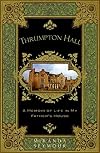
I read this after reading some fairly negative reviews, so I was pleased to enjoy it. Seymour's memoir stresses the "father" of her subtitle more than the "house," though the house plays a great role in both their lives. While there are some passages evoking the house directly through Seymour's eyes, her perceptions, as well as the reader's, are heavily filtered through her father's. Some reviewers have summed the book up as, essentially, "Boo hoo, I'm rich but I hate my father!" This is an show more extremely superficial reading of a much more complex narrative. Seymour uses Catullus's pithy "I love and I hate" (odi et amo) throughout to structure her account of many facets of her relationship with her father: Both extremes of her sentiment toward him, the poles of her certainty and doubt, her own negative self-regard, and other intertwined aspects of this relationship. Seymour's mother functions as a corrective narrator (though one presumes not always an accurate one), consistently serving up the refrain that Seymour is misunderstanding, or nursing old grievances, or airing the dirty linens. This device works well to allow Seymour to demonstrate how she questions her own interpretations and struggles to understand the intersecting and diverging truths of her own and her mother's experiences of their family history. This includes their reluctance to speak about whether her father had affairs with young men.
As to her father himself, I do wonder whether he had a temporal lobe disorder (which might account for his pedantry, his social difficulties, his often humorless and emotionally wounded interactions, the heightened importance and meaning with which he imbues some aspects of the world, and his obsessiveness). Seymour does not describe her father throwing tantrums as a child, but does highlight his irritability and great lability and anger as an adult; this description makes me wonder whether the concussion he suffered during his military service caused a closed-head brain injury that exacerbated his earlier difficulties. Just a speculation based on Seymour's descriptions.
For two additional accounts by children of parents passionately emotionally invested in an old house (as well as the financial and legal tangles of ownership and inheritance) intertwined with narratives about homosexuality and family secrets, read Nigel Nicholson's [book: Portrait of a Marriage] on his parents, Harold Nicholson and Vita Sackville-West, and Alison Bechdel's graphic novel, [book: Fun Home: A Family Tragicomic]. show less
As to her father himself, I do wonder whether he had a temporal lobe disorder (which might account for his pedantry, his social difficulties, his often humorless and emotionally wounded interactions, the heightened importance and meaning with which he imbues some aspects of the world, and his obsessiveness). Seymour does not describe her father throwing tantrums as a child, but does highlight his irritability and great lability and anger as an adult; this description makes me wonder whether the concussion he suffered during his military service caused a closed-head brain injury that exacerbated his earlier difficulties. Just a speculation based on Seymour's descriptions.
For two additional accounts by children of parents passionately emotionally invested in an old house (as well as the financial and legal tangles of ownership and inheritance) intertwined with narratives about homosexuality and family secrets, read Nigel Nicholson's [book: Portrait of a Marriage] on his parents, Harold Nicholson and Vita Sackville-West, and Alison Bechdel's graphic novel, [book: Fun Home: A Family Tragicomic]. show less
Noble Endeavours: The Life of Two Countries, England and Germany, in Many Stories by Miranda Seymour
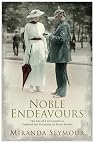
Here is history of a love affair between Germany and Britain that became a troubled marriage after many centuries with all the passion, anger, tragedy and humour of star-crossed lovers just aching to be reunited. It begins with the marriage of Elizabeth Stuart (the Winter Queen or Queen of Hearts) to the Elector Palatine in February 1613. This union between the Thames and Rhine was celebrated by her father James VI and I with court performances of The Winter's Tale and The Tempest. show more
Thereafter the histories of the two countries were constantly woven together with Hanoverian monarchs inheriting the British throne and artists, musicians, writers, bankers, industrialists and ordinary people following their example of merging two countries and cultures. George Eliot and G.H. Lewes eloped together and spent their unofficial honeymoon in Weimar – she spoke execrable German but wrote it perfectly. The stories told here are stained with the terror and cruelties of war. Families were pulled apart with the Great War and divided loyalties one member declaring: 'I feel as if my mother and father have quarrelled.' For Nazi POWs in Scotland, one man worked hard ensure that they took 'part in the reconciliation of all people and the maintenance of peace.' The Jewish interpreter, who had fought for Britain, Herbert Sulzbach, as Miranda Syemour writes 'never stopped working for reconciliation between England and Germany, the two countries he loved.'
Despite the agony and heartbreak of the Second World War, the stories of compassion, forgiveness and love are what remain with this reader and that this is a union, albeit rather worn and grumpy, should continue and be as happy, and hopefully far more successful, as that as the love-match between Elizabeth and Frederick of Bohemia. show less
Thereafter the histories of the two countries were constantly woven together with Hanoverian monarchs inheriting the British throne and artists, musicians, writers, bankers, industrialists and ordinary people following their example of merging two countries and cultures. George Eliot and G.H. Lewes eloped together and spent their unofficial honeymoon in Weimar – she spoke execrable German but wrote it perfectly. The stories told here are stained with the terror and cruelties of war. Families were pulled apart with the Great War and divided loyalties one member declaring: 'I feel as if my mother and father have quarrelled.' For Nazi POWs in Scotland, one man worked hard ensure that they took 'part in the reconciliation of all people and the maintenance of peace.' The Jewish interpreter, who had fought for Britain, Herbert Sulzbach, as Miranda Syemour writes 'never stopped working for reconciliation between England and Germany, the two countries he loved.'
Despite the agony and heartbreak of the Second World War, the stories of compassion, forgiveness and love are what remain with this reader and that this is a union, albeit rather worn and grumpy, should continue and be as happy, and hopefully far more successful, as that as the love-match between Elizabeth and Frederick of Bohemia. show less
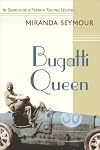
Helene Delangle is one of those characters that seem too over the top to be real; a successful dancer, a daring race car driver, the proverbial self-made woman, and without an independent fortune to back up her hell-for-leather lifestyle. It appears that her great mistake was to forget that friends come and go but enemies accumulate, so that when the noted French driver Louis Chiron tried to label her as being a collaborationist, damn few spoke up for her, even if the slander appears to be show more mostly a product of spite. While I might have preferred that this book was structured more as a conventional history, there is no doubt that it would make a good movie! show less
Lists
Awards


You May Also Like


Associated Authors
Statistics
- Works
- 27
- Also by
- 5
- Members
- 1,250
- Popularity
- #20,520
- Rating
- 3.8
- Reviews
- 30
- ISBNs
- 104
- Languages
- 2