
Michael Holroyd
Author of Bernard Shaw, Volume 1: 1856-1898; The Search for Love
About the Author
Michael Holroyd was born in London, England on August 27, 1935. He was educated at Eton College. He published his first book, a biography of writer Hugh Kingsmill, in 1964. He has also written the biographies of George Bernard Shaw, Augustus John, Lytton Strachey, and Ellen Terry and Henry Irving. show more His other works include Basil Street Blues, Mosaic, and A Book of Secrets: Illegitimate Daughters, Absent Fathers. He has received several awards including the Heywood Hill Literary Prize in 2001, the David Cohen British Prize for Literature in 2005, and the James Tait Black Memorial Prize for biography for A Strange Eventful History in 2009. He was knighted for his services to literature in 2007. (Bowker Author Biography) Michael Holroyd has written acclaimed biographies of Lytton Strachey, Augustus John, & Bernard Shaw. He lives in London & Somerset, England. (Publisher Provided) show less
Image credit: © Jerry Bauer
Series
Works by Michael Holroyd
A Strange Eventful History: The Dramatic Lives of Ellen Terry, Henry Irving, and Their Remarkable Families (2008) 197 copies, 5 reviews
Lytton Strachey: a Critical Biography; Vol. 2, The Years of Achievement (1910-1932) (1968) — Author — 38 copies, 1 review
Lytton Strachey: a Critical Biography; Vol. 1, The Unknown Years (1880-1910) (1967) — Preface, some editions — 38 copies, 1 review
Ancestors in the Attic: Including My Great-Grandmother's Book of Ferns and My Aunt's Book of Silent Actors (2017) 2 copies
Associated Works
Writers on Writing, 2: More Collected Essays from the New York Times (2003) — Contributor — 200 copies, 3 reviews
Peterley Harvest: The Private Diary of David Peterley (Penguin Modern Classics) (1987) — Foreword, some editions — 11 copies
Tagged
Common Knowledge
- Other names
- Holroyd, Sir Michael De Courcy Fraser
- Birthdate
- 1935-08-27
- Gender
- male
- Education
- Eton College, Eton, Berkshire, England, UK
- Occupations
- novelist
essayist
biographer
editor - Organizations
- Society of Authors
The Book Trust
English PEN - Awards and honors
- Royal Society of Literature (Companion of Literature)
David Cohen British Literature Prize (2005)
Order of the British Empire (Commander, 1989)
Knight Bachelor (2007)
The Heywood Hill Literary Prize (2001)
Golden PEN Award (2006) - Relationships
- Drabble, Margaret (wife)
Byatt, A. S. (sister-in-law)
Langdon, Helen (sister-in-law) - Short biography
- The New York Times: Mr. Holroyd is best known for his biographies of Strachey, Bernard Shaw and the painter Augustus John. . . (He) is an impeccable writer and researcher, a man whose books are packed with intricate detail yet retain a buoyancy.
- Nationality
- United Kingdom
- Birthplace
- London, England, UK
- Places of residence
- London, England, UK
- Associated Place (for map)
- London, England, UK
Members
Reviews
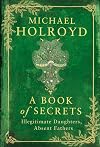
I very much enjoyed the earlier part of this book, centring around the life and various loves of Ernest Beckett, 2nd Lord Grimthorpe. It was a glittering tangle of mysteries and infidelities. In these ‘Google’ days I was able to follow up references and was fascinated by the vignettes of fashionable life illustrated by José Dale-Lace in South Africa. The portrait of José is particularly fine.
All roads seem to lead to Villa Cimbrone, and Holroyd, of course, travels there. The show more description of his visit with Catherine Till brings those mysteries of the past into a new, and current focus.
Seven years later he invited back to the Villa Cimbrone by Tiziana Masucci. Chapter Five, ‘Excitements, Earthquakes and Elopements’ continues the autobiographical theme, as Tiziana’s own absorption with Violet Trefussis is explored. From then on, however, the book seemed to me to lose its focus, and to descend into yet another episode of the long-running and oft explored Vita-Violet (+Virginia) saga—albeit seen heavily from Violet’s point of view.
One expects that all this will lead back, in some way, to the Villa Cimbrone, but it really doesn’t. The Villa makes a fleeting, and rather token appearance, in the Epilogue, but only as a symbol, and one very loosely connected to Violet herself.
Lady Sackville and Mrs Keppel might almost be seen as unifying characters in this book, sailing like imperious galleons, getting closer and closer to the waterline as the book progresses, until, with little ceremony, they sink. show less
All roads seem to lead to Villa Cimbrone, and Holroyd, of course, travels there. The show more description of his visit with Catherine Till brings those mysteries of the past into a new, and current focus.
Seven years later he invited back to the Villa Cimbrone by Tiziana Masucci. Chapter Five, ‘Excitements, Earthquakes and Elopements’ continues the autobiographical theme, as Tiziana’s own absorption with Violet Trefussis is explored. From then on, however, the book seemed to me to lose its focus, and to descend into yet another episode of the long-running and oft explored Vita-Violet (+Virginia) saga—albeit seen heavily from Violet’s point of view.
One expects that all this will lead back, in some way, to the Villa Cimbrone, but it really doesn’t. The Villa makes a fleeting, and rather token appearance, in the Epilogue, but only as a symbol, and one very loosely connected to Violet herself.
Lady Sackville and Mrs Keppel might almost be seen as unifying characters in this book, sailing like imperious galleons, getting closer and closer to the waterline as the book progresses, until, with little ceremony, they sink. show less
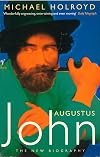
Engrossing and researched thoroughly, I can only praise this biography as a classic in its field. This is "The New Biography", a rewrite of Holroyd's original from 1976. It is the result of retrieving much additional correspondence, formerly held by private collectors.
Augustus John's reputation, once so high in his gifted early years, has declined because, Holroyd writes, "(of) the difficulty critics and historians have when treating individual talents that do not fit into ideological or show more narrative patterns."
This is not an art history book but an attempt to recreate a world which invites the reader to "enter, and where, interpreting messages from the past, they may experience feelings and thoughts that remain with them after the book is closed". show less
Augustus John's reputation, once so high in his gifted early years, has declined because, Holroyd writes, "(of) the difficulty critics and historians have when treating individual talents that do not fit into ideological or show more narrative patterns."
This is not an art history book but an attempt to recreate a world which invites the reader to "enter, and where, interpreting messages from the past, they may experience feelings and thoughts that remain with them after the book is closed". show less
In A Book of Secrets: Illegitimate Daughters, Absent Fathers, Michael Holroyd unravels the lives of three early twentieth century women, and joins them together through loose connections to Ernest Beckett, the second Lord Grimthorpe, and his Italian residence, the Villa Cimbrone. If this sounds a bit obscure, well, it is. Holroyd set out to write "not so much a traditional biographical narrative, but ... a set of thematically related stories" about three interesting, if lesser-known, show more women.
The first, Eve Fairfax, nearly married Beckett after the death of his first wife. Beckett commissioned a bust from the French sculptor, Rodin, but was ultimately unable to pay for the work. Eve's reasons for refusing Beckett are unclear. She spent most of her life in poverty, living off various friends and lugging around a huge book in which her visitors composed pithy thoughts. The second woman, Catherine Till, believes herself to be the illegitimate daughter of Beckett's grandson. Holroyd accompanied Catherine on a research project at the Villa Cimbrone. And finally, there is Violet Trefusis, the best known of the three. An author who had a notorious affair with Vita Sackville-West, Violet was likely Beckett's illegitimate daughter, the result of his affair with Alice Keppel (later the mistress of King Edward VII).
Each woman's story is interesting in its own right, as is the allure of Villa Cimbrone and the many literary figures and society members who graced its halls. As a fan of Virago Modern Classics, I especially enjoyed reading Violet's story. Holroyd presents a fairly balanced picture of the woman and her controversial romantic liaisons. On the one hand I felt sorry for her, forced by her family to marry a man and cover up her lesbian relationships. On the other hand, her arrogant, controlling nature made her a less sympathetic figure.
I was also intrigued by Holroyd's attempts to assemble a coherent history, when in fact many trails go nowhere, DNA evidence is not available, and there are no tell-all documents or definitive sources. And then there's the theme of illegitimacy, which manifests itself in various ways:
Illegitimacy is a word with several meanings. Ernest’s wife Luie was to die in her twenties producing a legitimate heir to the Grimthorpe title. Eve Fairfax was illegitimate in the sense that, not marrying Ernest, she lost her legitimate place in society. Her Book is a unique testament to the enduring pride that kept her afloat. And then there is Ernest’s extraordinary illegitimate daughter Violet who, exiled from England, was to compensate for her outcast state by claiming the King of England as her father. Such fantasies were a balm for the pain of lost love. But fact and fantasy are held in subtle equilibrium in the best of her novels, which may yet find a legitimate place in European literature for the name Violet Trefusis.
Holroyd's style, mingling traditional biography with personal experience, results in an engaging book which will appeal to anyone who enjoys English history and literature. show less
The first, Eve Fairfax, nearly married Beckett after the death of his first wife. Beckett commissioned a bust from the French sculptor, Rodin, but was ultimately unable to pay for the work. Eve's reasons for refusing Beckett are unclear. She spent most of her life in poverty, living off various friends and lugging around a huge book in which her visitors composed pithy thoughts. The second woman, Catherine Till, believes herself to be the illegitimate daughter of Beckett's grandson. Holroyd accompanied Catherine on a research project at the Villa Cimbrone. And finally, there is Violet Trefusis, the best known of the three. An author who had a notorious affair with Vita Sackville-West, Violet was likely Beckett's illegitimate daughter, the result of his affair with Alice Keppel (later the mistress of King Edward VII).
Each woman's story is interesting in its own right, as is the allure of Villa Cimbrone and the many literary figures and society members who graced its halls. As a fan of Virago Modern Classics, I especially enjoyed reading Violet's story. Holroyd presents a fairly balanced picture of the woman and her controversial romantic liaisons. On the one hand I felt sorry for her, forced by her family to marry a man and cover up her lesbian relationships. On the other hand, her arrogant, controlling nature made her a less sympathetic figure.
I was also intrigued by Holroyd's attempts to assemble a coherent history, when in fact many trails go nowhere, DNA evidence is not available, and there are no tell-all documents or definitive sources. And then there's the theme of illegitimacy, which manifests itself in various ways:
Illegitimacy is a word with several meanings. Ernest’s wife Luie was to die in her twenties producing a legitimate heir to the Grimthorpe title. Eve Fairfax was illegitimate in the sense that, not marrying Ernest, she lost her legitimate place in society. Her Book is a unique testament to the enduring pride that kept her afloat. And then there is Ernest’s extraordinary illegitimate daughter Violet who, exiled from England, was to compensate for her outcast state by claiming the King of England as her father. Such fantasies were a balm for the pain of lost love. But fact and fantasy are held in subtle equilibrium in the best of her novels, which may yet find a legitimate place in European literature for the name Violet Trefusis.
Holroyd's style, mingling traditional biography with personal experience, results in an engaging book which will appeal to anyone who enjoys English history and literature. show less

When Michael Holroyd's life of Strachey appeared in 1967, it changed the course of modern biography, setting a new standard for the recounting of literary lives and launching the enduring Bloomsbury revival. In the 1960s, however, many of Strachey's friends and lovers were still alive; much could not be said, and access to letters and resources was restricted. Since then, almost all his circle has died, and homosexuality in England has been decriminalized. In telling Strachey's life anew, show more Holroyd has drawn on a wealth of previously unavailable material, bring fresh candour and accuracy to his account of Strachey's friendships with E. M. Forster, Virginia and Leonard Woolf, Duncan Grant and Vanessa Bell, Ralph and Frances Patridge, and his companion Dora Carrington, among others. In many of Bloomsbury's three-cornered relationships, Holroyd could lay claim to only two sides of the triangle. Now he has all three with which to recount the story of this extraordinary man and his complex world. At the centre of the drama is the long-lasting relationship between Strachey and Carrington and their "Triangular Trinity of Happiness" with Ralph Partridge. In equally elegant and humorous prose, Holroyd shows the parts that many men and women played in this comedy of manners as it developed into a tragedy.
This is a big, gossipy life of English historian Strachey that offers a vibrant, intimate portrait of the Bloomsbury circle, their love affairs, jealousies and creative ferment. In Eminent Victorians (1918), Strachey stripped away the pious camouflage of Victorian society, targeting hypocrisy, imperialism, militarism and religion. Holroyd, biographer of G.B. Shaw, credits Strachey with revolutionizing historical biography by emphasizing character and hidden sexuality and subverting traditional forms through caricature and psychological innuendo. Drawing on thousands of letters by Strachey and his Bloomsbury coterie, Holroyd unearths details of Strachey's adolescent self-loathing and sexual guilt; his proposing marriage to Virginia Woolf in an effort to renounce his homosexuality; his pacifism during WWI; and his relationship with his adoring live-in companion, painter Dora Carrington, who tolerated his gay affairs. This panoramic account of Strachey's trajectory from hypersensitive, shy Cambridge undergraduate to social and literary lion is peopled with the likes of D.H. Lawrence, Rupert Brooke, John Maynard Keynes, T.S. Eliot, Lady Ottoline Morrell, Augustus John and Bertrand Russell. show less
This is a big, gossipy life of English historian Strachey that offers a vibrant, intimate portrait of the Bloomsbury circle, their love affairs, jealousies and creative ferment. In Eminent Victorians (1918), Strachey stripped away the pious camouflage of Victorian society, targeting hypocrisy, imperialism, militarism and religion. Holroyd, biographer of G.B. Shaw, credits Strachey with revolutionizing historical biography by emphasizing character and hidden sexuality and subverting traditional forms through caricature and psychological innuendo. Drawing on thousands of letters by Strachey and his Bloomsbury coterie, Holroyd unearths details of Strachey's adolescent self-loathing and sexual guilt; his proposing marriage to Virginia Woolf in an effort to renounce his homosexuality; his pacifism during WWI; and his relationship with his adoring live-in companion, painter Dora Carrington, who tolerated his gay affairs. This panoramic account of Strachey's trajectory from hypersensitive, shy Cambridge undergraduate to social and literary lion is peopled with the likes of D.H. Lawrence, Rupert Brooke, John Maynard Keynes, T.S. Eliot, Lady Ottoline Morrell, Augustus John and Bertrand Russell. show less
Lists
Awards


You May Also Like


Associated Authors
Statistics
- Works
- 40
- Also by
- 23
- Members
- 2,647
- Popularity
- #9,701
- Rating
- 4.0
- Reviews
- 31
- ISBNs
- 128
- Languages
- 3
- Favorited
- 3