
Lytton Strachey (1880–1932)
Author of Eminent Victorians
About the Author
Lytton Strachey (1880-1932), among the most famous writers of his time, was a member of the Bloomsbury group and the author of a number of biographies
Image credit: from Wikipedia Commons
Works by Lytton Strachey
Queen Victoria/Oliver Wendell Holmes/Rembrandt/Jesus of Nazareth (Reader's Digest Great Biographies) 8 copies
Arte de la biografía — Contributor — 3 copies
Uudessa 2 copies
Edward Gibbon : en essay 2 copies
Viktória királynő 1 copy
Voltaire 1 copy
Französische Paradiese Voltaire, Madame du Deffand, Mademoiselle de Lespinasse und Stendhal (2002) 1 copy
Ritratti in miniatura 1 copy
The Rousseau Affair 1 copy
Eminent Victorans 1 copy
Eminent Victorians 1 copy
Five Victorians 1 copy
Associated Works
Penguins 60s Classics (Loose as the Wind; Now Remember; Florence Nightingale; Rumpole and the Younger Generation; Elephant Tales; Scenes from Havian Life; Less is More Please;… (1996) — Contributor; Contributor — 12 copies
Tagged
Common Knowledge
- Canonical name
- Strachey, Lytton
- Legal name
- Strachey, Giles Lytton
- Birthdate
- 1880-03-01
- Date of death
- 1932-01-21
- Gender
- male
- Education
- Trinity College, Cambridge (BA|1903)
University of Liverpool
North Leamington School - Occupations
- biographer
critic
essayist
historian - Organizations
- Bloomsbury Group
Cambridge Apostles
The Midnight Society - Awards and honors
- Benson Medal
Chancellor's Medal (Trinity College) - Relationships
- Strachey, Dorothy (sister)
Strachey, James (brother)
Carrington, Dora (partner)
Strachey, Marjorie (sister)
Strachey, Julia (niece)
Strachey, Barbara (niece) (show all 8)
Strachey, Alix (sister-in-law)
Strachey, Ray (sister-in-law) - Short biography
- British biographer and essayist, who was part of the leftist arts and literature Bloomsbury Group, which gained notoriety for Bohemian lifestyles. He was born on March 1, 1880 in Clapham Common South Side, London, England. He was the son of Sir Richard Strachey, an Indian civil engineer and soldier. His mother was the essayist Lady Jane Strachey. He was named after his godfather, Robert Bulwer-Lytton, the First Earl of Lytton, and Viceroy of India. In 1899 he started at Trinity College where he became a member of the Apostles, making friends with G. E. Moore, John Maynard Keynes, E. M. Forster, Leonard Woolf, and Clive Bell, which all became members of the Bloomsbury Group. It was also during this time he began a close relationship with Keynes. Around 1915, he met Dora Carrington, a British artist, who would become extremely close to him. Eventually, the couple pledged their lives to each other to the point that in November of 1917, they began to cohabitate together. In 1921 after Carrington married Ralph Partridge, he and the couple would live together in a ménage à trois. He traveled with the newlyweds to Italy for a honeymoon. Outside of this arrangement were other published known relationships. Their nontraditional life style continued until she divorced Partridge, sometime after 1926. His posthumous letters and essays document their relationships. During his career, he wrote "Ely: An Ode," "Eminent Victorians," and "Queen Victoria" among others. He died on January 21, 1932 of stomach cancer. Although he left Carrington a monetary sum of his estate, his long-time companion, Carrington committed suicide two months later.
- Cause of death
- stomach cancer
- Nationality
- UK
- Birthplace
- Clapham, London, Middlesex, England, UK
- Places of residence
- London, Middlesex, England, UK
Ham Spray, Wiltshire, England, UK - Place of death
- Ham, Wiltshire, England, UK
- Burial location
- St. Andrew's Churchyard, Chew Magna, Bath and North East Somerset Unitary Authority, Somerset, England, UK
- Map Location
- England, UK
Members
Reviews
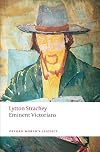
A brilliantly iconoclastic book in which a long-haired gay aesthete detonates the great and good of imperial England and the obsequious tradition of Victorian biography/hagiography along with them. The ‘ascetic’ Cardinal Manning is portrayed as a worldly and calculating careerist; Thomas Arnold as an educator who elevated religious indoctrination and ‘character-building’ above actual education; and General Gordon as a reckless, drunken and ultimately self-destructive adventurer. show more Interestingly, as she is the only female in the quartet, Strachey is rather more sympathetic towards Florence Nightingale and clearly on her side in her battles with the male dunderheads of the War Office.
Strachey may have been less than industrious with the research (he did no primary research), sometimes loftily indifferent to mere facts and a dab hand at embroidery in the interests of getting a laugh, but he wrote like an avenging angel and Eminent Victorians is eminently readable. Whatever its strengths and weaknesses as history, it’s straight from the top drawer as a work of literature. Above all, it’s very funny and teeming with great one-liners, sarcastic quips elevated to the level of art and lethal verbal hand-grenades disguised as elegant epigrams.
Strachey was writing against the backdrop of the appalling slaughter of the First World War (he was declared medically unfit but was an outspoken conscientious objector nonetheless) which was, arguably, the logical culmination of all that Victorian deference and veneration of ‘great men.’ Behind the sardonic humour this is a deeply felt work and through layers of irony Strachey wrote from the heart.
In his preface, reacting against the turgid two volume biographies of the time, he asserts that brevity should be the essence of biography. Despite Strachey’s reputation as the founder of modern biography this is one piece of advice many subsequent biographers have chosen to ignore. The idea persists that a definitive biography is possible and, it seems, the longer the biography the more ‘definitive’ it is. The two biographies of recent times I have enjoyed most are relatively concise by the blockbusting standards still prevalent in the genre - Ma’am Darling (99 Glimpses of Princess Margaret) and One Two Three Four: The Beatles in Time. Both are by satirist Craig Brown and possess distinctly Stracheyan qualities of playfulness, formal invention and subversive wit. Like Strachey, Brown is concerned not with imparting new information about his subjects but providing a fresh perspective on a familiar story. He has said that his approach to biography is to leave out the boring bits; Lytton Strachey would undoubtedly have approved. show less
Strachey may have been less than industrious with the research (he did no primary research), sometimes loftily indifferent to mere facts and a dab hand at embroidery in the interests of getting a laugh, but he wrote like an avenging angel and Eminent Victorians is eminently readable. Whatever its strengths and weaknesses as history, it’s straight from the top drawer as a work of literature. Above all, it’s very funny and teeming with great one-liners, sarcastic quips elevated to the level of art and lethal verbal hand-grenades disguised as elegant epigrams.
Strachey was writing against the backdrop of the appalling slaughter of the First World War (he was declared medically unfit but was an outspoken conscientious objector nonetheless) which was, arguably, the logical culmination of all that Victorian deference and veneration of ‘great men.’ Behind the sardonic humour this is a deeply felt work and through layers of irony Strachey wrote from the heart.
In his preface, reacting against the turgid two volume biographies of the time, he asserts that brevity should be the essence of biography. Despite Strachey’s reputation as the founder of modern biography this is one piece of advice many subsequent biographers have chosen to ignore. The idea persists that a definitive biography is possible and, it seems, the longer the biography the more ‘definitive’ it is. The two biographies of recent times I have enjoyed most are relatively concise by the blockbusting standards still prevalent in the genre - Ma’am Darling (99 Glimpses of Princess Margaret) and One Two Three Four: The Beatles in Time. Both are by satirist Craig Brown and possess distinctly Stracheyan qualities of playfulness, formal invention and subversive wit. Like Strachey, Brown is concerned not with imparting new information about his subjects but providing a fresh perspective on a familiar story. He has said that his approach to biography is to leave out the boring bits; Lytton Strachey would undoubtedly have approved. show less

Lytton Strachey is credited with reinventing the art of writing biographies in his brilliant Eminent Victorians. Strachey published the book in 1918, not long after the end of the Victorian Era. Rather than attempt a comprehensive history of the Victorian Era, which he viewed as impossible, Strachey instead wrote short biographies of four truly eminent Victorians that punctured the moral pretensions and historical myths of that famous era.
Strachey's subjects are barely remembered today. I show more suppose Florence Nightingale's name has some small current familiarity because of its association with selflessly nursing injured soldiers. I found her biography to be the flattest of them all. She came from a privileged background, stubbornly resisted her parents' efforts to marry her off, and exerted remarkable energy, persistence, and fortitude to accomplish significant changes in military medicine (which previously languished in a horrific state).
Strachey's Dr. Arnold is a cautious educational reformer at best, rather than the revered innovator who established the English Public School system. The education provided at Arnold's Rugby School was quite limited with a dreary focus on religion and the classics. The sciences were entirely neglected. He did establish the prefectorial system whereby the old boys terrorized the younger boys who in their turn got to terrorize the next batch. Readers of Flashman will recognize Dr. Arnold as the head of the school that produced Tom Brown (and kicked Flashman out for drunkenness).
Strachey's treatment of the life of Cardinal Manning is fascinating although the subject is arcane. Even in 1918 when Strachey wrote his book he said that few remembered Manning. The Pope's recent visit to the UK highlighted one Manning's archrivals, Cardinal Newman. Both Manning and Newman had risen high in the Anglican hierarchy when the Oxford Movement gradually led them to doubt that Henry VIII had been divinely inspired when he founded that church. Both converted to Catholicism, but the politically astute Manning managed a meteoric rise to Cardinal (with the connivance of the Pope's top assistant) while Newman languished in obscurity. Newman had ideas and ideas were threatening and indeed essentially heretical to Pio Nono, Pius IX (the pope who formally decreed papal infallibility). Only in his dotage was Newman gifted the red hat when the Duke of Norfolk intervened with the Pope on his behalf. Strachey's life of Cardinal Manning is simply a treat of wonderful writing, wit, with a thorough skewering of papal pomposity.
The highlight of Eminent Victorians, for me, was the final biography of General Gordon, in which Strachey blows apart the mythology surrounding Gordon and indeed the Empire. Gordon had been hired by the leaders of Shanghai during the Taiping Rebellion to lead the Ever Victorious Army, which as Strachey notes had been seldom victorious prior to Gordon's ascendancy. Gordon famously dispatched the rebels.
Gordon later served as British governor-general of the Sudan, but more often worked as a mercenary. He had returned to England and relative obscurity when the Mahdi Revolt broke out in the Sudan (see Mahdi Revolt). Gladstone wanted nothing more than to exit the Sudan, but he needed someone self-effacing with diplomatic skill for the job. Conservative elements in Gladstone's own government hit upon Gordon as the ideal man for the job. It is difficult to imagine any person less suited for the task of withdrawing than the strong-willed, idiosyncratic, and mercurial Gordon. With the appointment made, the die was cast: Gordon arrived in Khartoum, decided he could not abandon those fine people, and ended up a martyr when the city was predictably overrun (refusing numerous opportunities to leave for safety). The Gordon biography is simply high art.
Bertrand Russell described Eminent Victorians as "brilliant, delicious, exquisitely civilized". I agree completely. Read it. show less
Strachey's subjects are barely remembered today. I show more suppose Florence Nightingale's name has some small current familiarity because of its association with selflessly nursing injured soldiers. I found her biography to be the flattest of them all. She came from a privileged background, stubbornly resisted her parents' efforts to marry her off, and exerted remarkable energy, persistence, and fortitude to accomplish significant changes in military medicine (which previously languished in a horrific state).
Strachey's Dr. Arnold is a cautious educational reformer at best, rather than the revered innovator who established the English Public School system. The education provided at Arnold's Rugby School was quite limited with a dreary focus on religion and the classics. The sciences were entirely neglected. He did establish the prefectorial system whereby the old boys terrorized the younger boys who in their turn got to terrorize the next batch. Readers of Flashman will recognize Dr. Arnold as the head of the school that produced Tom Brown (and kicked Flashman out for drunkenness).
Strachey's treatment of the life of Cardinal Manning is fascinating although the subject is arcane. Even in 1918 when Strachey wrote his book he said that few remembered Manning. The Pope's recent visit to the UK highlighted one Manning's archrivals, Cardinal Newman. Both Manning and Newman had risen high in the Anglican hierarchy when the Oxford Movement gradually led them to doubt that Henry VIII had been divinely inspired when he founded that church. Both converted to Catholicism, but the politically astute Manning managed a meteoric rise to Cardinal (with the connivance of the Pope's top assistant) while Newman languished in obscurity. Newman had ideas and ideas were threatening and indeed essentially heretical to Pio Nono, Pius IX (the pope who formally decreed papal infallibility). Only in his dotage was Newman gifted the red hat when the Duke of Norfolk intervened with the Pope on his behalf. Strachey's life of Cardinal Manning is simply a treat of wonderful writing, wit, with a thorough skewering of papal pomposity.
The highlight of Eminent Victorians, for me, was the final biography of General Gordon, in which Strachey blows apart the mythology surrounding Gordon and indeed the Empire. Gordon had been hired by the leaders of Shanghai during the Taiping Rebellion to lead the Ever Victorious Army, which as Strachey notes had been seldom victorious prior to Gordon's ascendancy. Gordon famously dispatched the rebels.
Gordon later served as British governor-general of the Sudan, but more often worked as a mercenary. He had returned to England and relative obscurity when the Mahdi Revolt broke out in the Sudan (see Mahdi Revolt). Gladstone wanted nothing more than to exit the Sudan, but he needed someone self-effacing with diplomatic skill for the job. Conservative elements in Gladstone's own government hit upon Gordon as the ideal man for the job. It is difficult to imagine any person less suited for the task of withdrawing than the strong-willed, idiosyncratic, and mercurial Gordon. With the appointment made, the die was cast: Gordon arrived in Khartoum, decided he could not abandon those fine people, and ended up a martyr when the city was predictably overrun (refusing numerous opportunities to leave for safety). The Gordon biography is simply high art.
Bertrand Russell described Eminent Victorians as "brilliant, delicious, exquisitely civilized". I agree completely. Read it. show less

Eminent Victorians is a seminal work of biography that elevated the genre to the status of fine art. The biographical project was liberated by Strachey's humour, iconoclasm, and narrative flair, which replaced veneration with cynicism. For a decade, his images of Cardinal Manning, Florence Nightingale, Thomas Arnold, and General Gordon transformed people's conceptions of Victorians.
When Lytton Strachey's biographical articles on four "great Victorians" were published in 1918, they sent a show more shockwave through Victorian England. It was the beginning of the modern biography, elevating the genre to the status of high literary art. Strachey used his iconoclastic wit and cynicism to approach his themes rather than devotion. show less
When Lytton Strachey's biographical articles on four "great Victorians" were published in 1918, they sent a show more shockwave through Victorian England. It was the beginning of the modern biography, elevating the genre to the status of high literary art. Strachey used his iconoclastic wit and cynicism to approach his themes rather than devotion. show less
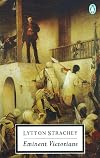
In "Eminent Victorians" (1918), Lytton Strachey (1880–1932) takes down the heroes he writes about: Florence Nightingale, Henry Cardinal Manning, Thomas Arnold and Gen. Charles Gordon. The book became a best-seller because the public, disillusioned by WWI, enjoyed the debunking of paragons of Victorian rectitude and achievement. Few were inclined to be admiring of the noble military disaster of General Gordon at Khartoum or Dr. Arnold’s lofty ambitions to mold boys into honest Englishmen show more and sturdy Christians at public schools.
Despite my prejudices against the Bloomsberries, I chose to read "EV" because of recommendations from the like of critic Paul Fussell, whose opinion I respect. But the first 20 pages of grated on me. Strachey’s tone of ironic detachment felt alternately bitchy and post-modern to me. Draining, that tone was. More seriously, I don’t know the truth about the four Victorian figures discussed, but my bushwah detector is sensitive enough to flash yellow when I sense a writer is being selective with facts, interpreting in questionable ways, and blithely theorizing about his subjects’ thoughts that no one could ever know.
But then I kicked myself and decided to get into the spirit. I realized that Strachey didn’t intend to write history. Strachey wrote a polemic to deflate an age and he wanted the reader to join him in the fun. Strachey won me over, despite the campy aesthetic, with an admirable range of knowledge, hard-boiled powers of observation, and an outsider’s suspicion of traditional values. He’s biased, he’s unfair. And for these reasons, is "EV" ever a frolic, like Kenneth Anger’s "Hollywood Babylon."
Strachey was a great writer. show less
Despite my prejudices against the Bloomsberries, I chose to read "EV" because of recommendations from the like of critic Paul Fussell, whose opinion I respect. But the first 20 pages of grated on me. Strachey’s tone of ironic detachment felt alternately bitchy and post-modern to me. Draining, that tone was. More seriously, I don’t know the truth about the four Victorian figures discussed, but my bushwah detector is sensitive enough to flash yellow when I sense a writer is being selective with facts, interpreting in questionable ways, and blithely theorizing about his subjects’ thoughts that no one could ever know.
But then I kicked myself and decided to get into the spirit. I realized that Strachey didn’t intend to write history. Strachey wrote a polemic to deflate an age and he wanted the reader to join him in the fun. Strachey won me over, despite the campy aesthetic, with an admirable range of knowledge, hard-boiled powers of observation, and an outsider’s suspicion of traditional values. He’s biased, he’s unfair. And for these reasons, is "EV" ever a frolic, like Kenneth Anger’s "Hollywood Babylon."
Strachey was a great writer. show less
Lists
Awards


You May Also Like


Associated Authors
Statistics
- Works
- 45
- Also by
- 6
- Members
- 4,519
- Popularity
- #5,548
- Rating
- 3.8
- Reviews
- 59
- ISBNs
- 323
- Languages
- 11
- Favorited
- 7
