
Frances Partridge (1900–2004)
Author of Memories
About the Author
Image credit: National Portrait Gallery
Series
Works by Frances Partridge
Associated Works
The Assassin's Cloak: An Anthology of the World's Greatest Diarists (2000) — Contributor, some editions — 622 copies, 9 reviews
Masterworks of Latin American Short Fiction: Eight Novellas (1996) — Translator, some editions — 57 copies, 1 review
Seven Voices: Seven Latin American Writers talk to Rita Guibert (1972) — Translator, some editions — 27 copies
Tagged
Common Knowledge
- Canonical name
- Partridge, Frances
- Legal name
- Partridge, Frances Catherine
- Other names
- Marshall, Frances Catherine (birth name)
- Birthdate
- 1900-03-15
- Date of death
- 2004-02-05
- Gender
- female
- Education
- University of Cambridge (Newnham College)
Bedales School - Occupations
- diarist
translator
memoirist - Organizations
- Bloomsbury Group
- Awards and honors
- Commander of the Order of the British Empire
- Relationships
- Partridge, Ralph (husband)
Partridge, Burgo (son)
Garnett, Ray (sister)
Garnett, David (brother-in-law)
Garnett, Henrietta (daughter-in-law) - Short biography
- Frances Partridge, née Marshall, was born in London, England. Her parents were Margaret Anna Lloyd, a suffragist, and William Marshall, an architect. She was educated at Bedales School and Cambridge University. From 1922, she worked for six years at a London bookshop owned by David Garnett (whose first wife was her sister Ray) and Francis Birrell, where she met Lytton Strachey, Dora Carrington, Ralph Partridge, and other members of the Bloomsbury Group.
Frances married Partridge in 1933 and lived with him at Ham Spray, the Wiltshire farmhouse he had shared with Strachey and Carrington before their deaths.
The couple had one son, Burgo, who married Henrietta Garnett. After the deaths of her husband and son in 1960-1963,
Frances sold Ham Spray and moved back to London. She was a prolific translator of works by Spanish and French authors, and with Ralph, helped Lytton Strachey edit the memoirs of 19th-century political diarist Charles Greville, published in eight volumes in 1938. She also published many volumes of her own memoirs and diaries. Her writings, her survival as the last member of the Bloomsbury circle, her personal charm, and the energy she retained into extreme old age, together made her a celebrity towards the end of her long life. - Nationality
- UK
- Birthplace
- Bedford Square, London, England, UK
- Places of residence
- Ham Spray, Wiltshire, England, UK
London, England, UK - Place of death
- London, England, UK
- Associated Place (for map)
- London, England, UK
Members
Reviews
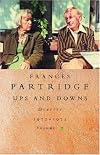
Francis Partridge's diaries are the record of a woman who not only participated in the lives of the legendary Bloomsbury group, but was the circle’s oldest surviving member until her death in 2004. At the age of 100, Frances Partridge decided to publish another volume of diaries which cover the years 1972-1975. Recognized as one of the great British diarists of the century, she was born in Bloomsbury in 1900, studied at Cambridge, and became part of the Bloomsbury Group, encountering show more Virginia Woolf, the Bells, Roger Fry and Maynard Keynes. Her diaries, written without thought of publication, chronicle a remarkable life. Beautifully written, full of an infectious enthusiasm and unending curiosity, they are utterly riveting and rank amongst the greatest diaries of the 20th century.
I have read a lot of biographies and diaries over the years and Frances Partridge's diaries are beyond anything the best I have read. Her use of language and description is so alive and interesting. Not a boring sentence in the entire book. Life is so short and I am unlikely to get back to rereading this book and I am trying to savour every bite by underlining. I cannot remember when I have underlined so much in a book in my life. I just want to somehow gobble it up and retain it and reread it and hold it somehow make it into mine. Her writing is lyrical, expressive. show less
I have read a lot of biographies and diaries over the years and Frances Partridge's diaries are beyond anything the best I have read. Her use of language and description is so alive and interesting. Not a boring sentence in the entire book. Life is so short and I am unlikely to get back to rereading this book and I am trying to savour every bite by underlining. I cannot remember when I have underlined so much in a book in my life. I just want to somehow gobble it up and retain it and reread it and hold it somehow make it into mine. Her writing is lyrical, expressive. show less
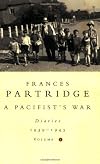
Florence Partridge was the 'nice' member of the famed Bloomsbury Group. During World War Two, the Partridges lived at Ham Spray House in Wiltshire. In 1978, Florence published her excerpted diary of the war years. Florence and husband Ralph were pacifists, which gives the book a quite different context than many wartime recollections. Their beliefs gave them no special shelter from the war's terrors and privations.
Florence records her experiences living with Ralph and their 4-year-old son show more Burgo and a seemingly continual parade of visitors and lodgers with acute insight and self-awareness. Not all of their friends shared their political or moral views and that creates an interesting tension throughout. Ralph's application for C.O. status hangs around the background of the diary, but seldom takes center stage (as she explains in the foreword, she felt little need to describe her thoughts about Ralph in her diary because he was central to her life).
The course of the war overwhelmed their daily lives in a way that is nearly unimaginable. With the invasion seemed like a foregone conclusion during much of 1940, Florence and her friends were plunged into depths of depression. Otherwise sane people seriously discussed the means and modes of committing suicide in the event the Germans did cross the Channel. They adjust to sleeping - or at least lying in bed - while planes drone overhead and learn the sounds and patterns of bombs being dropped. Even when the threat of invasion fades, the knowledge grows that the only possible outcomes are a German victory or a very long war indeed.
While the larger end is known, being a diary, the eventual outcome for specific individuals is not. In one instance, however, Partridge describes how Burgo was excited over meeting a young RAF pilot. She then reflects that `we are asking this young man to lose his life' at which point she added a powerful two-word footnote: "He did."
I came across this book from the historical endnotes in a work of historical detective fiction Second Violin: An Inspector Troy Thriller by John Lawton and temporarily rescued it from the lower stacks of our public library system. I highly recommended that you do the same. show less
Florence records her experiences living with Ralph and their 4-year-old son show more Burgo and a seemingly continual parade of visitors and lodgers with acute insight and self-awareness. Not all of their friends shared their political or moral views and that creates an interesting tension throughout. Ralph's application for C.O. status hangs around the background of the diary, but seldom takes center stage (as she explains in the foreword, she felt little need to describe her thoughts about Ralph in her diary because he was central to her life).
The course of the war overwhelmed their daily lives in a way that is nearly unimaginable. With the invasion seemed like a foregone conclusion during much of 1940, Florence and her friends were plunged into depths of depression. Otherwise sane people seriously discussed the means and modes of committing suicide in the event the Germans did cross the Channel. They adjust to sleeping - or at least lying in bed - while planes drone overhead and learn the sounds and patterns of bombs being dropped. Even when the threat of invasion fades, the knowledge grows that the only possible outcomes are a German victory or a very long war indeed.
While the larger end is known, being a diary, the eventual outcome for specific individuals is not. In one instance, however, Partridge describes how Burgo was excited over meeting a young RAF pilot. She then reflects that `we are asking this young man to lose his life' at which point she added a powerful two-word footnote: "He did."
I came across this book from the historical endnotes in a work of historical detective fiction Second Violin: An Inspector Troy Thriller by John Lawton and temporarily rescued it from the lower stacks of our public library system. I highly recommended that you do the same. show less

Excellent reading. After the death of her beloved Ralph, Frances goes into a tailspin and this is her diary of how she survived. Frances is a very expressive writer, lots of adjectives and adverbs. Descriptive and alive.

I give this writer top marks for observational skills and the ability to describe what she sees in a way that engages. I love her use of the English language and how she expresses what she feels about the people in her life. A very individual method of expression.Her honesty, tolerance, intelligence and insight combined with a vivid turn of phrase and an ability to evoke temperament and place have proved a popular and critical success. Rivalled only by her friend James Lees Milne, she was show more probably the best diarist published in English since World War II. show less
Awards

You May Also Like


Associated Authors
Statistics
- Works
- 12
- Also by
- 8
- Members
- 516
- Popularity
- #48,119
- Rating
- 4.0
- Reviews
- 6
- ISBNs
- 45
- Favorited
- 1