
Alan Bennett (1) (1934–)
Author of The Uncommon Reader
For other authors named Alan Bennett, see the disambiguation page.
About the Author
Bennett was born in Armley in Leeds, West Yorkshire. He decided to apply for a scholarship at Oxford University. He was accepted by Exeter College, Oxford from which he graduated with a first-class degree in history. He was born on May 9, 1934; he is an English author, actor, humorist and show more playwright. Bennett was made an Honorary Fellow of Exeter College, Oxford in 1987. He was also awarded a D.Litt by the University of Leeds in 1990 and an Hon. PhD from Kingston in 1996. In October 2008 Bennett announced that he was donating his entire archive of working papers, unpublished manuscripts, diaries and books to the Bodleian Library free of charge, as a gesture of thanks and repaying a debt he felt he owed to the UK's social welfare system that had given him educational opportunities which his humble family background would otherwise never have afforded. In 2015 his title, Six Poets: Hardy to Larkin: An Anthology by Alan Bennett, made The New Zealand Best Seller List. He also made the list in 2016 with his title The Lady in the Van. (Bowker Author Biography) show less
Image credit: Courtesy of Allen and Unwin
Works by Alan Bennett
Three Stories: "Father! Father! Burning Bright", "The Clothes They Stood Up in", "The Laying on of Hands" (2003) — Author — 87 copies, 5 reviews
Alan Bennett: Plays 2 : Kafka's Dick, the Insurance Man, the Old Country, an Englishman Abroad, a Question of Attribution (1998) 61 copies, 1 review
Alan Bennett Plays One: Forty Years On, Getting On, Habeas Corpus and Enjoy (Faber Contemporary Classics) (1991) 60 copies
Forty Years on: BBC Radio 4 Full Cast Dramatisation (BBC Radio Collection) (2000) 7 copies, 1 review
Six Plays By Alan Bennett: The Complete Series [DVD] — Playwright — 5 copies
Patricia Routledge in Three Portraits (A Woman of No Importance / A Lady of Letters / Miss Fozzars Finds Her Feet) (2004) — Author — 3 copies
Diary 2018 selections 3 copies
The Insurance Man 2 copies
Diary 2017 selections 2 copies
Diary 2019 2 copies
Bennett Alan 1 copy
Diary 2019 Slections 1 copy
Associated Works
The Assassin's Cloak: An Anthology of the World's Greatest Diarists (2000) — Contributor, some editions — 623 copies, 9 reviews
The Utterly Utterly Definitive and Pretty Damn Amusing Comic Relief Revue Book (1989) — Contributor — 11 copies
Alice in Wonderland & Through the Looking Glass [Abridged] BBC Radio Version (1997) — Narrator, some editions — 10 copies
Dear Philip, Dear Kingsley: Starring Alan Bennett & Robert Hardy (BBC Radio Collection) (2002) — Actor — 7 copies
The Secret Policeman's Balls — Actor — 1 copy
Tagged
Common Knowledge
- Canonical name
- Bennett, Alan
- Birthdate
- 1934-05-09
- Gender
- male
- Education
- University of Oxford (Exeter College ∙ BA ∙ 1957 ∙ First class degree in History)
Joint Services School for Linguists
Leeds Modern School - Occupations
- actor
humorist
playwright
screenwriter - Awards and honors
- British Book Award (Author of the Year, 2006)
British Book Award (Lifetime Achievement Award, 2003)
Society of London Theatre Special Award (2005) - Relationships
- Thomas, Rupert (partner)
- Nationality
- UK
- Birthplace
- Armley, Leeds, Yorkshire, England, UK
- Places of residence
- London, England, UK
Leeds, England, UK
Camden Town, London, England, UK - Map Location
- England, UK
Members
Discussions
Folio Archives 385: The Lady in the Van and Three Stories by Alan Bennett 2006 in Folio Society Devotees (July 2024)
The Madness of King George in I Love Jane Austen (February 2010)
Reviews

January's book club book - which I read in one sitting. the surmise is brilliantly simple, but the writing is sparkling and funny. The Queen discovers that there's a mobile library that arrives at the palace once a week when the corgis charge off after it. For politeness sake, she borrows a book, and then becomes an avid reader. A little late in life, maybe, a fact of which she is most aware. The progress of her reading is followed, from scatter gun beginnings to obsession. This is met with show more some resistance in various places, and there is a conspiracy to try and stop her - some of which backfire spectacularly! She progresses from reader to wanna be writer (and who of us has not had that thought). The sting in the tail is deliciously delivered, and thoroughly thought provoking.
Just brilliant, and I just know I'll be reading it again before we discuss it next month.
Yes, a re-read, but I now own a copy. Found it at the library book sale and simply had to have it. In fact I snaffled it as I was unpacking the books, that's how much I wanted it. And I'd finished it by tea-time.
We had a desert island discs conversation, but books & this is on my list. Just a sparkling good read, a simple surmise, but so well plotted that the ending takes my breath away every time.
An another re-read. In the mood for some "safe" reading and this gem, yet again, hits the spot. It's full of the most beautiful observational comment, some of it wryly funny, some of it quite poignant. The discovery of what it is to read, what it does to the person, stretches them yet can be diminishing at the same time, it's all in here. I still love the twist at the end, and the observation of the old school form of education - and how much more widely read those of the older generation seem to have been - is what struck me this time. If I were the Queen, I;d have whacked the Prime Minister over the head with a weighty handbag a long time ago!
Another re-read. I like the way that Alan Bennet captures what is probably our idea of the Queen and then subverts it ever so slightly. She starts behaving in a way that's not in keeping with out picture of her. Being late because she has her nose in a book is entirely understandable in a normal human, but it so at odds with our mental picture of the Queen that it is quite startling. And it doesn't matter how many times I read this, the whole universe of possibilities opened up by that last line still takes my breath away. Just imagine... show less
Just brilliant, and I just know I'll be reading it again before we discuss it next month.
Yes, a re-read, but I now own a copy. Found it at the library book sale and simply had to have it. In fact I snaffled it as I was unpacking the books, that's how much I wanted it. And I'd finished it by tea-time.
We had a desert island discs conversation, but books & this is on my list. Just a sparkling good read, a simple surmise, but so well plotted that the ending takes my breath away every time.
An another re-read. In the mood for some "safe" reading and this gem, yet again, hits the spot. It's full of the most beautiful observational comment, some of it wryly funny, some of it quite poignant. The discovery of what it is to read, what it does to the person, stretches them yet can be diminishing at the same time, it's all in here. I still love the twist at the end, and the observation of the old school form of education - and how much more widely read those of the older generation seem to have been - is what struck me this time. If I were the Queen, I;d have whacked the Prime Minister over the head with a weighty handbag a long time ago!
Another re-read. I like the way that Alan Bennet captures what is probably our idea of the Queen and then subverts it ever so slightly. She starts behaving in a way that's not in keeping with out picture of her. Being late because she has her nose in a book is entirely understandable in a normal human, but it so at odds with our mental picture of the Queen that it is quite startling. And it doesn't matter how many times I read this, the whole universe of possibilities opened up by that last line still takes my breath away. Just imagine... show less
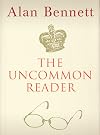
While out walking the corgis the Queen discovers the City of Westminster mobile library parked in one of the yards at Buckingham Palace, the only occupants being the driver/librarian Mr Hutchings and Norman Seakins who works in the palace kitchens. To be polite she borrows a book, a novel by Ivy Compton-Burnett, and in line with her philosophy of life dutifully finishes it despite finding it very dry. Returning the next week, she finds herself borrowing The Pursuit of Love by Nancy Mitford show more and so begins a love affair with reading which worries and irritates her staff, especially her over-conscientious private secretary Sir Kevin Scatchard, as once she begins to devote so much of her attention to books, she has much less attention to devote to the duties of being queen. A shared love of books liberates Norman from the kitchens to wait on the Queen personally, much to the irritation of the longer established staff, who manouever to get rid of him (and the books) from the Queen's life.
I love Alan Bennett's writing in general and I really love this book. I think it portrays beautifully the delights of reading: of how one book leads to another and how reading can been seen as a muscle that can be developed. The chasm between the reading world and the non-reading world is portrayed so well, for example where the Queen's equerries try to brief the people she meets about any likely conversation and warn them that:
'these days she was more likely to ask what the person was currently reading. At this most people looked blank (and sometimes panic-stricken) but nothing daunted the equerries came up with a list of suggestions. Though this meant that the Queen came away with a disproportionate notion of the popularity of Andy McNab and the near univeral affection for Joanna Trollope, no matter; at least embarrassment had been avoided.'
I should say at this point that I am a fairly ardent anti-royalist, who would vote to abolish the monarchy tomorrow if we had a referendum on the issue - not that that's at all likely of course. But that doesn't affect my love for this book which reads so much like a modern fairy tale. show less
I love Alan Bennett's writing in general and I really love this book. I think it portrays beautifully the delights of reading: of how one book leads to another and how reading can been seen as a muscle that can be developed. The chasm between the reading world and the non-reading world is portrayed so well, for example where the Queen's equerries try to brief the people she meets about any likely conversation and warn them that:
'these days she was more likely to ask what the person was currently reading. At this most people looked blank (and sometimes panic-stricken) but nothing daunted the equerries came up with a list of suggestions. Though this meant that the Queen came away with a disproportionate notion of the popularity of Andy McNab and the near univeral affection for Joanna Trollope, no matter; at least embarrassment had been avoided.'
I should say at this point that I am a fairly ardent anti-royalist, who would vote to abolish the monarchy tomorrow if we had a referendum on the issue - not that that's at all likely of course. But that doesn't affect my love for this book which reads so much like a modern fairy tale. show less
It was a hobby and it was in the nature of her job that she didn't have hobbies. ... Hobbies involved preferences and preferences had to be avoided; preferences excluded people. (p. 6)
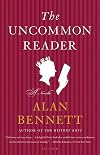
Alan Bennett's wonderful novella imagines what would happen if the Queen suddenly became an avid reader. When her much-loved corgis get loose and charge into a mobile library, Queen Elizabeth II charges in after them, and then feels an obligation to check out a book. And thus begins her obsession with reading; show more her discovery of great literature. Reading very quickly takes precedence over a multitude of royal obligations, sometimes causing her to be late, or creating conversational cul-de-sacs with staff and subjects alike:
Still, though reading absorbed her, what the Queen had not expected was the degree to which it drained her of enthusiasm for anything else. It's true that the at prospect of opening yet another swimming-baths her heart didn't exactly leap up, but even so, she had not exactly resented having to do it. ... Now she surveyed the unrelenting progression of tours, travels, and undertakings stretching years into the future only with dread. (p. 60)
Well, what avid reader hasn't felt the same way from time to time? Bennett keeps tongue firmly in cheek throughout this short book, satirizing the royals and English society. Yet he also paints an engaging portrait of the "real life" led by a public figure. The Uncommon Reader was a wonderful diversion that could be read again and again with enjoyment. show less
Alan Bennett's wonderful novella imagines what would happen if the Queen suddenly became an avid reader. When her much-loved corgis get loose and charge into a mobile library, Queen Elizabeth II charges in after them, and then feels an obligation to check out a book. And thus begins her obsession with reading; show more her discovery of great literature. Reading very quickly takes precedence over a multitude of royal obligations, sometimes causing her to be late, or creating conversational cul-de-sacs with staff and subjects alike:
Still, though reading absorbed her, what the Queen had not expected was the degree to which it drained her of enthusiasm for anything else. It's true that the at prospect of opening yet another swimming-baths her heart didn't exactly leap up, but even so, she had not exactly resented having to do it. ... Now she surveyed the unrelenting progression of tours, travels, and undertakings stretching years into the future only with dread. (p. 60)
Well, what avid reader hasn't felt the same way from time to time? Bennett keeps tongue firmly in cheek throughout this short book, satirizing the royals and English society. Yet he also paints an engaging portrait of the "real life" led by a public figure. The Uncommon Reader was a wonderful diversion that could be read again and again with enjoyment. show less
I listened to 'Killing Time' in a single sitting (it's only sixty-nine pages / 119 minutes long). At the end, I was at a bit of a loss to describe what I'd been listening to. I knew what it wasn't - a cutely humorous novella about old people in council care home coping with the impact of COVID - but I had more trouble saying what it was.
I knew that I had been completely mislead by the publisher's summary. This was not a joyful tale in which the surviving residents "…scamper freely in the show more warmth of the summer sun." This was a matter-of-fact description of a set of old people whose lives are mostly behind them. Their identities have been reduced down to a few personality quirks garnished with a scattering of possessions that are like driftwood from who they used to be, beached with them when the tide of their lives ebbed and ran them aground in a council-run care home. This was not a cosy narrative It romanticised nothing. It didn't set out to entertain or to push a message. It was a mostly dispassionate description of the people in the home and the impact of COVID on their lives.
There is a little bit of humour and a lot of undramatic, mostly ungrieved, deaths. The realities of being so old that you can no longer take care of yourself and mostly have no energy or motivation to take care of anyone else are well observed. There is a character who finally reveals things about her life that she's previously kept secret but, while the disclosures are dramatic and historically interesting, it's clear that the woman revealing them sees them as something that happened in another life. Who she was then and who she is now are linked only by memory and a recognition of decline.
'Killing Time' is a rare thing - a book about being old written by someone who is very old - Alan Bennett was ninety when it was published. The details of the life in the care home felt real and unapologetically honest. The fatal impact of COVID was treated in a shrugging 'Death happens' way. The overall feeling I was left with was that, if you live long enough, there is so little left of who you used to be that who you were becomes either a story that you tell yourself and others or just another thing that you let go of because you don't need it any more. show less
I knew that I had been completely mislead by the publisher's summary. This was not a joyful tale in which the surviving residents "…scamper freely in the show more warmth of the summer sun." This was a matter-of-fact description of a set of old people whose lives are mostly behind them. Their identities have been reduced down to a few personality quirks garnished with a scattering of possessions that are like driftwood from who they used to be, beached with them when the tide of their lives ebbed and ran them aground in a council-run care home. This was not a cosy narrative It romanticised nothing. It didn't set out to entertain or to push a message. It was a mostly dispassionate description of the people in the home and the impact of COVID on their lives.
There is a little bit of humour and a lot of undramatic, mostly ungrieved, deaths. The realities of being so old that you can no longer take care of yourself and mostly have no energy or motivation to take care of anyone else are well observed. There is a character who finally reveals things about her life that she's previously kept secret but, while the disclosures are dramatic and historically interesting, it's clear that the woman revealing them sees them as something that happened in another life. Who she was then and who she is now are linked only by memory and a recognition of decline.
'Killing Time' is a rare thing - a book about being old written by someone who is very old - Alan Bennett was ninety when it was published. The details of the life in the care home felt real and unapologetically honest. The fatal impact of COVID was treated in a shrugging 'Death happens' way. The overall feeling I was left with was that, if you live long enough, there is so little left of who you used to be that who you were becomes either a story that you tell yourself and others or just another thing that you let go of because you don't need it any more. show less
Lists
Short and Sweet (1)
Read in 2011 (1)
Comfort Reads (1)
Awards


You May Also Like


Associated Authors
Statistics
- Works
- 154
- Also by
- 20
- Members
- 17,392
- Popularity
- #1,269
- Rating
- 4.0
- Reviews
- 897
- ISBNs
- 546
- Languages
- 19
- Favorited
- 59

