
Susan Hill (1) (1942–)
Author of The Woman in Black: A Ghost Story
For other authors named Susan Hill, see the disambiguation page.
About the Author
Susan Hill was born in Scarborough, United Kingdom on February 5, 1942. She received a degree in English from King's College in London in 1963. Her first book, The Enclosure, was published during her first year at university. She worked as a freelance journalist between 1963 and 1968 and has been a show more monthly columnist for the Daily Telegraph since 1977. She founded her own publishing company, Long Barn Books, in 1996 and publishes a literary magazine called Books and Company. She has written works of fiction and non-fiction as well as children's books. She also edits short story compilations. Her works include Gentleman and Ladies, A Change for the Better, The Woman in Black, The Mist in the Mirror, and the Simon Serrailler Crime Novel series. She has won numerous awards including a Somerset Maugham Award for I'm the King of the Castle, the Whitbread Novel Award for The Bird of Night, the John Llewellyn Rhys Prize for The Albatross, and the Smarties Prize for Can It Be True? (Bowker Author Biography) show less
Series
Works by Susan Hill
The Woman in Black and Other Ghost Stories: The Collected Ghost Stories of Susan Hill (2015) 95 copies, 3 reviews
Books and Company, Issue 2 3 copies
Books and Company Issue 13 2 copies
Phantomschmerzen 2 copies
Books and Company Issue 1 — Editor — 2 copies
The Enclosure 2 copies
Books and Company Issue 4 — Editor — 2 copies
Books and Company Issue 3 — Editor — 2 copies
Stummes Echo 1 copy
A Story of Christmas 1 copy
A Ghost Story 1 copy
The custodian 1 copy
On the Face Of It 1 copy
Do me a favour 1 copy
Associated Works
Reader's Digest Select Editions: The Ghost • Sacrifice • The Man in the Picture • Power Play (2008) — Contributor — 15 copies, 1 review
Reader's Digest Condensed Books: The Last Juror • The Various Haunts of Men • The Codex • Life and Limb (2004) 15 copies
Reader's Digest Select Editions: The Last Juror | The Various Haunts of Men | The Codex | The Curious Incident of the Dog in the Night-Time (2004) — Author — 5 copies
Reader's Digest Select Editions: Crossfire | Heaven's Keep | The Shadows in the Street | Stillwater Creek — Contributor — 4 copies
Reader's Digest: De getuige; Lieve John; Het Venetiaanse masker; Roerloos — Author — 2 copies, 1 review
The Amateur: and Other Modern Stories (English Language Learning: Reading Scheme) (1979) — Contributor — 1 copy
Tagged
Common Knowledge
- Legal name
- Hill, Susan Elizabeth
- Birthdate
- 1942-02-05
- Gender
- female
- Education
- King's College, London
Scarborough Convent School
Barr's Hill Grammar School, Coventry - Occupations
- fiction writer
editor - Awards and honors
- Order of the British Empire (Commander, 2012)
Order of the British Empire (Dame Commander, 2020) - Relationships
- Wells, Stanley (husband)
Gove, Michael (friend) - Nationality
- UK
- Birthplace
- Scarborough, North Yorkshire, England, UK
- Places of residence
- Stratford-upon-Avon, Warwickshire, England, UK
Gloucestershire, England, UK
Coventry, Warwickshire, England, UK - Map Location
- England, UK
Members
Discussions
BRITISH AUTHOR CHALLENGE JANUARY - HILL AND UNSWORTH in 75 Books Challenge for 2016 (February 2016)
Help from any readers of The Mist in the Mirror by Susan Hill in Thing(amabrarian)s That Go Bump in the Night (May 2014)
The Woman in Black - book vs film in Thing(amabrarian)s That Go Bump in the Night (May 2012)
Reviews
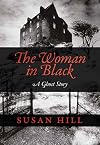
Susan Hill’s The Woman in Black is the rare ghost story that manages to feel both timeless and freshly terrifying. From the first page, the atmosphere tightens like a noose: fog, marshes, and isolation become as frightening as any apparition. Hill’s prose is spare yet lyrical, the kind that gives you chills not because of gore or shock, but because she lets your imagination run loose in the shadows she carefully builds.
The woman in black is one of the most complex and haunting ghosts in show more literature. She is not just a figure of malice, but a presence steeped in emotion that makes her unforgettable. The horror lies not only in her appearances but in the way she unsettles everything she touches.
What elevates the novel is how fully it inhabits the tradition of the Gothic ghost story while sharpening it for modern readers. Every creak of the house, every roll of the fog, every moment of silence feels alive with menace. Reading it alone at night is an exercise in bravery, and even in daylight, its images linger.
For me, this is a five-star book, not just for its ability to frighten, but for the way it treats the ghost as a character with her own tragic weight. It is chilling, yes, but it is also profound. show less
The woman in black is one of the most complex and haunting ghosts in show more literature. She is not just a figure of malice, but a presence steeped in emotion that makes her unforgettable. The horror lies not only in her appearances but in the way she unsettles everything she touches.
What elevates the novel is how fully it inhabits the tradition of the Gothic ghost story while sharpening it for modern readers. Every creak of the house, every roll of the fog, every moment of silence feels alive with menace. Reading it alone at night is an exercise in bravery, and even in daylight, its images linger.
For me, this is a five-star book, not just for its ability to frighten, but for the way it treats the ghost as a character with her own tragic weight. It is chilling, yes, but it is also profound. show less
Rating: 3.5* of five
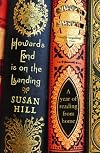
The Book Description: Early one autumn afternoon in pursuit of an elusive book on her shelves, Susan Hill encountered dozens of others that she had never read, or forgotten she owned, or wanted to read for a second time. The discovery inspired her to embark on a year-long voyage through her books, forsaking new purchases in order to get to know her own collection again.
A book which is left on a shelf for a decade is a dead thing, but it is also a chrysalis, packed with show more the potential to burst into new life. Wandering through her house that day, Hill's eyes were opened to how much of that life was stored in her home, neglected for years. Howard's End is on the Landing charts the journey of one of the nation's most accomplished authors as she revisits the conversations, libraries and bookshelves of the past that have informed a lifetime of reading and writing.
My Review: Haven't all of us who possess a lot of books done this? “I will not buy a new book until I have read x from my shelves!” Uh huh. “No seriously THIS year I mean it, I'm not buying a book! Not one! No!” Mmm hmmm “Really!! I WILL NOT!” Yes dear.
I have no idea how Ms. Hill fared in her commitment not to buy any new books for a year (I suspect poorly, but I'm a suspicious old bugger, I am). I read this lovely memoir of her her reading life with pleasure, because she told me enough about the books that sparked the memories she shares for me to capture my own memories of the books, or to latch on to her sense of them, their place in her life, and the overall effect is to offer her own context as well as the book's.
I like that idea. I like to read what other readers think about when they're reading or after they've finished or even before they've decided what to read next. (Makes sense, doesn't it, here on this site?) And when that reader has written some very, very popular books, published some very good books, and talked about books on radio, television, and stage, I mean! Go fight those odds. I had to read this book. And then re-read it. I loved the experience of both, and would never ask for those eyeblinks back.
There are two passages I've come to and come back to multiple times. One is from author David Cecil's book Library Looking Glass: A Personal Anthology, a tome and a writer absolutely unknown to my poorly educated little ol' Texan self; while Ms. Hill does a wee bit of Internet bashing at the beginning of this book, I found Mother Internet most helpful in digging up a potted biography on Wikipedia of this fourth child of a marquess and father of an actor, an historian, and a literary agent. He was a very old-school gent, and deeply deeply steeped in a bygone literary tradition, author of books on Tennyson and Max Beerbohm and Dorothy Osborne...ye gods how grisly it all sounds to my ear. But then Hill quotes this from his 1975 “Personal Anthology:”
Oh yes indeed, Lord David. Oh yes indeed, and so well said. Hardly a surprise, I suppose, this gift he shows there with the gab, given the amount and the quality of the poetry he spent his life reading, analyzing, delving into, parsing, disassembling and reassembling and explicating to generations of young scholars. But how surprising, how very satisfying to find, in a book about someone else's readerly DNA, a hitherto uncatalogued strand of my own.
Hill meditates on the subject of what forms a person, on readerly DNA, later in the book. The passage is one I found calling out to me while I was reading other books, and I marked it for easy access. It has helped me understand the reasons that I read, and the reasons that I decide not to read, certain books or genres or authors.
It is the reason I am so interested in what others who, like me, crave the written story and the printed book, have to say about their reading, and their lives. We're all made of a unique set of genes, and a unique formula of books. It makes us deeply flawed, and deeply interesting.
Even as I turned the pages of the book again and sometimes two or three times, to re-read and re-savor some lovely or lively moment of memory or of sensory pleasure, even as I contemplated my own version of this book, I was aware of a sense of want, a lack of something I was expecting and not getting. It feels churlish to bring it up, but it's the reason I've given the book a half-star less than I would have otherwise. Please forgive the nosy American, Ms. Hill, but...so? And you are...? I'm asking for a wee little bit more of your CV, your activities in some...not a great deal, just some...more detail than you give. The small bits of personal information that are here are those that a very congenial acquaintance would provide, and I have the sense that is exactly and precisely what was intended to be offered.
But we're all readers here, ma'am. We're all in the club. A tell-all dishfest on le monde litteraire? No, not this book (though one of those would be lovely)...but a few more lines of whys and hows and whos would not have come amiss, nor would a sense of your place in life as the discoveries you limn for us have weighed down the narrative unduly.
A minor cavil. A delight of a book. My warmest personal thanks from England's 1644 colonial foundation on Long Island to the Long Barn. show less
The Book Description: Early one autumn afternoon in pursuit of an elusive book on her shelves, Susan Hill encountered dozens of others that she had never read, or forgotten she owned, or wanted to read for a second time. The discovery inspired her to embark on a year-long voyage through her books, forsaking new purchases in order to get to know her own collection again.
A book which is left on a shelf for a decade is a dead thing, but it is also a chrysalis, packed with show more the potential to burst into new life. Wandering through her house that day, Hill's eyes were opened to how much of that life was stored in her home, neglected for years. Howard's End is on the Landing charts the journey of one of the nation's most accomplished authors as she revisits the conversations, libraries and bookshelves of the past that have informed a lifetime of reading and writing.
My Review: Haven't all of us who possess a lot of books done this? “I will not buy a new book until I have read x from my shelves!” Uh huh. “No seriously THIS year I mean it, I'm not buying a book! Not one! No!” Mmm hmmm “Really!! I WILL NOT!” Yes dear.
I have no idea how Ms. Hill fared in her commitment not to buy any new books for a year (I suspect poorly, but I'm a suspicious old bugger, I am). I read this lovely memoir of her her reading life with pleasure, because she told me enough about the books that sparked the memories she shares for me to capture my own memories of the books, or to latch on to her sense of them, their place in her life, and the overall effect is to offer her own context as well as the book's.
I like that idea. I like to read what other readers think about when they're reading or after they've finished or even before they've decided what to read next. (Makes sense, doesn't it, here on this site?) And when that reader has written some very, very popular books, published some very good books, and talked about books on radio, television, and stage, I mean! Go fight those odds. I had to read this book. And then re-read it. I loved the experience of both, and would never ask for those eyeblinks back.
There are two passages I've come to and come back to multiple times. One is from author David Cecil's book Library Looking Glass: A Personal Anthology, a tome and a writer absolutely unknown to my poorly educated little ol' Texan self; while Ms. Hill does a wee bit of Internet bashing at the beginning of this book, I found Mother Internet most helpful in digging up a potted biography on Wikipedia of this fourth child of a marquess and father of an actor, an historian, and a literary agent. He was a very old-school gent, and deeply deeply steeped in a bygone literary tradition, author of books on Tennyson and Max Beerbohm and Dorothy Osborne...ye gods how grisly it all sounds to my ear. But then Hill quotes this from his 1975 “Personal Anthology:”
It is often said that mankind needs a faith if the world is to be improved. In fact, unless the faith is vigilantly and regularly checked by a sense of man's fallibility, it is likely to make the world worse. From Torquemada to Robespierre and Hitler the men who have made mankind suffer the most have been inspired to do so have been inspired to do so by a strong faith; so strong that it led them to think their crimes were acts of virtue necessary to help them achieve their aim, which was to build some sort of an ideal kingdom on earth.(pp156-157, English softcover edition)
Oh yes indeed, Lord David. Oh yes indeed, and so well said. Hardly a surprise, I suppose, this gift he shows there with the gab, given the amount and the quality of the poetry he spent his life reading, analyzing, delving into, parsing, disassembling and reassembling and explicating to generations of young scholars. But how surprising, how very satisfying to find, in a book about someone else's readerly DNA, a hitherto uncatalogued strand of my own.
Hill meditates on the subject of what forms a person, on readerly DNA, later in the book. The passage is one I found calling out to me while I was reading other books, and I marked it for easy access. It has helped me understand the reasons that I read, and the reasons that I decide not to read, certain books or genres or authors.
Books help to form us. If you cut me open, will you find volume after volume, page after page, the contents of every one I have ever read, somehow transmuted and transformed into me? … But if the books I have read have helped to form me, then probably nobody else who ever lived has read exactly the same books, all the same books and only the same books, as me. So just as my genes and the soul within me make me uniquely me, so I am the unique sum of the books I have read. I am my literary DNA.(pp201-202, English softcover edition)
It is the reason I am so interested in what others who, like me, crave the written story and the printed book, have to say about their reading, and their lives. We're all made of a unique set of genes, and a unique formula of books. It makes us deeply flawed, and deeply interesting.
Even as I turned the pages of the book again and sometimes two or three times, to re-read and re-savor some lovely or lively moment of memory or of sensory pleasure, even as I contemplated my own version of this book, I was aware of a sense of want, a lack of something I was expecting and not getting. It feels churlish to bring it up, but it's the reason I've given the book a half-star less than I would have otherwise. Please forgive the nosy American, Ms. Hill, but...so? And you are...? I'm asking for a wee little bit more of your CV, your activities in some...not a great deal, just some...more detail than you give. The small bits of personal information that are here are those that a very congenial acquaintance would provide, and I have the sense that is exactly and precisely what was intended to be offered.
But we're all readers here, ma'am. We're all in the club. A tell-all dishfest on le monde litteraire? No, not this book (though one of those would be lovely)...but a few more lines of whys and hows and whos would not have come amiss, nor would a sense of your place in life as the discoveries you limn for us have weighed down the narrative unduly.
A minor cavil. A delight of a book. My warmest personal thanks from England's 1644 colonial foundation on Long Island to the Long Barn. show less
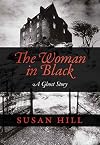
Now this is my kind of ghost story. In the past I've enjoyed books like The Turning of the Screw and The Haunting of Hill House, but have always been left feeling just a little bit frustrated. You aren't quite sure if they are ghosts stories or tales of madness. You can't trust the narrator, which makes them both wonderful and infuriating.
The Woman is Black doesn't take that approach. It is absolutely a ghost story and it scared me more than I'd like to admit (but in a good way!)
A young show more solicitor, Arthur Kipps, is dispatched to a remote corner of England to resolve the affairs of a recently deceased client, Mrs. Drablow. She had lived alone in a huge, old mansion, Eel Marsh House, on the outskirts of town. Kipps quickly realizes that things won't be as simple as he'd hoped, but every attempt he makes to get more information is thwarted. The townspeople's furtive glances and refusal to talk about Eel Marsh House heighten his suspicions that there's something very wrong with the house.
I think if I could sum up the book in one word it would be: satisfying. It perfectly fulfilled my own personal taste for a ghost story. I don't like graphic scenes of horror, but I love a good scare. I also want good characters and a believable plot. This one had the perfect balance of all of those factors and on top of that, the writing was excellent.
It has the best and most disturbing description of fog that I've ever read...
"It was a mist like a damp, clinging cobwebby thing, fine and yet impenetrable. It smelled and taste quite different from the yellow filthy fog of London; that was choking and thick and still, this was salty, light and pale and moving in front of my eyes all the time. I felt confused, teased by it, as though it were made up of millions of live fingers that crept over me, hung on to me and then shifted away again."
Another reason I loved this story is Kipps himself. So often ghost stories seem to contain weak lead characters that are easily frightened. I think I trusted Kipps' description of the events more because he was determined not to be easily scared off by rumors. The story scares with both the tangible and intangible, both scary in their own way. For example...
"At that moment I began to doubt my own reality."
Is anything more terrifying than that?
I absolutely recommend this one for anyone and everyone who likes a good scare. show less
The Woman is Black doesn't take that approach. It is absolutely a ghost story and it scared me more than I'd like to admit (but in a good way!)
A young show more solicitor, Arthur Kipps, is dispatched to a remote corner of England to resolve the affairs of a recently deceased client, Mrs. Drablow. She had lived alone in a huge, old mansion, Eel Marsh House, on the outskirts of town. Kipps quickly realizes that things won't be as simple as he'd hoped, but every attempt he makes to get more information is thwarted. The townspeople's furtive glances and refusal to talk about Eel Marsh House heighten his suspicions that there's something very wrong with the house.
I think if I could sum up the book in one word it would be: satisfying. It perfectly fulfilled my own personal taste for a ghost story. I don't like graphic scenes of horror, but I love a good scare. I also want good characters and a believable plot. This one had the perfect balance of all of those factors and on top of that, the writing was excellent.
It has the best and most disturbing description of fog that I've ever read...
"It was a mist like a damp, clinging cobwebby thing, fine and yet impenetrable. It smelled and taste quite different from the yellow filthy fog of London; that was choking and thick and still, this was salty, light and pale and moving in front of my eyes all the time. I felt confused, teased by it, as though it were made up of millions of live fingers that crept over me, hung on to me and then shifted away again."
Another reason I loved this story is Kipps himself. So often ghost stories seem to contain weak lead characters that are easily frightened. I think I trusted Kipps' description of the events more because he was determined not to be easily scared off by rumors. The story scares with both the tangible and intangible, both scary in their own way. For example...
"At that moment I began to doubt my own reality."
Is anything more terrifying than that?
I absolutely recommend this one for anyone and everyone who likes a good scare. show less
The Various Haunts of Men: A Simon Serrailler Mystery (Simon Serrailler crime novels Book 1) by Susan Hill
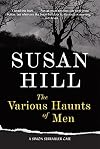
[The Various Haunts of Men] - Susan Hill - (England)
Genera: Crime/Police procedural
Narrator: Steven Pacey
4★
A woman vanishes in the fog up on "the Hill", an area locally known for its tranquility and peace. The police are not alarmed; people usually disappear for their own reasons. But when a young girl, an old man, and even a dog disappear, no one can deny that something untoward is happening in this quiet town. Young policewoman Freya Graffham is assigned to the case; she's new to the show more job, compassionate, inquisitive, and dedicated. She and the enigmatic detective Chief Inspector Simon Serrailler have the task of unraveling the mystery behind this gruesome sequence of events.
This is the first in a series by Susan Hill, who is best known for her gothic, and chilling suspense novels. My favorite will always be [The Woman in Black]. I will admit to being a bit annoyed that this book really had nothing to do with Simon Serrailler. He was a secondary character through the entire story. Another thing that more than annoyed this animal lover was that they killed the dog! Seriously...was that really necessary to the story? The main character made some choices that were flat out idiocy. I understand that people do stupid things sometimes, but this woman, Freya Graffham, needed a 'handler". I found that I was actually continuing to read in order to see for her next "I'm going to get myself killed" choice. Before I knew it, I was at the end of the book, and by the grace of God and Susan Hill's pen...she was still alive...so all's well that ends well. I have to give Ms. Hill credit that she didn't write a "happy ever after ending".... nor did she write crappy dialogue trying to force readers into believing or disbelieving anything about her characters. She let the reader use their "God -given" brain to decide for themselves. 4 Stars and I'll continue to read this author. show less
Lists
THE WAR ROOM (1)
Winter Books (1)
Overdue Podcast (1)
Ghosts (3)
100 Hemskaste (2)
A Novel Cure (2)
Bibliomemoirs (2)
British Mystery (1)
Bedbooks (1)
2010s (1)
Booker Prize (1)
Awards


You May Also Like


Associated Authors
Statistics
- Works
- 125
- Also by
- 20
- Members
- 18,761
- Popularity
- #1,163
- Rating
- 3.7
- Reviews
- 964
- ISBNs
- 993
- Languages
- 21
- Favorited
- 43

