

James Lees-Milne (1908–1997)
Author of Another Self
About the Author
Image credit: James Lees-Milne (1908-1997)
Series
Works by James Lees-Milne
The Bachelor Duke: A Life of William Spencer Cavendish 6th Duke of Devonshire 1790-1858 (1991) 38 copies
Cotehele 2 copies
BLICKLING HALL 2 copies
GUNBY HALL 1 copy
Plowden Hall, Shropshire 1 copy
Lyme Park, Cheshire 1 copy
Hanbury Hall Worcestershire 1 copy
BARRINGTON COURT 1 copy
Associated Works
The Assassin's Cloak: An Anthology of the World's Greatest Diarists (2000) — Contributor, some editions — 622 copies, 9 reviews
Tagged
Common Knowledge
- Legal name
- Lees-Milne, James Henry
- Birthdate
- 1908-08-06
- Date of death
- 1997-12-28
- Gender
- male
- Education
- Eton College
Magdalen College, University of Oxford (BA|1931) - Occupations
- architectural historian
novelist
biographer
diarist
secretary - Organizations
- National Trust
- Awards and honors
- Royal Society of Literature (Fellow, 1957)
Society of Antiquaries of London (Fellow, 1974) - Relationships
- Lloyd, George (employer)
Nicolson, Harold (lover)
Chaplin, Alvilde (spouse) - Short biography
- George James Henry Lees-Milne, better known as James Lees-Milne, was an English writer and expert on country houses, who worked for the National Trust from 1936 to 1973. He was an architectural historian, novelist and biographer. His extensive diaries remain in print.
- Nationality
- UK
- Birthplace
- Wickhamford, Worcestershire, England, UK
- Places of residence
- Wickhamford, Worcestershire, England, UK
Alderley Grange, Gloucestershire, England, UK
Essex House, Gloucestershire, England, UK
Bath, Somerset, England, UK - Place of death
- Tetbury, Gloucestershire, England, UK
- Burial location
- Cremated, ashes scattered on the grounds of Essex House, Badminton, Gloucestershire, England, UK.
- Associated Place (for map)
- England, UK
Members
Reviews
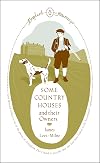
Throughout the 1940s Milne traveled all over Great Britain on behalf of the newly-formed National Trust. His job was to visit stately homes, castles or homes of historical significance, look them over and determine if the trust should ask for them to be donated for public use. The owners were often eager to donate their ancestral homes to get out from under the crushing death taxes levied, along with the enormous expense of keeping up a home that was often two or three hundred years show more old.
Milne kept a journal of the many homes he visited, and this book is divided between the homes the trust acquired and the ones Milne worked to acquire but didn't, for many reasons. He has the quick eye and keen observation needed for his job and describes the homes in great detail as to what he likes and often what he hates. He can tell when the furniture is fake and when a building has been modernized badly. His descriptions of the various occupants is so clearly written that the reader can see them as Milne does. He often likes these aristocrats who have fallen on hard times, at one point, in 1947, he writes in fear of what will happen to a particular house once the average people are allowed near it:
A whole social system has broken down. What will replace it beyond government by the masses, uncultivated, rancorous, savage, philistine, the enemies of all things beautiful? How I detest democracy.
To be fair, he was seeing many grand houses that were being vandalized by the military personnel living in them at the time, as much of the journal was during WWII. And Milne is funny, with a snarky sense of humor. His descriptions are wonderful.
Lord Beauchamp is fat, with a great paunch, looking like God knows what, wearing an old blue shirt, open at the frayed neck, and a tight pair of brown Army shorts, baby socks and sandshoes.
or an arrogant Lord who clearly didn't trust Milne or the idea of the trust:
At 5.45 Lord Leconfield, tired out, led me to the street door where he dismissed me. Pointing to a tea house with an enormous CLOSED hanging in the window, he said, "You will get a very good tea in there. Put it down to me. Goodbye."
This is a quick read but the extended version of Lees-Milne's journals is available too. show less
Milne kept a journal of the many homes he visited, and this book is divided between the homes the trust acquired and the ones Milne worked to acquire but didn't, for many reasons. He has the quick eye and keen observation needed for his job and describes the homes in great detail as to what he likes and often what he hates. He can tell when the furniture is fake and when a building has been modernized badly. His descriptions of the various occupants is so clearly written that the reader can see them as Milne does. He often likes these aristocrats who have fallen on hard times, at one point, in 1947, he writes in fear of what will happen to a particular house once the average people are allowed near it:
A whole social system has broken down. What will replace it beyond government by the masses, uncultivated, rancorous, savage, philistine, the enemies of all things beautiful? How I detest democracy.
To be fair, he was seeing many grand houses that were being vandalized by the military personnel living in them at the time, as much of the journal was during WWII. And Milne is funny, with a snarky sense of humor. His descriptions are wonderful.
Lord Beauchamp is fat, with a great paunch, looking like God knows what, wearing an old blue shirt, open at the frayed neck, and a tight pair of brown Army shorts, baby socks and sandshoes.
or an arrogant Lord who clearly didn't trust Milne or the idea of the trust:
At 5.45 Lord Leconfield, tired out, led me to the street door where he dismissed me. Pointing to a tea house with an enormous CLOSED hanging in the window, he said, "You will get a very good tea in there. Put it down to me. Goodbye."
This is a quick read but the extended version of Lees-Milne's journals is available too. show less
I had a wonderful time reading this book. At only 133 pages, one could easily read it in an hour or so. But I took much longer because I had to look up each property on the internet and then mark it in my giant UK road atlas, just in case I'm in the neighbourhood sometime (don't want to miss anything!). Looking up the properties was highly rewarding, because I saw that most (although not all) of these "houses" were not what you and I call houses. Unless of course your house is situated on show more thousands of acres and has hundreds of rooms.
There are three sections to the book: the introduction by Michael Bloch, and then Part One: Houses Now Owned by the National Trust, and Part Two: Houses Which Escaped the National Trust. In the intro, he explains how the National Trust is a private charity and has never been part of the government. Silly me--I had it confused with English Heritage, which is part of the government and owns properties such as Stonehenge. Anyway, when the National Trust "was founded in the 1890s, its main object was to acquire land in order to preserve and give public access to gems of the English landscape which were under threat from the expansion of suburbia. However, by the 1930s it recognized that equally in need of preservation were the many beautiful country houses . . . Thanks to a long agricultural depression, the deaths of heirs in the First World War, and the vastly increased taxation of incomes and estates, most of their traditional owners, if they had not already abandoned them, looked as if they would be unable to continue living in them for much longer." James Lees-Milne's job was to visit these properties and arrange for their transfer to the National Trust. Entries are listed in alphabetical order by property name (which is handy for easy reference) and are made up of Lees-Milne's diary entries from his visits.
These diary entries are interesting, enlightening and often quite wry (especially if you find eccentric British aristocrats funny, as I do). Sometimes the entries are sad. Whatever the mood, he has a sharp eye for observing character and a gift for assessing the properties and their contents. It's also a bit of an elegy for a lost way of life and class of people (some people would say this loss is the world's gain, but we won't go there now).
Rating: 5 stars, when combined with looking up pictures on the internet. A picture book comprising this text and pictures of the houses and their owners would be fabulous. If I ever become a book publisher . . .
Recommended for: This is a must read for all Anglophiles, and a fun quick read for anyone planning on visiting an English country estate or two. Also great for anyone interested in English history. show less
There are three sections to the book: the introduction by Michael Bloch, and then Part One: Houses Now Owned by the National Trust, and Part Two: Houses Which Escaped the National Trust. In the intro, he explains how the National Trust is a private charity and has never been part of the government. Silly me--I had it confused with English Heritage, which is part of the government and owns properties such as Stonehenge. Anyway, when the National Trust "was founded in the 1890s, its main object was to acquire land in order to preserve and give public access to gems of the English landscape which were under threat from the expansion of suburbia. However, by the 1930s it recognized that equally in need of preservation were the many beautiful country houses . . . Thanks to a long agricultural depression, the deaths of heirs in the First World War, and the vastly increased taxation of incomes and estates, most of their traditional owners, if they had not already abandoned them, looked as if they would be unable to continue living in them for much longer." James Lees-Milne's job was to visit these properties and arrange for their transfer to the National Trust. Entries are listed in alphabetical order by property name (which is handy for easy reference) and are made up of Lees-Milne's diary entries from his visits.
These diary entries are interesting, enlightening and often quite wry (especially if you find eccentric British aristocrats funny, as I do). Sometimes the entries are sad. Whatever the mood, he has a sharp eye for observing character and a gift for assessing the properties and their contents. It's also a bit of an elegy for a lost way of life and class of people (some people would say this loss is the world's gain, but we won't go there now).
Rating: 5 stars, when combined with looking up pictures on the internet. A picture book comprising this text and pictures of the houses and their owners would be fabulous. If I ever become a book publisher . . .
Recommended for: This is a must read for all Anglophiles, and a fun quick read for anyone planning on visiting an English country estate or two. Also great for anyone interested in English history. show less
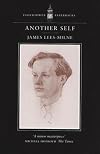
Oh, I laughed out loud at this one. It was a scream from start to finish. James Lees Milne is one of the best diarists of the last one hundred years. He's the Samuel Pepys of the 20th Century. However, Another Self is his "memoir" (put in quotation marks because several writers dispute the truthfulness of his accounts). But I don't care if everything he wrote was bologna. It was delicious bologna and hilarious bologna. He was raised by lunatic parents and his stories about them had me in show more tears. Also, he wrote about his adventures at school and his military service afterwards. It's a short book and a breeze to read. You will not be disappointed.
(Btw, Milne may be the one of the greatest preservers of English architecture in the 20th Century. He joined Britain's National Trust in its early days and thereafter went about saving a host of country estates which had fallen into disrepair, most of which were slated for destruction. Because of him and his cohorts, there are many real-life Downtown Abbeys in existence today.) show less
(Btw, Milne may be the one of the greatest preservers of English architecture in the 20th Century. He joined Britain's National Trust in its early days and thereafter went about saving a host of country estates which had fallen into disrepair, most of which were slated for destruction. Because of him and his cohorts, there are many real-life Downtown Abbeys in existence today.) show less
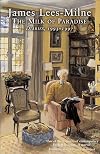
This is the last in the series of diaries of James Lees -Milne, covering the final five years of his long life. He died in 1997 aged 89. He was best known for his work for the National Trust, saving magnificent country homes "in trust for the nation" so preserving architectural masterpieces and enabling heirs to meet their inheritance tax obligations but still also live rent free in their old homes (you must br open to the unwashed public for at least some of the time). . He shaped the show more National trust and lived to deliver on a vision of preserving at least remnants of a fast disappearing older lifestyle . A win -win situation where everyone gains and Britain acquires star attractions for tourists . Lees-Milne's was an a man representative of his era and his class . His was a full and fascinating 20th century life . His reputation also rested on his writing ... Some wonderful arhitectural histories , two volumes of very readable autobiographies ( this was how I first discovered him ) and finally as a modern day Pepys in keeping his diaries . His diaries ran to twelve volumes and all were published (except for the last) in this lifetime and he did his own editions. . It ended up as too much of a good thing ... As the impression gained is that the diarist then writes not for himself or his family as a private testimony , but for the effect on unknown readers with an income flowing in from the publisher and we the reader connives by being a voyeur into someone else's life . There is a quality of contrived artlessness. This final diary is sad as it reveals the horrors of old age and the onset physical decrepitude and the sharing your life with an ageing and then dying wife . But Lees- Milne had that stiff upper lip British approach to fate and kept engaged , occupied and interested in his kind of people, hearing thr first cuckoo and his priveleged social world . His life was in the provinces , a country village in the South West , but trips to London, many luncheons, visits and house visits , hob nibbling with old friends. I would have preferred more on his actual work. They say that in old age one's life shrinks to ultimately your house, your garden, four walls and finally the four corners of your own bed . All worth fighting against and resisting which James L -M certainly did . His diaries reveal the measure of the man, someone assured in his knowledge of his subject (architectural history) , an excessive snob, self deprecating, very vain, sexually ambivalent , with a waspish twist in the rapier type of humor . He gives very sharp pen portraits of the many characters he encounters or remembers from his youth He was very well connected and thought it important to drop names in just about every entry . He does not come across as a likeable person.... How did he keep his friends ? Nothing here on the books he was reading or world politics and affairs . Your reading logic is constantly interrupted by needing to also read the numerous footnotes to discover who all these titled people were or are , ( carefully recorded with dates of birth and death, titles, marriages , divorces and lineage) , but an end biographical glossary woukd have worked better. His sharp nettled sentences puts barbs into friend and foe alike and give the diaries their appeal... It's their quirkiness that is original but perhaps a little contrrived . The diaries avoid being boring as you pick up inside tit bits and the scandals of the day about the royal family , bishops, duchesses , ladies , business people of note , socialites etc. Lees-Milne is well served by his editor and biographer Michael Bloch who edited this final volume of diaries . There are no photographs . You are either a fan and an admirer of Lees Milne or you rile at the snobbery and affectations . To promote his writing and his books despite his passing more than 10 years ago there is a James Lees-Milne website ... An irony as he was not computer literate. show less
Lists
Awards

You May Also Like


Associated Authors
Statistics
- Works
- 71
- Also by
- 2
- Members
- 1,726
- Popularity
- #14,890
- Rating
- 3.9
- Reviews
- 36
- ISBNs
- 103
- Languages
- 2
- Favorited
- 6

