
Charlotte Mosley
Author of The Mitfords: Letters Between Six Sisters
About the Author
Works by Charlotte Mosley
In Tearing Haste: Letters Between Deborah Devonshire and Patrick Leigh Fermor (2008) — Editor — 364 copies, 10 reviews
Associated Works
Tagged
Common Knowledge
- Birthdate
- 1952
- Gender
- female
- Occupations
- publisher
journalist
editor - Relationships
- Mosley, Diana (mother-in-law)
Mitford, Nancy (aunt-in-law) - Short biography
- Charlotte Mosley, who married Oswald Alexander Mosley, a son of author Diana (Mitford) Mosley, has written about the six Mitford sisters and edited some of their correspondence. She has worked as a publisher and journalist and lives in Paris.
- Nationality
- UK
- Places of residence
- Paris, France
- Associated Place (for map)
- Paris, France
Members
Discussions
labwriter's Mitford Sisters thread, #1 in 75 Books Challenge for 2011 (April 2011)
Reviews
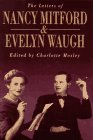
Not the sort of thing most readers would be interested in. Nary an intellectual thought passes between these two self-satisfied English snobs in the numerous correspondences. Certainly not the sort of book one can take in anything other than in small doses. Essentially, the letters contain almost nothing more than gossip, which they ironically insist bores them. The two of them have little curiosity about the world and letters written twenty years after they started their correspondence show more indicate a sort of arrested development as thinkers. But read on if you want the sordid details.
Most of these letters consist of gossip about other English upper-class snobs, which sometimes becomes malicious. In particular, they (mostly Waugh) revel in tormenting Cyril Connelly. The two letter writers think themselves witty and superior; they are such a perfect match that one wonders why they didn’t just divorce their spouses and get it on.
Were they always this way, or was it the success of Brideshead Revisited and The Pursuit of Love that bloated their egos so? How much further can I read before I have had enough?
Especially Waugh. It’s almost as if he converted to Catholicism as a stunt that would peeve all those Church of England stalwarts. His letters make clear that he is not a particularly devout Christian, and his heart-on-his-sleeve misanthropist rantings, lack of love for his children, annoyance at Christmas, etc. makes one wonder if his Catholicism is theoretical rather than one that is actually practiced.
Nancy, however, comes across as essentially and cheerfully Godless. She tends toward socialism, whereas Waugh leans just to the left of outright fascism. But they aren’t that political, deep down. One suspects it’s just another accessory that one dons that keeps them interesting to others in those rarified social gatherings.
Ms. Mitford, for her part, is perhaps the better person. Still, she doesn’t get off the hook with her references to gay friends as “pansies.” She had an irrational hatred of Americans (not having visited the US, by the way). Mitford as cinema critic: “It [Brief Encounter] is both dreary & unrealistic, unlike our books.” For someone who lived in Paris for decades and called herself a Francophile, is it not unseemly to refer to various French as “frogs” in her letters?
Waugh is your I-hate-everyone-sort, and can’t seem to resist pointing out that someone who annoyed him is a “jew” (I use his lower-case). I kept wondering if it wasn’t fatiguing to be so relentlessly “superior”? Elsewhere he says that only jews and lunatics buy the paintings of Cubists.
These letters have been excised of potentially libelous statements (even the oldest from the mid-1940’s). The two of them have strong opinions about artists (perhaps more than the art itself). Both Picasso and Matisse are dissed, for instance. Waugh cannot stand the French (especially everything they have been for the last two hundred years). Rule, Britannia!
I longed to hear something catty about the Royals. What did they think of them? show less
Most of these letters consist of gossip about other English upper-class snobs, which sometimes becomes malicious. In particular, they (mostly Waugh) revel in tormenting Cyril Connelly. The two letter writers think themselves witty and superior; they are such a perfect match that one wonders why they didn’t just divorce their spouses and get it on.
Were they always this way, or was it the success of Brideshead Revisited and The Pursuit of Love that bloated their egos so? How much further can I read before I have had enough?
Especially Waugh. It’s almost as if he converted to Catholicism as a stunt that would peeve all those Church of England stalwarts. His letters make clear that he is not a particularly devout Christian, and his heart-on-his-sleeve misanthropist rantings, lack of love for his children, annoyance at Christmas, etc. makes one wonder if his Catholicism is theoretical rather than one that is actually practiced.
Nancy, however, comes across as essentially and cheerfully Godless. She tends toward socialism, whereas Waugh leans just to the left of outright fascism. But they aren’t that political, deep down. One suspects it’s just another accessory that one dons that keeps them interesting to others in those rarified social gatherings.
Ms. Mitford, for her part, is perhaps the better person. Still, she doesn’t get off the hook with her references to gay friends as “pansies.” She had an irrational hatred of Americans (not having visited the US, by the way). Mitford as cinema critic: “It [Brief Encounter] is both dreary & unrealistic, unlike our books.” For someone who lived in Paris for decades and called herself a Francophile, is it not unseemly to refer to various French as “frogs” in her letters?
Waugh is your I-hate-everyone-sort, and can’t seem to resist pointing out that someone who annoyed him is a “jew” (I use his lower-case). I kept wondering if it wasn’t fatiguing to be so relentlessly “superior”? Elsewhere he says that only jews and lunatics buy the paintings of Cubists.
These letters have been excised of potentially libelous statements (even the oldest from the mid-1940’s). The two of them have strong opinions about artists (perhaps more than the art itself). Both Picasso and Matisse are dissed, for instance. Waugh cannot stand the French (especially everything they have been for the last two hundred years). Rule, Britannia!
I longed to hear something catty about the Royals. What did they think of them? show less

This is an entertaining exchange of correspondence, in many ways, because Paddy Leigh Fermor loved books but obviously hated sitting down to write them, whilst Deborah, youngest Mitford sister and Duchess of Devonshire in her day job, always professed to loath books(*) but rather enjoyed writing them. He knew as little about death-watch beetles, the National Trust and diseases of sheep as she did about literature and Byzantine art, so their letters, which span five decades, never get bogged show more down in professional gossip, but range freely over the oddness of the world, the strange ways their respective lives have panned out, and the many interesting people they both know.
Being who they were, between the two of them they mixed with just about everybody who was anybody in the mid-20th century (not just in England and Greece, either: Deborah was sister-in-law to the Kennedys, and Paddy knew most of the ex-aristocrats of Central and Eastern Europe). Royalty, landowners, politicians, spies, travel writers and SOE types, artists and sculptors, Hollywood, the queerocracy, the Bloomsburies, and all the rest. So the names do tend to drop thick and fast, but of course they aren't trying to impress each other, it's more like an amused fascination with the way all these connections drop into place.
Often, too, they seem to use their letters as a safe space to try out material for articles or speeches they are working on: it's quite odd sometimes to read Paddy's long and detailed accounts to Deborah of trips to remote places he's been on with her husband.
Charlotte Mosley (daughter-in-law of Deborah's sister Diana) had the great advantage when she was editing this book that both participants were still around to answer questions, and she has included their comments in the footnotes where something is obscure from the letters. Other than that, her own notes are brief, unintrusive and usually enough to help you to keep up with all the idiosyncratic nicknames.
As with almost all letter collections, the main drawback is that the last part of the book leaves you on a depressing note of old age, illness, and a steady stream of funerals. Maybe the trick would be to start at the end and work backwards in time?
---
(*) This was so notorious that when Evelyn Waugh sent her a presentation copy of his latest book in 1959, he arranged for it to be bound with all the pages blank to see if she would notice. show less
Being who they were, between the two of them they mixed with just about everybody who was anybody in the mid-20th century (not just in England and Greece, either: Deborah was sister-in-law to the Kennedys, and Paddy knew most of the ex-aristocrats of Central and Eastern Europe). Royalty, landowners, politicians, spies, travel writers and SOE types, artists and sculptors, Hollywood, the queerocracy, the Bloomsburies, and all the rest. So the names do tend to drop thick and fast, but of course they aren't trying to impress each other, it's more like an amused fascination with the way all these connections drop into place.
Often, too, they seem to use their letters as a safe space to try out material for articles or speeches they are working on: it's quite odd sometimes to read Paddy's long and detailed accounts to Deborah of trips to remote places he's been on with her husband.
Charlotte Mosley (daughter-in-law of Deborah's sister Diana) had the great advantage when she was editing this book that both participants were still around to answer questions, and she has included their comments in the footnotes where something is obscure from the letters. Other than that, her own notes are brief, unintrusive and usually enough to help you to keep up with all the idiosyncratic nicknames.
As with almost all letter collections, the main drawback is that the last part of the book leaves you on a depressing note of old age, illness, and a steady stream of funerals. Maybe the trick would be to start at the end and work backwards in time?
---
(*) This was so notorious that when Evelyn Waugh sent her a presentation copy of his latest book in 1959, he arranged for it to be bound with all the pages blank to see if she would notice. show less
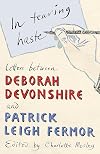
A wonderful window on a friendship that has stood the test of time. Reading these letters makes me want to give up email and go back to writing physical notes! PLF's travel writing is exactly what I like to read - descriptions of the flora and fauna, logistics of how one gets to various places (I hate it when people "magically" whisk from one continent to another and never mention HOW they travelled!), people, architecture, history etc, all with self-deprecating humor. Just reading about all show more his mountain hiking made me exhausted! And Debo's charming stories about estate matters, livestock, books, people and doings are warm and gossipy and interesting.
These two lived through an amazing amount of history - and continue to do so today. Their take on it all is another side of conflicts and personalities one might not have heard or known about before.
I've put on hold at my library all their books that are available, I do hope their other writing is as good as their letters! show less
These two lived through an amazing amount of history - and continue to do so today. Their take on it all is another side of conflicts and personalities one might not have heard or known about before.
I've put on hold at my library all their books that are available, I do hope their other writing is as good as their letters! show less
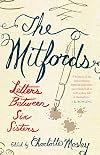
I meant to keep this as a bedside treat and read a few letters each evening, but inevitably gobbled it down indiscriminately. I was sorry that Nancy's funnier letters, already printed in other collections, didn't make it into this volume as well, as the full extent of her wit is not apparent; the same could be said of Jessica. Diana's famous charm did not come across from the printed page for me - she seemed querulous and tiresome by the end, as if she used up all her bravery during her show more period of imprisonment and in subsequent defence of Mosley. Debo is the funniest in this volume; Unity can be amusing but it is something of a relief when her letters, with their repetitive refrain of "poor dear Hitler", come to an end. The selection tells the story of the sisters very effectively, letting their own words narrate and expose the complexities of their lives and relationships with each other. show less
Lists
You May Also Like


Associated Authors
Statistics
- Works
- 4
- Also by
- 2
- Members
- 1,745
- Popularity
- #14,740
- Rating
- 3.8
- Reviews
- 44
- ISBNs
- 20
- Languages
- 1