
Paula Byrne (1) (1967–)
Author of The Real Jane Austen: A Life in Small Things
For other authors named Paula Byrne, see the disambiguation page.
About the Author
Paula Byrne is the critically acclaimed author of six biographies, including Kick: The True Story of JFK's Sister and the Heir to Chatsworth, Belle: The Slave Daughter and the Lord Chief Justice, The Real Jane Austen, and Mad World: Evelyn Waugh and the Secrets of Brideshead. She is married to the show more academic and biographer Jonathan Bate and lives in Oxford, England. show less
Works by Paula Byrne
Associated Works
Tagged
Common Knowledge
- Other names
- Lady Bate
- Birthdate
- 1967
- Gender
- female
- Education
- West Sussex Institute of Higher Education (BA)
University of Liverpool (MA, PhD) - Occupations
- scholar
founder and CEO, ReLit: The Bibliotherapy Foundation - Awards and honors
- Fellow, Royal Society of Arts
- Relationships
- Bate, Jonathan (spouse)
- Nationality
- UK
- Birthplace
- Birkenhead, Cheshire, England, UK
- Map Location
- UK
Members
Reviews
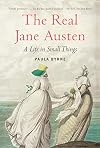
Every scholar brings their own interpretations and insights to their subject. No matter how many books on Jane Austen I read, there is always something new to learn.
Byrne's book is entertaining and I enjoyed reading it. She considers Austen through the lens of physical objects that impacted her life. Yes, the famous amber cross gifted by her brother is one, and her writing desk gifted from her father. Also, the card of lace her aunt was accused of stealing and the bathing machines Austen show more would have used when staying at her beloved oceanside resorts. Each object is symbolic of an aspect of Austen's life discussed in the chapter.
Of particular interest are insights into Austen's novel Mansfield Park.
Jane had visited the estate of the real Lord Mansfield who adopted a niece to be their heir. She was raised with Dido, the illegitimate daughter of Mansfield's nephew and an enslaved black woman. Byrnes explores Jane's knowledge of slavery through Mansfield, close and distant relatives, and her naval brother Franks' interception of slave vessels and his abolitionist beliefs. The Norris family name also had associations, for it was the name of a notorious slave trader.
Byrnes dissects the background to the novel's plot as reflecting what was going on in Antigua, the reliance on slave labor, the depletion of the soil, and brewing unrest. She notes that Fanny is the only one who wished to ask Mr. Bertram about the slave trade.
After reading Sense and Sensibility and Pride and Prejudice, I was the only one of my university classmates who liked Mansfield Park. The morally superior, powerless, and sensitive Fanny stood her ground, which impressed me. But I did not consider what Byrnes addresses: that the word 'home' was used 140 times in the novel. She asserts that the importance of home is a main theme. "Is it a place or is it a family?", she queries. One of the transformative events in my life was moving at age ten, leaving me homesick and forever wondering about true homes and the homes we make out of necessity.
We can only know Austen through her surviving letters, her novels, and one authenticated portrait--of her back. I appreciate Byrnes deep exploration of these sources which helps to further fill out our understanding of the 'real' Jane Austen. show less
Byrne's book is entertaining and I enjoyed reading it. She considers Austen through the lens of physical objects that impacted her life. Yes, the famous amber cross gifted by her brother is one, and her writing desk gifted from her father. Also, the card of lace her aunt was accused of stealing and the bathing machines Austen show more would have used when staying at her beloved oceanside resorts. Each object is symbolic of an aspect of Austen's life discussed in the chapter.
Of particular interest are insights into Austen's novel Mansfield Park.
Jane had visited the estate of the real Lord Mansfield who adopted a niece to be their heir. She was raised with Dido, the illegitimate daughter of Mansfield's nephew and an enslaved black woman. Byrnes explores Jane's knowledge of slavery through Mansfield, close and distant relatives, and her naval brother Franks' interception of slave vessels and his abolitionist beliefs. The Norris family name also had associations, for it was the name of a notorious slave trader.
Byrnes dissects the background to the novel's plot as reflecting what was going on in Antigua, the reliance on slave labor, the depletion of the soil, and brewing unrest. She notes that Fanny is the only one who wished to ask Mr. Bertram about the slave trade.
After reading Sense and Sensibility and Pride and Prejudice, I was the only one of my university classmates who liked Mansfield Park. The morally superior, powerless, and sensitive Fanny stood her ground, which impressed me. But I did not consider what Byrnes addresses: that the word 'home' was used 140 times in the novel. She asserts that the importance of home is a main theme. "Is it a place or is it a family?", she queries. One of the transformative events in my life was moving at age ten, leaving me homesick and forever wondering about true homes and the homes we make out of necessity.
We can only know Austen through her surviving letters, her novels, and one authenticated portrait--of her back. I appreciate Byrnes deep exploration of these sources which helps to further fill out our understanding of the 'real' Jane Austen. show less
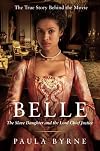
So, a good reason to pick up this book is that you have seen the exquisitely crafted 2014 movie "Belle." If you haven't, do. Anyway, the movie is based on the true story of a mixed race girl being acknowledged and brought up by the aristocratic white half of her family. In 18TH CENTURY BRITAIN. Kind of a big deal.
Unfortunately, all we factually know of her today comes from a lovely and intriguing painting, a few legal documents, the household account books, and the diary of one acquaintance. show more The story is there, but the gaps are tantalizing.
That's why this book has to focus more on her uncle/guardian, Lord Mansfield, the Lord Chief Justice of England. He was called on several times in his professional career to rule on slaves' rights...a touchy subject, given that the economy of the British empire was growing ever more dependent on its slaves. While he couldn't legislate new laws, he could interpret what already existed as humanely as possible. His rulings paved the way for the abolition of the slave trade. This stand becomes more meaningful knowing that he had a mixed race niece at home.
There are enough source documents to confirm that Dido Belle did have a privileged standing in her white family. She wasn't just a glorified servant. She was a daughter of the house. She was accustomed to spend time with them. She was educated enough to have beautiful and clear handwriting (a couple samples actually exist!). Lord Mansfield kept adding codicils to his will, leaving her money, then worrying that it wasn't enough and leaving her more money. An older cousin also left her a legacy, as a "mark of regard."
What I like about this story, both as a movie and real-life history, is what it illustrates about people. In that time and place, no white person was obligated to care for an illegitimate "mulatto." There were no repercussions: the rules gave you every right to close your eyes. But the Mansfields made their own decision to be decent.
I think that's awesome. show less
Unfortunately, all we factually know of her today comes from a lovely and intriguing painting, a few legal documents, the household account books, and the diary of one acquaintance. show more The story is there, but the gaps are tantalizing.
That's why this book has to focus more on her uncle/guardian, Lord Mansfield, the Lord Chief Justice of England. He was called on several times in his professional career to rule on slaves' rights...a touchy subject, given that the economy of the British empire was growing ever more dependent on its slaves. While he couldn't legislate new laws, he could interpret what already existed as humanely as possible. His rulings paved the way for the abolition of the slave trade. This stand becomes more meaningful knowing that he had a mixed race niece at home.
There are enough source documents to confirm that Dido Belle did have a privileged standing in her white family. She wasn't just a glorified servant. She was a daughter of the house. She was accustomed to spend time with them. She was educated enough to have beautiful and clear handwriting (a couple samples actually exist!). Lord Mansfield kept adding codicils to his will, leaving her money, then worrying that it wasn't enough and leaving her more money. An older cousin also left her a legacy, as a "mark of regard."
What I like about this story, both as a movie and real-life history, is what it illustrates about people. In that time and place, no white person was obligated to care for an illegitimate "mulatto." There were no repercussions: the rules gave you every right to close your eyes. But the Mansfields made their own decision to be decent.
I think that's awesome. show less
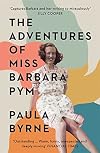
Talk about bringing an idol down off the pedestal; I’ve always joked that Barbara Pym is my patron saint, but oof this was a rough read. I actually knew that the first draft of Pym’s first novel was written in the 1930s and was creepily pro-Nazi (thanks to Laura Shapiro at the Pym conference) and was disturbed then, but wow I definitely didn’t know that she herself visited Germany so many times and was in love with a Nazi too; I mean JFC in the extreme. That was enough, but then there show more was the entire boy-crazy aspect of her life which was annoying; I’m not sure if that was more Byrne’s interpretation, or if Pym truly only ever wrote about men in all her diaries.
It all makes one think about what you leave behind too as she wrote to herself along with her novels and stories; the fact that she ripped out and destroyed pages of those diaries is telling, and it’s so interesting to wonder about what was lost. I do ponder still how Byrne decided to tell Pym’s story; this was a crazy long bio for what was generally a fairly ordinary life, but I wish that we actually saw more of that ordinary part which Pym so beautifully writes about in her novels (although perhaps that was the point—the novels were the ordinary part…). show less
It all makes one think about what you leave behind too as she wrote to herself along with her novels and stories; the fact that she ripped out and destroyed pages of those diaries is telling, and it’s so interesting to wonder about what was lost. I do ponder still how Byrne decided to tell Pym’s story; this was a crazy long bio for what was generally a fairly ordinary life, but I wish that we actually saw more of that ordinary part which Pym so beautifully writes about in her novels (although perhaps that was the point—the novels were the ordinary part…). show less
I love the early novels of Evelyn Waugh simply because they are so funny, filled with epigrammatic sentences and a humor that verges on the fantastic and surreal. "Decline and Fall" is as sparkling as Voltaire's "Candide," and in some ways funnier for the twentieth-century reader, while "Vile Bodies" is a masterly period piece, the definitive satirical portrait of the 1920s "bright young things." Waugh can shock, too: Near the climax of "Black Mischief" (1932), the hero actually finds show more himself at a cannibal feast where he ends up eating his girlfriend.
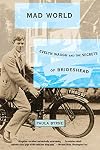
In Mad World, Paula Byrne spends much of the book showing just how deeply the novelist drew on real people, places and events to produce his best known and most controversial novel, "Brideshead Revisited". Despite being exceptionally funny in places, "Brideshead Revisited" focuses, slowly but inexorably, on a religious theme: the working out of God's grace in human lives. In its pages Charles Ryder gradually progresses up a kind of ladder of love. Byrne pursues the autobiographical connections between Waugh, Tony Last of A Handful of Dust and Brideshead Revisited’s Charles Ryder. One link, says Byrne, is Madresfield Court, much of its architecture used as model for both Hetton Abbey and Brideshead Castle, many of its inhabitants used as model for his characters — notably, the gay Lord Beauchamp, squire of Madresfield, inspired Tony Last, and Beauchamp’s gay son Hugh Lygon, one of those with whom Waugh had an affair while at Oxford, inspired Brideshead’s Sebastian Flyte. Byrne’s title plays off Madresfield’s informal name of Mad Court or “Madders”; her title is also inspired by the nervous breakdown of Waugh’s later years:
He went mad, began hearing voices in his head. One of them kept telling him that he was homosexual. He wasn’t — he loved women too much for that — but there is no question that the creator of Sebastian Flyte and admirer of Lord Beauchamp had one of the great bisexual imaginations of the English literary tradition.
Byrne's biography is somewhat narrow in focus, concentrating on just the first 40 years of the writer's life, and with this focus she is able to maintain a fast pace and mirror the fun of his novels. Only in her last section does the story slow, becoming somewhat academic in needlessly highlighting all the correspondences between the world of Madresfield and the world of Brideshead. But she makes her case.
As she says in her prologue, "Mad World" illuminates the obsessions that shaped Waugh's life: "the search for an ideal family and the quest for a secure faith." Her book also reminds us just how much our lives are enriched and sustained by friendships. show less
In Mad World, Paula Byrne spends much of the book showing just how deeply the novelist drew on real people, places and events to produce his best known and most controversial novel, "Brideshead Revisited". Despite being exceptionally funny in places, "Brideshead Revisited" focuses, slowly but inexorably, on a religious theme: the working out of God's grace in human lives. In its pages Charles Ryder gradually progresses up a kind of ladder of love. Byrne pursues the autobiographical connections between Waugh, Tony Last of A Handful of Dust and Brideshead Revisited’s Charles Ryder. One link, says Byrne, is Madresfield Court, much of its architecture used as model for both Hetton Abbey and Brideshead Castle, many of its inhabitants used as model for his characters — notably, the gay Lord Beauchamp, squire of Madresfield, inspired Tony Last, and Beauchamp’s gay son Hugh Lygon, one of those with whom Waugh had an affair while at Oxford, inspired Brideshead’s Sebastian Flyte. Byrne’s title plays off Madresfield’s informal name of Mad Court or “Madders”; her title is also inspired by the nervous breakdown of Waugh’s later years:
He went mad, began hearing voices in his head. One of them kept telling him that he was homosexual. He wasn’t — he loved women too much for that — but there is no question that the creator of Sebastian Flyte and admirer of Lord Beauchamp had one of the great bisexual imaginations of the English literary tradition.
Byrne's biography is somewhat narrow in focus, concentrating on just the first 40 years of the writer's life, and with this focus she is able to maintain a fast pace and mirror the fun of his novels. Only in her last section does the story slow, becoming somewhat academic in needlessly highlighting all the correspondences between the world of Madresfield and the world of Brideshead. But she makes her case.
As she says in her prologue, "Mad World" illuminates the obsessions that shaped Waugh's life: "the search for an ideal family and the quest for a secure faith." Her book also reminds us just how much our lives are enriched and sustained by friendships. show less
Lists
Awards


You May Also Like


Associated Authors
Statistics
- Works
- 13
- Also by
- 1
- Members
- 1,973
- Popularity
- #13,037
- Rating
- 3.8
- Reviews
- 60
- ISBNs
- 92
