
Claire Harman
Author of Jane's Fame: How Jane Austen Conquered the World
About the Author
Claire Harman teaches at Columbia University's School of the Arts.
Works by Claire Harman
All Sorts of Lives: Katherine Mansfield and the Art of Risking Everything (2023) 49 copies, 1 review
Associated Works
Femmes de Siècle: Stories from the 90s - Women Writing at the End of Two Centuries (1992) — Contributor — 18 copies
Tagged
Common Knowledge
- Birthdate
- 1957
- Gender
- female
- Education
- University of Manchester
- Occupations
- writer
critic - Organizations
- University of Manchester
University of Oxford
Columbia University
Alliance of Literary Societies - Awards and honors
- FRSL, 2008
- Nationality
- UK
- Places of residence
- Oxford, England, UK
New York, New York, USA
Cheshire, England, UK - Associated Place (for map)
- England, UK
Members
Reviews
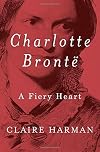
Loved this book. Harman does a wonderful job telling the story of Bronte's life, which is also the story of her family- her siblings and her father. Her growth as a writer, her growing fame and her drift towards marriage were really interesting to read about. Harman brings Bronte to life, warts and all, especially her selfishness when it came to her relationships and the vivid fictional worlds she created with her siblings. I felt like I learned so much about Bronte and the world she lived show more in. Wonderful rewarding read. show less
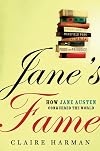
Jane Austen is my favorite author. She and Charlotte Bronte remain the two authors whose works I have read and re-read the most. (And if you know anything at all about English literature, you'll know just how entertaining it is that I regularly lump these two authors together in my head on my own personal "best of" lists.) And I am certainly not alone in my love for Jane Austen by any means as the plethora of movies based on her books, sequels, and adaptations these days show. A quick show more skimming search of websites like etsy or ebay will yield scads of products marketed by their connection to Austen and her world. But how did Austen, who, after all, only wrote 6 novels and about whose life little is truly known become so universally beloved? Claire Harman's Jane's Fame seeks to answer that question.
As most Austen fans know, it took many years for any of Austen's works to be published and they were not the instant sort of success that one might expect of works that have been so enduring. Starting with the little known of Austen's life and her road to publication, Harman traces not Austen's life but the life of her novels as they grew into the cultural phenomenon that they are today. From the initial public reception of the novels to the publication of Austen's biography by her nephew which established her as a saintly hobbyist writer to the current craze for all things Austen, Harman has researched the changing feeling about Austen's works and in fact the re-writing of who she was as an author through numerous sources which back up her conclusions. Occasionally the tone of the book veers toward the academic but for the most part it stays less ponderous so that a more casual reader can appreciate the evolution of Austen's reputation and the critical reception of her works. It's a worthwhile read for Austen fans and an intriguing look at the way in which books can take on a life of their own but perhaps a bit too detailed for all but the most ardent admirers. show less
As most Austen fans know, it took many years for any of Austen's works to be published and they were not the instant sort of success that one might expect of works that have been so enduring. Starting with the little known of Austen's life and her road to publication, Harman traces not Austen's life but the life of her novels as they grew into the cultural phenomenon that they are today. From the initial public reception of the novels to the publication of Austen's biography by her nephew which established her as a saintly hobbyist writer to the current craze for all things Austen, Harman has researched the changing feeling about Austen's works and in fact the re-writing of who she was as an author through numerous sources which back up her conclusions. Occasionally the tone of the book veers toward the academic but for the most part it stays less ponderous so that a more casual reader can appreciate the evolution of Austen's reputation and the critical reception of her works. It's a worthwhile read for Austen fans and an intriguing look at the way in which books can take on a life of their own but perhaps a bit too detailed for all but the most ardent admirers. show less

As well as a brief biography of Miss Austen, this book examines how she came to be so incredibly popular when other authors of her time are only read by a few. I'd recommend this book to people who aren't massive fans of JA as well as those who are, because Claire Harman includes criticisms from those who hated JA's books as well as those who loved them (and there are some fantastic quotes from writers like Charlotte Bronte and Mark Twain who really disliked her books).
Harman ends the book show more by giving her theories as to why JA is so popular. The first is that she is popular because her books are neither trash nor works of blinding greatness but somewhere in between:
"The middle-aged, the middle class and those who consider themselves slightly above the middlebrow are Austen's natural constituency. They (we!) love Austen - the idea as much as the books - because she comes from our own ranks and rocks no boats. With Austen, we know that we are never going to be taken to extremes."
Her other theory relates to the delay between Austen writing S&S, P&P and NA and those books being published. Harman posits that JA would have had to update these books to remove now obsolete references to events and include references to current events. She theorises that because of this exercise, JA included far fewer references to current events in her novels, simply to save herself work if the novels were published at a later date. Although this is often a criticism levelled at JA by some (why does she not mention the slave trade in detail or the Napoleonic war or politics etc?) the absence of these period-specific references give her books a timeless feel that make it a lot easier for a 20th or 21st century reader to understand her work compared to her contemporaries'.
Fascinating stuff. show less
Harman ends the book show more by giving her theories as to why JA is so popular. The first is that she is popular because her books are neither trash nor works of blinding greatness but somewhere in between:
"The middle-aged, the middle class and those who consider themselves slightly above the middlebrow are Austen's natural constituency. They (we!) love Austen - the idea as much as the books - because she comes from our own ranks and rocks no boats. With Austen, we know that we are never going to be taken to extremes."
Her other theory relates to the delay between Austen writing S&S, P&P and NA and those books being published. Harman posits that JA would have had to update these books to remove now obsolete references to events and include references to current events. She theorises that because of this exercise, JA included far fewer references to current events in her novels, simply to save herself work if the novels were published at a later date. Although this is often a criticism levelled at JA by some (why does she not mention the slave trade in detail or the Napoleonic war or politics etc?) the absence of these period-specific references give her books a timeless feel that make it a lot easier for a 20th or 21st century reader to understand her work compared to her contemporaries'.
Fascinating stuff. show less
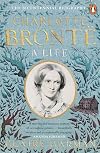
I thought I owed Charlotte a decent biography after Graham Watson's skewed take on the author, but this one took a while to get through (and it's a library book!) To be fair, that's not Claire Harman's fault - Charlotte's life reads like: death, school, death, Brussels, death, obsession, published author, fame, death, death, death, marriage, death. There's not a lot you can do to liven up that sequence of events! I did get a bit teary eyed when Branwell, Emily and Anne died, though.
One show more question mark I have with this - and any - biography of Charlotte is the reliance on quotes from Elizabeth 'National Enquirer' Gaskell's own muck-raking and fictionalised biography. So the story of Branwell setting fire to his bed is dubious, but Emily attacking Keeper and being attacked by a rabied dog must be true because Gaskell, champion of 'second hand sources and gossip', said so? Okay then! Gaskell was a terrible 'friend' to Charlotte, both Watson and Harman have proved that to me, however unintentional. At least Harman doesn't make Charlotte out to be some ignorant bog-dweller living in abject poverty just because she didn't have a villa full of children in Manchester, however.
Still not a Bronte fan, for all I live in Bronte country, but I'm warming to the sisters - we would have got along perfectly well, not talking to each other, I think! show less
One show more question mark I have with this - and any - biography of Charlotte is the reliance on quotes from Elizabeth 'National Enquirer' Gaskell's own muck-raking and fictionalised biography. So the story of Branwell setting fire to his bed is dubious, but Emily attacking Keeper and being attacked by a rabied dog must be true because Gaskell, champion of 'second hand sources and gossip', said so? Okay then! Gaskell was a terrible 'friend' to Charlotte, both Watson and Harman have proved that to me, however unintentional. At least Harman doesn't make Charlotte out to be some ignorant bog-dweller living in abject poverty just because she didn't have a villa full of children in Manchester, however.
Still not a Bronte fan, for all I live in Bronte country, but I'm warming to the sisters - we would have got along perfectly well, not talking to each other, I think! show less
Lists
Awards


You May Also Like


Associated Authors
Statistics
- Works
- 7
- Also by
- 6
- Members
- 1,554
- Popularity
- #16,576
- Rating
- 3.8
- Reviews
- 50
- ISBNs
- 60
- Favorited
- 3
