
Kate Summerscale
Author of The Suspicions of Mr. Whicher: A Shocking Murder and the Undoing of a Great Victorian Detective
About the Author
Kate Summerscale is the former literary editor of the Daily Telegraph and the author of The Queen of Whale Cay, which won the Somerset Maugham Award and was shortlisted for the Whitbread biography award. She lives in London.
Image credit: www.katesummerscale.com/
Works by Kate Summerscale
The Suspicions of Mr. Whicher: A Shocking Murder and the Undoing of a Great Victorian Detective (2008) 3,725 copies, 179 reviews
The Queen of Whale Cay: The Eccentric Story of 'Joe' Carstairs, Fastest Woman on Water (1997) 304 copies, 10 reviews
Associated Works
Tagged
Common Knowledge
- Birthdate
- 1965
- Gender
- female
- Education
- Bedales School
University of Oxford
Stanford University - Occupations
- journalist
biographer
historian - Short biography
- Kate Summerscale was brought up in Japan, England and Chile and now lives in London with her son.
She took a double-first at Oxford University and earned a master's degree in journalism from Stanford University. She has worked for The Independent and The Daily Telegraph. An award-winning author herself, she has judged various literary competitions, including the Booker Prize. - Nationality
- UK
- Birthplace
- London, England, UK
- Places of residence
- London, England, UK
Japan
Chile - Associated Place (for map)
- London, England, UK
Members
Reviews
The suspicions of Mr Whicher : a shocking murder and the undoing of a great Victorian detective by Kate Summerscale

The publisher’s description sums this book up neatly and accurately, but it doesn’t convey what a compelling story it tells. It’s a fascinating and gruesome murder mystery/detective story, with well-drawn characters and a focus on the relevant details, but all soundly documented by primary sources, including police and court documents, correspondence of the people involved, newspaper articles, and similar historic documents. It also looks at the popular reaction to the case and the show more great influence it had on the creation and rise in popularity of detective fiction. Everything is tied up neatly by the end, but it ends up being a rather melancholy tale when all is said and done.
Summerscale does a wonderful job of presenting interesting and relevant details without bogging down the history with a lot of boring facts. I typically hate reading history, so maybe this style of telling would disappoint historians, but I found it very engaging, like reading fiction. The notes (aside from a few explanatory notes at the ends of chapters) are endnotes, so I could flip to the back if I wanted to see her sources, or ignore them until a convenient lull in the story. So I guess I can tolerate history after all: just give me a lurid story told like fiction, with historic details inconspicuously tucked away out of sight. show less
Summerscale does a wonderful job of presenting interesting and relevant details without bogging down the history with a lot of boring facts. I typically hate reading history, so maybe this style of telling would disappoint historians, but I found it very engaging, like reading fiction. The notes (aside from a few explanatory notes at the ends of chapters) are endnotes, so I could flip to the back if I wanted to see her sources, or ignore them until a convenient lull in the story. So I guess I can tolerate history after all: just give me a lurid story told like fiction, with historic details inconspicuously tucked away out of sight. show less
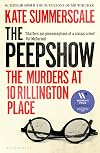
In March 1953 the tenant of shabby house in Notting Hill set about putting a shelf to hold his transistor radio, in the process he knocked a hole in the wall. On looking into it created he found a boarded-up alcove containing the bodies of three women.
The house was 10 Rillington Place, home to Reginald Christie, an unprepossessing man who would soon claim a lasting place in British popular culture as the murderer of five women and, indirectly, as the instigator of a miscarriage of justice show more that would help make the case for abolishing the death penalty.
True crime is a literary genre that has not infrequently failed to cover itself in glory, occupying in many cases a low position on the publishing food chain. The stuff of cheap paperbacks rushed out while a sensational case is still fresh in the minds of a readership that delights in having its flesh made to creep.
Kate Summerscale is one of a small cadre of authors who have, in recent years, done much to lift the true crime genre out of the bargain basement. She does so again with this unflinching account of the Rillington Place murders and society in which they took place.
She frames her account of the crimes through the coverage of them provided by Harry Procter, a hack on the staff of the Sunday Pictorial, a low-end tabloid specializing in sex, scandal and crime. He comes over, initially at least, as a less than sympathetic character, a shameless opportunist willing to bend the rules of journalistic ethics into the most outlandish shapes in the name of landing his next scoop.
What, partly, redeems Procter is his unwavering determination to prove that Christie framed his neighbour Timothy Evans who was hung in 1950 for the murder of his wife and daughter. He also, as the Christie trial ran on, became increasingly uneasy with the behaviour of the tabloid press and his part in exploiting the suffering of crime victims and their families to sell papers, eventually writing an expose of his former employers and dying young worn out by guilt as much as the bibulous Fleet Street lifestyle.
Summerscale places the crimes, trial and execution of Reginald Christie against the backdrop of an unflinching portrait of post-war Britain. A grimy, down at heel place where crumbling Victorian grandeur collided with the aftershocks of war and austerity and the social changes brought about by impending modernity.
Christie himself is a figure entirely emblematic of his times, a seemingly inconsequential little man portraying a shabby sort of propriety that might, in other circumstances, be comical. That his smallness of mind, hypocrisy and peevish prejudices were a mask for depravity makes his crimes, if it is possible, even more shocking.
Summerscale also writes with unflinching clarity of vision about how Timothy Evans was not the simple-minded innocent he has been portrayed as by campaigners against the death penalty who used his case as an example of the irreversible consequences of hanging the wrong man. He comes across as a violet philanderer who may, she suggests, have contracted Christie to kill his wife if not his baby daughter, with the injustice of the original judgement against his compounded by a cover up of the facts by officials fearing that it would fuel calls for abolition if exposed.
What is it that makes the horrors that took place at Rillington Place such a source of ongoing appalled fascination? Perhaps it isn’t just that what Christie did was monstrous, and it very much was, it is that he himself was so devastatingly ordinary. The face of the monster looks unnervingly like the one we meet whenever we look into a mirror.
In writing an admirably level-headed book about a sensationalized crime Kate Summerscale has reminded us of this uncomfortable truth. One that should make all our flesh creep. show less
The house was 10 Rillington Place, home to Reginald Christie, an unprepossessing man who would soon claim a lasting place in British popular culture as the murderer of five women and, indirectly, as the instigator of a miscarriage of justice show more that would help make the case for abolishing the death penalty.
True crime is a literary genre that has not infrequently failed to cover itself in glory, occupying in many cases a low position on the publishing food chain. The stuff of cheap paperbacks rushed out while a sensational case is still fresh in the minds of a readership that delights in having its flesh made to creep.
Kate Summerscale is one of a small cadre of authors who have, in recent years, done much to lift the true crime genre out of the bargain basement. She does so again with this unflinching account of the Rillington Place murders and society in which they took place.
She frames her account of the crimes through the coverage of them provided by Harry Procter, a hack on the staff of the Sunday Pictorial, a low-end tabloid specializing in sex, scandal and crime. He comes over, initially at least, as a less than sympathetic character, a shameless opportunist willing to bend the rules of journalistic ethics into the most outlandish shapes in the name of landing his next scoop.
What, partly, redeems Procter is his unwavering determination to prove that Christie framed his neighbour Timothy Evans who was hung in 1950 for the murder of his wife and daughter. He also, as the Christie trial ran on, became increasingly uneasy with the behaviour of the tabloid press and his part in exploiting the suffering of crime victims and their families to sell papers, eventually writing an expose of his former employers and dying young worn out by guilt as much as the bibulous Fleet Street lifestyle.
Summerscale places the crimes, trial and execution of Reginald Christie against the backdrop of an unflinching portrait of post-war Britain. A grimy, down at heel place where crumbling Victorian grandeur collided with the aftershocks of war and austerity and the social changes brought about by impending modernity.
Christie himself is a figure entirely emblematic of his times, a seemingly inconsequential little man portraying a shabby sort of propriety that might, in other circumstances, be comical. That his smallness of mind, hypocrisy and peevish prejudices were a mask for depravity makes his crimes, if it is possible, even more shocking.
Summerscale also writes with unflinching clarity of vision about how Timothy Evans was not the simple-minded innocent he has been portrayed as by campaigners against the death penalty who used his case as an example of the irreversible consequences of hanging the wrong man. He comes across as a violet philanderer who may, she suggests, have contracted Christie to kill his wife if not his baby daughter, with the injustice of the original judgement against his compounded by a cover up of the facts by officials fearing that it would fuel calls for abolition if exposed.
What is it that makes the horrors that took place at Rillington Place such a source of ongoing appalled fascination? Perhaps it isn’t just that what Christie did was monstrous, and it very much was, it is that he himself was so devastatingly ordinary. The face of the monster looks unnervingly like the one we meet whenever we look into a mirror.
In writing an admirably level-headed book about a sensationalized crime Kate Summerscale has reminded us of this uncomfortable truth. One that should make all our flesh creep. show less
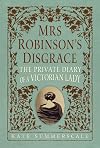
This morning I heard a story on the radio show Radio 360 about Jace Clayton, a Brooklyn-based DJ also known as DJ/rupture, and how he pulls together sometimes quite different pieces of music and merges them into something new. I found it thrilling to hear the original pieces and then hear how Clayton brought them together. This was similar to how I felt while reading Mrs Robinson's Disgrace. Kate Summerscale skillfully weaves a variety of elements into a cohesive narrative, which I found show more absolutely engaging.
I picked up this book after reading a review by Teresa on Shelf Love. Teresa seemed most struck by the idea that the act of keeping a diary would in itself have an influence on the diarist's thoughts and actions, that because in her diary Isabella Robinson dwelled so much on her infatuations and her feelings of being trapped by her marriage, she actually heightened and perpetuated those feelings.
While I, too, found this idea intriguing, I was more interested in where Mrs Robinson's diary and the ensuing divorce trial were situated in relation to the culture at that time. Victorian England was very focused on appearances and on maintaining institutions. While, given that atmosphere, it might seem an odd time to establish a Divorce Court, it wasn't really divorce as we think of it today. The purpose of the Divorce Court in Victorian England wasn't to dissolve unions that were unpleasant for either party. The purpose of the Divorce Court at the time, Summerscale suggests, was to strengthen the institution of marriage by weeding out the "bad" examples.
As a result, many of the rulings contained elements that we might find strange today. For example, there was the case in which Fanny Curtis was granted a divorce from her abusive husband but was not granted custody of their children. The vice-chancellor deciding the custody case determined that it was more important to the fabric of society to uphold a husband's rights, even if that meant leaving children in the hands of someone known to be abusive in his actions. "However harsh, however cruel the husband may be," the vice-chancellor explained, "it does not justify the wife's want of that due submission to the husband, which is her duty both by the law of God and by the law of man." Upholding the institution of marriage and the man's role within it was more important than the safety and wellbeing of the people affected by it. If the institution of marriage should fall, the concern seemed to be, society itself would be in danger.
It struck me several times while reading this book just how delicate the Victorians seemed to view society. Everywhere you turn, there's a threat. After Henry Robinson read his wife's diary with its apparent confession of adultery and amorous feelings for multiple men, he filed for divorce in the new court. Because he had no evidence for the adultery besides his wife's diary, excerpts were presented as evidence in court. Initially, the newspapers printed these excerpts as they were read in court, but after a while, the prurient content of the excerpts began to alarm some readers. Women had been barred from the courtroom during the reading of the most expository of the passages, but here women and even children could read the same material in the morning paper. Some publications chose not to publish these extracts because they might give readers (particularly women) bad ideas.
Summerscale writes:
England recognized the bad influence of foreign novels like Flaubert's Madame Bovary, which addresses issues of adultery and (gasp!) women's sexual urges, but now it appeared necessary to protect the women of England even from themselves.
This is the beauty of this book. Summerscale doesn't just present the diary of one woman or chronicle the collapse of one marriage. Instead, she places these elements in historical context. We see how the lives of Isabella and Henry Robinson are interwoven with the culture and the ideas that were emerging at the time. She clearly demonstrates to her readers the tumult in England at the time as ideas of spirituality, sexuality, art, intellectualism, and the role of institutions in the lives of individuals were being scrutinized and inevitably altered in the examining. She shows the anxiety with which these new and dangerous ideas were received and how all of this coalesced in the pages of Isabella Robinson's diary and then intersected with the public sphere again during the divorce proceedings.
I enjoyed observing Summerscale's skill in pulling all of this together, and I highly enjoyed reading the resulting narrative. show less
I picked up this book after reading a review by Teresa on Shelf Love. Teresa seemed most struck by the idea that the act of keeping a diary would in itself have an influence on the diarist's thoughts and actions, that because in her diary Isabella Robinson dwelled so much on her infatuations and her feelings of being trapped by her marriage, she actually heightened and perpetuated those feelings.
While I, too, found this idea intriguing, I was more interested in where Mrs Robinson's diary and the ensuing divorce trial were situated in relation to the culture at that time. Victorian England was very focused on appearances and on maintaining institutions. While, given that atmosphere, it might seem an odd time to establish a Divorce Court, it wasn't really divorce as we think of it today. The purpose of the Divorce Court in Victorian England wasn't to dissolve unions that were unpleasant for either party. The purpose of the Divorce Court at the time, Summerscale suggests, was to strengthen the institution of marriage by weeding out the "bad" examples.
As a result, many of the rulings contained elements that we might find strange today. For example, there was the case in which Fanny Curtis was granted a divorce from her abusive husband but was not granted custody of their children. The vice-chancellor deciding the custody case determined that it was more important to the fabric of society to uphold a husband's rights, even if that meant leaving children in the hands of someone known to be abusive in his actions. "However harsh, however cruel the husband may be," the vice-chancellor explained, "it does not justify the wife's want of that due submission to the husband, which is her duty both by the law of God and by the law of man." Upholding the institution of marriage and the man's role within it was more important than the safety and wellbeing of the people affected by it. If the institution of marriage should fall, the concern seemed to be, society itself would be in danger.
It struck me several times while reading this book just how delicate the Victorians seemed to view society. Everywhere you turn, there's a threat. After Henry Robinson read his wife's diary with its apparent confession of adultery and amorous feelings for multiple men, he filed for divorce in the new court. Because he had no evidence for the adultery besides his wife's diary, excerpts were presented as evidence in court. Initially, the newspapers printed these excerpts as they were read in court, but after a while, the prurient content of the excerpts began to alarm some readers. Women had been barred from the courtroom during the reading of the most expository of the passages, but here women and even children could read the same material in the morning paper. Some publications chose not to publish these extracts because they might give readers (particularly women) bad ideas.
Summerscale writes:
The idea that certain kinds of writing were dangerous---especially to young women---was commonplace: usually the culprits were French novels, but Isabella Robinson's diary showed that a middle-class Englishwoman could assault her own decency in prose.
England recognized the bad influence of foreign novels like Flaubert's Madame Bovary, which addresses issues of adultery and (gasp!) women's sexual urges, but now it appeared necessary to protect the women of England even from themselves.
This is the beauty of this book. Summerscale doesn't just present the diary of one woman or chronicle the collapse of one marriage. Instead, she places these elements in historical context. We see how the lives of Isabella and Henry Robinson are interwoven with the culture and the ideas that were emerging at the time. She clearly demonstrates to her readers the tumult in England at the time as ideas of spirituality, sexuality, art, intellectualism, and the role of institutions in the lives of individuals were being scrutinized and inevitably altered in the examining. She shows the anxiety with which these new and dangerous ideas were received and how all of this coalesced in the pages of Isabella Robinson's diary and then intersected with the public sphere again during the divorce proceedings.
I enjoyed observing Summerscale's skill in pulling all of this together, and I highly enjoyed reading the resulting narrative. show less

This is the story of Isabella Robinson, a woman who made the mistake of a) marrying an a-hole and b) keeping a diary of her feelings, flirtations, and, possibly, indiscretions. In 1858, England started allowing faster and cheaper divorces and Mr. Robinson was first in line, accusing his wife of infidelity based on the diary that he found in her desk while she was ill. What followed was a battle in the public eye over whether she was an evil adulteress or a typical woman, deranged by her show more malfunctioning uterus.
The book really got to me. It was difficult to read how women were marginalized and abused, both by society and by the law, in Victorian times (and earlier). Isabella moved in rather grand circles and one of her purported lovers owned a health spa, frequented by the likes of Charles Darwin and female authors Dinah Maria Mulock and Georgiana Craik. It was this doctor who put up the defense during the divorce proceedings (because he was named as co-defendant) that her journal was nothing but fantasy, a writing exercise, and that she had such vivid imaginings because of her female troubles. The book does not come to a conclusion as to the veracity of the journal but we as readers do come to the conclusion that Isabella was very unjustly treated by one or more men in her life.
http://webereading.com/2016/02/mental-health-and-victorian-or-modern.html show less
The book really got to me. It was difficult to read how women were marginalized and abused, both by society and by the law, in Victorian times (and earlier). Isabella moved in rather grand circles and one of her purported lovers owned a health spa, frequented by the likes of Charles Darwin and female authors Dinah Maria Mulock and Georgiana Craik. It was this doctor who put up the defense during the divorce proceedings (because he was named as co-defendant) that her journal was nothing but fantasy, a writing exercise, and that she had such vivid imaginings because of her female troubles. The book does not come to a conclusion as to the veracity of the journal but we as readers do come to the conclusion that Isabella was very unjustly treated by one or more men in her life.
http://webereading.com/2016/02/mental-health-and-victorian-or-modern.html show less
Lists
Awards


You May Also Like


Associated Authors
Statistics
- Works
- 7
- Also by
- 1
- Members
- 6,207
- Popularity
- #3,951
- Rating
- 3.5
- Reviews
- 307
- ISBNs
- 149
- Languages
- 11
- Favorited
- 8