
Lyndall Gordon
Author of Lives Like Loaded Guns: Emily Dickinson and Her Family's Feuds
About the Author
Lyndall Gordon is the prize-winning author of, most recently, "T. S. Eliot: An Imperfect Life" & "A Private Life of Henry James". (Bowker Author Biography)
Works by Lyndall Gordon
Associated Works
Regarding Jane Eyre: Writers Respond to Charlotte Bronte's Jane Eyre (1997) — Contributor — 17 copies
Tagged
Common Knowledge
- Canonical name
- Gordon, Lyndall
- Birthdate
- 1941-11-04
- Gender
- female
- Education
- University of Cape Town
- Occupations
- Senior Research Fellow, St Hilda's College, Oxford
literary biographer - Nationality
- South Africa
- Birthplace
- Cape Town, South Africa
- Places of residence
- Cape Town, South Africa
England, UK - Associated Place (for map)
- South Africa
Members
Reviews
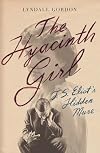
I was a freshmen in college, prowling the library shelves, when I found the poetry of T. S. Eliot. His collected poems and plays sits, tattered and worn, on my shelf. I have the facsimile and transcript of the original manuscript of The Waste Land. But after reading The Hyacinth Girl, I feel like I need to go back and reread everything with this book in hand.
Over a thousand letters between the poet and Emily Hale, his muse for many years, were released to the public in 2020. What they reveal show more changes everything. Hale, along with Eliot’s first wife Vivienne, his relationship with Mary Trevelyan, and his second wife Valerie Fletcher, impacted his poetry in surprising ways. His plays drew upon his relationships, and the women recognized themselves in the characters.
These women loved Eliot. His treatment of Vivienne, Hale, and Mary show a side of the poet that is very disagreeable and reveals deep personality issues and existential conflict. He came to abhor his first wife and her demands. He claimed to love Hale while keeping distant; after embracing Anglicism, he adopted stringent ideas about divorce. His friendship with Trevelyan broke her heart; he claimed he was in love with Hale. And then, when Vivienne died, he pulled back from Hale and Mary, only to suddenly marry his secretary, Valerie, who was half his age. She had been infatuated with Eliot through his poetry before she worked for him. She had no demands. He was writing no more poetry. And she had a natural sexuality that brought him, late in life, sexual fulfillment.
Eliot clearly used Vivienne and Hale for poetic reasons. He said that Vivienne drove him crazy but she was good for his poetry, while he knew that being with Hale would ‘destroy’ it. He wasn’t looking for happiness. His extreme religious views enforced ideas that brought unhappiness.
What an eye-opening book. I almost wish I had not read it, for in ignorance I had a better opinion of Eliot the man.
I received a free egalley from the publisher though NetGalley. My review is fair and unbiased. show less
Over a thousand letters between the poet and Emily Hale, his muse for many years, were released to the public in 2020. What they reveal show more changes everything. Hale, along with Eliot’s first wife Vivienne, his relationship with Mary Trevelyan, and his second wife Valerie Fletcher, impacted his poetry in surprising ways. His plays drew upon his relationships, and the women recognized themselves in the characters.
These women loved Eliot. His treatment of Vivienne, Hale, and Mary show a side of the poet that is very disagreeable and reveals deep personality issues and existential conflict. He came to abhor his first wife and her demands. He claimed to love Hale while keeping distant; after embracing Anglicism, he adopted stringent ideas about divorce. His friendship with Trevelyan broke her heart; he claimed he was in love with Hale. And then, when Vivienne died, he pulled back from Hale and Mary, only to suddenly marry his secretary, Valerie, who was half his age. She had been infatuated with Eliot through his poetry before she worked for him. She had no demands. He was writing no more poetry. And she had a natural sexuality that brought him, late in life, sexual fulfillment.
Eliot clearly used Vivienne and Hale for poetic reasons. He said that Vivienne drove him crazy but she was good for his poetry, while he knew that being with Hale would ‘destroy’ it. He wasn’t looking for happiness. His extreme religious views enforced ideas that brought unhappiness.
What an eye-opening book. I almost wish I had not read it, for in ignorance I had a better opinion of Eliot the man.
I received a free egalley from the publisher though NetGalley. My review is fair and unbiased. show less
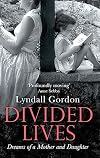
Gordon's book uses the relationship between her mother and herself, first in Cape Town and then as she travels to the US and the UK, to tell a biographical story. She focuses, in a narrative that will be familiar to those who have read Karen Armstrong, on her mother's (awful) experiences being told that she can somehow personally 'control' her epilepsy through force of will. And that the seizures that result are perhaps the result of her own moral failure.
She is aware of the problems of show more apartheid, but this is not a book to read to find out about women's protest groups e.g. the Black Sash. For her family, emigration to Israel is the solution to complicity in apartheid, as visitors from Israel urge members of the South African population to migrate in the 1950s and 60s, running children's groups and hebrew classes, and even encouraging young people to give up their studies as their degrees will be of no use in the new state (fortunately, she records, South African members of the youth groups ignore this instruction). I said in an earlier post I had been to much of the coastline she describes. The black and white photos here don't do justice to a beautiful part of the world that she lovingly describes. Here she is talking in terms of her homesickness
The alternative that isn't on offer is what I want, but can't voice: to return to the roar of the breakers on the rocks and the gulls overhead beating their wings against the wind.
Yet for me the most interesting section of this book is where she writes about herself: her own battle with postnatal depression (and homesickness) in New York, where she studied literature as her husband worked on scientific research. Her self-doubt at moving her daughter to Oxford when she was appointed to teach, following her thesis on T.S. Eliot. The responses to her work are not all positive, and reflect resistance from critics convinced by 'the death of the author':
Some reviewers are outraged though. These men own Eliot. Who is this female scurrying around, sifting papers? I try (though don't quite manage) to console myself with Virgina Woolf's comic portrait of the gentleman put out to find the housemaid turning over books in his library.
She offers insight into the process of the biographer, her own ability to see a narrative in the lives of others such as Emily Dickinson, and connects this to her experiences as a child, reading with her mother, caring for her mother.
...the deep pursuit will be that question Woolf asked about what is obscured in our nature: the authenticity of unuttered thoughts, the pressure to communicate the incommunicable - to say directly, even awkwardly, what's in the mind
I have a copy of Lives Like Loaded Guns on my shelf and reading this bio has made me want to go back to it again, to see the points of similarity with her descriptions of her mum's experience of epilepsy and isolated creativity. I don't think this bio works because she never addresses the key question at the heart of her mother's life (was she a good poet?), even though she is more than willing to expose other personal questions (her mother's affair) that you might expect from a family member writing a biography to hide or downplay. I wondered if this is because for her this question of literary worth *is* the most personal question, given her career as a literary scholar and writer. The book works though if read as a love letter to her mother, demonstrating her feelings through her investigations of connections, papers and experiences to find a woman who had aspired to the writing life Gordon successfully achieved: perhaps in some ways this is also an apology. Her mother's one bid to follow her work, taking a short trip to London where she joined the City Lit and was beginning to see her work published, was cut short for the sake of the children (Lyndall Gordon and her brother) back in Cape Town. show less
She is aware of the problems of show more apartheid, but this is not a book to read to find out about women's protest groups e.g. the Black Sash. For her family, emigration to Israel is the solution to complicity in apartheid, as visitors from Israel urge members of the South African population to migrate in the 1950s and 60s, running children's groups and hebrew classes, and even encouraging young people to give up their studies as their degrees will be of no use in the new state (fortunately, she records, South African members of the youth groups ignore this instruction). I said in an earlier post I had been to much of the coastline she describes. The black and white photos here don't do justice to a beautiful part of the world that she lovingly describes. Here she is talking in terms of her homesickness
The alternative that isn't on offer is what I want, but can't voice: to return to the roar of the breakers on the rocks and the gulls overhead beating their wings against the wind.
Yet for me the most interesting section of this book is where she writes about herself: her own battle with postnatal depression (and homesickness) in New York, where she studied literature as her husband worked on scientific research. Her self-doubt at moving her daughter to Oxford when she was appointed to teach, following her thesis on T.S. Eliot. The responses to her work are not all positive, and reflect resistance from critics convinced by 'the death of the author':
Some reviewers are outraged though. These men own Eliot. Who is this female scurrying around, sifting papers? I try (though don't quite manage) to console myself with Virgina Woolf's comic portrait of the gentleman put out to find the housemaid turning over books in his library.
She offers insight into the process of the biographer, her own ability to see a narrative in the lives of others such as Emily Dickinson, and connects this to her experiences as a child, reading with her mother, caring for her mother.
...the deep pursuit will be that question Woolf asked about what is obscured in our nature: the authenticity of unuttered thoughts, the pressure to communicate the incommunicable - to say directly, even awkwardly, what's in the mind
I have a copy of Lives Like Loaded Guns on my shelf and reading this bio has made me want to go back to it again, to see the points of similarity with her descriptions of her mum's experience of epilepsy and isolated creativity. I don't think this bio works because she never addresses the key question at the heart of her mother's life (was she a good poet?), even though she is more than willing to expose other personal questions (her mother's affair) that you might expect from a family member writing a biography to hide or downplay. I wondered if this is because for her this question of literary worth *is* the most personal question, given her career as a literary scholar and writer. The book works though if read as a love letter to her mother, demonstrating her feelings through her investigations of connections, papers and experiences to find a woman who had aspired to the writing life Gordon successfully achieved: perhaps in some ways this is also an apology. Her mother's one bid to follow her work, taking a short trip to London where she joined the City Lit and was beginning to see her work published, was cut short for the sake of the children (Lyndall Gordon and her brother) back in Cape Town. show less
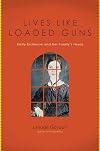
Who knew that a book about reclusive Emily Dickinson and her terribly proper New England family could be a potboiler, a bodice-ripper? Lyndall Gordon gives us a completely different Emily than the one we thought we knew, with her unsuspected, and ultimately unfulfilled, passions. Add to that her brother's late-life, all-consuming affair with a young Amherst faculty wife, and his willingness to split his family over it. After Emily's death, the hated mistress actually becomes her literary show more executor. The only thing that keeps this book from all five stars, for me, is the convoluted tale of the later trials over the literary rights to Emily's work, but this is more of a page-turner overall than I would have thought possible, given the subject matter. show less

I knew next to nothing about Emily Dickinson, when I came across this fascinating-looking work in a charity shop!
An extremely erudite and well-researched account (the author is a Senior Research Fellow at Oxford); the book takes us back to Emily Dickinson's young life, living in Amherst with her correct parents and an unmarried sister; next door lives upright brother Austin and his wife, Sue. We see a very different Emily from the simple recluse of popular mythology; Gordon describes a show more flirtation with a married man, and a meaningful entanglement with another. But her life is beset by some unspecified and secret illness; Gordon convincingly posits the theory that it was epilepsy: the doctors seen, the prescriptions filled, the lines in her poems...and her subsequent withdrawing from the world. Emily's life centred on her writing, much of which she shared with her sister-in-law next door.
Into this world comes pretty young faculty wife, Mabel Loomis Todd, and nothing will ever be the same again, as Austin falls prey to her charms...more secrecy, assignations (how will Emily and her sister react?) And this whole lengthy scenario continues after the poet's death with rival factions trying to get possession of her works. Money, power, emotion, fame, resentment...all play their part in the lengthy struggle between Ms Todd, Emily's surviving sister and the family of poor wronged wife Sue, who owned so much of the work. And indeed into the next generation...
For me, the machinations over who owned what, the competing books brought out by separate camps, went on a tad, but I found the poet's life quite unputdownable! show less
An extremely erudite and well-researched account (the author is a Senior Research Fellow at Oxford); the book takes us back to Emily Dickinson's young life, living in Amherst with her correct parents and an unmarried sister; next door lives upright brother Austin and his wife, Sue. We see a very different Emily from the simple recluse of popular mythology; Gordon describes a show more flirtation with a married man, and a meaningful entanglement with another. But her life is beset by some unspecified and secret illness; Gordon convincingly posits the theory that it was epilepsy: the doctors seen, the prescriptions filled, the lines in her poems...and her subsequent withdrawing from the world. Emily's life centred on her writing, much of which she shared with her sister-in-law next door.
Into this world comes pretty young faculty wife, Mabel Loomis Todd, and nothing will ever be the same again, as Austin falls prey to her charms...more secrecy, assignations (how will Emily and her sister react?) And this whole lengthy scenario continues after the poet's death with rival factions trying to get possession of her works. Money, power, emotion, fame, resentment...all play their part in the lengthy struggle between Ms Todd, Emily's surviving sister and the family of poor wronged wife Sue, who owned so much of the work. And indeed into the next generation...
For me, the machinations over who owned what, the competing books brought out by separate camps, went on a tad, but I found the poet's life quite unputdownable! show less
Lists
Awards


You May Also Like


Associated Authors
Statistics
- Works
- 13
- Also by
- 2
- Members
- 1,870
- Popularity
- #13,765
- Rating
- 3.9
- Reviews
- 33
- ISBNs
- 87
- Languages
- 3
- Favorited
- 2