
Mary Karr
Author of The Liar's Club: A Memoir
About the Author
Mary Karr's memoir, "The Liars' Club," won the PEN/Martha Albrand Award. A poet & essayist, she has won Pushcart prizes in both genres. Her other grants & awards include the prestigious Whiting Award & the Bunting Fellowship from Radcliffe College. Her previous poetry collections are "Abacus," "The show more Devil's Tour," & "Viper Rum." She is a full professor at Syracuse University. (Publisher Provided) Mary Karr was born in Groves, Texas on January 16, 1955. She received an M.F.A. from Goddard College in 1979. Before becoming a poet and memoirist, she held various jobs in the computer and telecommunications industries. Her works include Lit, The Liars' Club, Cherry, and The Art of Memoir. She has also published four volumes of poetry: Abacus, The Devil's Tour, Viper, and Sinners Welcome. She was a Guggenheim Fellow in poetry in 2005 and has won Pushcart prizes for both her poetry and her essays. She was an assistant professor at numerous colleges and universities including Tufts University, Emerson College, Harvard University, and Sarah Lawrence College. She is currently the Peck Professor of English Literature at Syracuse University. (Bowker Author Biography) show less
Image credit: Onion Inc.
Series
Works by Mary Karr
The Liars' Club and Cherry 2 copies
Associated Works
All I Did Was Ask: Conversations with Writers, Actors, Musicians, and Artists (2004) — Contributor — 602 copies, 13 reviews
Why We Write: 20 Acclaimed Authors on How and Why They Do What They Do (2013) — Contributor — 211 copies, 10 reviews
Writers on Writing, 2: More Collected Essays from the New York Times (2003) — Contributor — 201 copies, 3 reviews
This Is My Best: Great Writers Share Their Favorite Work (2004) — Contributor — 175 copies, 3 reviews
St. Peter's B-list: Contemporary Poems Inspired by the Saints (2014) — Contributor — 32 copies, 1 review
Tagged
Common Knowledge
- Birthdate
- 1955-01-16
- Gender
- female
- Education
- Port Neches-Groves High School (Texas)
Goddard College - Occupations
- poet
essayist - Organizations
- Sarah Lawrence College (poetry teacher)
Syracuse University (Jesse Truesdell Peck Professor of Literature) - Awards and honors
- Radcliffe College Bunting Fellow
Guggenheim Fellowship (Poetry, 2004)
Whiting Writers' Award (1989) - Agent
- Amanda Urban (ICM)
- Nationality
- USA
- Birthplace
- Groves, Texas, USA
- Places of residence
- Groves, Texas, USA
Colorado, USA
New York, New York, USA - Associated Place (for map)
- USA
Members
Reviews
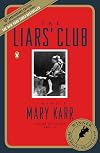
I've just reread THE LIAR'S CLUB as part of a creative nonfiction class--it stands up well to a second look. Karr is a deft, gritty narrator who milks drama from even the smallest moments and portrays true drama without sensationalizing it. For memoir writers looking for models, Karr is an excellent teacher. She doesn't shy from depicting the dark, even horrific, qualities of her parents and still manages to make us love them as much as she does. She explores the fickle nature of memory show more without letting her exploration detract from the story itself. Her structural choices--a beginning that flashes forward to the middle and then three chronological chunks in time--show writers how well-selected memories can function well together without any need for the author to account for missing years. Most of all, she shows us how a powerful personality can infuse every word and thus delight the reader.
Here's a sample:
Because it took so long for me to paste together what happened, I will leave that part of the story missing for a while. It went long unformed for me, and I want to keep it that way here. I don't mean to be coy. When the truth would be unbearable the mind often just blanks it out. But some ghost of an event may stay in your head. Then, like the smudge of a bad word quickly wiped off a school blackboard, this ghost can call undue attention to itself by its very vagueness. You keep studying the dim shape of it, as if the original form will magically emerge. This blank spot in my past, then, spoke most loudly to me by being blank. It was a hole in my life that I both feared and kept coming back to because I couldn't quite fill it in.
Oh--one last thing I admire about this book. Karr tells such a good story I often found myself wondering whether she was pushing memoir's boundaries by making up details. But her title, her great admiration for her father's capacity to lie, and the layers of behavioral lying she explores with her family make lying a unifying theme of the book. And so I'm willing to forgive her for stretching the truth. In fact, I suspect by stretching the truth she's written a truer story. show less
Here's a sample:
Because it took so long for me to paste together what happened, I will leave that part of the story missing for a while. It went long unformed for me, and I want to keep it that way here. I don't mean to be coy. When the truth would be unbearable the mind often just blanks it out. But some ghost of an event may stay in your head. Then, like the smudge of a bad word quickly wiped off a school blackboard, this ghost can call undue attention to itself by its very vagueness. You keep studying the dim shape of it, as if the original form will magically emerge. This blank spot in my past, then, spoke most loudly to me by being blank. It was a hole in my life that I both feared and kept coming back to because I couldn't quite fill it in.
Oh--one last thing I admire about this book. Karr tells such a good story I often found myself wondering whether she was pushing memoir's boundaries by making up details. But her title, her great admiration for her father's capacity to lie, and the layers of behavioral lying she explores with her family make lying a unifying theme of the book. And so I'm willing to forgive her for stretching the truth. In fact, I suspect by stretching the truth she's written a truer story. show less
For the most part, this is a sensational and coarse memoir. I found it insistently ugly, with Karr being one of the more unsympathetic child subjects I’ve encountered in my long reading life. This was perhaps the author’s intention, to defy convention by providing the reader with an unsentimental in-your-face portrait of a difficult childhood. She presents incidents from two pivotal years of her childhood, first in the toxic oil refinery town of “Leechfield” (actually Port Arthur), show more Texas and then in the mountains near Colorado Springs, Colorado. The author revels in the idea of herself as a tough, insolent, and belligerent youngster, repeatedly hitting the reader over the head with “evidence” of her stubborn wildness. I grew very, very tired of this kid.
Karr’s telling is often unnecessarily graphic—sometimes verging on pornographic, and her content is consistently dark and violent.
Family dysfunction, check.
Alcoholism and other substance abuse, check.
Child neglect, check.
Cancer and its ravages, check.
Marital breakdown, check.
Poverty, check.
Parental mental illness—including a psychotic break, check.
Attempted homicide(s), check.
Child rape and sexual abuse, check.
Fistfights, check.
Guns, check.
Knives, check.
Hunting and animal suffering, check.
Gore (vomit, feces, blood, snot, semen, and more), check.
Hmm. Did I leave anything out?
Only in the last two chapters, in which the author moves ahead almost two decades to 1980 (when she was 25), to focus on her father’s demise and her mother’s long held secret, does the tone change. Sadness and, yes, even compassion are present. These were a long time coming, let me tell you.
Other quibbles:
The text should be categorized as “autobiographical fiction” not memoir. There is no way Karr, who was only seven, then eight years old would have been able to recall events with the amount of photographic detail presented here. I’m equally doubtful family members would’ve been any more likely to supply the specifics provided in the book. What’s more, no child I know, no matter how precocious, would be capable of making the kinds of observations that little Mary Marlene does. From time to time, Karr admits that she doesn’t remember significant facts and events—which makes her elaborate descriptions of other lesser happenings even harder to credit. The book often doesn’t ring true.
The rough and deliberately ungrammatical language —for example, the use of adjectives for adverbs (“real” instead of “really”, “quick” instead of “quickly”)—apparently meant to suggest south Texas dialect, becomes tiresome. Prose intended to sound fresh and authentic only calls attention to itself, paradoxically coming across as studied and artificial.
I don’t think anyone could dispute that the author had a difficult and damaging childhood. Was it actually worthy of being the subject of a book? I don’t think so. Tastes differ, of course, but much of the memoir did not interest me. The excess padding didn’t help.
The Liars’ Club was a bestseller back in the day, and it has become something of a modern American classic. I cannot say I understand the enthusiasm for this work. The book sat on my shelf for years. Yes, I was one of those taken in by the hype. I’m relieved to be done with it now and very glad that the spot it occupied is now vacant. show less
Karr’s telling is often unnecessarily graphic—sometimes verging on pornographic, and her content is consistently dark and violent.
Family dysfunction, check.
Alcoholism and other substance abuse, check.
Child neglect, check.
Cancer and its ravages, check.
Marital breakdown, check.
Poverty, check.
Parental mental illness—including a psychotic break, check.
Attempted homicide(s), check.
Child rape and sexual abuse, check.
Fistfights, check.
Guns, check.
Knives, check.
Hunting and animal suffering, check.
Gore (vomit, feces, blood, snot, semen, and more), check.
Hmm. Did I leave anything out?
Only in the last two chapters, in which the author moves ahead almost two decades to 1980 (when she was 25), to focus on her father’s demise and her mother’s long held secret, does the tone change. Sadness and, yes, even compassion are present. These were a long time coming, let me tell you.
Other quibbles:
The text should be categorized as “autobiographical fiction” not memoir. There is no way Karr, who was only seven, then eight years old would have been able to recall events with the amount of photographic detail presented here. I’m equally doubtful family members would’ve been any more likely to supply the specifics provided in the book. What’s more, no child I know, no matter how precocious, would be capable of making the kinds of observations that little Mary Marlene does. From time to time, Karr admits that she doesn’t remember significant facts and events—which makes her elaborate descriptions of other lesser happenings even harder to credit. The book often doesn’t ring true.
The rough and deliberately ungrammatical language —for example, the use of adjectives for adverbs (“real” instead of “really”, “quick” instead of “quickly”)—apparently meant to suggest south Texas dialect, becomes tiresome. Prose intended to sound fresh and authentic only calls attention to itself, paradoxically coming across as studied and artificial.
I don’t think anyone could dispute that the author had a difficult and damaging childhood. Was it actually worthy of being the subject of a book? I don’t think so. Tastes differ, of course, but much of the memoir did not interest me. The excess padding didn’t help.
The Liars’ Club was a bestseller back in the day, and it has become something of a modern American classic. I cannot say I understand the enthusiasm for this work. The book sat on my shelf for years. Yes, I was one of those taken in by the hype. I’m relieved to be done with it now and very glad that the spot it occupied is now vacant. show less
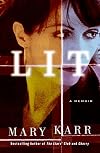
Reading Mary Karr’s latest memoir, "Lit," is akin to catching up with an old friend over a cup of coffee or, perhaps in this case, over something a bit stronger than coffee. Karr’s earlier memoirs, "The Liars’ Club" (1995), which covered her childhood years, and "Cherry" (2000), the story of her adolescence and early adulthood, established for her a well deserved reputation as an exceptional memoirist. Now, some nine years after "Cherry," Karr completes her story, for now, by revealing show more how she managed to overcome the odds to escape both the insular little town in which she grew up and the quirky upbringing she endured there.
One thing is certain; Mary Karr has not had an easy time of it. Growing up in a muggy, mosquito ridden little East Texas refinery town, one in which its residents breathe polluted air no matter from which direction it blows (as I well remember), she was raped by a teenaged neighbor when she was eight years old. Her father, a heavy drinking refinery worker, loved her dearly but was not exactly a role model for his daughters. Her seven-times-married, artistic mother was a bit of a desperado in spirit who struggled with a tendency toward full-blown psychotic episodes throughout much of her life.
As she so frankly details in "Lit," Mary Karr is a combination of the good and the bad components of both her parents. Always a bit of a rebel at heart like her mother, she went into the world resenting those born to wealth as much as her father disliked them, taking pride that she could at least outdrink those who “had been born on third base” but who believed “they hit a home run.” And outdrink them, Mary did - all the way to the point of her own debilitating struggle with alcoholism, a struggle that would steal years of her life and ultimately destroy the marriage that produced her son.
It was a close thing, but Mary managed to save herself, and she accomplished it by doing something so completely out of character for her that it still surprises her. She turned to prayer and organized religion despite a lifetime spent scoffing at both. Despairing and suicidal, she committed herself to what she calls “The Mental Marriott” and the timeout there that would ultimately lead her to place her future in the hands of God, the possibility of whose existence she previously had not been able to take seriously. "Lit" is a word of several meanings when it comes to Mary Karr. It can be a reference to her success in the literary world or it can be used to describe the drunken state in which she spent so many of her waking hours for so many years. Finally, and most hopefully, it also describes the religious experience that saved Mary Karr’s life when she finally “saw the light.”
Fans of Karr’s previous memoirs will be pleased with this inspirational addition to her story, but "Lit" also works well for those reading her for the first time, so well that I suspect the new Karr readers will now want to turn to the first two books.
Rated at: 5.0 show less
One thing is certain; Mary Karr has not had an easy time of it. Growing up in a muggy, mosquito ridden little East Texas refinery town, one in which its residents breathe polluted air no matter from which direction it blows (as I well remember), she was raped by a teenaged neighbor when she was eight years old. Her father, a heavy drinking refinery worker, loved her dearly but was not exactly a role model for his daughters. Her seven-times-married, artistic mother was a bit of a desperado in spirit who struggled with a tendency toward full-blown psychotic episodes throughout much of her life.
As she so frankly details in "Lit," Mary Karr is a combination of the good and the bad components of both her parents. Always a bit of a rebel at heart like her mother, she went into the world resenting those born to wealth as much as her father disliked them, taking pride that she could at least outdrink those who “had been born on third base” but who believed “they hit a home run.” And outdrink them, Mary did - all the way to the point of her own debilitating struggle with alcoholism, a struggle that would steal years of her life and ultimately destroy the marriage that produced her son.
It was a close thing, but Mary managed to save herself, and she accomplished it by doing something so completely out of character for her that it still surprises her. She turned to prayer and organized religion despite a lifetime spent scoffing at both. Despairing and suicidal, she committed herself to what she calls “The Mental Marriott” and the timeout there that would ultimately lead her to place her future in the hands of God, the possibility of whose existence she previously had not been able to take seriously. "Lit" is a word of several meanings when it comes to Mary Karr. It can be a reference to her success in the literary world or it can be used to describe the drunken state in which she spent so many of her waking hours for so many years. Finally, and most hopefully, it also describes the religious experience that saved Mary Karr’s life when she finally “saw the light.”
Fans of Karr’s previous memoirs will be pleased with this inspirational addition to her story, but "Lit" also works well for those reading her for the first time, so well that I suspect the new Karr readers will now want to turn to the first two books.
Rated at: 5.0 show less

That summer I fell into reading as into a deep well where no voice could reach me. There was a poem about a goat-footed balloon man I recited everyday like a spell, and another about somebody stealing somebody else's plums and saying he was sorry but not really meaning it. I read the Tarzan books by Edgar Rice Burroughs and fancied myself running away to Africa to find just such an ape man to swing me from vine to vine.
Mary Karr is best known for her memoir of a childhood spent in a rough show more and tumble Texas town. This is her follow up to that memoir, taking the reader through her teenage years. At the start of the story, Mary is a bookish girl in a place that did not value intelligence, and especially not in women. She eventually makes friends and then discovers both boys and drugs. It was the seventies and she quickly fell in with a group of surfer boys and their hangers-on, which suited her contrarian nature and need to push back against the often pointless authoritarianism of her high school. Her parents are not able to provide a good example or even rules, although they do occasionally come through when needed.
So you ride home strangely placated. You lack the wits to acknowledge the jail cell of the previous night. If you'd glanced back even once, given that arrest one hard look, a lot of onrushing trouble might have been staved off. show less
Mary Karr is best known for her memoir of a childhood spent in a rough show more and tumble Texas town. This is her follow up to that memoir, taking the reader through her teenage years. At the start of the story, Mary is a bookish girl in a place that did not value intelligence, and especially not in women. She eventually makes friends and then discovers both boys and drugs. It was the seventies and she quickly fell in with a group of surfer boys and their hangers-on, which suited her contrarian nature and need to push back against the often pointless authoritarianism of her high school. Her parents are not able to provide a good example or even rules, although they do occasionally come through when needed.
So you ride home strangely placated. You lack the wits to acknowledge the jail cell of the previous night. If you'd glanced back even once, given that arrest one hard look, a lot of onrushing trouble might have been staved off. show less
Lists
The Writing Life (1)
Read This Next (1)
Allie's Wishlist (1)
wish list (1)
100 New Classics (1)
Page Turners (1)
Female Author (1)
Awards


You May Also Like


Associated Authors
Statistics
- Works
- 14
- Also by
- 13
- Members
- 9,038
- Popularity
- #2,662
- Rating
- 3.8
- Reviews
- 197
- ISBNs
- 111
- Languages
- 11
- Favorited
- 14
