
David Grann
Author of Killers of the Flower Moon: The Osage Murders and the Birth of the FBI
About the Author
David Grann is a staff writer at The New Yorker. He graduated from Connecticut College in 1989, and earned a master's degree in international relations from the Fletcher School of Law & Diplomacy and a master's degree from Boston College in creative writing. He has written for The New York Times show more Magazine, The Atlantic, The Washington Post, The Wall Street Journal, and The New Republic. His stories have been published in numerous anthologies of American writing. His books include The Devil and Sherlock Holmes, The Lost City of Z: A Tale of Deadly Obsession in the Amazon which won the Indies Choice award for the best nonfiction book of 2009, and Killers of the Flower Moon: The Osage Murders and the Birth of the FBI. (Bowker Author Biography) show less
Works by David Grann
Killers of the Flower Moon: The Osage Murders and the Birth of the FBI (2017) 8,827 copies, 360 reviews
The Wager: A Tale of Shipwreck, Mutiny and Murder (2023) — Narrator, some editions — 4,569 copies, 138 reviews
The Devil and Sherlock Holmes: Tales of Murder, Madness and Obsession (2010) 1,168 copies, 50 reviews
Killers of the Flower Moon: Adapted for Young Readers: The Osage Murders and the Birth of the FBI (2021) 168 copies, 5 reviews
Associated Works
Fire Fighters: Stories of Survival from the Front Lines of Firefighting (2002) — Contributor — 16 copies
Tagged
Common Knowledge
- Canonical name
- Grann, David
- Legal name
- Grann, David Elliot
- Birthdate
- 1967-03-10
- Gender
- male
- Education
- Tufts University (MA | 1993 | International Relations)
Boston University (MA | 1994 | Creative Writing)
Connecticut College (AB | 1989) - Occupations
- journalist
writer - Organizations
- The Hill
The New Republic
The New Yorker - Awards and honors
- Thomas J. Watson Fellowship (1989)
George Polk Award (2009) - Agent
- Kathy Robbins (Robbins Office)
David Halpern (Robbins Office)
Matthew Snyder (CAA) - Relationships
- Darnton, Kyra (wife)
- Nationality
- USA
- Birthplace
- New York, New York, USA
- Places of residence
- New York, New York, USA
Boston, Massachusetts, USA
New London, Connecticut, USA
Westport, Connecticut, USA - Associated Place (for map)
- USA
Members
Reviews
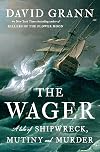
The Wager is a capable if underwhelming narrative history, further let down by some clumsy and out-of-place editorialising. It's a shame because, over the years, David Grann has been one of my favourite non-fiction writers; his The Lost City of Z was well-researched and had the pace of a good novel, and his essay collection The Devil and Sherlock Holmes found some truly weird and fascinating topics to cover, such as the Polish writer whose crime novel sounded suspiciously similar to an show more unsolved murder from a few years previously.
However, I have also experienced some disquiet off the back of more recent releases. The White Darkness was too slim to be worth its price; an interesting essay padded out with photographs and white space to give it the RRP of a full book. Furthermore, it was too non-critical of its topic. The Old Man and the Gun was a naked cash-grab, pulling a few essays from the earlier The Devil and Sherlock Holmes and slapping a new title on it. Killers of the Flower Moon, Grann's best-known book (and soon to be a Scorsese film), had a thrilling true story behind it – Indians on a reservation strike oil and become wealthy beyond their dreams, before being bumped off by grasping white 'saviours' – but was less taut in its narrative than I expected from the writer of The Lost City of Z. It also allowed Grann a few whispers of the sort of ahistorical sanctimony that has sadly become all too common in mainstream releases.
It is the latter quirk which stands out most clumsily in The Wager, Grann's newest release which tells the true story of an 18th-century sea voyage and storm-stayed shipwreck which sees its marooned castaways devolve into mutiny before a desperate escape. I know it has become a bit cringeworthy nowadays to criticise a book for being 'woke', and is something I try to avoid when possible. Such politically-correct affectations from a writer – usually privileged, humourless, upper-middle-class types who don't know how easy they have it – draw a sigh from me and perhaps a shake of the head, rather than cause me to froth at the mouth and declaim the collapse of civilisation, as seems to be the case among many perpetually-online types. That said, when Grann takes his story – a true story of human endurance and endeavour, of unimaginable hardship and desperation and terror, as well as feats of ingenuity and navigational skill – and warps it into an ungracious, moralising critique of imperialism, it compels me to put my boots on, and remark upon it at length.
Pearls are clutched when contemporary sources refer to indigenous people as 'savages' (pg. 123), as this betrays "their inherent racism" (pg. 223), and the idea that the British saw themselves as bringing civilisation to such noble, resourceful cultures – look, Grann says, they can build canoes and know where to find food! – is "condescending" (pg. 126). The slave trade is shoehorned in, despite the story of the ill-fated HMS Wager having nothing to do with it. Grann's raison d'être for his book is that the HMS Wager's voyage was evidence of imperial hubris and deservedly got its comeuppance; that the castaways' discipline unravelled over many months of unspeakable hardship shows that the purported superiority of their Empire was hollow; that some of the starved men were so desperate they resorted to cannibalism proves it was they who were the real 'savages' (pg. 242).
It's astonishingly tactless and mean-spirited to use this true story of human misery and endurance to make such a distasteful political point – imperialism being a paper tiger in 2023 – and particularly on such thin evidence. The descent into uncivilised chaos is, despite Grann's editorialising, shown to be rather tame given the circumstances; among the 100+ who survive the shipwreck, only a few resort to cannibalism (and evidence of this is even thinner). The mutineers even draft up legal documents to document and legitimise each of their (often very rational) decisions! The starved, shipwrecked men make their return trip through some of the most challenging waters in the world in less time than Magellan did (pg. 194), after months of woe and without much in the way of navigational aid, in a makeshift boat salvaged from scraps – but Grann is not impressed. For him, they committed the sin of not reflecting upon the fact they were "the agents of an imperialist system. They were consumed with their own daily struggles and ambitions… But it is precisely such unthinking complicity that allows empires to endure… a system many of them rarely question" (pg. 248).
This is a disgraceful passage of writing. It would be ahistorical in any book – to criticise the unfortunate castaways for imperialism is to criticise them for being born in the 18th century, rather than having the decency and foresight to be born into Grann's New York social circle in 2023 – but to condemn survivors in this way, after chronicling their hardships and mischance… to what purpose? It is as absurd as to write a book on the survivors of a plane crash, and condemn them for contributing to climate change. Grann ends the book by writing in his Acknowledgments page that "writing a book can sometimes feel like navigating a ship on a long, stormy voyage" (pg. 261). After maligning the feats and hardships of the Wager's castaways for his shallow point-scoring, such tone-deaf lack of grace at the end is astounding. It seems to me that the self-satisfied system to which Grann commits himself with such 'unthinking complicity' often has less to recommend it than the one the men of the Wager struggled under.
However, while the above is the book's most offensive flaw, it is not its most fatal. However distasteful it is when presented, Grann's heroic and timely fight against racism in 1741 does not dominate the book on a page-by-page basis. Rather, it is that the flaws in previous Grann books, that I alluded to in the second paragraph of my review, all find further evidence in The Wager. The loosening of Grann's narrative skill, already in evidence in Killers of the Flower Moon, becomes completely slack in The Wager. The book moves lubberly from point to point, and while it has its achievements – Grann does well to explain the perils and circumstances of the sea to readers who may not understand them, and draws well the dispositions of the various castaway factions – it's a far cry from the zip of The Lost City of Z.
And while the padding isn't as brazen as in The White Darkness, it's clear there's much of the story that Grann does not know about. And I don't mean his wrongheadedness on making racism the central crime, but the general structure on which we, the reader, are sold. The story purports to reveal the mystery of which of the competing factions of shipwrecked men were telling the truth – for those found to be in the wrong at court-martial will surely hang – but this is an anti-climax. The trial is no such thing; the mysteries mostly over pinning down who said what and when and why, which is a pretty mundane historical enterprise. Grann lamely says that it is "impossible to know for sure what transpired behind the scenes" (pg. 241), but nor does he make any attempt to find out. Any authorial speculation is of the unresearched, "it's because they were imperialist racists" variety. All the mystery is sifted out in Grann's telling of the story – a telling which becomes just a routine sea tale, told better elsewhere and with less editorialising.
It's a great shame, because although the story of the HMS Wager is not the fascinating mystery that Grann and his marketers have claimed, there were interesting angles that the author, had he the inclination to recognise them, could have found. One of the most interesting perspectives in the book comes when a young blue-blooded castaway, Byron (whose grandson would find fame as the poet Lord Byron), sneaks away from the mass of castaways who, under the command of a common gunner, Bulkeley, have decided to make that Magellan-like escape on their makeshift boat. Byron returns to the marooned, deposed captain on the barren, shelterless island, and Bulkeley, in his journal, comments that "the Honourable Mr. Byron could not quite accommodate himself to 'lie forward with the men'" in their cramped boat (pg. 176).
While also not being the full story, this angle of class and hierarchy would have been much more appropriate to the story of The Wager, though naturally less appealing to the American Grann and his modern audience. All the talk of the slave trade and colonialism could instead have gone to discussion of the press-gang, a form of forced servitude which shows that Grann's white racist imperialists were hardly unthinking and complicit in the system that Grann, in his beatitude, is unwilling to forgive them for. Towards the end of the book, Grann again admonishes how these "people tailor their stories to serve their interests – revising, erasing, embroidering – [as] do nations" (pg. 251). For Grann to recognise this and yet contribute his own self-serving, editorialised version is a poor show. show less
However, I have also experienced some disquiet off the back of more recent releases. The White Darkness was too slim to be worth its price; an interesting essay padded out with photographs and white space to give it the RRP of a full book. Furthermore, it was too non-critical of its topic. The Old Man and the Gun was a naked cash-grab, pulling a few essays from the earlier The Devil and Sherlock Holmes and slapping a new title on it. Killers of the Flower Moon, Grann's best-known book (and soon to be a Scorsese film), had a thrilling true story behind it – Indians on a reservation strike oil and become wealthy beyond their dreams, before being bumped off by grasping white 'saviours' – but was less taut in its narrative than I expected from the writer of The Lost City of Z. It also allowed Grann a few whispers of the sort of ahistorical sanctimony that has sadly become all too common in mainstream releases.
It is the latter quirk which stands out most clumsily in The Wager, Grann's newest release which tells the true story of an 18th-century sea voyage and storm-stayed shipwreck which sees its marooned castaways devolve into mutiny before a desperate escape. I know it has become a bit cringeworthy nowadays to criticise a book for being 'woke', and is something I try to avoid when possible. Such politically-correct affectations from a writer – usually privileged, humourless, upper-middle-class types who don't know how easy they have it – draw a sigh from me and perhaps a shake of the head, rather than cause me to froth at the mouth and declaim the collapse of civilisation, as seems to be the case among many perpetually-online types. That said, when Grann takes his story – a true story of human endurance and endeavour, of unimaginable hardship and desperation and terror, as well as feats of ingenuity and navigational skill – and warps it into an ungracious, moralising critique of imperialism, it compels me to put my boots on, and remark upon it at length.
Pearls are clutched when contemporary sources refer to indigenous people as 'savages' (pg. 123), as this betrays "their inherent racism" (pg. 223), and the idea that the British saw themselves as bringing civilisation to such noble, resourceful cultures – look, Grann says, they can build canoes and know where to find food! – is "condescending" (pg. 126). The slave trade is shoehorned in, despite the story of the ill-fated HMS Wager having nothing to do with it. Grann's raison d'être for his book is that the HMS Wager's voyage was evidence of imperial hubris and deservedly got its comeuppance; that the castaways' discipline unravelled over many months of unspeakable hardship shows that the purported superiority of their Empire was hollow; that some of the starved men were so desperate they resorted to cannibalism proves it was they who were the real 'savages' (pg. 242).
It's astonishingly tactless and mean-spirited to use this true story of human misery and endurance to make such a distasteful political point – imperialism being a paper tiger in 2023 – and particularly on such thin evidence. The descent into uncivilised chaos is, despite Grann's editorialising, shown to be rather tame given the circumstances; among the 100+ who survive the shipwreck, only a few resort to cannibalism (and evidence of this is even thinner). The mutineers even draft up legal documents to document and legitimise each of their (often very rational) decisions! The starved, shipwrecked men make their return trip through some of the most challenging waters in the world in less time than Magellan did (pg. 194), after months of woe and without much in the way of navigational aid, in a makeshift boat salvaged from scraps – but Grann is not impressed. For him, they committed the sin of not reflecting upon the fact they were "the agents of an imperialist system. They were consumed with their own daily struggles and ambitions… But it is precisely such unthinking complicity that allows empires to endure… a system many of them rarely question" (pg. 248).
This is a disgraceful passage of writing. It would be ahistorical in any book – to criticise the unfortunate castaways for imperialism is to criticise them for being born in the 18th century, rather than having the decency and foresight to be born into Grann's New York social circle in 2023 – but to condemn survivors in this way, after chronicling their hardships and mischance… to what purpose? It is as absurd as to write a book on the survivors of a plane crash, and condemn them for contributing to climate change. Grann ends the book by writing in his Acknowledgments page that "writing a book can sometimes feel like navigating a ship on a long, stormy voyage" (pg. 261). After maligning the feats and hardships of the Wager's castaways for his shallow point-scoring, such tone-deaf lack of grace at the end is astounding. It seems to me that the self-satisfied system to which Grann commits himself with such 'unthinking complicity' often has less to recommend it than the one the men of the Wager struggled under.
However, while the above is the book's most offensive flaw, it is not its most fatal. However distasteful it is when presented, Grann's heroic and timely fight against racism in 1741 does not dominate the book on a page-by-page basis. Rather, it is that the flaws in previous Grann books, that I alluded to in the second paragraph of my review, all find further evidence in The Wager. The loosening of Grann's narrative skill, already in evidence in Killers of the Flower Moon, becomes completely slack in The Wager. The book moves lubberly from point to point, and while it has its achievements – Grann does well to explain the perils and circumstances of the sea to readers who may not understand them, and draws well the dispositions of the various castaway factions – it's a far cry from the zip of The Lost City of Z.
And while the padding isn't as brazen as in The White Darkness, it's clear there's much of the story that Grann does not know about. And I don't mean his wrongheadedness on making racism the central crime, but the general structure on which we, the reader, are sold. The story purports to reveal the mystery of which of the competing factions of shipwrecked men were telling the truth – for those found to be in the wrong at court-martial will surely hang – but this is an anti-climax. The trial is no such thing; the mysteries mostly over pinning down who said what and when and why, which is a pretty mundane historical enterprise. Grann lamely says that it is "impossible to know for sure what transpired behind the scenes" (pg. 241), but nor does he make any attempt to find out. Any authorial speculation is of the unresearched, "it's because they were imperialist racists" variety. All the mystery is sifted out in Grann's telling of the story – a telling which becomes just a routine sea tale, told better elsewhere and with less editorialising.
It's a great shame, because although the story of the HMS Wager is not the fascinating mystery that Grann and his marketers have claimed, there were interesting angles that the author, had he the inclination to recognise them, could have found. One of the most interesting perspectives in the book comes when a young blue-blooded castaway, Byron (whose grandson would find fame as the poet Lord Byron), sneaks away from the mass of castaways who, under the command of a common gunner, Bulkeley, have decided to make that Magellan-like escape on their makeshift boat. Byron returns to the marooned, deposed captain on the barren, shelterless island, and Bulkeley, in his journal, comments that "the Honourable Mr. Byron could not quite accommodate himself to 'lie forward with the men'" in their cramped boat (pg. 176).
While also not being the full story, this angle of class and hierarchy would have been much more appropriate to the story of The Wager, though naturally less appealing to the American Grann and his modern audience. All the talk of the slave trade and colonialism could instead have gone to discussion of the press-gang, a form of forced servitude which shows that Grann's white racist imperialists were hardly unthinking and complicit in the system that Grann, in his beatitude, is unwilling to forgive them for. Towards the end of the book, Grann again admonishes how these "people tailor their stories to serve their interests – revising, erasing, embroidering – [as] do nations" (pg. 251). For Grann to recognise this and yet contribute his own self-serving, editorialised version is a poor show. show less
The Lost City of Z: A Legendary British Explorer's Deadly Quest to Uncover the Secrets of the Amazon by David Grann

David Grann's The Lost City of Z has everything I look for in a book. It tells a fascinating story. It has engaging characters. It is incredibly easy to read. You finish it wanting more and more. It is the sort of book you never want to put down, and you read it at a faster rate than you normally do. In a way, it is surprising that it has all these qualities as it is a non-fiction account. Don't get me wrong: I love non-fiction and it forms the bulk of my personal library. But the books that show more I adore the most are, with one or two exceptions, fiction. Non-fiction is informative and interesting, but it tends to be the fictional books that worm their way into my heart. Part of the reason The Lost City of Z bucks this trend is because it is told, in parts, with the flair of a novelist. Grann doesn't embellish, but he does make the story leap off the page. It is one of the few books I've read where at no point whatsoever did I want to be doing anything else. It's also one of those books that you're angry at yourself for having left so long before reading it.
The book tells the story of Percy Harrison Fawcett, one of the last great Victorian explorers who went missing in the Amazon in 1925 whilst searching for 'Z', a city that would provide archaeological evidence of an advanced civilisation in South America pre-dating European colonization. This mystery is the centrepiece of Grann's book and, while of course he cannot provide any definitive answers (the disappearance of Fawcett remains unexplained to this day) he does provide some remarkable closure. Not only can the reader make reasonable judgements from the story Grann provides (in all likelihood, Fawcett and his party were killed by hostile Indians) but it turns out that Z in fact did exist! It may not have been the 'El Dorado' of legend (and Fawcett for the most part seems to have been sceptical about a 'city of gold') but archaeologists have found compelling evidence of an extensive society and infrastructure in the Amazon rainforest. In his meetings with anthropologist Michael Heckenberger at an excavation site in the jungle, Grann provides a fitting end to this remarkable adventure, with Fawcett's dreams vindicated. The current theory - and it is a strong one - is that there was such a city and it was glimpsed by European conquistadors (hence the origins of the El Dorado myth) but colonialism also brought disease which wiped out this society and the jungle reclaimed the ruins of the city. Because their city was built largely from wood (stone being hard to come by in the jungle) there was little remaining for later explorers to find.
The reason the book works so well is that it is partly a historical account, partly an adventure story and partly a travelogue (Grann follows in Fawcett's footsteps in his own investigative quest), and excels in all these different angles. Grann is particularly good at evoking the awesome power and danger of the Amazon. Some of the facts and figures are mind-boggling, and evoke a sense of awe and wanderlust that sends the reader day-dreaming. The author doesn't romanticise the story any more than it already inherently is, and he doesn't shirk from detail about some of the horrible diseases, creatures and violence that Fawcett and those who came after him endured. Indeed, the stories of the maggots which crawl around under a living person's skin, the diseases which rot a man's face off and the incessant swarms of mosquitoes and flies and other insects put paid to any flickerings of wanderlust one might have about such adventures.
I'm struggling to really put down my true thoughts about this book, simply because there's so much good stuff I could say about it that they're all flooding my brain and it's hard to collect them. Put simply, The Lost City of Z works because everyone likes a mystery. Everyone likes an adventure. And, above all, everyone likes a good story well-told. I cannot recommend this book highly enough. show less
The book tells the story of Percy Harrison Fawcett, one of the last great Victorian explorers who went missing in the Amazon in 1925 whilst searching for 'Z', a city that would provide archaeological evidence of an advanced civilisation in South America pre-dating European colonization. This mystery is the centrepiece of Grann's book and, while of course he cannot provide any definitive answers (the disappearance of Fawcett remains unexplained to this day) he does provide some remarkable closure. Not only can the reader make reasonable judgements from the story Grann provides (in all likelihood, Fawcett and his party were killed by hostile Indians) but it turns out that Z in fact did exist! It may not have been the 'El Dorado' of legend (and Fawcett for the most part seems to have been sceptical about a 'city of gold') but archaeologists have found compelling evidence of an extensive society and infrastructure in the Amazon rainforest. In his meetings with anthropologist Michael Heckenberger at an excavation site in the jungle, Grann provides a fitting end to this remarkable adventure, with Fawcett's dreams vindicated. The current theory - and it is a strong one - is that there was such a city and it was glimpsed by European conquistadors (hence the origins of the El Dorado myth) but colonialism also brought disease which wiped out this society and the jungle reclaimed the ruins of the city. Because their city was built largely from wood (stone being hard to come by in the jungle) there was little remaining for later explorers to find.
The reason the book works so well is that it is partly a historical account, partly an adventure story and partly a travelogue (Grann follows in Fawcett's footsteps in his own investigative quest), and excels in all these different angles. Grann is particularly good at evoking the awesome power and danger of the Amazon. Some of the facts and figures are mind-boggling, and evoke a sense of awe and wanderlust that sends the reader day-dreaming. The author doesn't romanticise the story any more than it already inherently is, and he doesn't shirk from detail about some of the horrible diseases, creatures and violence that Fawcett and those who came after him endured. Indeed, the stories of the maggots which crawl around under a living person's skin, the diseases which rot a man's face off and the incessant swarms of mosquitoes and flies and other insects put paid to any flickerings of wanderlust one might have about such adventures.
I'm struggling to really put down my true thoughts about this book, simply because there's so much good stuff I could say about it that they're all flooding my brain and it's hard to collect them. Put simply, The Lost City of Z works because everyone likes a mystery. Everyone likes an adventure. And, above all, everyone likes a good story well-told. I cannot recommend this book highly enough. show less
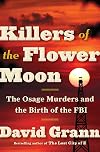
Imagine your neighbor is John Wayne Gacy and your husband is Scott Peterson and your “guardian” is Ted Bundy (seems like a nice guy but wants to kill you). The Osage Indians of the 1920s did not have to imagine this, they lived it. There were great reserves of oil on the Osage reservation in Oklahoma and the law said you had to pay a headright to the Indians to drill there. This made the Indians rich overnight and because the system run by the white men in the area was so corrupt, show more Indians were declared unable to handle their own money and guardians were appointed. The situation was ripe for abuse, and the bottom feeders did not hesitate to take advantage in the cruelest ways imaginable.
I do not think this could have happened in any other situation. It required almost the entire white population to be complicit, and that was apparently pretty easy for most as long as the dead bodies belonged to Osage Indians. When Anna Brown is killed, then her mother, then her sister Rita and brother-in-law, Bill Smith, this leaves only her sister Mollie Burkhart alive, and she now holds all the headrights of all of these individuals. You don’t have to be a genius to figure out that her life is not worth a sack of salt. She has been seeking help outside the local and state officials since the death of Anna, and the FBI is finally called in to investigate. This family is not the only one affected, but it is the most severely affected. The number of murders is, in fact, astounding.
We meet the FBI investigators, and particularly Tom White, who assumes the investigation and finally brings it to some resolution. What is clear is that the scope of the murders extends beyond the group punished and that the punishment is sorely insufficient to the crime. If you think we have corruption in our political and legal system today (and God knows we do), it pales in the face of the corruption we see here. It makes you want to scream and stomp. This killing spree on the Osage Reservation reverberates through the century since it occurred and affects the lives of descendants into the fourth generation. That anyone would ever trust a family member, a legal representative or a doctor in this place again is inconceivable.
Read this, but be prepared to feel a bit sickened by your fellow man. show less
I do not think this could have happened in any other situation. It required almost the entire white population to be complicit, and that was apparently pretty easy for most as long as the dead bodies belonged to Osage Indians. When Anna Brown is killed, then her mother, then her sister Rita and brother-in-law, Bill Smith, this leaves only her sister Mollie Burkhart alive, and she now holds all the headrights of all of these individuals. You don’t have to be a genius to figure out that her life is not worth a sack of salt. She has been seeking help outside the local and state officials since the death of Anna, and the FBI is finally called in to investigate. This family is not the only one affected, but it is the most severely affected. The number of murders is, in fact, astounding.
We meet the FBI investigators, and particularly Tom White, who assumes the investigation and finally brings it to some resolution. What is clear is that the scope of the murders extends beyond the group punished and that the punishment is sorely insufficient to the crime. If you think we have corruption in our political and legal system today (and God knows we do), it pales in the face of the corruption we see here. It makes you want to scream and stomp. This killing spree on the Osage Reservation reverberates through the century since it occurred and affects the lives of descendants into the fourth generation. That anyone would ever trust a family member, a legal representative or a doctor in this place again is inconceivable.
Read this, but be prepared to feel a bit sickened by your fellow man. show less

"The rain forest was not a garden of easy abundance, but precisely the opposite. Its quiet, shaded halls of leafy opulence were not a sanctuary, but rather the greatest natural battlefield anywhere on the planet, hosting an unremitting and remorseless fight for survival that occupied every single one of its inhabitants, every minute of every day." — Candace Miller, The River of Doubt
"Explorers are not, perhaps, the most promising people with whom to build a society. Indeed, some might say show more that explorers become explorers precisely because they have a streak of unsociability and a need to remove themselves at regular intervals as far as possible from their fellow men."
The above quotes, both from this adventurous and heartbreaking book, illuminate a bit of the obsessive personality of Colonel Percy Harrison Fawcett, the early 20th century British explorer who was determined, at seemingly any cost, to find the City of Z. As he financed and led multiple expeditions to the jungles of South America, the more evidence he found of a vast civilization that existed there long ago. Over time, what initially piqued his interest turned into an unrelenting pursuit. And note this was also during a time in history when the remainder of the world's unexplored areas were rapidly becoming known. This clash of modernity, paradoxically, only intensified Colonel Fawcett's belief in the existence of Z. show less
"Explorers are not, perhaps, the most promising people with whom to build a society. Indeed, some might say show more that explorers become explorers precisely because they have a streak of unsociability and a need to remove themselves at regular intervals as far as possible from their fellow men."
The above quotes, both from this adventurous and heartbreaking book, illuminate a bit of the obsessive personality of Colonel Percy Harrison Fawcett, the early 20th century British explorer who was determined, at seemingly any cost, to find the City of Z. As he financed and led multiple expeditions to the jungles of South America, the more evidence he found of a vast civilization that existed there long ago. Over time, what initially piqued his interest turned into an unrelenting pursuit. And note this was also during a time in history when the remainder of the world's unexplored areas were rapidly becoming known. This clash of modernity, paradoxically, only intensified Colonel Fawcett's belief in the existence of Z. show less
Lists
True Crime (2)
2023 Challenge (1)
Edgar Award (1)
Non-Fiction (2)
To Read (1)
At the Library (1)
Wanted List (1)
Obama Reads (1)
Evan's Wish List (1)
Unhinged History (1)
Unread books (1)
Awards


You May Also Like


Associated Authors
Statistics
- Works
- 13
- Also by
- 4
- Members
- 21,040
- Popularity
- #1,027
- Rating
- 4.0
- Reviews
- 873
- ISBNs
- 207
- Languages
- 20
- Favorited
- 11
