
Peter Hessler
Author of River Town: Two Years on the Yangtze
About the Author
Peter Hessler is a staff writer at The New Yorker, where he served as the Beijing correspondent from 2000 to 2007, and is also a contributing writer for National Geographic. He is the author of River Town, which won the Kiriyama Prize; Oracle Bones, which was a finalist for the National Book Award; show more and, most recently, Country Driving. He won the 2008 National Magazine Award for excellence in reporting, and he was named a MacArthur Fellow in 2011. He lives in Cairo. show less
Image credit: From Amazon
Works by Peter Hessler
Associated Works
Secret Ingredients: The New Yorker Book of Food and Drink (2007) — Contributor — 596 copies, 10 reviews
Unsavory Elements: Stories of Foreigners on the Loose in China (2013) — Contributor — 31 copies, 1 review
Tagged
Common Knowledge
- Birthdate
- 1968-06-14
- Gender
- male
- Education
- Princeton University
University of Oxford (Mansfield College)
Hickman High School - Occupations
- journalist
travel writer - Organizations
- The New Yorker
Peace Corps - Awards and honors
- Rhodes Scholarship
- Relationships
- Chang, Leslie T (wife)
- Short biography
- Peter Hessler joined The New Yorker as a staff writer in 2000. He is the magazine’s correspondent in the People’s Republic of China, where he has lived since 1996. His Letter from China articles have included features on the basketball player Yao Ming, a Shenzhen factory worker, and a rural family in the grip of a medical crisis. He has also written about being robbed on the border between China and North Korea, the Mongolian Presidential elections, and the Three Gorges Dam.
- Nationality
- USA
- Places of residence
- Columbia, Missouri, USA
Fuling, China
Cairo, Egypt
Members
Reviews
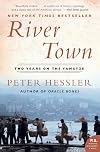
I’ve never been to China. After reading the first book in Peter Hessler’s trilogy that chronicles his experiences as an American living in China on the cusp of the 21st century, I now understand that China is so massive geographically that there is no one China. A common history binds the culture, but the social conventions and language can differ depending on where you are.
River Town is about the two years Hessler taught English in Fuling, a remote city in Sichuan in the mountainous show more center of the nation. As part of the earliest cadre of Peace Corps volunteers to enter China in the 1990s, Hessler was assigned to a small teacher’s college. Most of his students were peasants’ children, and the opportunity to teach school was an honorable advancement for them.
The students were diligent and well-behaved, but Hessler and his fellow volunteer, Adam, made plenty of missteps inside and outside the classroom. The pair learn the local Chinese dialect, make friends in town, and feel like they belong there. But unfolding events prove their confidence and comfort are premature.
I enjoyed this peek into Chinese society in the 1990s. With the newly opened economy, the country only recently allowed outside influences in, and the clash between the cultures was very real. But so was the humanity both sides displayed.
Hessler covers too much ground to examine in a short review. He was there while the nation built the Three Gorges Dam and lamented the imminent loss of the area’s beautiful landscapes. But he celebrates the kindnesses and honesty of the residents while denigrating the government propaganda that kept them under control. River Town is a wonderful book for anyone who genuinely enjoys a “slice of life” look at a particular place and time. show less
River Town is about the two years Hessler taught English in Fuling, a remote city in Sichuan in the mountainous show more center of the nation. As part of the earliest cadre of Peace Corps volunteers to enter China in the 1990s, Hessler was assigned to a small teacher’s college. Most of his students were peasants’ children, and the opportunity to teach school was an honorable advancement for them.
The students were diligent and well-behaved, but Hessler and his fellow volunteer, Adam, made plenty of missteps inside and outside the classroom. The pair learn the local Chinese dialect, make friends in town, and feel like they belong there. But unfolding events prove their confidence and comfort are premature.
I enjoyed this peek into Chinese society in the 1990s. With the newly opened economy, the country only recently allowed outside influences in, and the clash between the cultures was very real. But so was the humanity both sides displayed.
Hessler covers too much ground to examine in a short review. He was there while the nation built the Three Gorges Dam and lamented the imminent loss of the area’s beautiful landscapes. But he celebrates the kindnesses and honesty of the residents while denigrating the government propaganda that kept them under control. River Town is a wonderful book for anyone who genuinely enjoys a “slice of life” look at a particular place and time. show less
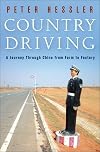
There are many books written about China's economic miracle. There are many studies published every year for the last thirty years predicting impending collapse of China. Don't read those books, ignore these studies, read Peter Hessler instead.
The books attempting to capture 'the big picture' of the economic transformation of China invariably miss out on the role played by individual choices that drive this transformation. Hessler starts from a very different position. He travels, he talks show more to people, he makes friends, he observes what individuals strive for and how they accomplish their goals. Initially disjointed personal stories soon form a pattern, little streams converge into mighty rivers, hundred million former farm hands rush into cities, head to factories in the south to make 'China's economic miracle' not only possible but inevitable. Formed by individual choices, 'the big picture' arrives all by itself, without the need to tweak economic theories that failed to predict it.
Peter Hessler starts out like most westerners arriving in China would. He is intrigued by history, he attempts to drive along the entire Great Wall. As he observes the quickly changing world around him, his interest in the past gives way to the fascination with the present. Hessler realizes that he is witnessing a historical event of unique proportions not only for China but for the whole world. And he rushes to document it as a good journalist would, focusing on individuals he meets, armed with keen powers of observation and not encumbered by stereotypes or political dogmas. He carries no baggage of preconceptions, he is humble and open, full of the appreciation for the people he meets and the culture he learns about. This approach is what makes the book successful.
Hessler begins with sketches of hitchhikers 'petting an invisible dog' on the side of the road during his long drive along the ancient walls. He moves on to more detailed portraits of members of a family in a struggling village of Sancha. He follows the story of Wei Ziqi over the course of several years and records his transformation from a reluctant farmer into a successful businessman. Wei Ziqi's son, who calls the strange foreigner living in their house 'Uncle Monster', forms a strong bond with the author. Hessler finishes his story in the southern province Zhejiang, where he follows a small factory from its creation to eventual moderate success. He first meets and describes the bosses, documenting the essential ingredients for entrepreneurship in China, then switches to more endearing stories, fortunes and aspirations of several factory workers.
Peter Hessler's writing style is unadorned, economical, very easy to read. He combines well the main story line with some historical snapshots and throws in quite a few amusing anecdotes from his travels. show less
The books attempting to capture 'the big picture' of the economic transformation of China invariably miss out on the role played by individual choices that drive this transformation. Hessler starts from a very different position. He travels, he talks show more to people, he makes friends, he observes what individuals strive for and how they accomplish their goals. Initially disjointed personal stories soon form a pattern, little streams converge into mighty rivers, hundred million former farm hands rush into cities, head to factories in the south to make 'China's economic miracle' not only possible but inevitable. Formed by individual choices, 'the big picture' arrives all by itself, without the need to tweak economic theories that failed to predict it.
Peter Hessler starts out like most westerners arriving in China would. He is intrigued by history, he attempts to drive along the entire Great Wall. As he observes the quickly changing world around him, his interest in the past gives way to the fascination with the present. Hessler realizes that he is witnessing a historical event of unique proportions not only for China but for the whole world. And he rushes to document it as a good journalist would, focusing on individuals he meets, armed with keen powers of observation and not encumbered by stereotypes or political dogmas. He carries no baggage of preconceptions, he is humble and open, full of the appreciation for the people he meets and the culture he learns about. This approach is what makes the book successful.
Hessler begins with sketches of hitchhikers 'petting an invisible dog' on the side of the road during his long drive along the ancient walls. He moves on to more detailed portraits of members of a family in a struggling village of Sancha. He follows the story of Wei Ziqi over the course of several years and records his transformation from a reluctant farmer into a successful businessman. Wei Ziqi's son, who calls the strange foreigner living in their house 'Uncle Monster', forms a strong bond with the author. Hessler finishes his story in the southern province Zhejiang, where he follows a small factory from its creation to eventual moderate success. He first meets and describes the bosses, documenting the essential ingredients for entrepreneurship in China, then switches to more endearing stories, fortunes and aspirations of several factory workers.
Peter Hessler's writing style is unadorned, economical, very easy to read. He combines well the main story line with some historical snapshots and throws in quite a few amusing anecdotes from his travels. show less
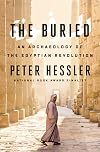
So, I got this book as the May 2019 Book of the Month. I chose this book because I've always been interested in Egyptian history. When I received this book, I was honestly surprised because it's thick as fuck, so it was really intimidating with its 430 pages over 27 chapters - the acknowledgments and such at the back amount to 480 total pages.
Now, I'm interested in History, but I find it very hard for me to read history. Most history books are honestly just so boring to me and it's a show more struggle for me to make it through the text. Most people just lay down the facts and that's it, they don't add their own personal flair or personality to it so it's hella boring.
Peter is different, though. He doesn't just write down history and leave it be, he writes down what happened but he puts emotion into it - it feels like you were there with him, experiencing what he did. Maybe it's because he was there experiencing it, so he can tell the story from his own perspective and personal experience. Which is another thing, it's history but it isn't ancient history, it's recent history that happened throughout the 2000s.
I honestly admire him and his wife. They went there to observe and document, but they can control themselves, even in the presence of something that seems wrong. I can honestly respect that because I don't think I would be able to hold my tongue with the way most of the men treat women but I also understand that that's their culture, it's how it's always been and even though I think it's wrong, it would also be wrong for me to go and disrespect them for doing what their culture deems to be right.
Even if they disagree, Peter and his wife are there to observe. There are a few occasions where they give advice to their friends but overall, they keep their opinions to themself.
I also admire the women in Egypt. Not only do they have to deal with some serious oppression by the men, but they also have to dress conservatively even in the blazing sun. It's 110 degrees in the summer and these women are dressed head to toe in thick clothing. Like, I get that it's their culture and all, but... how?? It's only like 85 here, I'm sitting in the shade with shorts and a t-shirt and I'm nearly dead okay
"He explained that in detention one of the tramadol dealers had told him about an American chemical product with special powers. If a man sprayed himself with this special American product, he became sexually irresistible."
I fucking read that paragraph in the book and nearly DIED. Was he talking about axe body spray?? Like those ads for the chocolate body spray where he sprays himself and then all of the women are all over him. I literally died laughing.
When I finally finished this book, it left me feeling speechless. Honestly, it was such a relief when I only had two chapters left because of how damn long this book is. I usually avoid nonfiction and history because of their length and how boring they are, but Peter has something special in the way he retells everyone's story.
I feel like I experienced a small part of what he went through and I'm so thankful that he was willing to record the story of their everyday lives. I've never met them, and probably never will, but I feel impacted by these amazing people.
Manu. Sayyid, Wahiba, and their beautiful children. Rifaat and his brother Raafat.
I feel connected to them and their story, and I only want the best for them. I'm so happy that Manu was able to accept himself, and that Sayyid and Wahiba were able to find middle ground. I feel so sorry for Raafat and what happened to his brother. They're all such wonderful people who have all gone through so much hell, as has the country that they call home.
This is my first real experience with Egyptian history, despite my interest, so I'm honestly a bit shocked by it all - learning that such oppression of women and homosexuals is so strong in such recent years. I really hope that things change for the better. I hope that women can more rights and that gays can live without fear of being beaten or arrested.
I hope they can work through their issues and come out stronger as a country. Egypt is rich with history, and I'd hate to see it collapse.
I feel like I learned a lot while reading this book, about the history of the recent revolution and the people that live there. I'm glad I took a chance on this book, and I encourage others to do the same. show less
Now, I'm interested in History, but I find it very hard for me to read history. Most history books are honestly just so boring to me and it's a show more struggle for me to make it through the text. Most people just lay down the facts and that's it, they don't add their own personal flair or personality to it so it's hella boring.
Peter is different, though. He doesn't just write down history and leave it be, he writes down what happened but he puts emotion into it - it feels like you were there with him, experiencing what he did. Maybe it's because he was there experiencing it, so he can tell the story from his own perspective and personal experience. Which is another thing, it's history but it isn't ancient history, it's recent history that happened throughout the 2000s.
I honestly admire him and his wife. They went there to observe and document, but they can control themselves, even in the presence of something that seems wrong. I can honestly respect that because I don't think I would be able to hold my tongue with the way most of the men treat women but I also understand that that's their culture, it's how it's always been and even though I think it's wrong, it would also be wrong for me to go and disrespect them for doing what their culture deems to be right.
Even if they disagree, Peter and his wife are there to observe. There are a few occasions where they give advice to their friends but overall, they keep their opinions to themself.
I also admire the women in Egypt. Not only do they have to deal with some serious oppression by the men, but they also have to dress conservatively even in the blazing sun. It's 110 degrees in the summer and these women are dressed head to toe in thick clothing. Like, I get that it's their culture and all, but... how?? It's only like 85 here, I'm sitting in the shade with shorts and a t-shirt and I'm nearly dead okay
"He explained that in detention one of the tramadol dealers had told him about an American chemical product with special powers. If a man sprayed himself with this special American product, he became sexually irresistible."
I fucking read that paragraph in the book and nearly DIED. Was he talking about axe body spray?? Like those ads for the chocolate body spray where he sprays himself and then all of the women are all over him. I literally died laughing.
When I finally finished this book, it left me feeling speechless. Honestly, it was such a relief when I only had two chapters left because of how damn long this book is. I usually avoid nonfiction and history because of their length and how boring they are, but Peter has something special in the way he retells everyone's story.
I feel like I experienced a small part of what he went through and I'm so thankful that he was willing to record the story of their everyday lives. I've never met them, and probably never will, but I feel impacted by these amazing people.
Manu. Sayyid, Wahiba, and their beautiful children. Rifaat and his brother Raafat.
I feel connected to them and their story, and I only want the best for them. I'm so happy that Manu was able to accept himself, and that Sayyid and Wahiba were able to find middle ground. I feel so sorry for Raafat and what happened to his brother. They're all such wonderful people who have all gone through so much hell, as has the country that they call home.
This is my first real experience with Egyptian history, despite my interest, so I'm honestly a bit shocked by it all - learning that such oppression of women and homosexuals is so strong in such recent years. I really hope that things change for the better. I hope that women can more rights and that gays can live without fear of being beaten or arrested.
I hope they can work through their issues and come out stronger as a country. Egypt is rich with history, and I'd hate to see it collapse.
I feel like I learned a lot while reading this book, about the history of the recent revolution and the people that live there. I'm glad I took a chance on this book, and I encourage others to do the same. show less
Guys... this might make my Christmas card top 5 this year. The Buried was THAT good, I'm still thinking about it! Peter Hessler combines archaeology, cultural and religious customs, politics, language, family relations, and the Egyptian Revolution and writes a compelling narrative of his family's time in Cairo through the lens of the Arab Spring. Peter, his Chinese wife, Leslie, and their two newborn twins settle in Cairo for several years and experience it all. I learned SO MUCH. And it show more wasn't dry or overwhelming; it was fascinating stuff! Sprinkled throughout would be tidbits about Chinese immigrants selling lingerie, the oppression of women, and anecdotes about the world's friendliest trash man, I can't get over how well this book read. This is definitely one I will come back to again. I've loved Egyptian history since I was a child and getting to read about it's modern day archaeology and it's political climate was so intriguing. It makes me want to go on an Egyptian reading binge. Wonderful, wonderful political/cultural/memoir. A must read! show less
Lists
Awards


You May Also Like


Associated Authors
Statistics
- Works
- 10
- Also by
- 14
- Members
- 4,378
- Popularity
- #5,728
- Rating
- 4.1
- Reviews
- 112
- ISBNs
- 57
- Languages
- 7
- Favorited
- 14
