
Tim Cahill
Author of Road Fever
About the Author
Series
Works by Tim Cahill
Not So Funny When It Happened: The Best of Travel Humor and Misadventure (2000) — Editor — 244 copies, 7 reviews
Hyenas laughed at me, and now I know why : the best of travel humor and misadventure (2003) — Introduction — 48 copies, 1 review
Dolphins [2000 film] — Writer — 14 copies
Mini Timmy - El Minimundial (Castellano - A PARTIR DE 6 AÑOS - PERSONAJES Y SERIES - Mini Timmy) (2018) 10 copies
Associated Works
South: The Story of Shackleton's Last Expedition, 1914-1917 (1919) — Foreword, some editions — 2,150 copies, 45 reviews
Tagged
Common Knowledge
- Birthdate
- 1944
- Gender
- male
- Education
- University of Wisconsin-Madison
San Francisco State University - Occupations
- editor-at-large
travel writer - Organizations
- Rolling Stone
Outside - Nationality
- USA
- Birthplace
- Nashville, Tennessee, USA
- Places of residence
- Livingston, Montana, USA
Waukesha, Wisconsin, USA - Map Location
- USA
Members
Reviews
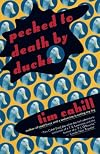
So I picked this book thinking its about living on a farm. Its not. Its really a compilation of articles that the author wrote for various magazines and journals. I totally enjoyed. The first story, Kuwait is Burning: A Postcard From the Apocalypse, is a story that really got to me - the sardonic voice of Cahill, as he searches for a bit of adventure in burning Kuwait immediately after the Gulf War - was a perfect mix of brutal imagery with humor. Other stories were more on the side of show more adventure.
Cahill went to a lot of exotic places in his time - from reporting on contradictory reports of a program to increase the population of highly endangered Giant Clams in the Pacific (Spoiler: The reports from the non-native science experts were wrong), to taking two newbie climbers up a mountain in western USA, each story is really well written and insightful.
A few stories were not as good, but that always happens in an anthology and should be expected. Also, the book was written in 1993, but didn't feel dated.
Highly recommended, especially the story "Bear in Mind", where the author falls asleep watching Grizzlies... show less
Cahill went to a lot of exotic places in his time - from reporting on contradictory reports of a program to increase the population of highly endangered Giant Clams in the Pacific (Spoiler: The reports from the non-native science experts were wrong), to taking two newbie climbers up a mountain in western USA, each story is really well written and insightful.
A few stories were not as good, but that always happens in an anthology and should be expected. Also, the book was written in 1993, but didn't feel dated.
Highly recommended, especially the story "Bear in Mind", where the author falls asleep watching Grizzlies... show less
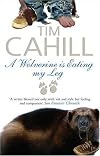
a real-life Indiana Jones who writes instead of nabbing priceless artifacts, Cahill writes the funniest social criticism disguised as travel journalism.
unlike Jaguars Ripped My Flesh, this book is dark. he even warns us at the entrance to this hall of mirrors but nothing prepared me for the middle portion of the book. the first portion of the book was darker than his other stuff, yes, but still within the realm of dark humor. then he gets to the Jonestown Massacre in Guyana. i had to stop show more reading several times just to keep from breaking down. i knew it was bad but i had no idea just how bad and Cahill's unique perspective and insider knowledge made it utterly gut-wrenching.
once that portion of the book is over, he gives a quick, hilarious chaser to wash away the bitter let behind by the Story That Must Not Be Named and then into more usual tales of adventure and cynical woe.
disjointed and non-linear? yes. but well worth it to hear about Cahill's experiences in his voice. show less
unlike Jaguars Ripped My Flesh, this book is dark. he even warns us at the entrance to this hall of mirrors but nothing prepared me for the middle portion of the book. the first portion of the book was darker than his other stuff, yes, but still within the realm of dark humor. then he gets to the Jonestown Massacre in Guyana. i had to stop show more reading several times just to keep from breaking down. i knew it was bad but i had no idea just how bad and Cahill's unique perspective and insider knowledge made it utterly gut-wrenching.
once that portion of the book is over, he gives a quick, hilarious chaser to wash away the bitter let behind by the Story That Must Not Be Named and then into more usual tales of adventure and cynical woe.
disjointed and non-linear? yes. but well worth it to hear about Cahill's experiences in his voice. show less
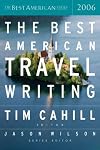
I bought this anthology based on the strength of its user reviews on Amazon and LibraryThing, plus my positive experiences with another title in the series The Best American Science and Nature Writing. However I had serious trepidations, after all isn't modern travel writing mostly just light touristic pieces found in Reader's Digest or the local newspaper, barely hidden attempts at selling us packaged vacations? Was I ever wrong and pleasantly surprised, the 2006 collection turns out to be show more one of the best books I've read this year. There are 26 essays and not one is bad, they are all fantastic and at least 4 of them are classics. Normally in anthologies like this I'm happy when a third are favorited enough to mark the page for re-reading later, but here it's almost 100%; marking the pages is superfluous.
The guest editor for 2006 is Tim Cahill, founder and editor of Outside magazine, so it is perhaps not surprising that, as a professional editor of a magazine that caters to travel writing, he was like a Saudi Sheik with unlimited funds on a shopping spree in Paris, able to pick and choose from the best the world has to offer, the only limit being 320 pages. But how does he pick the "best"? "In choosing pieces for this anthology", he says, "I've looked for the best stories I could find", [emphasis added] - clarifying what he means by story, "if I can't find a story, I often feel I'm being beaten over the head with an encyclopedia. Stories are the sole written instrument that can bring tears to our eyes, or make us laugh.. and they are more fun to read. Story is of the essence. " This collection then is a testament to Cahill's ideal of travel writing as story, and it succeeds brilliantly. Cahill also posits that America is currently in a "Golden Age" of travel writing and after reading this collection I might agree.
If you read only one travel writing anthology this would be an ideal place to start. Even if your not interested in travel writing as a genre, most of these pieces were not written as strictly travel writing, or for traditional travel magazines. The articles are mostly by well established and known journalists and novelists and non-fiction authors in top-tier magazines like National Geographic, The New Yorker, GQ and others. I look forward to reading more from this series, but based on admittedly shallow investigations of user reviews, none of the other volumes in the series look as good as this one. Perhaps 2005 was just a very good year for travel writing, perhaps Cahill has an unusually good talent for picking the best articles, or perhaps since this is my first experience with the series, and my initial low expectations - whatever the case this volume will be revisited in later years and has earned a satisfying place on my bookshelf.
--Review by Stephen Balbach, via CoolReading (c) 2008 cc-by-nd show less
The guest editor for 2006 is Tim Cahill, founder and editor of Outside magazine, so it is perhaps not surprising that, as a professional editor of a magazine that caters to travel writing, he was like a Saudi Sheik with unlimited funds on a shopping spree in Paris, able to pick and choose from the best the world has to offer, the only limit being 320 pages. But how does he pick the "best"? "In choosing pieces for this anthology", he says, "I've looked for the best stories I could find", [emphasis added] - clarifying what he means by story, "if I can't find a story, I often feel I'm being beaten over the head with an encyclopedia. Stories are the sole written instrument that can bring tears to our eyes, or make us laugh.. and they are more fun to read. Story is of the essence. " This collection then is a testament to Cahill's ideal of travel writing as story, and it succeeds brilliantly. Cahill also posits that America is currently in a "Golden Age" of travel writing and after reading this collection I might agree.
If you read only one travel writing anthology this would be an ideal place to start. Even if your not interested in travel writing as a genre, most of these pieces were not written as strictly travel writing, or for traditional travel magazines. The articles are mostly by well established and known journalists and novelists and non-fiction authors in top-tier magazines like National Geographic, The New Yorker, GQ and others. I look forward to reading more from this series, but based on admittedly shallow investigations of user reviews, none of the other volumes in the series look as good as this one. Perhaps 2005 was just a very good year for travel writing, perhaps Cahill has an unusually good talent for picking the best articles, or perhaps since this is my first experience with the series, and my initial low expectations - whatever the case this volume will be revisited in later years and has earned a satisfying place on my bookshelf.
--Review by Stephen Balbach, via CoolReading (c) 2008 cc-by-nd show less

Garry Sowerby and Tim Cahill pursue the speed record for driving a GMC truck from Tierra del Fuego in South America at the southernmost, to Prudhoe Bay in Alaska at the north, a total distance of 15,000 miles! The record was 50 days, but that was unverified. So they enlist Ross McWhirter of the Guiness Book of Records to ascertain that their achievement would be a verified record. They believed they could make the journey in 25 days.
The book was not that entertaining to read. The two men show more were traveling at such a break neck pace and didn't really stop through the entire journey, save for border crossings. What observaional detail there was, is crammed into such short space that it is lost. There was some interesting drama between the men as they endured the experience,but that didn't make up for the lack of any real fleshed out story detail. And after the first 95% of the book tells of the journey through Mexico, the rest of the journey is told in about 15 pages!
If the authors goal was to make the reader experience the slam bang pace of the journey as if they were along on the trip he succeeded. But to me there were many situations and places on the trip that could have been fleshed out better. Maybe even add a map or two. And about the second half of the journey? I guess nothing happened. By the end I just wanted the trip (and the read) to be over. Oh, by the way, they set the record in 23 and 1/2 days. show less
The book was not that entertaining to read. The two men show more were traveling at such a break neck pace and didn't really stop through the entire journey, save for border crossings. What observaional detail there was, is crammed into such short space that it is lost. There was some interesting drama between the men as they endured the experience,but that didn't make up for the lack of any real fleshed out story detail. And after the first 95% of the book tells of the journey through Mexico, the rest of the journey is told in about 15 pages!
If the authors goal was to make the reader experience the slam bang pace of the journey as if they were along on the trip he succeeded. But to me there were many situations and places on the trip that could have been fleshed out better. Maybe even add a map or two. And about the second half of the journey? I guess nothing happened. By the end I just wanted the trip (and the read) to be over. Oh, by the way, they set the record in 23 and 1/2 days. show less
Lists
Awards


You May Also Like


Associated Authors
Statistics
- Works
- 35
- Also by
- 16
- Members
- 3,352
- Popularity
- #7,616
- Rating
- 3.7
- Reviews
- 57
- ISBNs
- 130
- Languages
- 4
- Favorited
- 12
