

Redmond O'Hanlon
Author of Into the Heart of Borneo
About the Author
Redmond O'Hanlon was the Natural History editor of The Times Literary Supplement.
Image credit: Picture:Shannon Morris
Works by Redmond O'Hanlon
Darwin, Wallace en de anderen : evolutie volgens Redmond O'Hanlon (2011) — Contributor — 22 copies, 2 reviews
Joseph Conrad and Charles Darwin: The Influence of Scientific Thought on Conrad's Fiction (1984) 4 copies
Op reis met ... : Redmond O'Hanlon, Ivan A. Gontsjarov, Wilfred Thesiger, Astolphe marquis de Custine, Colin Thubron, Pa (1990) — Contributor — 3 copies
Associated Works
Wild: Stories of Survival from the World's Most Dangerous Places (Adrenaline) (1999) — Contributor — 65 copies, 1 review
Penguins 60s Classics (Loose as the Wind; Now Remember; Florence Nightingale; Rumpole and the Younger Generation; Elephant Tales; Scenes from Havian Life; Less is More Please;… (1996) — Contributor — 12 copies
Op reis met — Contributor — 6 copies
Vakantieverhalen — Contributor — 1 copy
Tagged
Common Knowledge
- Canonical name
- O'Hanlon, Redmond
- Legal name
- O'Hanlon, Raymond
- Birthdate
- 1947-06-05
- Gender
- male
- Education
- University of Oxford
Marlborough College - Occupations
- writer
scholar - Organizations
- Society for the Bibliography of Natural History (1982)
Royal Geographical Society (1984)
Royal Society of Literature (1993) - Awards and honors
- Boudewijn Büch-Prize (2013)
Royal Geographical Society (Fellow, 1984)
Royal Society of Literature (Fellow, 1993)
SHNH (1983) - Relationships
- Fenton, James (friend)
Büch, Boudewijn (friend) - Nationality
- UK
- Birthplace
- Dorset, UK
- Places of residence
- Oxfordshire, UK
- Associated Place (for map)
- UK
Members
Reviews
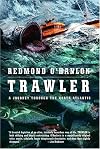
Being the Walter Mitty that I am, I thought it would always be fun to sail through a Force 12 storm (but only on an aircraft carrier or battleship or maybe the QM 2 being also a major chicken). Well, O'Hanlon had the same wish only he wanted to experience it on a fishing trawler in the North Sea. He was invited on the Norlantean by a fishing biologist friend. Jason, the captain, is very good at what he does -- he has to be since he took out a 2,000,000 pound loan to refit the ship. Talk show more about pressure to perform. Lots of really interesting details such as most of the ocean (99%) remains unexplored and is below 2 km deep. This is a deep trawling vessel so many of the fish that get pulled up are interesting, if not bizarre, something that truly excites O'Hanlon's friend.
O'Hanlon rather vividly describes what it is like to get seasick (no thanks, I remember being seasick - it's a state where you wish you would die, but unfortunately also realize you won't.) Not to mention, the terror of that 1 in 100,000 "lump," what we might call a rogue wave that towers about the normal huge waves in a storm. The crew, in the meantime, during the harsh weather is gutting fish with razor sharp knives.
I would have given this book more stars had he not spent so much time on the idiosyncratic characters. I prefer more detail about the technology and the social and cultural issues faced by the crew. show less
O'Hanlon rather vividly describes what it is like to get seasick (no thanks, I remember being seasick - it's a state where you wish you would die, but unfortunately also realize you won't.) Not to mention, the terror of that 1 in 100,000 "lump," what we might call a rogue wave that towers about the normal huge waves in a storm. The crew, in the meantime, during the harsh weather is gutting fish with razor sharp knives.
I would have given this book more stars had he not spent so much time on the idiosyncratic characters. I prefer more detail about the technology and the social and cultural issues faced by the crew. show less
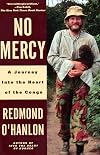
O'Hanlon is a splendid writer. He manages to bring a sense of wonder, compassion and knowledge to whatever subject he writes about.
Here he travels deep into the Congo, allegedly to visit Lake Tele and search for the cryptid dinosaur Mokele-mbembe, but I think more just to travel deep into the Congo.
Traveling companions, flawed as we all are, are presented in a way that feels honest and understanding, and the most jerk-like behavior is often followed by actions that redeem the person in the show more reader’s eyes.
Personally, the rescue and transportation of a young orphaned gorilla represents O’Hanlon’s combined craziness, intelligence and empathy for nature and all it offers. show less
Here he travels deep into the Congo, allegedly to visit Lake Tele and search for the cryptid dinosaur Mokele-mbembe, but I think more just to travel deep into the Congo.
Traveling companions, flawed as we all are, are presented in a way that feels honest and understanding, and the most jerk-like behavior is often followed by actions that redeem the person in the show more reader’s eyes.
Personally, the rescue and transportation of a young orphaned gorilla represents O’Hanlon’s combined craziness, intelligence and empathy for nature and all it offers. show less
This is a complex and rich book: it takes the form of a diary of an intrepid tropical journey, but at a deeper level it is an observant and challenging look at the people (predominantly men in greater depth) whom O'Hanlon travels with and meets. These people's manners and moods run the gamut of responses to their circumstances as more or less marginal residents of Congo-Brazzaville: chiefly Marcellin, his main guide, a highly educated man of some authority whose resentment at his lack of show more opportunity to express his talents seems to have twisted his character into domineering, nymphomania and deviousness. He also encounters Marcellin's subordinate nephews, bothersome government officials and soldiers (in a wonderful opening section dealing with his efforts to obtain the right visa), tyrannical local bosses, feuding villagers, exotic pygmies, and many women who in each location gravitate to Marcellin. There are shocking scenes, as on the river convoy, a malaria fever-dream, and untold wildlife sightings and disease reports. O'Hanlon is by turns adventurous, fearful, anxious, and curious, not to mention subject to drug-induced hallucinations and self-doubt, while fellow traveller Larry's reservations and homesickness serve as a foil to his romantic ideas. There is loads here for the nature and adventure reader, but even more for the reader interested in getting an unvarnished, unexpurgatedly realistic view of the relations between people of differing levels of power and opportunity in a modern post-colonial society, one where Euro-Americans are not much esteemed but still vastly wealthier in money and life-chances: the academic adventurers with money and daring, reduced to dependence and ignorance in their strange surroundings; the thwarted local 'big man'; the hangers-on doing the best they can without much hope for the future; the traditional pygmies hoping to keep out from under the thumb of the region's Bantu colonists; a country of meaningless official ideology, corruption, unsatisfying liaisons, callous bargaining and everybody trying to make the best of a losing hand. There is very little explicit authorial editorialising, and there is so much going on in this book that it can be hard to get a mental handle on it, but this is also what makes it so richly thought-provoking. This is a reality presented with very little censorship or opinionation; it is in many ways saddening and startling. It is not necessarily a hugely enjoyable book, or one that is easy to read, but it is a strange travel book of rare human depth. show less
This is a complex and rich book: it takes the form of a diary of an intrepid tropical journey, but at a deeper level it is an observant and challenging look at the people (predominantly men in greater depth) whom O'Hanlon travels with and meets. These people's manners and moods run the gamut of responses to their circumstances as more or less marginal residents of Congo-Brazzaville: chiefly Marcellin, his main guide, a highly educated man of some authority whose resentment at his lack of show more opportunity to express his talents seems to have twisted his character into domineering, nymphomania and deviousness. He also encounters Marcellin's subordinate nephews, bothersome government officials and soldiers (in a wonderful opening section dealing with his efforts to obtain the right visa), tyrannical local bosses, feuding villagers, exotic pygmies, and many women who in each location gravitate to Marcellin. There are shocking scenes, as on the river convoy, a malaria fever-dream, and untold wildlife sightings and disease reports. O'Hanlon is by turns adventurous, fearful, anxious, and curious, not to mention subject to drug-induced hallucinations and self-doubt, while fellow traveller Lary's reservations and homesickness serve as a foil to his romantic ideas. There is loads here for the nature and adventure reader, but even more for the reader interested in getting an unvarnished, unexpurgatedly realistic view of the relations between people of differing levels of power and opportunity in a modern post-colonial society, one where Euro-Americans are not much esteemed but still vastly wealthier in money and life-chances: the academic adventurers with money and daring, reduced to dependence and ignorance in their strange surroundings; the thwarted local 'big man'; the hangers-on doing the best they can without much hope for the future; the traditional pygmies hoping to keep out from under the thumb of the region's Bantu colonists; a country of meaningless official ideology, corruption, unsatisfying liaisons, callous bargaining and everybody trying to make the best of a losing hand. There is very little explicit authorial editorialising, and there is so much going on in this book that it can be hard to get a mental handle on it, but this is also what makes it so richly thought-provoking. This is a reality presented with very little censorship or opinionation; it is in many ways saddening and startling. It is not necessarily a hugely enjoyable book, or one that is easy to read, but it is a strange travel book of rare human depth. show less
Lists
Five star books (2)
Folio Society (1)
Awards


You May Also Like


Associated Authors
Statistics
- Works
- 16
- Also by
- 14
- Members
- 2,945
- Popularity
- #8,683
- Rating
- 3.7
- Reviews
- 50
- ISBNs
- 116
- Languages
- 7
- Favorited
- 11