
Gavin Young (1928–2001)
Author of Slow Boats to China
About the Author
Image credit: Wilfred Thesinger (on Right) with Gavin Young
Works by Gavin Young
Associated Works
Tagged
Common Knowledge
- Canonical name
- Young, Gavin
- Legal name
- Young, Gavin David
- Birthdate
- 1928-04-24
- Date of death
- 2001-01-18
- Gender
- male
- Education
- University of Oxford (Trinity College)
Rugby School - Occupations
- journalist
travel writer
MI6 Agent - Awards and honors
- Royal Society of Literature (Fellow)
Royal Geographical Society (Fellow) - Relationships
- Thesiger, Wilfred (travel companion)
- Nationality
- UK
- Birthplace
- Bude, Cornwall, England, UK
- Places of residence
- Bude, Cornwall, England, UK
South Wales
Basra, Iraq - Place of death
- London, England, UK
- Associated Place (for map)
- England, UK
Members
Reviews

I have always loved the books of this wonderful travel writer. He combines a gift for elegant expression with a genuine interest in the people he meets and the places he visits. He is not opinionated and is always open and unprejudiced in his conclusions.
This book, written close to the end of his career, has an elegiac quality I feel, as in the following: '' I have to admit that New York isn't quite what it was to me years ago. for one thing, too many people I knew in the old days are dead; show more so it is a city too much full of ghosts. Nevertheless it still has it's magical moments, and it is certainly true that ' I like', as the Lorenz Hart song said, 'New York in June.'
This slightly melancholic tone does not dominate as Young embarks on a journey of homage to his literary heroes such as Melville, Jack London and Chandler, visits places ,important to America's history, and follows in the footsteps of General Sherman whom he rather reluctantly admires.
He has the gift of taking the reader into the scene he describes so intensely that one feels one is walking beside him, a gift granted to the best travel writers.
These fairly short pieces inspire this reader with the desire to know more about the Alamo or the American Civil War, and to repair the oversight of not yet having read ''Moby Dick.''
I found the most moving section of the book to be the final chapter. Young visits the Yukon, following the trail of Jack London. The snowy wilderness is a revelation to him as, staying with a friendly dog camp owner and his family, he drives a sled for the first time, and experiences the stillness and awesome quality of the place. ''I could see the meandering Yukon, white and solid, straggling tortuously south towards Dawson, invisible now behind one of the snow-flecked folds in the hills. Further east the Ogilvie Range ran north to south, and behind that the even more impressive outline of the Mackenzie Mountains completely blocked the eastern horizon. What could I say? I looked at the infinite sheets of snow, felt the clear bitter cold on my cheeks - and could only say 'Phew!' There were no comforting shadows here. There was only the silence. And, in awe, I spoke the phrase aloud: 'The White Silence.' '' One can only echo that 'Phew!' - what glorious writing, and what a privilege to read it. show less
This book, written close to the end of his career, has an elegiac quality I feel, as in the following: '' I have to admit that New York isn't quite what it was to me years ago. for one thing, too many people I knew in the old days are dead; show more so it is a city too much full of ghosts. Nevertheless it still has it's magical moments, and it is certainly true that ' I like', as the Lorenz Hart song said, 'New York in June.'
This slightly melancholic tone does not dominate as Young embarks on a journey of homage to his literary heroes such as Melville, Jack London and Chandler, visits places ,important to America's history, and follows in the footsteps of General Sherman whom he rather reluctantly admires.
He has the gift of taking the reader into the scene he describes so intensely that one feels one is walking beside him, a gift granted to the best travel writers.
These fairly short pieces inspire this reader with the desire to know more about the Alamo or the American Civil War, and to repair the oversight of not yet having read ''Moby Dick.''
I found the most moving section of the book to be the final chapter. Young visits the Yukon, following the trail of Jack London. The snowy wilderness is a revelation to him as, staying with a friendly dog camp owner and his family, he drives a sled for the first time, and experiences the stillness and awesome quality of the place. ''I could see the meandering Yukon, white and solid, straggling tortuously south towards Dawson, invisible now behind one of the snow-flecked folds in the hills. Further east the Ogilvie Range ran north to south, and behind that the even more impressive outline of the Mackenzie Mountains completely blocked the eastern horizon. What could I say? I looked at the infinite sheets of snow, felt the clear bitter cold on my cheeks - and could only say 'Phew!' There were no comforting shadows here. There was only the silence. And, in awe, I spoke the phrase aloud: 'The White Silence.' '' One can only echo that 'Phew!' - what glorious writing, and what a privilege to read it. show less

Gavin Young was an admirable writer, ever adventurous; his reportage was always distinguished by compassion for the people caught up in war and disaster, but it wasn't sentimental or strident.
He was an adventurer for a lifetime and sought out the places where civil government and politics was disintegrating. He includes a piece about my own country (New Zealand) and the detrimental impact it has had on many of the Samoan population that emigrate there to provide for their families.
The show more section that covers the Vietnam War is a highlight of Young's collection. He was present at Hue before, during and after the Battle of Hue in March 1968. The horrible experiences that permanently wrecked the lives of the inhabitants at the hands of the communists is told with sober elegance.
All Gavin Young's books cannot be put down, I have found. This collection from a life fully lived, is another one show less
He was an adventurer for a lifetime and sought out the places where civil government and politics was disintegrating. He includes a piece about my own country (New Zealand) and the detrimental impact it has had on many of the Samoan population that emigrate there to provide for their families.
The show more section that covers the Vietnam War is a highlight of Young's collection. He was present at Hue before, during and after the Battle of Hue in March 1968. The horrible experiences that permanently wrecked the lives of the inhabitants at the hands of the communists is told with sober elegance.
All Gavin Young's books cannot be put down, I have found. This collection from a life fully lived, is another one show less

A pleasant enough short overview of the Marsh Arabs and their way of life. This is a reflection on Young's first contact with these people during the nineteen fifties, initially in the company of Wilfred Thesiger.
The latter parts of the book sketch his return in 1984 and sound caution about the survival of the Marsh Arabs; the Iran-Iraq conflict has intervened and industrial food production methods have been introduced.
Gavin Young shares his love of these generous, happy, hard working show more people.
It's to be regretted that terrible destruction was visited on Iraq a few decades later, an everlasting stain of blood engineered by war criminals Blair and Bush (junior). show less
The latter parts of the book sketch his return in 1984 and sound caution about the survival of the Marsh Arabs; the Iran-Iraq conflict has intervened and industrial food production methods have been introduced.
Gavin Young shares his love of these generous, happy, hard working show more people.
It's to be regretted that terrible destruction was visited on Iraq a few decades later, an everlasting stain of blood engineered by war criminals Blair and Bush (junior). show less
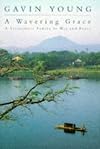
Young draws on his reporting from Vietnam during the war and on his return in 1985, and adds a travel narrative from visits in 1995/96. The unifying theme is the story of the family he befriends in Hue and their dispersal to Saigon, America and Germany through the upheavals of the war and the subsequent communist rule.
Young's characteristic even-handedness, candour and eye for detail are present here as in his other books and overall this is a useful examination of Vietnam from a Vietnamese show more point of view. Perhaps the strongest material in the book are the numerous letters from various members of Madame Bong's clan as Young seeks to help them escape the country. The writing from the war is also excellent, especially the account of the death of a South Vietnamese recruit which has however been published in another book by Young (I forget which). The last section, in which the author goes back to the country in the nineties, feels disconnected and relatively inconsequential. show less
Young's characteristic even-handedness, candour and eye for detail are present here as in his other books and overall this is a useful examination of Vietnam from a Vietnamese show more point of view. Perhaps the strongest material in the book are the numerous letters from various members of Madame Bong's clan as Young seeks to help them escape the country. The writing from the war is also excellent, especially the account of the death of a South Vietnamese recruit which has however been published in another book by Young (I forget which). The last section, in which the author goes back to the country in the nineties, feels disconnected and relatively inconsequential. show less
Lists
Awards

You May Also Like


Associated Authors
Statistics
- Works
- 16
- Also by
- 2
- Members
- 935
- Popularity
- #27,473
- Rating
- 3.7
- Reviews
- 14
- ISBNs
- 56
- Languages
- 4
- Favorited
- 4

