
Wilfred Thesiger (1910–2003)
Author of Arabian Sands
About the Author
Works by Wilfred Thesiger
Associated Works
Wild: Stories of Survival from the World's Most Dangerous Places (Adrenaline) (1999) — Contributor — 65 copies, 1 review
Op reis met ... : Redmond O'Hanlon, Ivan A. Gontsjarov, Wilfred Thesiger, Astolphe marquis de Custine, Colin Thubron, Pa (1990) — Contributor — 3 copies
Tagged
Common Knowledge
- Canonical name
- Thesiger, Wilfred
- Legal name
- Thesiger, Wilfred Patrick
- Other names
- بَارَك بِن لَنْدَن
Mubarak bin Landan - Birthdate
- 1910-06-03
- Date of death
- 2003-08-24
- Gender
- male
- Education
- Eton College
University of Oxford (Magdalen College | MA, third class | 1933 |History) - Occupations
- military officer
explorer
writer - Organizations
- Sudan Political Service
Sudan Defence Force
British Army Special Air Service - Awards and honors
- Order of the Star of Ethiopia (Commander, 1930)
Distinguished Service Order (1941)
Founder's Medal (1948)
Royal Society of Literature (Fellow, 1982)
Order of the British Empire (Commander, 1968|Knight Commander, 1995)
British Academy (honorary fellow|1982) (show all 13)
Lawrence of Arabia Memorial Medal (1955)
Livingston Medal (1962)
W. H. Heinemann Award (1964)
Burton Memorial Medal (1966)
Royal Astronomical Society (Fellow)
Royal Geographical Society (Fellow)
Abu Dhabi Award (2008) - Agent
- Curtis Brown
- Relationships
- Maxwell, Gavin (travel companion)
Young, Gavin (travel companion) - Nationality
- UK
- Birthplace
- Addis Ababa, Ethiopia
- Places of residence
- Addis Ababa, Ethiopia
- Place of death
- Croydon, Surrey, England, UK
- Map Location
- UK
Members
Reviews

Wilfred Thesiger was very much in the tradition of the great British eccentric, a man with little time for the comforts of the 20th century, who managed to spend most of his life in wild and exotic places. He is chiefly known for his books Arabian Sands and The Marsh Arabs where he describes his travels between 1945 and 1964. The life of my choice, written in retirement in 1987, is a memoir describing his life up to roughly the end of the Second World War. In particular, he focuses on show more Abyssinia (Ethiopia), the country where he spent his childhood and travelled extensively later; on his education at Eton and Magdalen; on his time as a colonial administrator in the Sudan, and on his war service in Abyssinia and the Western Desert.
Apart from being a thoughtful, well-written account of an extraordinary life, what runs through the whole book is Thesiger's great romantic affection for traditional ways of life - whether he's talking about desert nomads, marsh-dwellers in southern Sudan, Islam, Abyssinian Christianity, or the flogging rituals at Eton, it is the continuity of the cultures that he is interested in, not whether they offer people a free, healthy and fulfilling life. He hates anything that threatens to undermine these traditions, whether it's motor transport, literacy, agriculture, or foreign religion (he does seem to have a bit of a blind spot for guns and Western medical science, though).
With hindsight, he does make a sort of apology for his wholesale slaughter of wildlife: at the time he "couldn't anticipate" that many African animals would be driven to the verge of extinction. However, he also argues that hunting is in itself an important cultural activity, and that he had to go hunting with his hosts to establish a proper bond with them.
He doesn't make any excuses for his small-c conservatism: basically, he takes the view that he's seen the old world and the new, and the old world was better. And of course it's difficult to argue with that, particularly as it's very clear from his account that he is not just theorising, but is motivated by a genuine affection for the men and boys of the various cultures he's been involved with, and has made a serious attempt to understand their traditions and share their way of life (royalty apart, he never mentions a woman by name, and one suspects that he never really noticed women as individuals).
Obviously, Thesiger is right when he says that the innovations of the twentieth century did a lot of harm to people in Africa and the middle East. He knows as well as we do that there's no going back, though: it's a shame that he is too modest to offer any advice on how we could better manage development and find a way of sharing the benefits of progress without causing so many problems along the way. show less
Apart from being a thoughtful, well-written account of an extraordinary life, what runs through the whole book is Thesiger's great romantic affection for traditional ways of life - whether he's talking about desert nomads, marsh-dwellers in southern Sudan, Islam, Abyssinian Christianity, or the flogging rituals at Eton, it is the continuity of the cultures that he is interested in, not whether they offer people a free, healthy and fulfilling life. He hates anything that threatens to undermine these traditions, whether it's motor transport, literacy, agriculture, or foreign religion (he does seem to have a bit of a blind spot for guns and Western medical science, though).
With hindsight, he does make a sort of apology for his wholesale slaughter of wildlife: at the time he "couldn't anticipate" that many African animals would be driven to the verge of extinction. However, he also argues that hunting is in itself an important cultural activity, and that he had to go hunting with his hosts to establish a proper bond with them.
He doesn't make any excuses for his small-c conservatism: basically, he takes the view that he's seen the old world and the new, and the old world was better. And of course it's difficult to argue with that, particularly as it's very clear from his account that he is not just theorising, but is motivated by a genuine affection for the men and boys of the various cultures he's been involved with, and has made a serious attempt to understand their traditions and share their way of life (royalty apart, he never mentions a woman by name, and one suspects that he never really noticed women as individuals).
Obviously, Thesiger is right when he says that the innovations of the twentieth century did a lot of harm to people in Africa and the middle East. He knows as well as we do that there's no going back, though: it's a shame that he is too modest to offer any advice on how we could better manage development and find a way of sharing the benefits of progress without causing so many problems along the way. show less
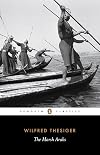
This is a fascinating true account of the years British traveler Wilfred Thesiger lived among the Ahwaris in the 1950s. The Ahwaris lived in southern Iraq in the marshlands where the Tigris and Euphrates Rivers meet before they empty into the Persian Gulf. The Ahwaris (or Maʻdān as Thesiger calls them) had a unique way of life adapted to living in the marshes. They built their homes out of the marsh reeds, traveled everywhere by boat, kept buffalos, and grew rice. The book is an show more interesting look at an ancient way of life that was quickly disappearing.
There was one surprising aspect of Ahwaris culture that is relevant to modern readers in places like the United States. According to Thesiger, the Ahwaris acknowledged and accepted that some people are what we would call transgender. Biological women who identified and lived as men were accepted as men by their society, and vice versa. The Ahwaris men told Thesiger that some people were just born in the wrong bodies. So the claim that being transgender is a new phenomenon and only found in “western” countries is just false. Transgender people have existed and been accepted in many societies around the world and throughout history. Learning about different cultures, places, and times is one important way to gain much needed perspective. show less
There was one surprising aspect of Ahwaris culture that is relevant to modern readers in places like the United States. According to Thesiger, the Ahwaris acknowledged and accepted that some people are what we would call transgender. Biological women who identified and lived as men were accepted as men by their society, and vice versa. The Ahwaris men told Thesiger that some people were just born in the wrong bodies. So the claim that being transgender is a new phenomenon and only found in “western” countries is just false. Transgender people have existed and been accepted in many societies around the world and throughout history. Learning about different cultures, places, and times is one important way to gain much needed perspective. show less

Thesiger writes about strange, exotic cultures the way we might expect him to write about a visit to a slightly eccentric relative. Just like Desert sands, this book is not about "a culture" or "a region", but about a group of individual characters with their own personalities, families, backgrounds, and so on. Our picture of the culture of the marshes comes through Thesiger's descriptions of his encounters, friendship and conflicts with all these individuals, not through any global show more pronouncements. Charming, utterly personal, and very engaging.
You can't simply read the book as a quaint description of an exotic place, though: everyone reading this book since 1991 is only too well aware of how thoroughly Saddam Hussein wiped out what remained of the environment and culture that Thesiger describes. That gives the book an extra poignancy, of course, but you also have to wonder a bit about how much Thesiger influenced British and American attitudes to the Shia of Iraq, and how much that in turn contributed to Saddam's actions. Perhaps not much, but the BBC were certainly illustrating their reports with Thesiger's photographs... show less
You can't simply read the book as a quaint description of an exotic place, though: everyone reading this book since 1991 is only too well aware of how thoroughly Saddam Hussein wiped out what remained of the environment and culture that Thesiger describes. That gives the book an extra poignancy, of course, but you also have to wonder a bit about how much Thesiger influenced British and American attitudes to the Shia of Iraq, and how much that in turn contributed to Saddam's actions. Perhaps not much, but the BBC were certainly illustrating their reports with Thesiger's photographs... show less

Exploring is normally a rather egotistical activity. You travel through antres vast and deserts idle in order to boast about your achievements afterwards: to publish books and make films about how intrepid you are, to make money for your sponsor, or (like Othello) to help you chat up girls.
The wonderful thing about Thesiger as an explorer is how modest he is. You get the idea that he would really have preferred to keep the whole thing quiet. When word gets out about where he's been, he's show more more likely to have problems with the local authorities next time around, and he also knows that other people will emulate his journeys and spoil the fragile, pristine ecologies he has had the privilege of seeing. In the case of his Arabian journeys, he was only persuaded to write a book ten years after the event, much against his better judgement. By this time it was becoming clear that the life of the Bedu in the deserts of southern Arabia had already been changed irreversibly by the discovery of oil.
Despite his reluctance to commit himself to the printed page, Thesiger turns out to be a wonderful travel writer. His work has a rather different slant from what we are used to seeing: much less about moving accidents by flood and field or rough quarries, rocks and hills whose heads touch heaven, but much more about his travelling companions. The Bedu who cross the Empty Quarter with him are presented more like characters in a novel than colourful extras in a travel book. They are all very clear-cut individuals, with their own backgrounds, worries, ambitions, families, habits endearing and otherwise, and so on. Thesiger makes sure we understand how they fit into Bedu society, how the economy and ecology of the desert works, how social customs are linked to the particular constraints of living in a decentralised, tribal and nomadic society. It's an affectionate, sympathetic account, with none of T.E. Lawrence's lyrical bombast (and certainly none of Lawrence's "Me! Me! Me!"). Thesiger does admittedly let himself go a little bit when he's talking about the beauty of the two teenage tribesmen who travel with him, but judging by the photographs he's got some reason for that... He does make it quite clear that the Bedu, contrary to what Lawrence leads us to believe, don't go in for hanky-panky in the desert, and includes a rather grisly (second-hand) description of an execution for "sodomy" in Riyadh.
The real joy of this book, for me, are Thesiger's descriptions of the inconsequential everyday discussions in camp or on the march, the endless debates about the qualities of different camels, and the infinitely recursive nature of Bedu storytelling. Even a simple request for information about the travelling time between two wells has to be answered with a detailed description of the journey, the ancestries of the camels involved, the Arabs met in the way and the reasons for their journeys, etc. show less
The wonderful thing about Thesiger as an explorer is how modest he is. You get the idea that he would really have preferred to keep the whole thing quiet. When word gets out about where he's been, he's show more more likely to have problems with the local authorities next time around, and he also knows that other people will emulate his journeys and spoil the fragile, pristine ecologies he has had the privilege of seeing. In the case of his Arabian journeys, he was only persuaded to write a book ten years after the event, much against his better judgement. By this time it was becoming clear that the life of the Bedu in the deserts of southern Arabia had already been changed irreversibly by the discovery of oil.
Despite his reluctance to commit himself to the printed page, Thesiger turns out to be a wonderful travel writer. His work has a rather different slant from what we are used to seeing: much less about moving accidents by flood and field or rough quarries, rocks and hills whose heads touch heaven, but much more about his travelling companions. The Bedu who cross the Empty Quarter with him are presented more like characters in a novel than colourful extras in a travel book. They are all very clear-cut individuals, with their own backgrounds, worries, ambitions, families, habits endearing and otherwise, and so on. Thesiger makes sure we understand how they fit into Bedu society, how the economy and ecology of the desert works, how social customs are linked to the particular constraints of living in a decentralised, tribal and nomadic society. It's an affectionate, sympathetic account, with none of T.E. Lawrence's lyrical bombast (and certainly none of Lawrence's "Me! Me! Me!"). Thesiger does admittedly let himself go a little bit when he's talking about the beauty of the two teenage tribesmen who travel with him, but judging by the photographs he's got some reason for that... He does make it quite clear that the Bedu, contrary to what Lawrence leads us to believe, don't go in for hanky-panky in the desert, and includes a rather grisly (second-hand) description of an execution for "sodomy" in Riyadh.
The real joy of this book, for me, are Thesiger's descriptions of the inconsequential everyday discussions in camp or on the march, the endless debates about the qualities of different camels, and the infinitely recursive nature of Bedu storytelling. Even a simple request for information about the travelling time between two wells has to be answered with a detailed description of the journey, the ancestries of the camels involved, the Arabs met in the way and the reasons for their journeys, etc. show less
Lists
el (2)
Wish to read (1)
Awards


You May Also Like


Associated Authors
Statistics
- Works
- 19
- Also by
- 7
- Members
- 3,018
- Popularity
- #8,457
- Rating
- 4.0
- Reviews
- 57
- ISBNs
- 102
- Languages
- 8
- Favorited
- 7

