

Freya Stark (1893–1993)
Author of The Valleys of the Assassins: and Other Persian Travels
About the Author
Freya Stark (1893-1993), 'the poet of travel', was the doyenne of Middle East travel writers. Her travels earned her the title of Dame and huge public acclaim. Her many, now classic, books include Traveller's Prelude, Ionia, The Southern Gates of Arabia, Alexander's Path, Dust in the Lion's Paw, show more East is West and Valleys of the Assassins. show less
Works by Freya Stark
Associated Works
Tagged
Common Knowledge
- Canonical name
- Stark, Freya
- Legal name
- Stark, Freya Madeline
- Other names
- Stark, Dame Freya Madeline
- Birthdate
- 1893-01-31
- Date of death
- 1993-05-09
- Gender
- female
- Education
- Bedford College, University of London
School of Oriental and African Studies, University of London - Occupations
- travel writer
arabist
photographer - Organizations
- British Red Cross (WWI)
British Ministry of Information (WWII) - Awards and honors
- Order of the British Empire (Dame Commander, 1972)
Richard Burton Memorial Medal (1934)
Cross of the British Empire (1953)
Royal Geographical Society Founder's Gold Medal (1942)
Back Award (1933)
Mungo Park Medal (1935) (show all 7)
Percy Sykes Memorial Medal (1951) - Relationships
- Perowne, Stewart (spouse)
- Nationality
- UK
Italy - Birthplace
- Paris, French Third Republic
- Places of residence
- Asolo, Italy
Lebanon
England, UK - Place of death
- Asolo, Veneto, Italy
- Burial location
- Asolo, Italy
- Map Location
- UK
Members
Reviews
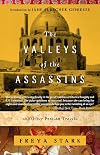
There is no doubt that Freya wanted to live a life full of adventure that was challenging, rewarding, and more than a little dangerous. While she carried letters of introduction to give her access to key people, Freya relied heavily on her own wits to maintain her safety while in Persia. She recognized villains when she saw them. She played upon her novelty, knowing no European woman had ever been in various regions before. She would further confound the natives by putting the fragments of a show more skull in a jar as a keepsake or best them at their customs of all possible polite greetings and the responses one could go through. Freya demonstrated her sense of humor even when she was in sticky situations. Her attempt to find hidden treasure in a cave was both heroic and hilarious.
When people asked Freya why she wanted to travel the way that she did she blamed "the trouble" on an aunt after this relative sent Freya a copy of Arabian Nights for her 9th birthday. Freya was instantly bitten by the adventure bug. Most children would snuggle down in their beds and dream of spitting camels and endless sand, but Stark's dreams took her to ride real camels across real deserts. Confessional: Freya never mentions camels. Her mode of transportation was a mule.
Part One takes the reader through Luristan, as it was a country where one is less frequently murdered, but the threat is not completely out of the question. As Freya maps the area for British Intelligence her actions put her in constant danger of being thought of as a spy. At the same time, Freya becomes a healer of sorts; being called upon to parse out quinine and castor oil; administer care for for snake bites, broken limbs and mysterious ailments.
Throughout Valleys of the Assassins are wonderful full page photographs. My favorite is of Keram Khan with his majestic horse and magnificent coat. show less
When people asked Freya why she wanted to travel the way that she did she blamed "the trouble" on an aunt after this relative sent Freya a copy of Arabian Nights for her 9th birthday. Freya was instantly bitten by the adventure bug. Most children would snuggle down in their beds and dream of spitting camels and endless sand, but Stark's dreams took her to ride real camels across real deserts. Confessional: Freya never mentions camels. Her mode of transportation was a mule.
Part One takes the reader through Luristan, as it was a country where one is less frequently murdered, but the threat is not completely out of the question. As Freya maps the area for British Intelligence her actions put her in constant danger of being thought of as a spy. At the same time, Freya becomes a healer of sorts; being called upon to parse out quinine and castor oil; administer care for for snake bites, broken limbs and mysterious ailments.
Throughout Valleys of the Assassins are wonderful full page photographs. My favorite is of Keram Khan with his majestic horse and magnificent coat. show less

Alexander's Path was the result of three lengthy trips Stark made to Southern Anatolia in the 1950s. In the course of her travels, she became interested in puzzling out the exact route that Alexander the Great followed through Asia Minor with his Macedonian army between the battles of the Granicus and Issus (334-333 BCE). The book evolved into a composite narrative of Stark's travels, geographically arranged "in reverse order" from East to West, followed by a more scholarly appendix that show more sets out the evidence Stark found for and against the different theories about where the Macedonians actually marched.
Although I'm moderately interested in Alexander, I don't really know the source material well enough to be seriously interested in the nitty-gritty of this mountain pass versus that one, and I didn't have any good maps of the region to hand when I was reading this anyway, so I skipped rather lightly over a lot of the military history, but I very much enjoyed Stark's often almost lyrical accounts of the landscapes and cities she found, and her hard-nosed but also oddly sympathetic comments on the people she met, the realities of their lives, and their reactions to her as an independent woman traveller. Although her chief business is to look at Hellenic-era ruins in the context of the landscape, she isn't one of those archaeological writers who regard the current inhabitants of the area they are visiting as merely a nuisance and/or a source of cheap labour - she clearly has a lot of respect for the Anatolian villagers who are often struggling to make a living in very difficult conditions. And when she stays the night in someone's house, rents horses from them, or employs them as a driver or guide, she wants to know about their families, how they live, what their aspirations are, and so on. In several cases this clearly develops into a real friendship. But she is also an old hand at Asian travel by this time, so she doesn't hesitate to hit back when someone tries to feed her misleading information, or to cheat her beyond the generally understood permissible limit. Her scorn falls equally on lazy Turkish innkeepers and on inexperienced British archaeologists who don't know the first thing about managing horses on mountain tracks. But not on Alexander, with whom she's clearly more than a little in love, and who can do no wrong...
A very entertaining, very human bit of travel writing. show less
Although I'm moderately interested in Alexander, I don't really know the source material well enough to be seriously interested in the nitty-gritty of this mountain pass versus that one, and I didn't have any good maps of the region to hand when I was reading this anyway, so I skipped rather lightly over a lot of the military history, but I very much enjoyed Stark's often almost lyrical accounts of the landscapes and cities she found, and her hard-nosed but also oddly sympathetic comments on the people she met, the realities of their lives, and their reactions to her as an independent woman traveller. Although her chief business is to look at Hellenic-era ruins in the context of the landscape, she isn't one of those archaeological writers who regard the current inhabitants of the area they are visiting as merely a nuisance and/or a source of cheap labour - she clearly has a lot of respect for the Anatolian villagers who are often struggling to make a living in very difficult conditions. And when she stays the night in someone's house, rents horses from them, or employs them as a driver or guide, she wants to know about their families, how they live, what their aspirations are, and so on. In several cases this clearly develops into a real friendship. But she is also an old hand at Asian travel by this time, so she doesn't hesitate to hit back when someone tries to feed her misleading information, or to cheat her beyond the generally understood permissible limit. Her scorn falls equally on lazy Turkish innkeepers and on inexperienced British archaeologists who don't know the first thing about managing horses on mountain tracks. But not on Alexander, with whom she's clearly more than a little in love, and who can do no wrong...
A very entertaining, very human bit of travel writing. show less
I was thrilled when my book club chose this one, as it had been on my list since I read a biography of the fascinating Ms. Stark years ago. Ms. Stark was one of the first Europeans to travel through southern Arabia, exploring, conducting archaeological and anthropological surveys, and writing extensively for publication, and for the Royal Geographical Society. I didn't love the book as I had hoped I would -- bits of it were rather tedious, but her detailed descriptions of the land, the show more people, and their customs was an intimate look at a place so unfamiliar it could have been another planet. Ms. Stark writes with obvious affection and respect for Arabs and especially for the many and surprisingly diverse Bedouin tribes she encounters throughout her travels. She speaks their languages, she understands their customs, and has an encyclopedic knowledge of the pre-Islamic and ancient writing and artifacts scattered throughout this desolate terrain. That she freely travels there are all is remarkable for any time, but as a woman largely on her own in the 1930s, with many villages hostile and inaccessible except by camel or donkey, and with food, water and other resources incredibly scarce, her travels are impressive.
I marked a few passages that I found memorable:
"The perpetual charm of Arabia is that the traveller finds his level there simply as a human being: the people's directness, deadly to the sentimental or pedantic, likes the less complicated virtues; and the pleasantness of being liked for oneself might, I think, be added to the five reasons for travel given to me by Sayyid Abdulla, the watch-maker: 'to leave one's troubles behind one; to earn a living; to acquire learning; to practice good manners; and to meet honorable men.'"
On nomads:
"There are, I sometimes think, only two sorts of people in this world -- the settled, and the nomad -- and there is a natural antipathy between them, whatever the land to which they belong. Perhaps this is because we are comparatively recently barbarians, because the stone age lingered longer among us than along the Mediterranean coasts that the English have remained so frequently nomadic at heart. It is the more imaginative attitude in an transitory world, where a man who tries to feel settled must appear to the eyes of eternity very like someone pretending to sit in comfort on an ant-hill. And the nomads are without doubt the more amusing. With a mind receptive to the unexpected they acquire a Social Sense. The roughest bedu has it, and it is this that so happily distinguishes him from a peasant like Ahmed or even from a Banker, people who walk through landscapes with their heads down, thinking out sums. The nomad, moving from place to place in mind as well as body, is ready to take an interest in any odd thing that meets him; this makes him pleasant and I am inclined -- especially after last winter -- to think it is better to be pleasant than be virtuous, if the two must be looked upon as mutually exclusive."
On a stealthy night-time caravan through unstable and dangerous territory:
"The caravan was gathered already when we joined it at two o'clock, waiting dimly under a moon that scudded through pale clouds. We were supposed to be quiet and show no lights, for the country of Al Dhiyaib lay close at hand, but there is something beyond mere human unobtrusiveness in the silence of a camel caravan with its soft padded feet in the night. Among the waiting shadows Nasir came up to ask me how I felt, and bent to take a drink of milk from my naga (she camel) whose foal ran loose beside her, in and out among the head-ropes like a dog. The Old Wolf had started; word was passed from one to another; the caravan like a snake uncoiling shook out its silhouette against the moonlit sand, and every camel-man tied his rope to the tail of the animal before him, like one of those long lines of fishing boats you see ploughing up the straits of Euboea into the early dawn." show less
I marked a few passages that I found memorable:
"The perpetual charm of Arabia is that the traveller finds his level there simply as a human being: the people's directness, deadly to the sentimental or pedantic, likes the less complicated virtues; and the pleasantness of being liked for oneself might, I think, be added to the five reasons for travel given to me by Sayyid Abdulla, the watch-maker: 'to leave one's troubles behind one; to earn a living; to acquire learning; to practice good manners; and to meet honorable men.'"
On nomads:
"There are, I sometimes think, only two sorts of people in this world -- the settled, and the nomad -- and there is a natural antipathy between them, whatever the land to which they belong. Perhaps this is because we are comparatively recently barbarians, because the stone age lingered longer among us than along the Mediterranean coasts that the English have remained so frequently nomadic at heart. It is the more imaginative attitude in an transitory world, where a man who tries to feel settled must appear to the eyes of eternity very like someone pretending to sit in comfort on an ant-hill. And the nomads are without doubt the more amusing. With a mind receptive to the unexpected they acquire a Social Sense. The roughest bedu has it, and it is this that so happily distinguishes him from a peasant like Ahmed or even from a Banker, people who walk through landscapes with their heads down, thinking out sums. The nomad, moving from place to place in mind as well as body, is ready to take an interest in any odd thing that meets him; this makes him pleasant and I am inclined -- especially after last winter -- to think it is better to be pleasant than be virtuous, if the two must be looked upon as mutually exclusive."
On a stealthy night-time caravan through unstable and dangerous territory:
"The caravan was gathered already when we joined it at two o'clock, waiting dimly under a moon that scudded through pale clouds. We were supposed to be quiet and show no lights, for the country of Al Dhiyaib lay close at hand, but there is something beyond mere human unobtrusiveness in the silence of a camel caravan with its soft padded feet in the night. Among the waiting shadows Nasir came up to ask me how I felt, and bent to take a drink of milk from my naga (she camel) whose foal ran loose beside her, in and out among the head-ropes like a dog. The Old Wolf had started; word was passed from one to another; the caravan like a snake uncoiling shook out its silhouette against the moonlit sand, and every camel-man tied his rope to the tail of the animal before him, like one of those long lines of fishing boats you see ploughing up the straits of Euboea into the early dawn." show less
The first part of this book (which is a digest of several of Stark's books) is an unflinching look at her hard bohemian childhood in the early part of the 20th century. Stark shows a child's ability to find wonder in the natural world and broad friendship in the human one, mixed with a clear-eyed look at the parents and step-parents who caused her childhood to be terrifically unsettled and even dangerous. It's a gorgeously detailed and atmospheric story that spans the UK and Italy, and show more intersects with some interesting people who become lifelong friends. The second section covers her early adult life. Because of her neglected childhood (and a horrifying industrial accident), she spends much of her time through her mid-30s fighting chronic illness, worrying about her feckless mother and her beloved but hapless sister, maintaining a friendship with her odd, distant father, and trying to make money with a small farm. All the time, though, she holds a vision of becoming independent of all that — in fact, of becoming an explorer in the oil regions of Syria, Iraq and "Arabia." So she takes Arabic and cartography lessons, builds her contacts, and slowly finds her way to independence. And in the third book, with her mother finally provided for and some other loose ends tied as best she can, she heads out. It's a transportive story. show less
Lists
Women in Islam (2)
Sense of place (1)
Awards


You May Also Like


Associated Authors
Statistics
- Works
- 43
- Also by
- 7
- Members
- 2,479
- Popularity
- #10,344
- Rating
- 3.8
- Reviews
- 46
- ISBNs
- 142
- Languages
- 7
- Favorited
- 12