
Tim Mackintosh-Smith
Author of Travels with a Tangerine : A Journey in the Footnotes of Ibn Battutah
About the Author
Tim Mackintosh-Smith was born in 1961 and educated at Oxford, where he studied Arabic. Seduced at an early age by images of Yemen, he has lived there since 1982, earning the unofficial title "Shaykh of the Nazarenes." Steeped in the language and customs of his adopted land, he is both guest at the show more feast and fly on the wall show less
Image credit: www.mackintosh-smith.com/
Series
Works by Tim Mackintosh-Smith
Two Arabic Travel Books: Accounts of China and India and Mission to the Volga (Library of Arabic Literature) (2014) — Translator — 42 copies
Landfalls 1 copy
Yemen 1 copy
Associated Works
The Travels of Ibn Battutah (1355) — Editor, some editions; Translator, some editions — 442 copies, 5 reviews
A Secret Pilgrimage to Mecca and Medina (1994) — Introduction, some editions — 322 copies, 5 reviews
Tagged
Common Knowledge
Members
Reviews
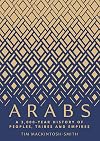
This is a humane, scholarly but highly readable book by one of that diminishing breed, the sensitive British Arabist who is as much Arab as British and who manages to be both detached in observation and engaged as a liberal who loves his adopted culture.
He is based in Yemen. South Arabian and Yemeni examples and anecdotes pepper the book giving perhaps a slight bias against the Maghreb and Mashriq in favour of the complexities of the Arabian heartlands. But you can only do so much in 536 show more pages.
Order has to be given to a tale of 3,000 years. Arab origins in the tension between 'badawah' and 'haradah' and the importance of the Arab poetic heritage are to be found in the Arabian Peninsular and are central to understanding what may be to be an 'Arab'. The bias is legitimate.
I say 'what it may be to be an Arab' because being an Arab is an uncertain business (much as being a European is). Mackintosh-Smith does an excellent job in working through those uncertainties and the reinventions and variations on what 'being an Arab' means at any one point in history.
He does two things that give perspective. First, he refuses to tell the tale as the same tale as the rise of Islam giving due weight to the 1,500 years before Muhammed as much as to the 1,450 or so since his arrival as unifier of the Peninsula under a particularly dynamic form of monotheism.
The second thing he does is not define Arab by particular uses of the term 'arab as it shifts and changes over time but by its truly salient characteristic which is the use of an Arabic language derived from Arabian poetry (still a political force) and the Quran (a poetic book).
I can express an interest here as not being an Arabist (deliberately so) but having worked with Arabs for a quarter of a century (as well as 'Zionists' for a decade before that) - Saudis and Syrians intimately, Moroccans, Iraqis and Emiratis seriously and many others tangentially.
I can attest to the pecularities of the culture, its simultaneous unity and divisions, the effects of foreign empires, the continuing importance of rhetoric and the poetic phrase, the brutal realism, the intellectual melancholy and the ambiguities involved in truth-telling.
Mackintosh-Smith brought it all together for me quite nicely and gave this experience context. It confirmed an intuition that cultures taken as a whole (whether English or Chinese, Arab or Persian) have deep roots where the use of language helps to frame the freedom of any individual.
The book is not really a straight narrative so much as a chronological exploration of themes that becomes increasingly anecdotal towards the end. The last section (from 1800) is the weakest only because the anecdotes seem most disconnected and most affected by the author's sentiment.
The author does something I do not usually forgive (as you will see in my other reviews) but will forgive in him - distract us in the final moments of the book with the current existential despair of the modern liberal trying to cope with the monstrosities in view.
In this case, I forgive because his despair comes from having been at his post in war-torn Yemen, come under fire and stood his ground as long as he could in the tradition of many a medieval Arab intellectual and because he wears his liberal politics as lightly as his conscience permits.
And I forgive him for the insights and the fundamentally sound and substantial weaving of a deep knowledge of the Arabic language and sympathy for the speakers of the language with the tough realism of the natural historian.
He is also subtle enough (without abandoning his 'English' liberal values) to show respect for the possibility that the things that might make him despair about Arab political culture are a matter for Arabs to work through and not for outsiders.
So, we have a strange situation by the end of the book where he is trying to square his anger at the cruelty of 'anarcharchs' and 'demonocracy' and the Arab world's uneven (to say the least) relationship to truth-telling with his acceptance of it as a unique and independent culture.
My own experience and the book's solid exposition of the 'soul' of the Arab in history (slippery though the concept is through three thousand years of existence) could create a natural 'despair' that the culture will ever become 'good' like 'ours'. But is it really any of our business?
Of course, 'ours' is not at all 'good'. It just has its own rhetoric and a different history that allows the 'bad' to be more limited in scope. Mackintosh-Smith rightly regrets the lack of institutional structures that allow Arabs to choose their own paths rather than submit to autocrats.
But wishes are cheap. The blundering of neo-conservatives and, before that, of the insertion of Zionism like a wedge into the region (and imperialism before that) has not helped very much in creating the possibilities for organic institutional liberal democratic development.
Arabs, in short, have an inchoate but very real and complex culture that is quite separate from Islam yet heavily inflected by it just as Europeans have a very real and complex culture heavily inflected by Christianity but quite separate from it - both with pagan pasts as well.
The Arabs though are bound by a language constructed out of a book and tradition whereas, if Europe was also constructed out of a book and its competition with the classical tradition, Europe was to break into competitive languages that helped force through national institutional structures.
The Arabic language is both a binder of peoples from Morocco to Oman and Iraq to Sudan and also a 'false friend' insofar as the dialects across the region can be almost unintelligible to each other and the 'high' language tends to bind intellectuals and elites rather than peoples.
Arab nationalism (where one suspects the author has some sympathy, at least based on his account of Nasser) attempted to force the pace through radio and print rhetoric but such nationalisms can only be partially forced from above and then only over long periods of time on fertile ground.
The messiness of the last half century comes from traditional order-maintaining national autocrats maintaining the fiction of 'Arab-ness' and also trying to manage Islamic sentiment when that sentiment, in fact, does not and cannot include all Arabs and has dissident variants itself.
When 'Arab-ness' gets ideologised, it has a tendency to be closer to a form of soft fascism (in European terms) than anything more liberal - although one of the few areas of neglect in the book is the brief incursion of socialist ideas into the region in the last century.
I tend to conservative pessimism on all this (basically Mackintosh-Smith's liberal pessimism but without the undercurrent of suppressed outrage) but I agree with him when he suggests that it is for Arabs and not outsiders to define themselves.
The tide of Islamism now seems to have partially abated. This is probably as much to do with the passing of generations as to any 'counter-terrorist action'. But, as it recedes, the association of Arabism more firmly with Islam crowds out the very secular nationalisms that are its best hope.
Mackintosh-Smith is bitter about Bashar Al-Assad (as many liberal Arabs must be) but, in the brutal context between even 'moderate' Political Islam and secular nationalism, the Baathist may be a last bulwark against an inappropriate Sunni appropriation of an entire linguistic culture.
We might liken this to the neo-confucian appropriation of what it is to be Chinese by the Chinese Communist Party or the attempts (so far beaten off) to 'rediscover' Europe as a Christian entity by the emergent European populist Right.
Being Chinese or European or Arab is not coterminous with being Neo-Confucian, Christian or Muslim. In the first case because China is a multiplicity of traditions in itself and in the last two because these religions are global and yet not everyone in either culture accepts them.
Perhaps Nasser's main error was to construct out of very little a general Arab nationalism instead of accepting that there was the potential for many collaborating Arab nationalisms based on the many inheritances of the Arab conquests but where secularism had room for respected minorities.
But that was then and this is now. The error was historically comprehensible. All Arab 'errors' are historically comprehensible and, thanks to this book , we cannot say we cannot comprehend them. President Nonsense bin Nonsense might have benefited from it had it existed in 2003.
Ironically, the only modern Arab Leader who may be 'getting it' is MBS in Saudi Arabia, the heartland of the Arabs, who is busy building up a possibly viable Saudi nationalism as an ideology which permits greater difference within an historically determined Islamic framework.
And yet the general view of the West has to be that MBS is the autocrat's autocrat at the moment and he is not even King yet. The methodology is that of Henry VIII and Francis I. Both monarchs were consolidators of national feeling into a viable nation state with the dynastic as means.
So, all in all, for all the anecdotalism, an excellent guide to the creation and history of the Arab community that respects its subject and its readers and which I can strongly recommend. Incidentally, I also want to praise Yale for the attractive design and binding of this edition. show less
He is based in Yemen. South Arabian and Yemeni examples and anecdotes pepper the book giving perhaps a slight bias against the Maghreb and Mashriq in favour of the complexities of the Arabian heartlands. But you can only do so much in 536 show more pages.
Order has to be given to a tale of 3,000 years. Arab origins in the tension between 'badawah' and 'haradah' and the importance of the Arab poetic heritage are to be found in the Arabian Peninsular and are central to understanding what may be to be an 'Arab'. The bias is legitimate.
I say 'what it may be to be an Arab' because being an Arab is an uncertain business (much as being a European is). Mackintosh-Smith does an excellent job in working through those uncertainties and the reinventions and variations on what 'being an Arab' means at any one point in history.
He does two things that give perspective. First, he refuses to tell the tale as the same tale as the rise of Islam giving due weight to the 1,500 years before Muhammed as much as to the 1,450 or so since his arrival as unifier of the Peninsula under a particularly dynamic form of monotheism.
The second thing he does is not define Arab by particular uses of the term 'arab as it shifts and changes over time but by its truly salient characteristic which is the use of an Arabic language derived from Arabian poetry (still a political force) and the Quran (a poetic book).
I can express an interest here as not being an Arabist (deliberately so) but having worked with Arabs for a quarter of a century (as well as 'Zionists' for a decade before that) - Saudis and Syrians intimately, Moroccans, Iraqis and Emiratis seriously and many others tangentially.
I can attest to the pecularities of the culture, its simultaneous unity and divisions, the effects of foreign empires, the continuing importance of rhetoric and the poetic phrase, the brutal realism, the intellectual melancholy and the ambiguities involved in truth-telling.
Mackintosh-Smith brought it all together for me quite nicely and gave this experience context. It confirmed an intuition that cultures taken as a whole (whether English or Chinese, Arab or Persian) have deep roots where the use of language helps to frame the freedom of any individual.
The book is not really a straight narrative so much as a chronological exploration of themes that becomes increasingly anecdotal towards the end. The last section (from 1800) is the weakest only because the anecdotes seem most disconnected and most affected by the author's sentiment.
The author does something I do not usually forgive (as you will see in my other reviews) but will forgive in him - distract us in the final moments of the book with the current existential despair of the modern liberal trying to cope with the monstrosities in view.
In this case, I forgive because his despair comes from having been at his post in war-torn Yemen, come under fire and stood his ground as long as he could in the tradition of many a medieval Arab intellectual and because he wears his liberal politics as lightly as his conscience permits.
And I forgive him for the insights and the fundamentally sound and substantial weaving of a deep knowledge of the Arabic language and sympathy for the speakers of the language with the tough realism of the natural historian.
He is also subtle enough (without abandoning his 'English' liberal values) to show respect for the possibility that the things that might make him despair about Arab political culture are a matter for Arabs to work through and not for outsiders.
So, we have a strange situation by the end of the book where he is trying to square his anger at the cruelty of 'anarcharchs' and 'demonocracy' and the Arab world's uneven (to say the least) relationship to truth-telling with his acceptance of it as a unique and independent culture.
My own experience and the book's solid exposition of the 'soul' of the Arab in history (slippery though the concept is through three thousand years of existence) could create a natural 'despair' that the culture will ever become 'good' like 'ours'. But is it really any of our business?
Of course, 'ours' is not at all 'good'. It just has its own rhetoric and a different history that allows the 'bad' to be more limited in scope. Mackintosh-Smith rightly regrets the lack of institutional structures that allow Arabs to choose their own paths rather than submit to autocrats.
But wishes are cheap. The blundering of neo-conservatives and, before that, of the insertion of Zionism like a wedge into the region (and imperialism before that) has not helped very much in creating the possibilities for organic institutional liberal democratic development.
Arabs, in short, have an inchoate but very real and complex culture that is quite separate from Islam yet heavily inflected by it just as Europeans have a very real and complex culture heavily inflected by Christianity but quite separate from it - both with pagan pasts as well.
The Arabs though are bound by a language constructed out of a book and tradition whereas, if Europe was also constructed out of a book and its competition with the classical tradition, Europe was to break into competitive languages that helped force through national institutional structures.
The Arabic language is both a binder of peoples from Morocco to Oman and Iraq to Sudan and also a 'false friend' insofar as the dialects across the region can be almost unintelligible to each other and the 'high' language tends to bind intellectuals and elites rather than peoples.
Arab nationalism (where one suspects the author has some sympathy, at least based on his account of Nasser) attempted to force the pace through radio and print rhetoric but such nationalisms can only be partially forced from above and then only over long periods of time on fertile ground.
The messiness of the last half century comes from traditional order-maintaining national autocrats maintaining the fiction of 'Arab-ness' and also trying to manage Islamic sentiment when that sentiment, in fact, does not and cannot include all Arabs and has dissident variants itself.
When 'Arab-ness' gets ideologised, it has a tendency to be closer to a form of soft fascism (in European terms) than anything more liberal - although one of the few areas of neglect in the book is the brief incursion of socialist ideas into the region in the last century.
I tend to conservative pessimism on all this (basically Mackintosh-Smith's liberal pessimism but without the undercurrent of suppressed outrage) but I agree with him when he suggests that it is for Arabs and not outsiders to define themselves.
The tide of Islamism now seems to have partially abated. This is probably as much to do with the passing of generations as to any 'counter-terrorist action'. But, as it recedes, the association of Arabism more firmly with Islam crowds out the very secular nationalisms that are its best hope.
Mackintosh-Smith is bitter about Bashar Al-Assad (as many liberal Arabs must be) but, in the brutal context between even 'moderate' Political Islam and secular nationalism, the Baathist may be a last bulwark against an inappropriate Sunni appropriation of an entire linguistic culture.
We might liken this to the neo-confucian appropriation of what it is to be Chinese by the Chinese Communist Party or the attempts (so far beaten off) to 'rediscover' Europe as a Christian entity by the emergent European populist Right.
Being Chinese or European or Arab is not coterminous with being Neo-Confucian, Christian or Muslim. In the first case because China is a multiplicity of traditions in itself and in the last two because these religions are global and yet not everyone in either culture accepts them.
Perhaps Nasser's main error was to construct out of very little a general Arab nationalism instead of accepting that there was the potential for many collaborating Arab nationalisms based on the many inheritances of the Arab conquests but where secularism had room for respected minorities.
But that was then and this is now. The error was historically comprehensible. All Arab 'errors' are historically comprehensible and, thanks to this book , we cannot say we cannot comprehend them. President Nonsense bin Nonsense might have benefited from it had it existed in 2003.
Ironically, the only modern Arab Leader who may be 'getting it' is MBS in Saudi Arabia, the heartland of the Arabs, who is busy building up a possibly viable Saudi nationalism as an ideology which permits greater difference within an historically determined Islamic framework.
And yet the general view of the West has to be that MBS is the autocrat's autocrat at the moment and he is not even King yet. The methodology is that of Henry VIII and Francis I. Both monarchs were consolidators of national feeling into a viable nation state with the dynastic as means.
So, all in all, for all the anecdotalism, an excellent guide to the creation and history of the Arab community that respects its subject and its readers and which I can strongly recommend. Incidentally, I also want to praise Yale for the attractive design and binding of this edition. show less
"Inverse archaeology", 19 Jun. 2016
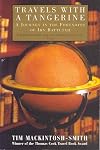
This review is from: Travels with a Tangerine: A Journey in the Footnotes of Ibn Battutah (Paperback)
This book had been sitting on my 'to read' shelf for a couple of years: I didn't think it would be particularly interesting.
When I determinedly sat down to read it, I realised what I'd been missing as this is travel writing at its absolutely superb best. In it the author - an Arabist and longterm Yemeni resident - seeks to follow the travels of 14th century show more Moroccan traveller Ibn Battutah, a man who over twenty-nine years visited "over forty countries on the modern map, travelling some 75,000 miles by horse, mule, camel, ox-wagon, junk, dhow, raft and on foot."
With Battutah's 'Travels' ever in hand, the author re-discovers shrines, mosques and churches and finds similarities - and vast differences - in the lifestyle of the people he meets on the way.
This, the first volume, covers Morocco, Egypt, Syria, Oman, Turkey and the Crimea.
Mr Mackintosh-Smith writes wonderful descriptions, both witty and intelligent; he peppers his work with tales taken from Battutah and elsewhere; he draws us in to his one-man archaeological efforts as he seeks to identify places mentioned in the work. And the reader experiences a thrill as he conclusively identifies somewhere, where Battutah himself would have stood so long ago.
This is a wonderful read and I hope to go on and read the other two volumes. show less
This review is from: Travels with a Tangerine: A Journey in the Footnotes of Ibn Battutah (Paperback)
This book had been sitting on my 'to read' shelf for a couple of years: I didn't think it would be particularly interesting.
When I determinedly sat down to read it, I realised what I'd been missing as this is travel writing at its absolutely superb best. In it the author - an Arabist and longterm Yemeni resident - seeks to follow the travels of 14th century show more Moroccan traveller Ibn Battutah, a man who over twenty-nine years visited "over forty countries on the modern map, travelling some 75,000 miles by horse, mule, camel, ox-wagon, junk, dhow, raft and on foot."
With Battutah's 'Travels' ever in hand, the author re-discovers shrines, mosques and churches and finds similarities - and vast differences - in the lifestyle of the people he meets on the way.
This, the first volume, covers Morocco, Egypt, Syria, Oman, Turkey and the Crimea.
Mr Mackintosh-Smith writes wonderful descriptions, both witty and intelligent; he peppers his work with tales taken from Battutah and elsewhere; he draws us in to his one-man archaeological efforts as he seeks to identify places mentioned in the work. And the reader experiences a thrill as he conclusively identifies somewhere, where Battutah himself would have stood so long ago.
This is a wonderful read and I hope to go on and read the other two volumes. show less

As others have observed, Tim Mackintosh-Smith does a very good impersonation of the charming, old-fashioned type of eccentric British scholar, both on screen and on the printed page. Quite a scary thought when I realise that he and I must have been contemporaries at university, though I don't think we ever met. I'm not that old, am I?
Travels with a tangerine simply oozes with charm — the nicest possible sort of ooze, Dundee marmalade, perhaps — a very English mix of erudition, show more self-deprecation, silly schoolboy puns, and that strange obsession with defecation that goes with a certain type of English middle-classness. He's quite aware of this, and frequently mocks himself for doing it. Interestingly, he cites Patrick Leigh Fermor as one of the travel writers he most admires.
It's a pure pleasure to follow him on his quasi-random wanderings around Morocco, Egypt, Syria, Oman, Turkey and the Crimea. Don't be surprised if it leaves you with an inexplicable urge to read medieval Arabic travel books, though.
I read Ibn Battutah's Travels (in Mackintosh-Smith's abridgement of the Gibb translation) just before Travels with a Tangerine (I had seen the TV documentaries a few years earlier): if possible, I think it is best to start out by forming your own impression of Ibn Battutah before you get Mackintosh-Smith's image of him lodged into your mind. Ibn Battutah (with the occasional help of M-S's discrete footnotes) is great fun and perfectly accessible to the ordinary reader, although few of us would have found our way to him without a bit of a nudge from Mackintosh-Smith. I have at least half a dozen books on my shelves where Ibn Battutah features in the index, but until I saw Mackintosh-Smith talking him up on the telly it never occurred to me to go and read him myself. That's Mackintosh-Smith's mission in operation: he's quoted in an interview (by Justin Marozzi) as saying "I shall not rest until people are saying 'Who's Marco Polo?' and they're saying, 'He's the Venetian Ibn Battutah'!" Of course, there is a bit more to it too: Mackintosh-Smith also wants to give his Western readers a gentle reminder that Arabs and Muslims are just ordinary people like the rest of us, and that there's more to the Middle East than what we see on television news.
Mackintosh-Smith calls his technique "inverse archaeology", by which he seems to mean the search for traces of the present in the texts of Ibn Battutah and his contemporaries. He's always especially keen to find human traces: people, or stories, with a direct connection back to something Ibn Battutah mentions. Surprisingly often, he succeeds, and we can really feel his thrill when someone is able to cap a story Ibn Battutah tells or identify a person mentioned in the text as an ancestor. But he also loves looking for the buildings, tombs, and even camp-sites that Ibn Battutah describes, all of which he describes in a fresh, interesting way. I'm looking forward to the second instalment (and the third, when it comes...). show less
Travels with a tangerine simply oozes with charm — the nicest possible sort of ooze, Dundee marmalade, perhaps — a very English mix of erudition, show more self-deprecation, silly schoolboy puns, and that strange obsession with defecation that goes with a certain type of English middle-classness. He's quite aware of this, and frequently mocks himself for doing it. Interestingly, he cites Patrick Leigh Fermor as one of the travel writers he most admires.
It's a pure pleasure to follow him on his quasi-random wanderings around Morocco, Egypt, Syria, Oman, Turkey and the Crimea. Don't be surprised if it leaves you with an inexplicable urge to read medieval Arabic travel books, though.
I read Ibn Battutah's Travels (in Mackintosh-Smith's abridgement of the Gibb translation) just before Travels with a Tangerine (I had seen the TV documentaries a few years earlier): if possible, I think it is best to start out by forming your own impression of Ibn Battutah before you get Mackintosh-Smith's image of him lodged into your mind. Ibn Battutah (with the occasional help of M-S's discrete footnotes) is great fun and perfectly accessible to the ordinary reader, although few of us would have found our way to him without a bit of a nudge from Mackintosh-Smith. I have at least half a dozen books on my shelves where Ibn Battutah features in the index, but until I saw Mackintosh-Smith talking him up on the telly it never occurred to me to go and read him myself. That's Mackintosh-Smith's mission in operation: he's quoted in an interview (by Justin Marozzi) as saying "I shall not rest until people are saying 'Who's Marco Polo?' and they're saying, 'He's the Venetian Ibn Battutah'!" Of course, there is a bit more to it too: Mackintosh-Smith also wants to give his Western readers a gentle reminder that Arabs and Muslims are just ordinary people like the rest of us, and that there's more to the Middle East than what we see on television news.
Mackintosh-Smith calls his technique "inverse archaeology", by which he seems to mean the search for traces of the present in the texts of Ibn Battutah and his contemporaries. He's always especially keen to find human traces: people, or stories, with a direct connection back to something Ibn Battutah mentions. Surprisingly often, he succeeds, and we can really feel his thrill when someone is able to cap a story Ibn Battutah tells or identify a person mentioned in the text as an ancestor. But he also loves looking for the buildings, tombs, and even camp-sites that Ibn Battutah describes, all of which he describes in a fresh, interesting way. I'm looking forward to the second instalment (and the third, when it comes...). show less

Mackintosh-Smith at first seems to be rather less at ease with the chaos of India than with the more orderly Islamic world he describes in Travels with a Tangerine, but ultimately the interaction between his variety of islamophile Englishness and the Hobson-Jobsonness of postcolonial India is a very fertile one. This is very much the India of R.K. Narayan, rather than that of Salman Rushdie: we are shown small-scale stories and learn about the big issues as marginal notes to the local show more history that Mackintosh-Smith is really interested in. He doesn't conceal the death and destruction of past or present, but he tries to put it into the context of a country where people of different faiths have mostly managed quite successfully to live side-by-side and learn from each other.
What we don't get in this book is a great deal of Ibn Battutah: try as hard as he might, Mackintosh-Smith finds very few actual traces of the 14th century in modern India, and even fewer that he can link confidently to IB. He does come up with plausible solutions to a couple of minor mysteries along the way, but by and large either IB's descriptions of this part of his travels are too vague to go on, or there is simply nothing left. In Mangalore the coast has moved; elsewhere everything has been obscured by new building in the Mughal period and later. show less
What we don't get in this book is a great deal of Ibn Battutah: try as hard as he might, Mackintosh-Smith finds very few actual traces of the 14th century in modern India, and even fewer that he can link confidently to IB. He does come up with plausible solutions to a couple of minor mysteries along the way, but by and large either IB's descriptions of this part of his travels are too vague to go on, or there is simply nothing left. In Mangalore the coast has moved; elsewhere everything has been obscured by new building in the Mughal period and later. show less
Lists
Awards


You May Also Like


Associated Authors
Statistics
- Works
- 13
- Also by
- 9
- Members
- 1,648
- Popularity
- #15,585
- Rating
- 3.9
- Reviews
- 25
- ISBNs
- 51
- Languages
- 10
- Favorited
- 2