
Ibn Battuta
Author of The Travels of Ibn Battutah
About the Author
Image credit: From Wikipedia
Works by Ibn Battuta
The Travels of Ibn Battuta: in the Near East, Asia and Africa, 1325-1354 (Dover Books on Travel, Adventure) (1989) 204 copies, 7 reviews
The Travels of Ibn Battúta: Explorations of the Middle East, Asia, Africa, China and India from 1325 to 1354, An Autobiography (2020) 6 copies, 1 review
Voyages d'Ibn Batoutah: Texte Arabe, accompagné d'une traduction (Cambridge Library Collection - Medieval History) (Volume 1) (2012) 2 copies
A través del Islam 1 copy
Voyages d'Ibn Batoutah, texte arabe, accompagné d'une tr. par C. Defrémery et B.R. Sanguinetti 1 copy
Voyages d'Ibn Batoutah: Texte Arabe, accompagné d'une traduction (Cambridge Library Collection - Medieval History) (Volume 3) (2012) 1 copy
Voyages d'Ibn Batoutah: Texte Arabe, accompagné d'une traduction (Cambridge Library Collection - Medieval History) (Volume 4) (2012) 1 copy
Travels 1-5 1 copy
Associated Works
Ibn Battuta ein Schwindler? Eine Analyse der Chinareise Ibn Battutas (2007) — Associated Name — 1 copy
Tagged
Common Knowledge
- Legal name
- Ibn Battuta, Abu Abdullah Muhammad Ibn Abdullah Al Lawati Al Tanji
و عبد الله محمد ابن عبد الله اللواتي الطنجي بن بطوطة - Birthdate
- 1304-02-25
- Date of death
- 1368/69
- Gender
- male
- Occupations
- geographer
legal scholar
explorer - Nationality
- Amazigh
- Birthplace
- Tangier, Morocco
- Places of residence
- Tangier, Morocco
- Place of death
- Morocco
- Map Location
- Morocco
Members
Discussions
Ibn Battuta in Ancient History (April 2009)
Reviews
The Travels of Ibn Battuta: in the Near East, Asia and Africa, 1325-1354 (Dover Books on Travel, Adventure) by Ibn Battuta
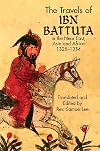
I have been meaning to read this for at least a decade: the Islamic world's answer to Marco Polo. Read this on the heels of [b:The Travels of Sir John Mandeville|964338|The Travels of Sir John Mandeville|John Mandeville|https://i.gr-assets.com/images/S/compressed.photo.goodreads.com/books/1547378674l/964338._SY75_.jpg|984851]Mandeville's adventures, and Battuta in comparison seems much more believable. The drawback of this is that Battuta's account is much drier. It's 90% a list of places he show more went and people he met, and 10% wild shit like people getting shot out of ballistae.
Battuta's account really puts into perspective our Eurocentric notions of the middle ages - if we thought that the world beyond Europe was barely known or that Europe was the centre of civilisation Battuta proves that a lie. He travels from Africa to Indonesia with barely any mention of Europe. In comparison, the Islamic world was unimaginably broad and diverse.
Many of the drawbacks of this book come down to the translator, a Christian Reverend of the Victorian era who clearly holds bigoted ideas against Islam. Even Mandeville was less prejudiced toward Islam! He was also very intent on showing his work, providing original Arabic text for every proper noun and assuming the reader can understand the French and Latin excerpts he quotes without translation in his footnotes. The translation could also do with updating, as the English spelling of Arabic names seems extremely outdated, to the extent that it is very difficult to look up personages mentioned for more information.
We could also have done with more cultural context. Battuta seems to have a habit of acquiring and losing slave girls, or marrying women on a temporary basis, despite otherwise presenting himself as a pious and law-abiding man. Is this...normal? I have no idea!
Regardless, this is an important work if you want to get a fuller understanding of the world in the Middle Ages, and is humbling for those raised on a Eurocentric framework. Great to read in comparison with Mandeville's work. I haven't read Marco Polo yet, but I expect it would also make a good comparison. show less
Battuta's account really puts into perspective our Eurocentric notions of the middle ages - if we thought that the world beyond Europe was barely known or that Europe was the centre of civilisation Battuta proves that a lie. He travels from Africa to Indonesia with barely any mention of Europe. In comparison, the Islamic world was unimaginably broad and diverse.
Many of the drawbacks of this book come down to the translator, a Christian Reverend of the Victorian era who clearly holds bigoted ideas against Islam. Even Mandeville was less prejudiced toward Islam! He was also very intent on showing his work, providing original Arabic text for every proper noun and assuming the reader can understand the French and Latin excerpts he quotes without translation in his footnotes. The translation could also do with updating, as the English spelling of Arabic names seems extremely outdated, to the extent that it is very difficult to look up personages mentioned for more information.
We could also have done with more cultural context. Battuta seems to have a habit of acquiring and losing slave girls, or marrying women on a temporary basis, despite otherwise presenting himself as a pious and law-abiding man. Is this...normal? I have no idea!
Regardless, this is an important work if you want to get a fuller understanding of the world in the Middle Ages, and is humbling for those raised on a Eurocentric framework. Great to read in comparison with Mandeville's work. I haven't read Marco Polo yet, but I expect it would also make a good comparison. show less

An abridged translation that has featured in a television programme: that gives you three good reasons to avoid a book. However, Tim Mackintosh-Smith's programmes on BBC Four did arouse my interest in Ibn Battutah, if not quite to the extent that I would splash out on a multi-volume scholarly edition of the Travels. Arabic not being a language I can read, Mackintosh-Smith's paperback abridgement of the Gibb translation looked like a good way to get a feel for what Ibn Battutah was all about. show more
Obviously, you never know in an abridgement what you've missed out on. What we get here is certainly entertaining and enjoyable, without much in the way of tedious repetition, so I suspect that Mackintosh-Smith has selected quite wisely. In the later parts of the book there is an occasional jerkiness in the narrative that leaves you wondering whether it comes from an acceleration in the pace of Battutah's description as he got nearer to the end of his travels, a tiring of the pen of his amanuensis and editor Ibn Juzayy, or an increased willingness to cut by the modern editor. Another complicating factor is clearly the translation Mackintosh-Smith is working from, done over a period of seventy years by Professor Gibb and his successors. The tone seems to shift a bit from rather baroque Edwardian in the early chapters to a more neutral academic English later in the book.
As seen through the lens of this book, Ibn Battutah is a lively and entertaining travelling companion: it isn't at all difficult to transpose yourself into his way of looking at the world, and share his surprise and pleasure at the strangeness of the many new places he visits on his epic journey. One of the things that makes him so sympathetic, as Mackintosh-Smith points out, is the modernity of his approach to travelling: he hops from place to place "with the dedicated aimlessness of a New Zealand back-packer", joining a caravan or getting on a boat simply because it's going somewhere he hasn't been before. Unlike the back-packer he isn't reliant on his parents for cash: as a qadi he can find work anywhere where Islam is practiced and Arabic spoken; as a distinguished guest he expects (and gets) lordly presents from the local rulers he visits.
Because we feel we can identify with him in his capacity as super-tourist, it is rather alarming when something happens to remind us that 14th century Islamic travellers are not "New Zealand back-packers". We are shocked by Ibn Battutah's casual references to buying slave-girls (virgins or otherwise), or to the many temporary marriages he makes and dissolves along the way: when he leaves town he simply divorces the girl and returns her to her parents together with the dowry. None of his wives is ever mentioned by name. In the Maldives he praises the climate and the local women for their sexually stimulating effect (despite four wives and an unspecified number of concubines his strength is undiminished), but practically with the same breath he fulminates against the women's refusal to dress in the modest fashion prescribed by law and sentences a couple to a beating for adultery.
But he's not some sort of monster - in his various illnesses and ailments he's endearingly human, and when he sees something really unpleasant (the dismembered corpses of prisoners outside the hall of an Indian sultan, for instance), he's as revolted as we would be.
I read this shortly after reading Barbara Tuchman's view of Europe in the 14th century in A distant mirror — it is really striking comparing her picture with Ibn Battutah's how much bigger and more mobile the Islamic world was at that time than (Western) Christendom. show less
Obviously, you never know in an abridgement what you've missed out on. What we get here is certainly entertaining and enjoyable, without much in the way of tedious repetition, so I suspect that Mackintosh-Smith has selected quite wisely. In the later parts of the book there is an occasional jerkiness in the narrative that leaves you wondering whether it comes from an acceleration in the pace of Battutah's description as he got nearer to the end of his travels, a tiring of the pen of his amanuensis and editor Ibn Juzayy, or an increased willingness to cut by the modern editor. Another complicating factor is clearly the translation Mackintosh-Smith is working from, done over a period of seventy years by Professor Gibb and his successors. The tone seems to shift a bit from rather baroque Edwardian in the early chapters to a more neutral academic English later in the book.
As seen through the lens of this book, Ibn Battutah is a lively and entertaining travelling companion: it isn't at all difficult to transpose yourself into his way of looking at the world, and share his surprise and pleasure at the strangeness of the many new places he visits on his epic journey. One of the things that makes him so sympathetic, as Mackintosh-Smith points out, is the modernity of his approach to travelling: he hops from place to place "with the dedicated aimlessness of a New Zealand back-packer", joining a caravan or getting on a boat simply because it's going somewhere he hasn't been before. Unlike the back-packer he isn't reliant on his parents for cash: as a qadi he can find work anywhere where Islam is practiced and Arabic spoken; as a distinguished guest he expects (and gets) lordly presents from the local rulers he visits.
Because we feel we can identify with him in his capacity as super-tourist, it is rather alarming when something happens to remind us that 14th century Islamic travellers are not "New Zealand back-packers". We are shocked by Ibn Battutah's casual references to buying slave-girls (virgins or otherwise), or to the many temporary marriages he makes and dissolves along the way: when he leaves town he simply divorces the girl and returns her to her parents together with the dowry. None of his wives is ever mentioned by name. In the Maldives he praises the climate and the local women for their sexually stimulating effect (despite four wives and an unspecified number of concubines his strength is undiminished), but practically with the same breath he fulminates against the women's refusal to dress in the modest fashion prescribed by law and sentences a couple to a beating for adultery.
But he's not some sort of monster - in his various illnesses and ailments he's endearingly human, and when he sees something really unpleasant (the dismembered corpses of prisoners outside the hall of an Indian sultan, for instance), he's as revolted as we would be.
I read this shortly after reading Barbara Tuchman's view of Europe in the 14th century in A distant mirror — it is really striking comparing her picture with Ibn Battutah's how much bigger and more mobile the Islamic world was at that time than (Western) Christendom. show less
I have been wanting to read Ibn Battutah ever since I lived in Morocco as a teenager, an experience that consolidated in me the same ‘overmastering impulse and desire long cherished’ to travel that he says first made him set off from his Moroccan home. Of course, he saw this through rather more thoroughly than I did. I spent two months InterRailing with a girlfriend, whereas he set off from Tangier in the summer of 1325 and didn't come back again for another twenty-four years.
His full show more name was Shams al-Din Abu Abdallah Muhammad ibn Abdallah ibn Muhammad ibn Ibrahim Ibn Battutah al-Lawati al-Tanji, business cards in those days being an A4-sized affair. (It means Light of Religion, the father of Abdallah, Muhammad Abdallahson Muhammadson Ibrahimson Ibn Battutah (the family name) of the Lawata tribe, from Tangier.) His initial destination was Mecca, to carry out the Hajj – but after that he just kept on going, travelling around almost the entire Islamic world and beyond.
How did he support himself? was my first question (having spent much of my twenties running out of money in foreign countries). Well, mainly because he was a scholar of fiqh – Islamic jurisprudence – and was therefore in considerable demand wherever he went. Some of his stops lasted for months, or years, and he typically found a position in court or as a legal-religious advisor which allowed him to live pretty comfortably. He also seems to have made a habit of marrying endless wives and knocking up slave-girls wherever he went, who keep dying in childbirth or falling overboard or getting abandoned in remote cities – and the long timescales involved mean we get breezy comments like this:
I came eventually to the city of Damascus of Syria, from which I had been absent fully twenty years. I had left there a pregnant wife, and while I was in India I learned that she had given birth to a male child….
This particular son, unfortunately, turns out to have died more than a decade ago, perhaps pining for his absent father; but Ibn Battutah must have left a string of children halfway across Africa and the Middle East. One begins to see why he was so interested in the Viagra-like effects of coconut in the Maldives:
All these products of the coco-palm and the fish which they live on have an amazing and unparalleled effect in sexual intercourse, and the people of these islands perform wonders in this respect. I had there myself four wives, and concubines as well, and I used to visit all of them every day and pass the night with the wife whose turn it was, and this I continued to do the whole year and a half that I was there.
Yes, well, you sometimes have to consider how tempting it is for travellers to exaggerate, a phenomenon that's still in evidence today – getting your pocket picked in Magaluf can quickly escalate, by the time it's rewritten as a status update on Facebook, into something approaching a heroic standoff with ISIS rebels. In any case, the values of the world described here are not our own; indeed they are not even Ibn Battutah's own. Seeing him face up to the different social mores of each new region and community is part of the fun of the Travels, like all good travel books, and for such an experienced traveller he is surprisingly easy to shock. Simple differences like unveiled women or dietary idiosyncrasies leave him spluttering with indignation and astonishment. Still, and despite the quotes I latched on to above, he is not as anecdotal as one might wish and he gives very few personal details of the sort that would allow modern readers to sympathise with him more closely on his journey. As a consequence, readers with the most to gain are probably those who already know the places he's describing and are in a position to compare and contrast – though sometimes a throwaway reference would leave me momentarily breathless with the weight of subsequent history.
We travelled next to Kabul. This was in former times a great city, and on its site there is now a village inhabited by a tribe of Persians called al-Afghan.
This particular edition, though clocking in at nearly four hundred pages of meaty hardback, represents only a selection of the full Rihlah which in its entirety is three or four times the size (and probably of more interest as a primary source than as an exciting travelogue). It benefits from a wonderful translation, published from 1958 to 1994 by a changing team of scholars, and from the editorship of Arabist Tim Mackintosh-Smith, whose informed notes and introduction turn Ibn Battutah's narrative into what at times is almost an introductory guidebook to the geography and culture of the mediaeval Islamic world. For anyone interested in that, you will hardly go wrong with the indefatigable Ibn Battutah; and for everyone else, well, there is that story about the Uzbek princess with a vagina like a ring to look out for. show less
His full show more name was Shams al-Din Abu Abdallah Muhammad ibn Abdallah ibn Muhammad ibn Ibrahim Ibn Battutah al-Lawati al-Tanji, business cards in those days being an A4-sized affair. (It means Light of Religion, the father of Abdallah, Muhammad Abdallahson Muhammadson Ibrahimson Ibn Battutah (the family name) of the Lawata tribe, from Tangier.) His initial destination was Mecca, to carry out the Hajj – but after that he just kept on going, travelling around almost the entire Islamic world and beyond.
How did he support himself? was my first question (having spent much of my twenties running out of money in foreign countries). Well, mainly because he was a scholar of fiqh – Islamic jurisprudence – and was therefore in considerable demand wherever he went. Some of his stops lasted for months, or years, and he typically found a position in court or as a legal-religious advisor which allowed him to live pretty comfortably. He also seems to have made a habit of marrying endless wives and knocking up slave-girls wherever he went, who keep dying in childbirth or falling overboard or getting abandoned in remote cities – and the long timescales involved mean we get breezy comments like this:
I came eventually to the city of Damascus of Syria, from which I had been absent fully twenty years. I had left there a pregnant wife, and while I was in India I learned that she had given birth to a male child….
This particular son, unfortunately, turns out to have died more than a decade ago, perhaps pining for his absent father; but Ibn Battutah must have left a string of children halfway across Africa and the Middle East. One begins to see why he was so interested in the Viagra-like effects of coconut in the Maldives:
All these products of the coco-palm and the fish which they live on have an amazing and unparalleled effect in sexual intercourse, and the people of these islands perform wonders in this respect. I had there myself four wives, and concubines as well, and I used to visit all of them every day and pass the night with the wife whose turn it was, and this I continued to do the whole year and a half that I was there.
Yes, well, you sometimes have to consider how tempting it is for travellers to exaggerate, a phenomenon that's still in evidence today – getting your pocket picked in Magaluf can quickly escalate, by the time it's rewritten as a status update on Facebook, into something approaching a heroic standoff with ISIS rebels. In any case, the values of the world described here are not our own; indeed they are not even Ibn Battutah's own. Seeing him face up to the different social mores of each new region and community is part of the fun of the Travels, like all good travel books, and for such an experienced traveller he is surprisingly easy to shock. Simple differences like unveiled women or dietary idiosyncrasies leave him spluttering with indignation and astonishment. Still, and despite the quotes I latched on to above, he is not as anecdotal as one might wish and he gives very few personal details of the sort that would allow modern readers to sympathise with him more closely on his journey. As a consequence, readers with the most to gain are probably those who already know the places he's describing and are in a position to compare and contrast – though sometimes a throwaway reference would leave me momentarily breathless with the weight of subsequent history.
We travelled next to Kabul. This was in former times a great city, and on its site there is now a village inhabited by a tribe of Persians called al-Afghan.
This particular edition, though clocking in at nearly four hundred pages of meaty hardback, represents only a selection of the full Rihlah which in its entirety is three or four times the size (and probably of more interest as a primary source than as an exciting travelogue). It benefits from a wonderful translation, published from 1958 to 1994 by a changing team of scholars, and from the editorship of Arabist Tim Mackintosh-Smith, whose informed notes and introduction turn Ibn Battutah's narrative into what at times is almost an introductory guidebook to the geography and culture of the mediaeval Islamic world. For anyone interested in that, you will hardly go wrong with the indefatigable Ibn Battutah; and for everyone else, well, there is that story about the Uzbek princess with a vagina like a ring to look out for. show less
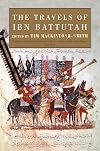
A highly abridged version of the account of the greatest world travellor of them all, who is said to have covered some 75,000 miles in the 14th century, from his home in Morocco to the far east in China. The editor, Mackintosh-Smith, says that he has edited out three-fifths of the original, the cuts being more heavy in the borrowed detaails of the holy sites and rites of Mecca and the Ummayyad mosqques, and the fulsome praise of Ibn Battutah's patrons. Of great interest are the accounts of show more medieval India of Mohammad Tughlaq (the one who trashed the currency and emptied out Delhi in a fit of pique against the critics in the capital), and of China of the last of the Yuan (Mongol) emperors; also such exotic places as the Maldives and an island of amazons in Southeast Asia (still not identified). One wonders what has been lost in editing, tempting a dip into the original. show less
Lists
Awards


You May Also Like


Associated Authors
Statistics
- Works
- 43
- Also by
- 5
- Members
- 1,360
- Popularity
- #18,902
- Rating
- 3.7
- Reviews
- 16
- ISBNs
- 92
- Languages
- 11
- Favorited
- 3