
Jason Elliot (1) (1965–)
Author of An unexpected light : travels in Afghanistan
For other authors named Jason Elliot, see the disambiguation page.
About the Author
Image credit: BBC News
Works by Jason Elliot
Associated Works
Tagged
Common Knowledge
- Birthdate
- 1965
- Gender
- male
- Occupations
- travel writer
- Nationality
- UK
- Places of residence
- London, England, UK
- Associated Place (for map)
- England, UK
Members
Reviews
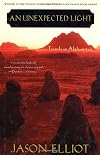
Elliot writes about Afghanistan with a passion that takes you along with him. You can practically smell and see the shops where one can buy shampoo, faux leather watch straps, sticky honey, blank staring heads of goats, army green grenades, prayer carpets, cooking pots, rotting vegetables, astringent medicine, wooly socks, or steel rockets...anything to suit your needs. His mission? To prove to the world that is was possible to travel alone in the places others shunned. (As an aside, what show more does he think of our world now? It is still possible?)
Besides passion, Elliot also writes with lyrical elegance. His statement about time being a river was stunning. It left me pondering my fishing abilities for days. Words like spectral, silent, ghostly, and luminous describe a simple ride through town, but those words also make the journey extra eerie and dangerous. He takes this imagery a step further by adding a touch of royalty by saying they are "kings in the night on our wild chariot" (p 47). It is a romantic image in a dangerous town for Elliot and his companion are out after curfew and could be shot on sight.
Speaking of danger, the section on the diabolical designs of landmines was difficult to read. I cringed as I read about explosives that were made out of plastic so that they would avoid detection by x-ray in a victim's body. Or mines that "jumped in the air to about the height of a man's groin before exploding" to cause a man the most damage and bleed to death...I could go on. My favorite section was when Elliot needed to distract himself from paralyzing fear. He fantasized about riding on the back of a giant fantastical simurgh and seeing with landscape from high above.
Elliot met with people with eyes open; people who supported the Taliban and even defended their actions, pointing out how order has been restored. Perception is truth to most people.
Personal observations: Can you imagine receiving a fax from someone chatting about curtain colors after you have been in the center of incoming tank rounds? It sounds inane.
When Elliot described people ripping off parts of Russian tanks and selling them for scrap I instantly thought of the opening scene to one of the Star Wars movies. show less
Besides passion, Elliot also writes with lyrical elegance. His statement about time being a river was stunning. It left me pondering my fishing abilities for days. Words like spectral, silent, ghostly, and luminous describe a simple ride through town, but those words also make the journey extra eerie and dangerous. He takes this imagery a step further by adding a touch of royalty by saying they are "kings in the night on our wild chariot" (p 47). It is a romantic image in a dangerous town for Elliot and his companion are out after curfew and could be shot on sight.
Speaking of danger, the section on the diabolical designs of landmines was difficult to read. I cringed as I read about explosives that were made out of plastic so that they would avoid detection by x-ray in a victim's body. Or mines that "jumped in the air to about the height of a man's groin before exploding" to cause a man the most damage and bleed to death...I could go on. My favorite section was when Elliot needed to distract himself from paralyzing fear. He fantasized about riding on the back of a giant fantastical simurgh and seeing with landscape from high above.
Elliot met with people with eyes open; people who supported the Taliban and even defended their actions, pointing out how order has been restored. Perception is truth to most people.
Personal observations: Can you imagine receiving a fax from someone chatting about curtain colors after you have been in the center of incoming tank rounds? It sounds inane.
When Elliot described people ripping off parts of Russian tanks and selling them for scrap I instantly thought of the opening scene to one of the Star Wars movies. show less

Great travelogues are still being written. While bookstores nowadays offer many stories of back-packing adventurers and journalists, often producing exciting, but superficial accounts of encounters with rugged locals, it is good to know that there are still scholars who travel and write in-depth travelogues of inaccessible destinations, such as Iran. Mirrors of the unseen. Journeys in Iran is such a travelogue. It is a real eye-opener. It offers true insight into a country and culture, which show more has been all but shut to outsiders for more than 30 years. Mirrors of the unseen. Journeys in Iran by Jason Elliott has everything to become a classic.
For once, impressions deceive. Born in 1965, Jason Elliott has published two travelogues about Iran and Afghanistan: An Unexpected Light: Travels in Afghanistan (1999) and Mirrors of the Unseen: Journeys in Iran (2006).
While Iran, formerly known as Persia, now is an impoverished country, it boasts an ancient culture, of thousands of years. Elliott is a Persianist, and his fluency is so exceptional that taxi drivers take him for a native speaker, albeit with an accent that is hard to place. This enables Elliott to travel and mingle with the local people very naturally.
Perhaps the strength of Mirrors of the unseen. Journeys in Iran is that the author travels like an adventurer, but can interpret and describe Iranian culture with all the depth and authority of a scholar. It lends the book a great deal of credibility. Still, the book is very well-written, and never bores. In many respects, Jason Elliott is the ideal author to bring Iranian culture to light.
Some of the most revealing insights from the book are that most common Iranians are not to be confused with the extremists that dominate foreign news bulletins. Mirrors of the unseen. Journeys in Iran demonstrates very elegantly how the ancient Persian culture is throroughly rooted in Central Asian culture and bears some similarity to Chinese culture, i.e. not formal, material, but informal culture of the people's customs, for example with regard to hospitality. Elliott describes how he participated in parties that were organized in a type of "samizdat" atmosphere, ready to disperse and comply with Islamic regulations the moment they were discovered.
While most of the book deals with travels throughout Iran and encounters with common people, Elliott does not fail to describe the history of Persia in broad outlines and inform the readers about the magnificence of Persian and Muslim art.
Reading Mirrors of the unseen. Journeys in Iran can really change your mind about Iran. show less
For once, impressions deceive. Born in 1965, Jason Elliott has published two travelogues about Iran and Afghanistan: An Unexpected Light: Travels in Afghanistan (1999) and Mirrors of the Unseen: Journeys in Iran (2006).
While Iran, formerly known as Persia, now is an impoverished country, it boasts an ancient culture, of thousands of years. Elliott is a Persianist, and his fluency is so exceptional that taxi drivers take him for a native speaker, albeit with an accent that is hard to place. This enables Elliott to travel and mingle with the local people very naturally.
Perhaps the strength of Mirrors of the unseen. Journeys in Iran is that the author travels like an adventurer, but can interpret and describe Iranian culture with all the depth and authority of a scholar. It lends the book a great deal of credibility. Still, the book is very well-written, and never bores. In many respects, Jason Elliott is the ideal author to bring Iranian culture to light.
Some of the most revealing insights from the book are that most common Iranians are not to be confused with the extremists that dominate foreign news bulletins. Mirrors of the unseen. Journeys in Iran demonstrates very elegantly how the ancient Persian culture is throroughly rooted in Central Asian culture and bears some similarity to Chinese culture, i.e. not formal, material, but informal culture of the people's customs, for example with regard to hospitality. Elliott describes how he participated in parties that were organized in a type of "samizdat" atmosphere, ready to disperse and comply with Islamic regulations the moment they were discovered.
While most of the book deals with travels throughout Iran and encounters with common people, Elliott does not fail to describe the history of Persia in broad outlines and inform the readers about the magnificence of Persian and Muslim art.
Reading Mirrors of the unseen. Journeys in Iran can really change your mind about Iran. show less
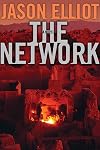
A British intelligence agent is sent into pre-9/11 Afghanistan on a mission. We follow his progress from his training through the operation. The technical details are accurate from what I know from other sources. The writing is occasionally poetic. At least by thriller standards. My major grumble with the book is the hero's characterization. He is either brilliant or incompetent which seemingly can change from page to page. Little explanation is given. Mostly seems to be plot convenience. I show more will look for future books by this author.
Recommended.
This was provided through the early reviewers program. show less
Recommended.
This was provided through the early reviewers program. show less
 This review was written for LibraryThing Early Reviewers.
Jason Elliott's The Network was published in September by Bloomsbury. I received a free copy from Library Thing's Early Reviewers program. The story opens 6 months before 9/11 with the protagonist Anthony Taverner, who is nicknamed Ant, being kidnapped but escaping and on the run from a group he does not know. Later he is recruited by MI6 to enter a Taliban controlled Afghanistan to destroy a cache of the CIA's Stinger missiles before they fall into the hands of Al Qaeda. Ant is first sent show more to Sudan in order to pry information out of a woman who was once Osama bin Laden's sister-in-law. He then moves his action to Afghanistan. However, the intelligence communities in Britain and the U.S. are poised for a catastrophe that they believe must be kept secret from the public.
The story is based on real characters and the author's first hand knowledge of Afghanistan. It is advertised as a thriller but I don't think it meets this classification. I would call it a spy mystery. The plot was fabulous but the pace was too slow to be considered a thriller and the author's setting descriptions bogged down the action. Elliott's background as a travel writer is obvious though. I think this was a good first novel and am interested in how Elliott develops as a fiction writer. show less
The story is based on real characters and the author's first hand knowledge of Afghanistan. It is advertised as a thriller but I don't think it meets this classification. I would call it a spy mystery. The plot was fabulous but the pace was too slow to be considered a thriller and the author's setting descriptions bogged down the action. Elliott's background as a travel writer is obvious though. I think this was a good first novel and am interested in how Elliott develops as a fiction writer. show less
This review was written for LibraryThing Early Reviewers.Lists
Awards


You May Also Like


Associated Authors
Statistics
- Works
- 3
- Also by
- 1
- Members
- 1,101
- Popularity
- #23,343
- Rating
- 3.9
- Reviews
- 43
- ISBNs
- 37
- Languages
- 5
