
Rory Stewart
Author of The Places In Between
About the Author
Rory Stewart is a former infantry officer, diplomat in Indonesia and Yugoslavia, and fellow at Harvard's John F. Kennedy School of Government
Works by Rory Stewart
The Prince of the Marshes: And Other Occupational Hazards of a Year in Iraq (2006) 835 copies, 17 reviews
Middleland: The new book from the #1 Sunday Times-bestselling author and co-host of hit podcast The Rest Is Politics (2025) 7 copies
Jonathan Cape Middleland. 4 copies
The King of Torts 1 copy
Associated Works
Heirs to Forgotten Kingdoms: Journeys Into the Disappearing Religions of the Middle East (2014) — Foreword, some editions — 424 copies, 17 reviews
The Pleasure of Reading: 43 Writers on the Discovery of Reading and the Books That Inspired Them (2015) — Contributor — 104 copies, 2 reviews
Images of Afghanistan: Exploring Afghan Culture through Art and Literature (2010) — Contributor — 6 copies
Living traditions: Contemporary art from Afghanistan, Iran and Pakistan — Foreword — 1 copy
Tagged
Common Knowledge
- Legal name
- Stewart, Roderick James Nugent
- Other names
- Stewart, Roderick 'Rory' James Nugent
- Birthdate
- 1973-01-03
- Gender
- male
- Education
- Dragon School
Eton College
University of Oxford (Balliol College) - Occupations
- diplomat
military officer
Member of Parliament - Organizations
- Turquoise Mountain Foundation
British Army
Conservative Party - Awards and honors
- Order of the British Empire (Officer, 2004)
Royal Society of Literature (Fellow) - Nationality
- UK
- Birthplace
- Hong Kong
- Places of residence
- Kabul, Afghanistan
Malaysia - Associated Place (for map)
- Kabul, Afghanistan
Members
Discussions
Rory Stewart in Pro and Con (March 2008)
Reviews
Anyone who has ever met me, knows that I am about as far from being a Conservative as it is possible to be: that's one thing that I seem to have in common with Rory Stewart.
I started this book quite liking Mr Stewart; by the time that I was thirty pages in, I wanted to say some exceedingly rude things to him then, by the time I got to the last page, I felt sorry for him.
The reason for my initial ire was the immense air of righteous deservedness about his ascension to Parliament and his show more expectation to enter the cabinet: didn't these people know who his people were? It eventually dawned upon me that the Houses of Parliament are filled with two types of people. There are the sons (and it is still mainly males in the top echelons) of Colonels or the Duke of... who expect the old boys (see previous parentheses) network to lead to instant installation at the top of government, and the ordinary Joe (and now Jane) Bloggs who are overawed by the stench of privilege: how does one react when the peg for your coat has a hanger for a sword next to it? (Remember, the vast majority of the House is not nearly as old as it pretends.)
Stewart, by his own admission, enters into politics with no knowledge of the game, just a feeling that he ought to give something back and he, of course, knows what the proles need! Stewart illuminates a stage filled with like minded players. He confirms the belief that most politicians have an incredibly light grasp of any concept of truth - always tell people what they want to hear and then, do what you want.
By the end of the book, I realised that Stewart was one of the good guys (for a Tory!); he can't help his education any more than anyone else, and I think that he really wanted to make things better. The second thing that I realised was that the arrival of Boris Johnson, a poor man's Donald Trump, was inevitable in a system that encourages bravado and testosterone filled antics. I am more certain than ever, that we need a new political system. show less
I started this book quite liking Mr Stewart; by the time that I was thirty pages in, I wanted to say some exceedingly rude things to him then, by the time I got to the last page, I felt sorry for him.
The reason for my initial ire was the immense air of righteous deservedness about his ascension to Parliament and his show more expectation to enter the cabinet: didn't these people know who his people were? It eventually dawned upon me that the Houses of Parliament are filled with two types of people. There are the sons (and it is still mainly males in the top echelons) of Colonels or the Duke of... who expect the old boys (see previous parentheses) network to lead to instant installation at the top of government, and the ordinary Joe (and now Jane) Bloggs who are overawed by the stench of privilege: how does one react when the peg for your coat has a hanger for a sword next to it? (Remember, the vast majority of the House is not nearly as old as it pretends.)
Stewart, by his own admission, enters into politics with no knowledge of the game, just a feeling that he ought to give something back and he, of course, knows what the proles need! Stewart illuminates a stage filled with like minded players. He confirms the belief that most politicians have an incredibly light grasp of any concept of truth - always tell people what they want to hear and then, do what you want.
By the end of the book, I realised that Stewart was one of the good guys (for a Tory!); he can't help his education any more than anyone else, and I think that he really wanted to make things better. The second thing that I realised was that the arrival of Boris Johnson, a poor man's Donald Trump, was inevitable in a system that encourages bravado and testosterone filled antics. I am more certain than ever, that we need a new political system. show less
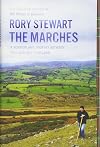
The Marches by Rory Stewart
The Marches is Rory Stewart's fourth book but it has much in common with his first book The Places In Between. The Marches defies easy classification as it is part travelogue, part history, and part narrative of a unique father/son relationship.
The Places in Between chronicles Stewart's hike across Afghanistan shortly after the fall of the Taliban. The book catapulted Stewart to fame. Stewart seems like a man from a different era, specifically that breed of show more explorers like Sir Richard Burton or Francis Younghusband who were not only explorers but poets, naturalists, statesmen and writers.
Following the success of The Places in Between, Stewart founded a non-profit in Kabul dedicated to teaching traditional Afghani crafts. He then joined the British diplomatic service following the 2003 invasion of Iraq and became a deputy governor of one of the southern provinces (the story of which forms the basis for his second and, in my opinion, best book The Prince of the Marshes. Following those exploits, Stewart taught at Harvard only to leave that position and run for Parliament. His first attempt was unsuccessful but he was elected in Penrith and the Border in 2009. In 2016, he became the Minister of State at the Department of International Development. It seems unlikely that his political career will end there but who knows. My hope is that he continues to write wonderful books.
The Marches, is similar to The Places in Between as it grows out of Stewart's decision to undertake two hikes through the border country between Scotland and England and then the Middlelands - a collection of former kingdoms, like the kingdom of Northumbria, that once sat between Scotland and England but were largely destroyed by the Norse invaders and ultimately absorbed into Scotland and England. The first walk runs along Hadrian's Wall and Stewart discusses the wall, its creation, and the impact that such a wall must have had on the people's both inside and outside the wall. Stewart starts out with the idea that walking the wall will help him understand the divisions between England and Scotland and the decisions driving a vote for Scottish independence.
The second walk, through the Middlelands, is more of a walk through a vanished world. While Stewart finds traces of Northumbria and similar kingdoms, much has been lost. Even more distressing is how few of the people that encounter the remnants in their daily lives understand the significance of the monuments and buildings.
Stewart makes it clear that he sets out on these walks to try and understand the land, its history, and the people - precisely what his walk through Afghanistan did. However, as Stewart describes, his plan collapses. The historical ties to the land that Stewart expects to find are largely gone. Many of the people inhabiting the land are more closely tied to far flung places around the globe. Scotland in particular comes across as an almost modern creation and that the kilts, the bagpipers and so on are more the stuff of Braveheart than any reflection of an actual culture. The few remnants of the true division between Scotland and England are largely unknown and forgotten by the nearby residents.
Throughout his walks, Stewart discusses his findings, his thoughts, and his frustrations with his elderly father. It takes awhile to fully develop but eventually it becomes clear that [The Marches] is as much about Stewart's relationship with his father as it is about the Middlelands and the Scottish/English border. This dialogue between father and son ultimately forms the core of the book and there are very interesting parallels between Stewart's observations about the modern border region and his father.
Stewart's father, Brian Stewart, is a walking embodiment of Empire. His career begins in the Second World War and the proceeds to various far flung diplomatic posts in Malaysia, Vietnam and Hong Kong where he rose to a very senior level in MI6. Brian Stewart took great pride in his Scottish heritage and insists on wearing tartans and teaching his son Scottish dancing. But like many of the people that Rory Stewart encounters in his walk, Brian Stewart's intense pride in his Scottish heritage is as much a personal creation as it is a reflection of any actual, inherited culture.
Stewart's work at trying to sort through his relationship with his father and his attempt to draw a common thread from history to his walks in the borderlands ultimately fails to come together. In the third section of the book, Brian Stewart grows increasingly frail and dies.
In less capable hands, the death of Brian Stewart and the failure to trace a single narrative for the borderlands would seem to make a failure of a book. But The Marches does not fail. Rather, it seems to come together with an acknowledgment that some of our truest stories are invented ones and that while we may crave stories that follow a straight line and finish with a satisfying denouement real life does not always oblige.
The Marches ends with a poignant description of Brian Stewart's funeral as his son asks the mourners to join in Scottish dancing in remembrance. Rory Stewart wryly acknowledges that the dance is a bastardized version of a dance from the French court and has little to do with the ancient Scottish highlands but yet it is fitting memorial to a man who prided himself on his Scottish heritage but lived a life more tied to Empire and the East than he ever was to Scotland.
The Marches is an engaging book that sticks with you after completion. However, the more I have thought about the book the more I feel like the reader would benefit from having read The Places in Between first as The Marches does much to expand on themes first raised by Stewart in the earlier book. Since The Place in Between is such an excellent book, a read or a re-read is well worth the time before diving into the The Marches. show less
The Marches is Rory Stewart's fourth book but it has much in common with his first book The Places In Between. The Marches defies easy classification as it is part travelogue, part history, and part narrative of a unique father/son relationship.
The Places in Between chronicles Stewart's hike across Afghanistan shortly after the fall of the Taliban. The book catapulted Stewart to fame. Stewart seems like a man from a different era, specifically that breed of show more explorers like Sir Richard Burton or Francis Younghusband who were not only explorers but poets, naturalists, statesmen and writers.
Following the success of The Places in Between, Stewart founded a non-profit in Kabul dedicated to teaching traditional Afghani crafts. He then joined the British diplomatic service following the 2003 invasion of Iraq and became a deputy governor of one of the southern provinces (the story of which forms the basis for his second and, in my opinion, best book The Prince of the Marshes. Following those exploits, Stewart taught at Harvard only to leave that position and run for Parliament. His first attempt was unsuccessful but he was elected in Penrith and the Border in 2009. In 2016, he became the Minister of State at the Department of International Development. It seems unlikely that his political career will end there but who knows. My hope is that he continues to write wonderful books.
The Marches, is similar to The Places in Between as it grows out of Stewart's decision to undertake two hikes through the border country between Scotland and England and then the Middlelands - a collection of former kingdoms, like the kingdom of Northumbria, that once sat between Scotland and England but were largely destroyed by the Norse invaders and ultimately absorbed into Scotland and England. The first walk runs along Hadrian's Wall and Stewart discusses the wall, its creation, and the impact that such a wall must have had on the people's both inside and outside the wall. Stewart starts out with the idea that walking the wall will help him understand the divisions between England and Scotland and the decisions driving a vote for Scottish independence.
The second walk, through the Middlelands, is more of a walk through a vanished world. While Stewart finds traces of Northumbria and similar kingdoms, much has been lost. Even more distressing is how few of the people that encounter the remnants in their daily lives understand the significance of the monuments and buildings.
Stewart makes it clear that he sets out on these walks to try and understand the land, its history, and the people - precisely what his walk through Afghanistan did. However, as Stewart describes, his plan collapses. The historical ties to the land that Stewart expects to find are largely gone. Many of the people inhabiting the land are more closely tied to far flung places around the globe. Scotland in particular comes across as an almost modern creation and that the kilts, the bagpipers and so on are more the stuff of Braveheart than any reflection of an actual culture. The few remnants of the true division between Scotland and England are largely unknown and forgotten by the nearby residents.
Throughout his walks, Stewart discusses his findings, his thoughts, and his frustrations with his elderly father. It takes awhile to fully develop but eventually it becomes clear that [The Marches] is as much about Stewart's relationship with his father as it is about the Middlelands and the Scottish/English border. This dialogue between father and son ultimately forms the core of the book and there are very interesting parallels between Stewart's observations about the modern border region and his father.
Stewart's father, Brian Stewart, is a walking embodiment of Empire. His career begins in the Second World War and the proceeds to various far flung diplomatic posts in Malaysia, Vietnam and Hong Kong where he rose to a very senior level in MI6. Brian Stewart took great pride in his Scottish heritage and insists on wearing tartans and teaching his son Scottish dancing. But like many of the people that Rory Stewart encounters in his walk, Brian Stewart's intense pride in his Scottish heritage is as much a personal creation as it is a reflection of any actual, inherited culture.
Stewart's work at trying to sort through his relationship with his father and his attempt to draw a common thread from history to his walks in the borderlands ultimately fails to come together. In the third section of the book, Brian Stewart grows increasingly frail and dies.
In less capable hands, the death of Brian Stewart and the failure to trace a single narrative for the borderlands would seem to make a failure of a book. But The Marches does not fail. Rather, it seems to come together with an acknowledgment that some of our truest stories are invented ones and that while we may crave stories that follow a straight line and finish with a satisfying denouement real life does not always oblige.
The Marches ends with a poignant description of Brian Stewart's funeral as his son asks the mourners to join in Scottish dancing in remembrance. Rory Stewart wryly acknowledges that the dance is a bastardized version of a dance from the French court and has little to do with the ancient Scottish highlands but yet it is fitting memorial to a man who prided himself on his Scottish heritage but lived a life more tied to Empire and the East than he ever was to Scotland.
The Marches is an engaging book that sticks with you after completion. However, the more I have thought about the book the more I feel like the reader would benefit from having read The Places in Between first as The Marches does much to expand on themes first raised by Stewart in the earlier book. Since The Place in Between is such an excellent book, a read or a re-read is well worth the time before diving into the The Marches. show less
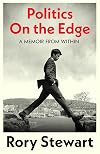
Politics On the Edge: The instant #1 Sunday Times bestseller from the host of hit podcast The Rest Is Politics by Rory Stewart
A magnificent read, just like everything else that Rory Stewart has turned out - this is the third of his that I've read, and each one has left me with the unmistakable impression of being in the company of a writer whose work will be fit for posterity.
In this book, Rory summarises his political career, from the decision to run for office through to his withdrawal from this side of public life after failing to become the next Prime Minister. It is a book of honesty - and at times, about show more Rory's startling naivety, such as when he agreed to meet the unreliable Michael Gove around the time of the leadership contest, as if he though anything could come of that... - and one that paints a brighter picture of some political figures, while simultaneously suggesting that the whole system is broken. show less
In this book, Rory summarises his political career, from the decision to run for office through to his withdrawal from this side of public life after failing to become the next Prime Minister. It is a book of honesty - and at times, about show more Rory's startling naivety, such as when he agreed to meet the unreliable Michael Gove around the time of the leadership contest, as if he though anything could come of that... - and one that paints a brighter picture of some political figures, while simultaneously suggesting that the whole system is broken. show less
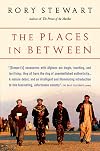
This is a travelogue of Rory Stewart’s walk across the centre of Afghanistan in 2002. I have travelled to some of the places that Stewart walked to, but I didn’t go on foot, or in the middle of winter or when the country was virtually still at war. Stewart’s walk was an epic and dangerous journey in a country that is backward, war torn and intensely tribal and he captures perfectly the hardships, the surprises and the mind numbing confusion in a populace whose hard lives got harder show more when the Russians invaded and then the Taliban insurgency and fall.
Stewart says that the only brand name in most of the country that he slogged through was Islam. There was no electricity, no T shirts and no coca-cola and people were deeply suspicious and sometimes hostile to strangers. Most villages were a collection of mud huts, a mosque, perhaps an old fort or caravanserai with very few if any cement buildings. Meat was unobtainable in many parts and Stewart had to rely on the Moslem religions edict that travellers should be welcomed as guests for any food and lodging that they might have. The walk turned out to be an endurance test and Stewart was under no illusions when he started. Previous travelling experience had taught him the essentials for survival in such a terrain. He always sought letters of introduction or a name of the headman of the next village, he sought out local knowledge and had the seasoned travellers sense of knowing when he was in danger. He could speak the lingua franca of Dari well enough to make himself understood and knew enough about the culture not to cause too great an offence, without these skills it would have been difficult for him to survive and even with them he needed to be lucky on occasions.
Walking in mountainous country in winter and climbing passes of between 8000-10000ft is very hard going. Snow drifts were up to his chest at times and he was mostly cold and wet. He needed all his will power to keep going especially when he was underfed and ill with dysentery. Sometimes it almost got too much for him, but the freedom of the walking, the sense of achievement, and of being alone in the landscape kept him going. He always had it in mind to get to the next place and as readers we enjoy the thrill of the getting there (from the safety of our armchairs perhaps). Occasionally the frustrations seep through into his writing, but it is not typical of him, here is such a paragraph:
Perhaps because I was sick, I was often irritated by villagers and village hospitality. On the fourteenth day, when I came off the snow plains after five hours walking and turned into a village hoping to get lunch, I was left standing in the snow with my pack on my back for half an hour while the headman decided to speak to me and another villager told me I would never make it to Barra Khana by dark. Finally I shouted “Right, thats it. If there is no welcome here, I’m off to Bara Khana now” and began to walk away. Only then did the headman invite me in and give me some dry bread. After the meal I found a gully, a necessity with Diarrhea, and half the village followed to watch me defecate. Back in the village, the headman’s son asked if he could try my camera and proceeded to finish the roll of film by pointing the lens to the ground and clicking again and again. I now had only one roll to see me to Kabul. I was angry for the rest of the day. That night I dreamed I was buying a plane ticket to Venice.
Although Stewart focuses his journey on the current situation in Afghanistan (there are few history lessons here) he does delight in following in the footsteps of the Emperor Babur who made the journey in the 16th century. Stewart includes extracts from Babur’s diary, which make it sound like little has changed since medieval times, which is probably not far from the truth. This is a fascinating juxtaposition and gives Stewart’s rumination on the current situation an added dimension. Stewart wanted to travel alone, but when he started out from Herat he was forced to accept two of the current warlords (Commandant Haji Mohsin Khan) men who were suspicious of his intentions. These men were often more of a hindrance and Stewart was never in control of their actions, fortunately they were only charged to follow him while he was walking through Khan’s territory. The real problem for Stewart was convincing people that he was just walking through the country, hardly anyone believed him because it was beyond their comprehension, as it may be to many readers of this book. Stewart encountered another problem when one of the village headman presented him with a very large dog (a fighting dog) which caused many villagers to set their own dogs on the pair (stone throwing children were a particular menace), however once Stewart named his dog Babur he forged a bond between them which kept both of them going until the end.
Stewart is critical of the aid agencies and foreign intervention advisers who try and solve problems from the top down, without spending time to understand the culture. Afghanistan is a tribal country, barely out of its feudalistic past and it is a Moslem country and until these two basic facts are understood and worked through, intervention will only make things worse. It was also a country when Stewart was there which had until two months previously been under the yoke of the Taliban and it was never easy to discover where the Taliban still held sway. A wrong word said in ignorance in one of the guest rooms could have been fatal. The Taliban committed atrocities especially in the central eastern area of the Country, which was populated by the Hazara’s and there is an intense feeling of desperation as Stewart walks through burnt out villages and decimated lands.
From my own experience of travelling I can admire the fortitude and honesty in Stewarts account. He tells it like it is and creates an atmosphere that will thrill the most hardened armchair traveller. A four star read. show less
Stewart says that the only brand name in most of the country that he slogged through was Islam. There was no electricity, no T shirts and no coca-cola and people were deeply suspicious and sometimes hostile to strangers. Most villages were a collection of mud huts, a mosque, perhaps an old fort or caravanserai with very few if any cement buildings. Meat was unobtainable in many parts and Stewart had to rely on the Moslem religions edict that travellers should be welcomed as guests for any food and lodging that they might have. The walk turned out to be an endurance test and Stewart was under no illusions when he started. Previous travelling experience had taught him the essentials for survival in such a terrain. He always sought letters of introduction or a name of the headman of the next village, he sought out local knowledge and had the seasoned travellers sense of knowing when he was in danger. He could speak the lingua franca of Dari well enough to make himself understood and knew enough about the culture not to cause too great an offence, without these skills it would have been difficult for him to survive and even with them he needed to be lucky on occasions.
Walking in mountainous country in winter and climbing passes of between 8000-10000ft is very hard going. Snow drifts were up to his chest at times and he was mostly cold and wet. He needed all his will power to keep going especially when he was underfed and ill with dysentery. Sometimes it almost got too much for him, but the freedom of the walking, the sense of achievement, and of being alone in the landscape kept him going. He always had it in mind to get to the next place and as readers we enjoy the thrill of the getting there (from the safety of our armchairs perhaps). Occasionally the frustrations seep through into his writing, but it is not typical of him, here is such a paragraph:
Perhaps because I was sick, I was often irritated by villagers and village hospitality. On the fourteenth day, when I came off the snow plains after five hours walking and turned into a village hoping to get lunch, I was left standing in the snow with my pack on my back for half an hour while the headman decided to speak to me and another villager told me I would never make it to Barra Khana by dark. Finally I shouted “Right, thats it. If there is no welcome here, I’m off to Bara Khana now” and began to walk away. Only then did the headman invite me in and give me some dry bread. After the meal I found a gully, a necessity with Diarrhea, and half the village followed to watch me defecate. Back in the village, the headman’s son asked if he could try my camera and proceeded to finish the roll of film by pointing the lens to the ground and clicking again and again. I now had only one roll to see me to Kabul. I was angry for the rest of the day. That night I dreamed I was buying a plane ticket to Venice.
Although Stewart focuses his journey on the current situation in Afghanistan (there are few history lessons here) he does delight in following in the footsteps of the Emperor Babur who made the journey in the 16th century. Stewart includes extracts from Babur’s diary, which make it sound like little has changed since medieval times, which is probably not far from the truth. This is a fascinating juxtaposition and gives Stewart’s rumination on the current situation an added dimension. Stewart wanted to travel alone, but when he started out from Herat he was forced to accept two of the current warlords (Commandant Haji Mohsin Khan) men who were suspicious of his intentions. These men were often more of a hindrance and Stewart was never in control of their actions, fortunately they were only charged to follow him while he was walking through Khan’s territory. The real problem for Stewart was convincing people that he was just walking through the country, hardly anyone believed him because it was beyond their comprehension, as it may be to many readers of this book. Stewart encountered another problem when one of the village headman presented him with a very large dog (a fighting dog) which caused many villagers to set their own dogs on the pair (stone throwing children were a particular menace), however once Stewart named his dog Babur he forged a bond between them which kept both of them going until the end.
Stewart is critical of the aid agencies and foreign intervention advisers who try and solve problems from the top down, without spending time to understand the culture. Afghanistan is a tribal country, barely out of its feudalistic past and it is a Moslem country and until these two basic facts are understood and worked through, intervention will only make things worse. It was also a country when Stewart was there which had until two months previously been under the yoke of the Taliban and it was never easy to discover where the Taliban still held sway. A wrong word said in ignorance in one of the guest rooms could have been fatal. The Taliban committed atrocities especially in the central eastern area of the Country, which was populated by the Hazara’s and there is an intense feeling of desperation as Stewart walks through burnt out villages and decimated lands.
From my own experience of travelling I can admire the fortitude and honesty in Stewarts account. He tells it like it is and creates an atmosphere that will thrill the most hardened armchair traveller. A four star read. show less
Lists
Awards


You May Also Like


Associated Authors
Statistics
- Works
- 13
- Also by
- 9
- Members
- 4,304
- Popularity
- #5,830
- Rating
- 3.9
- Reviews
- 119
- ISBNs
- 95
- Languages
- 8
- Favorited
- 8