
Åsne Seierstad
Author of The Bookseller of Kabul
About the Author
Asne Seierstad has received numerous awards for her journalism and has reported from such war-torn regions as Chechnya, the Balkans, Afghanistan, and Iraq. She is fluent in five languages and lives in Norway
Disambiguation Notice:
Correct form of the name is Åsne Seierstad.
Image credit: Asne Seierstad during the 2018 Toronto International Film Festival at Intercontinental Hotel on September 9, 2018 in Toronto, Canada
Works by Åsne Seierstad
Two Sisters: A Father, His Daughters, and Their Journey into the Syrian Jihad (2016) 205 copies, 7 reviews
Tagged
Common Knowledge
- Canonical name
- Seierstad, Åsne
- Legal name
- Seierstad, Åsne
- Birthdate
- 1970-02-10
- Gender
- female
- Education
- University of Oslo (BA)
- Occupations
- journalist
writer - Awards and honors
- Gullruten Award (1999)
Fritt Ord Honorary Award (2001)
Bokhandlarpriset (2002)
Årets Frilanser Award (2002)
The Peer Gynt Prize (2003)
Den Store Journalistprisen (2003) (show all 9)
Ethnic Multicultural Media award (2004)
Prix de Libraires (2004)
Leipzig Book Award for European Understanding (2018) - Relationships
- Guldahl, Frøydis (mother)
Seierstad, Dag (father)
Seim, Trygve (domestic partner) - Nationality
- Norway
- Birthplace
- Oslo, Norway
- Places of residence
- Oslo, Norway
Lillehammer, Norway
Russia
China
Afghanistan - Map Location
- Oslo, Norway
- Disambiguation notice
- Correct form of the name is Åsne Seierstad.
Members
Reviews
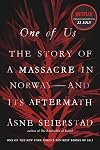
On July 22, 2011, Anders Breivik set off a bomb, outside of a government building, in Oslo killing eight people. He then drove on to a youth camp on the island of Utøya, and methodically killed sixty-nine more, most of them teenage members of Norway’s governing Labour Party.
This was not an easy book, to read, but is an incredibly well-crafted. The author, an acclaimed journalist, does an uncanny job getting into the head of Breivik, (a very, very, scary place) mining his childhood and show more young adulthood, to try and understand the makings of a monster. She also shines a light on several of the victims, and how the shootings effected them and how Norway, as a country dealt with this tragic event.
Like many places in Europe, America is also seeing a startling rise of “hate groups”, encouraged by certain political figures and fueled by social media. This has all ready led to bursts of horrific violence. How many Breiviks are developing right here in the states? A shuddering thought...
If you can stomach the subject matter, I highly recommend this near true crime classic. show less
This was not an easy book, to read, but is an incredibly well-crafted. The author, an acclaimed journalist, does an uncanny job getting into the head of Breivik, (a very, very, scary place) mining his childhood and show more young adulthood, to try and understand the makings of a monster. She also shines a light on several of the victims, and how the shootings effected them and how Norway, as a country dealt with this tragic event.
Like many places in Europe, America is also seeing a startling rise of “hate groups”, encouraged by certain political figures and fueled by social media. This has all ready led to bursts of horrific violence. How many Breiviks are developing right here in the states? A shuddering thought...
If you can stomach the subject matter, I highly recommend this near true crime classic. show less
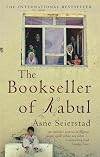
To my great regret, The Bookseller of Kabul turned out to be an extremely disappointing read. This was partly due to my own mistaken preconceptions of the book, but also due to author Ã…sne Seierstad's suspect approach to the telling of what was ostensibly a non-fiction account.
Given its title, the parameters of the story and the subject matter, I had expected (quite reasonably, I think) that the book would be about one man – an upstanding, principled and courageous man – show more and his struggle to bring learning and reading in the largely illiterate, backwards country of Afghanistan, and how this would bring him into conflict with the ruling Taliban, who brought an extremely strict form of Islamic rule to the forsaken country which, quite frankly, still beggars belief. I imagined a sort of real-life Fahrenheit 451, and Seierstad does indeed try to paint the 'bookseller', Sultan, as a sort of courageous freethinker. However, we only get the early chapter, 'Burning Books', devoted to Sultan's views on this (apart from some token statements in later chapters that he is a 'liberal' and a 'freethinker') and to the extreme iconoclasm practiced by the Taliban. Even here, Seierstad's commentary is disappointingly sketchy, offering no more insight into the issue than you would be able to find on the relevant Wikipedia page. Googling 'Bamiyan Buddha' would tell you just as much as you would get here.
I fully expect that Seierstad intended to write a whole book on this theme, but – understandably, I guess – her experiences in Kabul compelled her to shift focus to another theme: that of women's rights in the Muslim world. It is this theme which dominates the rest of the book. Now, this is of course an extremely important issue; indeed, some writers (notably Ayaan Hirsi Ali) would contend that the liberation of women in Islamic cultures is the key to the reformation and redemption of that religion as a creed of peace and tolerance. The problem is that Seierstad manages to take this hot-button topic and make it boring. She offers a sort of chronicle of one family living in Kabul, telling us in minute detail about the lives of these women and the men whom they must obey. None of the women offer a token resistance or rebellion to their lot in life; indeed, none of them seem to have the wit or the imagination to do so. (At one point, one male character makes a mocking joke about another man educating his wife as 'like a bored man teaching his donkey to talk'; though appallingly misogynistic, it unfortunately has the ring of truth here.) Rather, we are given detailed accounts of the women's routines; the cooking, the cleaning, the shopping, and so on, to the point that it becomes a chore to read. Nothing compared to the drab existence of these poor women, of course, but it still does not do the book any favours.
True, some of The Bookseller of Kabul does make the reader's blood boil, such as the arranged marriages in which the women are bought and sold with less dignity than one might a prostitute in the streets of any Western city. Seierstad's anecdotes range from the evil (on page 43, one teenage girl who has brought 'dishonour' on her family by merely meeting a boy is suffocated by her two brothers on their mother's orders), through the sinister ("It's a good sign when the bride is unwilling. That indicates a pure heart." (pg. 60)), to the simply absurd (we learn the Taliban forbade women from wearing shoes with solid heels, believing that the sound of women walking could distract men (pg. 91)). It is because of the importance of this issue that I feel a little guilty about disliking the book, but Seierstad's account doesn't stand out from any of the other books on this theme that are out there. In fact, as I shall discuss in the following paragraphs, her other decisions on writing style and content do much to diminish it in comparison.
Some reviews of the book which I have read commend it as offering an honest, even-handed and non-judgmental account of the lives of this family. Even leaving aside the fact that if there is one issue you are allowed to be judgmental about it is the appalling plight of these women, I did not find the praise of these reviewers to match with my own experience of the book. First of all, Seierstad's presence can be felt in every word of the prose. Rather than offering a fly-on-the-wall document of the family, the writer chooses a sort of 'progressive', 'artistic', 'some-other-buzzword' novelisation. We are given insights into how the characters (for that is what they are) feel about certain things, which Seierstad as a journalist and an outsider could not possibly know. This approach means we are seeing everything through the author's lens; rather than a documentary, the book is a speculation – a dramatization with Seierstad as director and scriptwriter. One does not finish the book with a finer understanding of the people of Afghanistan or the dynamics of a Muslim family; rather, we finish it with an understanding of the author's take on the people of Afghanistan and the dynamics of a Muslim family.
Even more damaging to the integrity of the book, Seierstad's lens is somewhat out of alignment. Since its publication, the book has been subject to court cases (including from the real 'bookseller' himself) and a great deal of criticism about its inaccuracies, its speculations and its fictionalisation of certain events (the horrifying scene on pages 130-1 in which a poor twelve-year-old beggar girl is exploited and raped apparently never happened – Seierstad generated it based on what she thought the characters would have done in such a scenario). It is hard to be lenient on a book when you can't even trust the author. When you don't know if the book is accurate or not, or have sincere lingering doubts about its honesty, you do at times wonder whether it is worth reading it at all.
Seierstad's judgment also seems to be off when she praises Sultan as a freethinker. Lip service is paid to this in the early chapters but it is never fully developed; rather, my conclusion was that Sultan was a businessman as opposed to a book-lover, thinking more in terms of expanding his customer base than bringing enlightenment through the joy of reading to the under-nourished masses. We get a truer understanding of Sultan's freethinking when the topic of Salman Rushdie comes up on page 68 (he should be killed, naturally, for his 'insult'), his compassion when he deals with a poverty-stricken carpenter (who gets three years in prison for stealing some of Sultan's postcards; Seierstad does not tell us what happens to the man's family now that their sole provider of food and money is locked up) and of his progressiveness when it comes to the members of his household, particularly the women (he rules with an iron fist as ruthlessly as any megalomaniac patriarch).
I suppose, however, that for all of The Bookseller of Kabul's myriad faults, it should be commended for, as I mentioned earlier, presenting us with another viewpoint on such an important topic. Its novelistic approach is fundamentally misguided, but in a (presumably) rather unintended way it was this which had the most profound effect on me. You see, Seierstad's fictionalised vignette-like approach to the story of this family often had me confused about which of the events are taking place during the period of Taliban rule and which are taking place after the post-9/11 American-led invasion. The only yardstick I could use (aside from the rare occasions when a specific date was mentioned) was whether the women were wearing burkas (burkas being a Taliban hobby-horse). This confusion made me realise that, burkas aside, Islamic culture in Afghanistan was not fundamentally different pre- and post-9/11. Even when the Taliban weren't around anymore to take things to the extremes by banning music, dancing or women's heels, the fundamentals of the society were the same: Men to be obeyed; women to obey. Men as patriarchs; women as assets to be traded. 'Family.' 'Honour.' 'Respect.'
The problem, it becomes clear, was not just the Taliban, nasty pieces of work though they were. It is the fundamentals of Islamic culture in which these three words of family, honour and respect become meaningless; daughters of the 'family' are traded like baseball cards, are ostracised or suffocated by their brothers if they impinge the family's 'honour' by refusing, and all serving to make that word 'respect' as shallow a word as ever there was. This is not an Islamophobic screed, though Seierstad seems to be able to stomach these insults to human dignity and aspiration than I personally believe I ever could. But one cannot help but feel oneself opposed to a culture and a mindset in which women are lobotomised, who feel 'nothing' because they have been taught that 'feelings are a disgrace' (pg. 259); a culture in which a woman can say to a male suitor with complete sincerity and lack of self-consciousness that "My family will decide whether I like you or not." (pg. 268). In one passage on page 169, we are told how these women have never been alone their entire lives; every moment of their existence is spent in the presence of either female relatives or a male chaperone. And yet, tragically, I would say that these women are probably amongst the most alone people in the entire world. show less
Given its title, the parameters of the story and the subject matter, I had expected (quite reasonably, I think) that the book would be about one man – an upstanding, principled and courageous man – show more and his struggle to bring learning and reading in the largely illiterate, backwards country of Afghanistan, and how this would bring him into conflict with the ruling Taliban, who brought an extremely strict form of Islamic rule to the forsaken country which, quite frankly, still beggars belief. I imagined a sort of real-life Fahrenheit 451, and Seierstad does indeed try to paint the 'bookseller', Sultan, as a sort of courageous freethinker. However, we only get the early chapter, 'Burning Books', devoted to Sultan's views on this (apart from some token statements in later chapters that he is a 'liberal' and a 'freethinker') and to the extreme iconoclasm practiced by the Taliban. Even here, Seierstad's commentary is disappointingly sketchy, offering no more insight into the issue than you would be able to find on the relevant Wikipedia page. Googling 'Bamiyan Buddha' would tell you just as much as you would get here.
I fully expect that Seierstad intended to write a whole book on this theme, but – understandably, I guess – her experiences in Kabul compelled her to shift focus to another theme: that of women's rights in the Muslim world. It is this theme which dominates the rest of the book. Now, this is of course an extremely important issue; indeed, some writers (notably Ayaan Hirsi Ali) would contend that the liberation of women in Islamic cultures is the key to the reformation and redemption of that religion as a creed of peace and tolerance. The problem is that Seierstad manages to take this hot-button topic and make it boring. She offers a sort of chronicle of one family living in Kabul, telling us in minute detail about the lives of these women and the men whom they must obey. None of the women offer a token resistance or rebellion to their lot in life; indeed, none of them seem to have the wit or the imagination to do so. (At one point, one male character makes a mocking joke about another man educating his wife as 'like a bored man teaching his donkey to talk'; though appallingly misogynistic, it unfortunately has the ring of truth here.) Rather, we are given detailed accounts of the women's routines; the cooking, the cleaning, the shopping, and so on, to the point that it becomes a chore to read. Nothing compared to the drab existence of these poor women, of course, but it still does not do the book any favours.
True, some of The Bookseller of Kabul does make the reader's blood boil, such as the arranged marriages in which the women are bought and sold with less dignity than one might a prostitute in the streets of any Western city. Seierstad's anecdotes range from the evil (on page 43, one teenage girl who has brought 'dishonour' on her family by merely meeting a boy is suffocated by her two brothers on their mother's orders), through the sinister ("It's a good sign when the bride is unwilling. That indicates a pure heart." (pg. 60)), to the simply absurd (we learn the Taliban forbade women from wearing shoes with solid heels, believing that the sound of women walking could distract men (pg. 91)). It is because of the importance of this issue that I feel a little guilty about disliking the book, but Seierstad's account doesn't stand out from any of the other books on this theme that are out there. In fact, as I shall discuss in the following paragraphs, her other decisions on writing style and content do much to diminish it in comparison.
Some reviews of the book which I have read commend it as offering an honest, even-handed and non-judgmental account of the lives of this family. Even leaving aside the fact that if there is one issue you are allowed to be judgmental about it is the appalling plight of these women, I did not find the praise of these reviewers to match with my own experience of the book. First of all, Seierstad's presence can be felt in every word of the prose. Rather than offering a fly-on-the-wall document of the family, the writer chooses a sort of 'progressive', 'artistic', 'some-other-buzzword' novelisation. We are given insights into how the characters (for that is what they are) feel about certain things, which Seierstad as a journalist and an outsider could not possibly know. This approach means we are seeing everything through the author's lens; rather than a documentary, the book is a speculation – a dramatization with Seierstad as director and scriptwriter. One does not finish the book with a finer understanding of the people of Afghanistan or the dynamics of a Muslim family; rather, we finish it with an understanding of the author's take on the people of Afghanistan and the dynamics of a Muslim family.
Even more damaging to the integrity of the book, Seierstad's lens is somewhat out of alignment. Since its publication, the book has been subject to court cases (including from the real 'bookseller' himself) and a great deal of criticism about its inaccuracies, its speculations and its fictionalisation of certain events (the horrifying scene on pages 130-1 in which a poor twelve-year-old beggar girl is exploited and raped apparently never happened – Seierstad generated it based on what she thought the characters would have done in such a scenario). It is hard to be lenient on a book when you can't even trust the author. When you don't know if the book is accurate or not, or have sincere lingering doubts about its honesty, you do at times wonder whether it is worth reading it at all.
Seierstad's judgment also seems to be off when she praises Sultan as a freethinker. Lip service is paid to this in the early chapters but it is never fully developed; rather, my conclusion was that Sultan was a businessman as opposed to a book-lover, thinking more in terms of expanding his customer base than bringing enlightenment through the joy of reading to the under-nourished masses. We get a truer understanding of Sultan's freethinking when the topic of Salman Rushdie comes up on page 68 (he should be killed, naturally, for his 'insult'), his compassion when he deals with a poverty-stricken carpenter (who gets three years in prison for stealing some of Sultan's postcards; Seierstad does not tell us what happens to the man's family now that their sole provider of food and money is locked up) and of his progressiveness when it comes to the members of his household, particularly the women (he rules with an iron fist as ruthlessly as any megalomaniac patriarch).
I suppose, however, that for all of The Bookseller of Kabul's myriad faults, it should be commended for, as I mentioned earlier, presenting us with another viewpoint on such an important topic. Its novelistic approach is fundamentally misguided, but in a (presumably) rather unintended way it was this which had the most profound effect on me. You see, Seierstad's fictionalised vignette-like approach to the story of this family often had me confused about which of the events are taking place during the period of Taliban rule and which are taking place after the post-9/11 American-led invasion. The only yardstick I could use (aside from the rare occasions when a specific date was mentioned) was whether the women were wearing burkas (burkas being a Taliban hobby-horse). This confusion made me realise that, burkas aside, Islamic culture in Afghanistan was not fundamentally different pre- and post-9/11. Even when the Taliban weren't around anymore to take things to the extremes by banning music, dancing or women's heels, the fundamentals of the society were the same: Men to be obeyed; women to obey. Men as patriarchs; women as assets to be traded. 'Family.' 'Honour.' 'Respect.'
The problem, it becomes clear, was not just the Taliban, nasty pieces of work though they were. It is the fundamentals of Islamic culture in which these three words of family, honour and respect become meaningless; daughters of the 'family' are traded like baseball cards, are ostracised or suffocated by their brothers if they impinge the family's 'honour' by refusing, and all serving to make that word 'respect' as shallow a word as ever there was. This is not an Islamophobic screed, though Seierstad seems to be able to stomach these insults to human dignity and aspiration than I personally believe I ever could. But one cannot help but feel oneself opposed to a culture and a mindset in which women are lobotomised, who feel 'nothing' because they have been taught that 'feelings are a disgrace' (pg. 259); a culture in which a woman can say to a male suitor with complete sincerity and lack of self-consciousness that "My family will decide whether I like you or not." (pg. 268). In one passage on page 169, we are told how these women have never been alone their entire lives; every moment of their existence is spent in the presence of either female relatives or a male chaperone. And yet, tragically, I would say that these women are probably amongst the most alone people in the entire world. show less
Review score: 4.5 stars
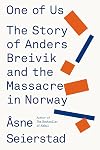
One of Us is a 21st century horror story that chronicles a tragic event from actual history. It’s a book about Anders Behring Breivik and the terrifying acts he carried out on 22 July 2011, which saw 77 Norwegians die and many more injured. This is a detailed and horrific true crime story about a searing, cold-blooded massacre.
This non-fiction work is by Norwegian journalist and writer, Åsne Seierstad. This is the fifth book by a writer who is no stranger to show more chronicling people’s lives in extreme circumstances as her previous works were about individuals living in Kabul and Chechnya. This volume is actually written like a novel and has been painstakingly researched and assembled from witness accounts, interviews, testimonies and other written works.
One of Us paints a portrait of Anders Breivik including his abusive and dysfunctional childhood and his adolescence where he was a graffiti tagger and hip-hop music lover. He had an obsession with belonging and being in charge or “at the top of a group”. But often he was rejected or ridiculed for having an over-inflated sense of his own self-worth and narcissistic personality.
As an adult Breivik became a high-school dropout and entrepreneur who was determined to get rich quick. He had a business where he sold fake diplomas and later became a recluse and computer game addict. The latter turned into a full-blown internet addiction and he’d eventually become radicalised by right wing ideas. This culminated in his dreaming up and carrying out violent and extreme acts, including making a bomb to use on a government building (this killed eight people) and murdering 77 individuals with guns (many of these victims were teenagers) at a young labour conference on the island of Utoya.
Seierstad also tells the stories of some of Breivik’s victims. In this way she humanises these inspiring young people and ensures that they’re remembered for more than just being a number in a long list of fatalities. These stories will haunt and stay with you, particularly the ones about the young and clever, natural-born leader, Simon Saebo and the strong and opinionated, Bano Rashid (the latter had escaped Iraqi Kurdistan with her parents and younger sister and was determined to become part of Norwegian society).
One of Us is a powerful and explosive book where Seierstad has done an excellent job of painting a vivid portrait of the events leading up to the monumental day as well as the actual event, the trial and the aftermath. She offers lots of background information and context to the story and this makes for an immersive and suspense-filled book that is simultaneously uncomfortable to read and hard to put down. This thorough, intense and unsettling work strikes at the very heart of the gut-wrenching tragedy. It’s positively horrific, extremely well-written and a very important story that had to be told. show less
One of Us is a 21st century horror story that chronicles a tragic event from actual history. It’s a book about Anders Behring Breivik and the terrifying acts he carried out on 22 July 2011, which saw 77 Norwegians die and many more injured. This is a detailed and horrific true crime story about a searing, cold-blooded massacre.
This non-fiction work is by Norwegian journalist and writer, Åsne Seierstad. This is the fifth book by a writer who is no stranger to show more chronicling people’s lives in extreme circumstances as her previous works were about individuals living in Kabul and Chechnya. This volume is actually written like a novel and has been painstakingly researched and assembled from witness accounts, interviews, testimonies and other written works.
One of Us paints a portrait of Anders Breivik including his abusive and dysfunctional childhood and his adolescence where he was a graffiti tagger and hip-hop music lover. He had an obsession with belonging and being in charge or “at the top of a group”. But often he was rejected or ridiculed for having an over-inflated sense of his own self-worth and narcissistic personality.
As an adult Breivik became a high-school dropout and entrepreneur who was determined to get rich quick. He had a business where he sold fake diplomas and later became a recluse and computer game addict. The latter turned into a full-blown internet addiction and he’d eventually become radicalised by right wing ideas. This culminated in his dreaming up and carrying out violent and extreme acts, including making a bomb to use on a government building (this killed eight people) and murdering 77 individuals with guns (many of these victims were teenagers) at a young labour conference on the island of Utoya.
Seierstad also tells the stories of some of Breivik’s victims. In this way she humanises these inspiring young people and ensures that they’re remembered for more than just being a number in a long list of fatalities. These stories will haunt and stay with you, particularly the ones about the young and clever, natural-born leader, Simon Saebo and the strong and opinionated, Bano Rashid (the latter had escaped Iraqi Kurdistan with her parents and younger sister and was determined to become part of Norwegian society).
One of Us is a powerful and explosive book where Seierstad has done an excellent job of painting a vivid portrait of the events leading up to the monumental day as well as the actual event, the trial and the aftermath. She offers lots of background information and context to the story and this makes for an immersive and suspense-filled book that is simultaneously uncomfortable to read and hard to put down. This thorough, intense and unsettling work strikes at the very heart of the gut-wrenching tragedy. It’s positively horrific, extremely well-written and a very important story that had to be told. show less
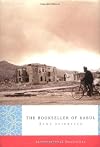
After September 11, Norwegian journalist Asne Seierstad was in Afghanistan, when she met a bookseller. The man, whom she calls Sultan Khan, was a well-educated Afghan who had a book stall in Kabul, where he had defied authorities in the past by saving books that were considered contraband. Seierstad lives with the family, talking to the men and women who speak English, recounting their experiences living in Afghanistan as a war-torn country.
This is narrative nonfiction, in which Seierstad show more pieces together conversations, thoughts and feelings, as the family explained them to her. Interestingly, I felt strangely distant because I realized that she was describing either what she herself saw while she lived there or what only the English-speaking family members could tell her about their thoughts, feelings, actions, and conversations. Sultan Khan is a complicated person: publicly, he is happy when women are part of government, and he broke the law to preserve books important to Afghan history; yet his word is law at home with his family, including his wives, sisters, and children, who all live with him and depend upon him for his livelihood. I found myself getting so mad about the situations of the various women. I also realized in my reading how little I truly know about Afghanistan's history (they were invaded by Soviet Russia?!) and culture. An eye-opening book, and one that will make for a rich book discussion. show less
This is narrative nonfiction, in which Seierstad show more pieces together conversations, thoughts and feelings, as the family explained them to her. Interestingly, I felt strangely distant because I realized that she was describing either what she herself saw while she lived there or what only the English-speaking family members could tell her about their thoughts, feelings, actions, and conversations. Sultan Khan is a complicated person: publicly, he is happy when women are part of government, and he broke the law to preserve books important to Afghan history; yet his word is law at home with his family, including his wives, sisters, and children, who all live with him and depend upon him for his livelihood. I found myself getting so mad about the situations of the various women. I also realized in my reading how little I truly know about Afghanistan's history (they were invaded by Soviet Russia?!) and culture. An eye-opening book, and one that will make for a rich book discussion. show less
Lists
Afghanistan (1)
Carole's List (1)
Afghanistan (1)
Women in Islam (1)
Allie's Wishlist (1)
Books I've read (1)
Unread books (1)
Caucasus (1)
Awards


You May Also Like


Associated Authors
Statistics
- Works
- 12
- Members
- 8,359
- Popularity
- #2,885
- Rating
- 3.7
- Reviews
- 242
- ISBNs
- 253
- Languages
- 23
- Favorited
- 12

