
Geraldine Brooks (1) (1955–)
Author of People of the Book
For other authors named Geraldine Brooks, see the disambiguation page.
About the Author
Geraldine Brooks is the author of two acclaimed works of nonfiction, "Nine Parts of Desire" and "Foreign Correspondence." A former war correspondent, her writing has appeared in The Wall Street Journal, The New York Times, and The Washington Post. (Publisher Provided) Geraldine Brooks was born in show more Sydney, Australia on September 14, 1955. She attended Bethlehem College Ashfield and the University of Sydney. She worked as a feature writer with a special interest in environmental issues for The Sydney Morning Herald for three years. In 1982, she won the Greg Shackleton Australian News Correspondents scholarship to the journalism master's program at Columbia University in New York City. She later worked for The Wall Street Journal, where she covered the Middle East, Africa, and the Balkans. She has written both fiction and non-fiction books including Year of Wonders, Nine Parts of Desire, and The Secret Chord. She has won several awards including the Nita Kibble Literary Award for Foreign Correspondence, the Pulitzer Prize in fiction in 2006 for March, the New England Book Award for Fiction and the Christianity Today Book Award for Caleb's Crossing, and the Australian Book of the Year Award and the Australian Literary Fiction Award in 2008 for People of the Book. (Bowker Author Biography) show less
Works by Geraldine Brooks
Foreign Correspondence: A Pen Pal's Journey from Down Under to All Over (1999) 470 copies, 22 reviews
The Best American Sampler 2011 5 copies
Associated Works
Fight of the Century: Writers Reflect on 100 Years of Landmark ACLU Cases (2020) — Contributor — 261 copies, 5 reviews
Writers on Writing, 2: More Collected Essays from the New York Times (2003) — Contributor — 201 copies, 3 reviews
Kingdom of Olives and Ash: Writers Confront the Occupation (2017) — Contributor — 167 copies, 5 reviews
Reader's Digest Condensed Books: Hornet Flight • Year of Wonders • The Analyst • Unscathed (2003) — Contributor — 5 copies
A Da Vinci-kód | A csillagvizsgáló | Az utolsó detektív | Csodák éve (2005) — Author — 4 copies, 1 review
Hebbes 4 — Contributor — 3 copies
Het Beste Boek 88: Vannacht varen de Hollanders / Tara / Harlequin / Zwanenliefde (1979) 2 copies, 1 review
Tagged
Common Knowledge
- Other names
- Brooks, Geraldine
- Birthdate
- 1955-09-14
- Gender
- female
- Education
- University of Sydney (BA)
Columbia University (MA, Journalisme | 1983)
Bethlehem College - Occupations
- journalist
- Organizations
- The Wall Street Journal (Journaliste)
Sydney Morning Herald (Journaliste)
Harvard University, Sydney, Australie - Awards and honors
- Overseas Press Club's Hal Boyle Award
Radcliffe Institute for Advanced Study fellowship, Harvard University (2006)
Dayton Literary Peace Prize's Lifetime Achievement Award (2010)
Helmerich Award (2009)
Prix Pulitzer de la fiction (2006)
Officier de l'Ordre de l'Australia (2016) (show all 8)
Université de Sydney (Doctorat honoris causa)
Pulitzer Prize for Fiction (2006) - Agent
- Kris Dahl (ICM)
- Relationships
- Horwitz, Tony (Epoux)
- Short biography
- Geraldine Brooks (born 14 September 1955) is an Australian-American journalist and novelist whose 2005 novel March won the Pulitzer Prize for Fiction.
A native of Sydney, Geraldine Brooks grew up in its inner-west suburb of Ashfield. Her father, Lawrie Brooks, was an American big-band singer who was stranded in Adelaide on a tour of Australia when his manager absconded with the band's pay; he decided to remain in Australia, and became a newspaper sub-editor; her mother Gloria, from Boorowa, was a public relations officer with radio station 2GB in Sydney. She attended Bethlehem College, a secondary school for girls, and the University of Sydney. Following graduation, she was a rookie reporter for The Sydney Morning Herald and, after winning a Greg Shackleton Memorial Scholarship, moved to the United States, completing a master's degree at New York City's Columbia University Graduate School of Journalism in 1983. The following year, in the Southern France artisan village of Tourrettes-sur-Loup, she married American journalist Tony Horwitz and converted to Judaism.
As a foreign correspondent for The Wall Street Journal, she covered crises in Africa, the Balkans, and the Middle East, with the stories from the Persian Gulf which she and her husband reported in 1990, receiving the Overseas Press Club's Hal Boyle Award for "Best Newspaper or Wire Service Reporting from Abroad". In 2006, she was awarded a fellowship at Harvard University's Radcliffe Institute for Advanced Study.
Brooks's first book, Nine Parts of Desire (1994), based on her experiences among Muslim women in the Middle East, was an international bestseller, translated into 17 languages. Foreign Correspondence (1997), which won the Nita Kibble Literary Award for women's writing, was a memoir and travel adventure about a childhood enriched by penpals from around the world, and her adult quest to find them.
Her first novel, Year of Wonders, published in 2001, became an international bestseller. Set in 1666, the story depicts a young woman's battle to save fellow villagers as well as her own soul when the bubonic plague suddenly strikes her small Derbyshire village of Eyam. - Nationality
- Australia
USA - Birthplace
- Sydney, New South Wales, Australia
- Places of residence
- Waterford, Virginia, USA
Martha's Vineyard, Massachusetts, USA - Map Location
- USA
Members
Discussions
Group Read: Horse by Geraldine Brooks in 75 Books Challenge for 2023 (February 2023)
Reviews
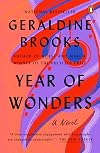
Well, if there are two things I love, it's stories about wise women, and learning about disgusting diseases. I wish I was kidding about the last one, but I'm not. Which is why this was so great! I got a good dose of gory plague details (bursting boils and rotting flesh...what fun!) injected into a story that was worth reading on its own, about a woman in 1666 who thinks for herself.
What I find great about stories like this is not that we have a modern woman in a time-machine, but a woman show more who is a product of her times without being a slave to the societal constraints--something tells me there might have been many more women than we know about who were able to push boundaries.
Also, it's a quick read. show less
What I find great about stories like this is not that we have a modern woman in a time-machine, but a woman show more who is a product of her times without being a slave to the societal constraints--something tells me there might have been many more women than we know about who were able to push boundaries.
Also, it's a quick read. show less

I've read a fair bit of historical fiction- it's not often a great literary accomplishment, but IS a customer-friendly way of immersing yourself in the past and picking up a fair bit of background knowledge in a palatable way. I did wonder, though, how the Bible would fare in a fictionalized version, having visions of sentimental schmaltz.
This is the story of the life of King David, and I felt it was very cleverly constructed. Told by his prophet, Natan, the author manages to recount the show more past (as Natan interviews people from the past to complete his biography of the King) and events at which Natan wasnt actually present) through court gossip, or the visions he has (these were VERY convincingly portrayed...I guess we hear of a prophet pronouncing judgement and rarely conmtemplate just how it was for him...)
Sentimental schmaltz is entirely absent- David's life, of course, was a violent one, and the author pictures the eviscerating battles, rapes, uprisings etc very vividly. The characters come to liofe, pretty much...the flawed king, who fails to control his sons, with dire consequences; the various wives (the account of Michal's being forced back to the palace from her second husband and children is particularly memorable), the jockeying for power among the factions. And the early life of Shlomo (Solomon) as he shines as potential successor.
Does God ('the Name') come into story as much as one might expect? Would it have worked if He had?
A very well written book...the author definitely pulls it off! show less
This is the story of the life of King David, and I felt it was very cleverly constructed. Told by his prophet, Natan, the author manages to recount the show more past (as Natan interviews people from the past to complete his biography of the King) and events at which Natan wasnt actually present) through court gossip, or the visions he has (these were VERY convincingly portrayed...I guess we hear of a prophet pronouncing judgement and rarely conmtemplate just how it was for him...)
Sentimental schmaltz is entirely absent- David's life, of course, was a violent one, and the author pictures the eviscerating battles, rapes, uprisings etc very vividly. The characters come to liofe, pretty much...the flawed king, who fails to control his sons, with dire consequences; the various wives (the account of Michal's being forced back to the palace from her second husband and children is particularly memorable), the jockeying for power among the factions. And the early life of Shlomo (Solomon) as he shines as potential successor.
Does God ('the Name') come into story as much as one might expect? Would it have worked if He had?
A very well written book...the author definitely pulls it off! show less
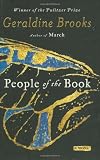
Finishing this and [b:Shadow Without a Name|9695|Shadow Without a Name|Ignacio Padilla|https://i.gr-assets.com/images/S/compressed.photo.goodreads.com/books/1311985588l/9695._SX50_.jpg|12497] in the same week leads to inevitable comparison. The structure of focusing on multiple people is the deftest way to tell the story of a war or an artifact, the best way to give a story two literal meanings: it is about this thing/world war/haggadah by way of being about these specific people. This is show more reminiscent of the long volumes we honor: the Bible, the Histories. There’s something about the structure itself which can make other books about individual people seem narcissistic. Your life, your book might be about one person, but there’s a lot you miss that way.
After that, I’m hesitant to look too closely at this individual book. (Oh, the irony.) It was unfair to make those comparisons to the Bible and the Histories in that first paragraph. This is a modern novel by a modern novelist, entirely different. It’s a fantastic premise: rare book conservator Hanna Heath becomes obsessed with the past of a famous volume, the Sarajevo haggadah, and the reader gets the real stories behind details she uncovers. The dramas of these historical novelettes are balanced by the sudden amplification of the modern protagonist’s book-related arc at the end. One of Brooks’ strengths as a historic novelist is her ability to research thoroughly and to write this research into her fiction so seamlessly that her worlds and characters come alive without feeling dead or inauthentic.
The problem of this book is the likability of the main narrator, Hanna. Her problems are significant, her life full of drama and travel, and yet she did not become truly interesting until the last segment of the book. The choices she makes, the reactions she has in that section seem more in line with the stakes of those who made and preserved the haggadah.
But books don’t owe us the experience we expect from modern novels, which seems at the moment rather predictable. A book can be good without enthralling us every second, without forcing us to like, relate to, or hate the narrator. Though Hanna is presented to us as a steely and curmudgeonly conservator, sure of herself and her skills, her arc in this book is one of maturation. Her choices and relationships in the first parts of the book are immature, a foil to the other characters involved with the haggadah. The most interesting parts of her sections were the physical explanations of the book itself, the luxury of looking closely at an object as it’s seen by an expert who can explain everything. And giving the reader a “true” story of how these came to be without revealing that to the expert was a brilliant strategic move.
Hanna is bad at being glue. As a modern reader I expected her to tie everything together, to discover everything, to be a singular hero. This was a dumb expectation, and I think I may be getting complacent. The book isn’t about Hanna at all; it’s about the book. Like everyone else who was a part of the book, she’s not more or less of its story for anything she had or lacked. Her expertise showed her the value in the book the same way others could see the art in the illustrations, the delicacy of the silversmithing involved. For her, the book was a very valuable artifact; for others it was leverage, or a religious item, and these change how the characters relate to the book, but none of them change the book itself except through the characters’ actions. Hanna’s skills and shortcomings alternately healed and put the book in danger, just like all the others’ had. She got more air time, but she ultimately wasn’t any more or less important to the haggadah’s fate.
What Brooks is exploring, as far as I can tell, is the relation that people have to a common reality, and if there is such a thing as a common reality, what that might be. Presented with the same book, all the characters who interact with it do so on the basis of their own beliefs, their own need for money or leverage or religious security, and they recognize different things in it. The veracity and location of it are constantly in question. Ultimately, a single entirely true history of the haggadah is impossible—and probably less important than the relations, histories, and discoveries of those who have held it. show less
After that, I’m hesitant to look too closely at this individual book. (Oh, the irony.) It was unfair to make those comparisons to the Bible and the Histories in that first paragraph. This is a modern novel by a modern novelist, entirely different. It’s a fantastic premise: rare book conservator Hanna Heath becomes obsessed with the past of a famous volume, the Sarajevo haggadah, and the reader gets the real stories behind details she uncovers. The dramas of these historical novelettes are balanced by the sudden amplification of the modern protagonist’s book-related arc at the end. One of Brooks’ strengths as a historic novelist is her ability to research thoroughly and to write this research into her fiction so seamlessly that her worlds and characters come alive without feeling dead or inauthentic.
The problem of this book is the likability of the main narrator, Hanna. Her problems are significant, her life full of drama and travel, and yet she did not become truly interesting until the last segment of the book. The choices she makes, the reactions she has in that section seem more in line with the stakes of those who made and preserved the haggadah.
But books don’t owe us the experience we expect from modern novels, which seems at the moment rather predictable. A book can be good without enthralling us every second, without forcing us to like, relate to, or hate the narrator. Though Hanna is presented to us as a steely and curmudgeonly conservator, sure of herself and her skills, her arc in this book is one of maturation. Her choices and relationships in the first parts of the book are immature, a foil to the other characters involved with the haggadah. The most interesting parts of her sections were the physical explanations of the book itself, the luxury of looking closely at an object as it’s seen by an expert who can explain everything. And giving the reader a “true” story of how these came to be without revealing that to the expert was a brilliant strategic move.
Hanna is bad at being glue. As a modern reader I expected her to tie everything together, to discover everything, to be a singular hero. This was a dumb expectation, and I think I may be getting complacent. The book isn’t about Hanna at all; it’s about the book. Like everyone else who was a part of the book, she’s not more or less of its story for anything she had or lacked. Her expertise showed her the value in the book the same way others could see the art in the illustrations, the delicacy of the silversmithing involved. For her, the book was a very valuable artifact; for others it was leverage, or a religious item, and these change how the characters relate to the book, but none of them change the book itself except through the characters’ actions. Hanna’s skills and shortcomings alternately healed and put the book in danger, just like all the others’ had. She got more air time, but she ultimately wasn’t any more or less important to the haggadah’s fate.
What Brooks is exploring, as far as I can tell, is the relation that people have to a common reality, and if there is such a thing as a common reality, what that might be. Presented with the same book, all the characters who interact with it do so on the basis of their own beliefs, their own need for money or leverage or religious security, and they recognize different things in it. The veracity and location of it are constantly in question. Ultimately, a single entirely true history of the haggadah is impossible—and probably less important than the relations, histories, and discoveries of those who have held it. show less
CW: slavery, broken family, unkind/abusive treatment of animals
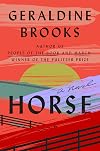
In Horse, Geraldine Brooks weaves together across time a group of narratives focused on, no surprise, a Horse—a famous pre-Civil War racehorse. There's the horse's origin story in set in the south. He's raised by Harry and Jarret, a Black freeman and his enslaved son. In the present day in the Smithsonian, the articulated skeleton of this very horse is discovered in an attic, and Jess, a curator, along with a bio-movement show more researcher agree to begin a project together based on this skeleton. Meanwhile, Theo, a Black art history grad student in DC finds an aged, discarded painting of a horse, which leads him to other horse paintings from the Civil War era and to a possible new dissertation topic.
As always, Brooks' writing is lovely: straightforward enough not to interfere with the narrative, but still adding moments of lexical/syntactical frisson. All of the narratives Brooks is working with are compelling, but to be utterly honest, the strand about Jarret, the young slave, and the horse was absolutely heart-breaking. Reading those chapters was so painful that I wound up skimming them and putting my full focus on the more recent threads. Usually, I appreciate a painful read, but this one, centered on a boy who is a piece of property and the horse he loves whole-heartedly was more than I could bear.
Whether or not you're a "horse person," Horse will provide an excellent read, if you're able to hold one of the narrative strands at arm's length.
I received a free electronic review copy of this title from the publisher via NetGalley; the opinions are my own. show less
In Horse, Geraldine Brooks weaves together across time a group of narratives focused on, no surprise, a Horse—a famous pre-Civil War racehorse. There's the horse's origin story in set in the south. He's raised by Harry and Jarret, a Black freeman and his enslaved son. In the present day in the Smithsonian, the articulated skeleton of this very horse is discovered in an attic, and Jess, a curator, along with a bio-movement show more researcher agree to begin a project together based on this skeleton. Meanwhile, Theo, a Black art history grad student in DC finds an aged, discarded painting of a horse, which leads him to other horse paintings from the Civil War era and to a possible new dissertation topic.
As always, Brooks' writing is lovely: straightforward enough not to interfere with the narrative, but still adding moments of lexical/syntactical frisson. All of the narratives Brooks is working with are compelling, but to be utterly honest, the strand about Jarret, the young slave, and the horse was absolutely heart-breaking. Reading those chapters was so painful that I wound up skimming them and putting my full focus on the more recent threads. Usually, I appreciate a painful read, but this one, centered on a boy who is a piece of property and the horse he loves whole-heartedly was more than I could bear.
Whether or not you're a "horse person," Horse will provide an excellent read, if you're able to hold one of the narrative strands at arm's length.
I received a free electronic review copy of this title from the publisher via NetGalley; the opinions are my own. show less
Lists
Parallel Novels (1)
Great Audiobooks (1)
Sense of place (1)
Same Title (1)
Fiction For Men (1)
Read This Next (1)
Best War Stories (1)
METAfiction (1)
Women in Islam (1)
Allie's Wishlist (1)
First Novels (1)
Set in the 1600s (2)
Five star books (2)
Female Author (2)
Unread books (2)
Women's Stories (2)
Carole's List (3)
el (1)
B-B to Get (1)
Jewish Books (1)
Overdue Podcast (1)
Names in Titles (1)
Awards


You May Also Like


Associated Authors
Statistics
- Works
- 15
- Also by
- 10
- Members
- 40,048
- Popularity
- #441
- Rating
- 3.9
- Reviews
- 1,783
- ISBNs
- 389
- Languages
- 22
- Favorited
- 133


