
Kate Grenville
Author of The Secret River
About the Author
Kate Grenville was born in Sydney on October 14, 1950. She is a graduate of the University of Sydney with a BA (Honours), the University of Colorado with a MA and a PhD in Creative Arts from the University of Technology, Sydney. She is one of Australia's best-known authors. She is the winner of the show more Orange Prize for Fiction, the Commonwealth Writers' Prize, and shortlisted for the Man Booker Prize. She will be at the Oz, New Zealand festival of literature and arts program in London in 2015. She also made the Indie Awards 2016 shortlists in the Nonfiction category with her title One Life. (Publisher Fact Sheets) show less
Image credit: Courtesy of Allen and Unwin
Series
Works by Kate Grenville
Associated Works
Goodbye to Romance: Stories by New Zealand and Australian Women Writers, 1930-1988 (1989) — Contributor — 10 copies
Tagged
Common Knowledge
- Canonical name
- Grenville, Kate
- Other names
- Grenville, Catherine Elizabeth (birth name)
- Birthdate
- 1950-10-15
- Gender
- female
- Education
- University of Sydney (BA)
University of Colorado (MA ∙ Creative Writing)
Cremorne Girls' High School
University of Technology, Sydney - Occupations
- novelist
creative writing teacher - Agent
- Barbara Mobbs
- Nationality
- Australia
- Birthplace
- Sydney, New South Wales, Australia
- Places of residence
- Colorado, USA
Sydney, Australia - Associated Place (for map)
- Australia
Members
Discussions
November 2011: Kate Grenville in Monthly Author Reads (December 2011)
Reviews

I thoroughly enjoyed reading this book.
Grenville takes three people, and to a lesser extent a handful of others, and acknowledges their personal doubts and fears. Not only are these characters presented with all their faults, they are honoured that way. Harley, Douglas and Felicity are all, one way or another, relatable people - and that is the beauty of this novel, which is more character than plot driven.
That the three of them are "fish out of water" in a tiny New South Wales town makes show more them even more interesting. And Grenville's depiction of the town, Karakarook, is deeply insightful. If you have ever visited a small Australian town you will recognise it here. show less
Grenville takes three people, and to a lesser extent a handful of others, and acknowledges their personal doubts and fears. Not only are these characters presented with all their faults, they are honoured that way. Harley, Douglas and Felicity are all, one way or another, relatable people - and that is the beauty of this novel, which is more character than plot driven.
That the three of them are "fish out of water" in a tiny New South Wales town makes show more them even more interesting. And Grenville's depiction of the town, Karakarook, is deeply insightful. If you have ever visited a small Australian town you will recognise it here. show less
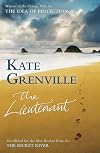
Having previously read and enjoyed Grenville’s 2006 novel ‘The Secret River’ I was pleased to be given ‘The Lieutenant’ as a book group read. Grenville is an Australian author whose fiction has won national and international awards. The copy I read is an uncorrected proof copy.
The Lieutenant
Daniel Rooke is an outsider from his youth: intelligent but socially awkward, he yearns to find his place in the world. Interested in mathematics and astronomy, he soon discovers that the world show more needs few astronomers and is forced to adopt a more sideways approach to his calling. He becomes a navy Lieutenant and lands in New South Wales with a commission to set up an observatory, but soon finds himself being observed by the natives. Fascinated by their language, Rooke sets himself the challenge of learning the native tongue. He begins to forge a friendship with a young Aboriginal girl, but tensions are growing between the settlers and the natives. Soon, Rooke will be forced to make a decision with life-forming consequences.
Exploring early Australia
Grenville begins the story by establishing Rooke’s innocent character, including his common sense conviction that a slave is not the same as a gold watch. This thoughtfulness sets him apart from his peers and allows his later difficulties to seem perfectly natural. I liked the quick pace of the storytelling and the efficient development of the narrative. Within 20 pages, Rooke is in uniform and heading for Boston, America; within 50 pages he has arrived in New South Wales in 1788 where the bulk of the story takes place.
Once in Australia, language and communication become the dominant concern of Rooke and Grenville. How does one interpret another when they have no common words? How does one even interpret the world? Rooke attempts to build a comprehensive glossary of grammar, vocabulary and inflection, but Grenville shows the reader how vain a pursuit this is when two cultures are so mismatched and, ultimately, at odds. I found Rooke’s enthusiasm engaging, which was just as well since so much of the narrative is taken up with his attempt to build this comprehensive guide. As someone with more than a passing interest in language, I found this all quite interesting. Possibly, other readers could find Rooke’s interest wearying. Then again, his excitement is infectious, written as it is by Grenville in such a delighted manner.
His relationship with Tagaran, the native child, is ambiguous. His own naivety is underscored by the knowing laughter of his worldlier friend, Silk, who assumes a physical relationship. Although Rooke appears to view the girl purely as a source of language learning, Tagaran herself is flirtatious and her age is never established. Later events suggest she may have had less innocent intentions than Rooke, but it is impossible to definitely establish this: the barriers cannot be breached this far.
Rooke’s core morality is increasingly tested as the book develops and he realises what it means to be a soldier in his majesty’s navy, and what it means to be one of a party. Grenville effectively contrasts him with the slippery Silk, who is able to adapt himself to any situation, however appalling, and retain a conviction of his own goodness. I found their relationship and different approaches a very well-handled element of the story.
The idea of conflict between the Aborigines and the invaders is certainly not a new one but it is deftly handled here. Rooke reflects on his group as visitors who, initially a source of some entertainment and some disquietude, have simply stayed too long and worn out the welcome mat. Grenville’s clear, uncluttered prose makes the story slip down easily; digestion is sometimes harder, as when the native Warungin is horrified by the dispensing of British justice. I defy readers to categorise the native viewer as uncivilised as they hear the repeated wet slap of ‘justice’ breaking a man’s skin for giving in to his hunger.
Gradually, the horizon darkens, a mission is convened, a choice made. The remainder of the novel reveals the consequences of this choice. There is a strong sense of closure which I liked, and which is achieved with broad brush strokes rather than the tiring minutiae of life. Despite being easy to read throughout, I found the storytelling to be very powerful. Despite his flaws, Rooke is a sympathetic character and his thoughtfulness inevitably affects readers responses to the situations Grenville depicts.
This story is based on a real man – William Dawes – and his records of the native language, although Grenville’s afterword makes it clear that the resulting book should be considered a work of fiction. I found this successful as a work of historical literature as the setting felt real rather than contrived and the events formed a convincing background. There are no overt ‘throwing in’ of historical detail or reference which can interrupt other examples of historical fiction / literature.
Conclusions
I enjoyed reading this story and read it in a few days. The prose is clear and direct, conveying Rooke’s feelings vividly. The font is relatively large, perhaps because this is a slightly oversized edition of the book, and paragraphs are short. Chapters are also relatively short – around 10 pages each – and the book is organised into four sections to clarify Rooke’s journey. The plot develops logically with a focus on emotional response more than actual events. The characters are simple and do not develop over the course of the story, but most characters are really background figures so I did not feel that this was a problem. As the title suggests, the Lieutenant is the central character in the story. I would read this again but would still hesitate to pay the £12.99 RRP, just because it will be available cheaper from some sources. That said, the price is worth it for 300 odd pages of gently compelling storytelling. I recommend this book to anyone with an interest in thoughtful storytelling, especially if they also have an interest in this period in history. I have now enjoyed two novels by Kate Grenville and will endeavour to try her other novels. show less
The Lieutenant
Daniel Rooke is an outsider from his youth: intelligent but socially awkward, he yearns to find his place in the world. Interested in mathematics and astronomy, he soon discovers that the world show more needs few astronomers and is forced to adopt a more sideways approach to his calling. He becomes a navy Lieutenant and lands in New South Wales with a commission to set up an observatory, but soon finds himself being observed by the natives. Fascinated by their language, Rooke sets himself the challenge of learning the native tongue. He begins to forge a friendship with a young Aboriginal girl, but tensions are growing between the settlers and the natives. Soon, Rooke will be forced to make a decision with life-forming consequences.
Exploring early Australia
Grenville begins the story by establishing Rooke’s innocent character, including his common sense conviction that a slave is not the same as a gold watch. This thoughtfulness sets him apart from his peers and allows his later difficulties to seem perfectly natural. I liked the quick pace of the storytelling and the efficient development of the narrative. Within 20 pages, Rooke is in uniform and heading for Boston, America; within 50 pages he has arrived in New South Wales in 1788 where the bulk of the story takes place.
Once in Australia, language and communication become the dominant concern of Rooke and Grenville. How does one interpret another when they have no common words? How does one even interpret the world? Rooke attempts to build a comprehensive glossary of grammar, vocabulary and inflection, but Grenville shows the reader how vain a pursuit this is when two cultures are so mismatched and, ultimately, at odds. I found Rooke’s enthusiasm engaging, which was just as well since so much of the narrative is taken up with his attempt to build this comprehensive guide. As someone with more than a passing interest in language, I found this all quite interesting. Possibly, other readers could find Rooke’s interest wearying. Then again, his excitement is infectious, written as it is by Grenville in such a delighted manner.
His relationship with Tagaran, the native child, is ambiguous. His own naivety is underscored by the knowing laughter of his worldlier friend, Silk, who assumes a physical relationship. Although Rooke appears to view the girl purely as a source of language learning, Tagaran herself is flirtatious and her age is never established. Later events suggest she may have had less innocent intentions than Rooke, but it is impossible to definitely establish this: the barriers cannot be breached this far.
Rooke’s core morality is increasingly tested as the book develops and he realises what it means to be a soldier in his majesty’s navy, and what it means to be one of a party. Grenville effectively contrasts him with the slippery Silk, who is able to adapt himself to any situation, however appalling, and retain a conviction of his own goodness. I found their relationship and different approaches a very well-handled element of the story.
The idea of conflict between the Aborigines and the invaders is certainly not a new one but it is deftly handled here. Rooke reflects on his group as visitors who, initially a source of some entertainment and some disquietude, have simply stayed too long and worn out the welcome mat. Grenville’s clear, uncluttered prose makes the story slip down easily; digestion is sometimes harder, as when the native Warungin is horrified by the dispensing of British justice. I defy readers to categorise the native viewer as uncivilised as they hear the repeated wet slap of ‘justice’ breaking a man’s skin for giving in to his hunger.
Gradually, the horizon darkens, a mission is convened, a choice made. The remainder of the novel reveals the consequences of this choice. There is a strong sense of closure which I liked, and which is achieved with broad brush strokes rather than the tiring minutiae of life. Despite being easy to read throughout, I found the storytelling to be very powerful. Despite his flaws, Rooke is a sympathetic character and his thoughtfulness inevitably affects readers responses to the situations Grenville depicts.
This story is based on a real man – William Dawes – and his records of the native language, although Grenville’s afterword makes it clear that the resulting book should be considered a work of fiction. I found this successful as a work of historical literature as the setting felt real rather than contrived and the events formed a convincing background. There are no overt ‘throwing in’ of historical detail or reference which can interrupt other examples of historical fiction / literature.
Conclusions
I enjoyed reading this story and read it in a few days. The prose is clear and direct, conveying Rooke’s feelings vividly. The font is relatively large, perhaps because this is a slightly oversized edition of the book, and paragraphs are short. Chapters are also relatively short – around 10 pages each – and the book is organised into four sections to clarify Rooke’s journey. The plot develops logically with a focus on emotional response more than actual events. The characters are simple and do not develop over the course of the story, but most characters are really background figures so I did not feel that this was a problem. As the title suggests, the Lieutenant is the central character in the story. I would read this again but would still hesitate to pay the £12.99 RRP, just because it will be available cheaper from some sources. That said, the price is worth it for 300 odd pages of gently compelling storytelling. I recommend this book to anyone with an interest in thoughtful storytelling, especially if they also have an interest in this period in history. I have now enjoyed two novels by Kate Grenville and will endeavour to try her other novels. show less
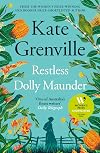
I greatly enjoyed this aptly entitled novel. It proceeds in linear fashion, not quite cradle to grave, but very close. It focuses on Dolly, who’s born to a poor Australian farming family in 1880 and tells her story into the 1950s. Dolly is a bright little girl and dreams of becoming a teacher. Over my dead body is her father’s harsh response. Educating children beyond the absolute basics is simply not part of the culture. After finishing at the one-room rural school, a girl is expected show more to stay on the farm and help her mother until she’s married off. Dolly chafes against this fate, but recognizing that the lives of most spinsters are pitiable, she resigns herself to it.
Dolly does experience some romance as a young woman. She falls in love with one Catholic boy, and then another, but such relationships can go nowhere: Dolly’s a “proddy”, Church of England, and the denominations don’t mix. One of the poorest and grubbiest of Dolly’s schoolmates, Bert Russell, ends up becoming a hired man on Dolly’s father’s farm. She has an aversion to him. Her mother, on the other hand, becomes fixated on the young man and determines he’ll be the one to save her restless, difficult daughter from spinsterhood. Mrs. Maunder keeps a terrible secret about Bert from Dolly, which the young woman discovers only after her marriage and the two have settled on a farm. Although Dolly typically looks ahead, this secret, her mother’s betrayal, and her own feelings of humiliation haunt her through the years.
There is no love lost between Bert and Dolly, but both have been formed by difficult circumstances, and they stay together, producing three children. Dolly has considerable drive. She’s the one who gets her family off a farm that fails to produce for several years in a row, due to the merciless elements: drought, wind, rain, and hail.
Grenville tells of their adventures moving to first to the outskirts of Sydney to run a shop and then to a series of small towns where they run pubs, hotels, and a beach house. In spite of her ongoing problems with Bert, she acknowledges that the two of them make good business partners, largely because her husband, for all his faults, respects her intelligence. Motherhood, however, is a tremendous challenge for her. She is not fulfilled by it and is often harsh with her children. She wishes she could be different, and is not without self-awareness. Nevertheless, she cannot take herself in hand. She’s quick to anger, dictatorial, and controlling. The kids are regularly uprooted, as Dolly’s restlessness inevitably kicks in. Everything changes, of course, with the Wall Street Crash of 1929, the effects of which ripple across the world. Strangely, it is only when all the Russell family has worked for is lost that Dolly becomes most free.
We tend to forget just how restricted women’s lives were, not even a hundred years ago. This simply told story reminds us. As I was reading the novel I was aware of echoes of Dolly’s problems in my grandmother’s, mother’s, and my own life. Some of the attitudes addressed here are still with us. The world still isn’t as tolerant as it might be of women who choose unconventional paths.
While there’s a certain repetitiveness to Dolly and Bert’s many moves, I still enjoyed the book and recommend it. show less
Dolly does experience some romance as a young woman. She falls in love with one Catholic boy, and then another, but such relationships can go nowhere: Dolly’s a “proddy”, Church of England, and the denominations don’t mix. One of the poorest and grubbiest of Dolly’s schoolmates, Bert Russell, ends up becoming a hired man on Dolly’s father’s farm. She has an aversion to him. Her mother, on the other hand, becomes fixated on the young man and determines he’ll be the one to save her restless, difficult daughter from spinsterhood. Mrs. Maunder keeps a terrible secret about Bert from Dolly, which the young woman discovers only after her marriage and the two have settled on a farm. Although Dolly typically looks ahead, this secret, her mother’s betrayal, and her own feelings of humiliation haunt her through the years.
There is no love lost between Bert and Dolly, but both have been formed by difficult circumstances, and they stay together, producing three children. Dolly has considerable drive. She’s the one who gets her family off a farm that fails to produce for several years in a row, due to the merciless elements: drought, wind, rain, and hail.
Grenville tells of their adventures moving to first to the outskirts of Sydney to run a shop and then to a series of small towns where they run pubs, hotels, and a beach house. In spite of her ongoing problems with Bert, she acknowledges that the two of them make good business partners, largely because her husband, for all his faults, respects her intelligence. Motherhood, however, is a tremendous challenge for her. She is not fulfilled by it and is often harsh with her children. She wishes she could be different, and is not without self-awareness. Nevertheless, she cannot take herself in hand. She’s quick to anger, dictatorial, and controlling. The kids are regularly uprooted, as Dolly’s restlessness inevitably kicks in. Everything changes, of course, with the Wall Street Crash of 1929, the effects of which ripple across the world. Strangely, it is only when all the Russell family has worked for is lost that Dolly becomes most free.
We tend to forget just how restricted women’s lives were, not even a hundred years ago. This simply told story reminds us. As I was reading the novel I was aware of echoes of Dolly’s problems in my grandmother’s, mother’s, and my own life. Some of the attitudes addressed here are still with us. The world still isn’t as tolerant as it might be of women who choose unconventional paths.
While there’s a certain repetitiveness to Dolly and Bert’s many moves, I still enjoyed the book and recommend it. show less
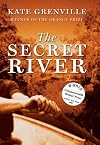
William Thornhill is born into poverty and the slums of London in the 1880's. In many ways, a good person at heart, William is also a complex character. "He grew up a fighter. By the time he was ten years old the other boys knew to leave him alone. The rage warmed him and filled him up. It was a kind of friend." p. 15
Shortly after marrying his beloved wife, Sal, he is sentenced to death for stealing wood. However , his sentence is commuted to transportation to Australia " for the term of his show more natural life"
His wife and growing family accompany him to the "sad scrabbling" p75 town of Sydney in 1806. There he labours for " His Majesty's Government " as England colonizes Australia.
As time goes by, William a loving husband and father, wishes for more dignity and patch of land to call his own. Very much against his wife's wishes, William moves his family to a very isolated piece of bush on the side of Hawkesbury River, a spot with which he has become smitten.While the young family tries to eke out a plot of land, slowly they realize that in fact this land is already occupied by aboriginal people. Internally frightened and not really understanding the aboriginal people and their culture , William acts aggressively and angrily with these people.
This is a powerful story, and the climax, in which many white men confront the aboriginal people, evoked anger, sorrow and even rage within me. I felt ashamed to to a part of the white race that has so often attempted to colonize other countries by our own villainous treatment of indigenous people. The Secret River shines a powerful and unflinching light on the clash between the forces of greed and entitlement felt by many colonizers versus the aboriginal people.
Very graphic, grim, unsettling and powerful , The Secret River will stay with me for a long, long time.
4. 5 stars show less
Shortly after marrying his beloved wife, Sal, he is sentenced to death for stealing wood. However , his sentence is commuted to transportation to Australia " for the term of his show more natural life"
His wife and growing family accompany him to the "sad scrabbling" p75 town of Sydney in 1806. There he labours for " His Majesty's Government " as England colonizes Australia.
As time goes by, William a loving husband and father, wishes for more dignity and patch of land to call his own. Very much against his wife's wishes, William moves his family to a very isolated piece of bush on the side of Hawkesbury River, a spot with which he has become smitten.While the young family tries to eke out a plot of land, slowly they realize that in fact this land is already occupied by aboriginal people. Internally frightened and not really understanding the aboriginal people and their culture , William acts aggressively and angrily with these people.
This is a powerful story, and the climax, in which many white men confront the aboriginal people, evoked anger, sorrow and even rage within me. I felt ashamed to to a part of the white race that has so often attempted to colonize other countries by our own villainous treatment of indigenous people. The Secret River shines a powerful and unflinching light on the clash between the forces of greed and entitlement felt by many colonizers versus the aboriginal people.
Very graphic, grim, unsettling and powerful , The Secret River will stay with me for a long, long time.
4. 5 stars show less
Lists
My TBR list (1)
Sense of place (1)
A Novel Cure (1)
Overdue Podcast (1)
Awards


You May Also Like


Associated Authors
Statistics
- Works
- 25
- Also by
- 6
- Members
- 7,545
- Popularity
- #3,235
- Rating
- 3.8
- Reviews
- 322
- ISBNs
- 320
- Languages
- 12
- Favorited
- 34