
David Malouf (1934–2026)
Author of Remembering Babylon
About the Author
David Malouf was born in Brisbane, Australia on March 20, 1934. He received a B.A. with honours from the University of Queensland in 1954. He lived and worked in Europe from 1959 to 1968, then taught English at the University of Sydney until 1977. After 1977 he became a full-time poet and novelist. show more His collections of poetry include Bicycle and Other Poems, Neighbours in a Thicket, Wild Lemons, First Things Last, Typewriter Music, and An Open Book. He received the Kenneth Slessor Prize for Poetry for Earth Hour. His novels include Johnno, Ransom, An Imaginary Life, Child's Play, Fly Away Peter, Harland's Half Acre, Dream Stuff, Every Move You Make, and The Conversations at Curlow Creek. He received the Commonwealth Writers' Prize and the Prix Femina Etranger for The Great World and the IMPAC Dublin Literary Award for Remembering Babylon. His collections of short stories include Antipodes, Untold Tales, Dream Stuff, and Every Move You Make. His Collected Stories won the 2008 Australia-Asia Literary Award. His essays collections include A First Place and The Writing Life. He also wrote the libretto for Richard Meale's opera Voss. He won the 2016 Australia Council Award for Lifetime Achievement in Literature. (Bowker Author Biography) show less
Image credit: Conrad Del Villar
Series
Works by David Malouf
David Malouf: Johnno, Short Stories, Poems, Essays & Interviews (Uqp Australian Authors) (1990) 13 copies, 1 review
Waterfront 4 copies
The Young Desire It 1 copy
An Imaginery Life 1 copy
David Malouf: A Celebration 1 copy
Poems: 1959-1989 1 copy
Southern Skies {short story} 1 copy
REGATE 1 copy
Associated Works
Ars amatoria [Art of Love | in translation] (0001) — Introduction, some editions — 1,853 copies, 37 reviews
Lost Classics: Writers on Books Loved and Lost, Overlooked, Under-read, Unavailable, Stolen, Extinct, or Otherwise Out of Commission (2000) — Contributor — 319 copies, 6 reviews
In Another Part of the Forest: An Anthology of Gay Short Fiction (1994) — Contributor — 193 copies, 2 reviews
Australian Literature: An Anthology of Writing from the Land Down Under (1993) — Contributor — 29 copies, 1 review
Facing Writers : Australia's Leading Writers Talk with Dagmar Strauss (1990) — Contributor — 6 copies
Stories from Down Under: Nine Short Stories - Australia and New Zealand — Author — 1 copy
Tagged
Common Knowledge
- Legal name
- Malouf, David George Joseph
- Birthdate
- 1934-03-20
- Date of death
- 2026-04-22
- Gender
- male
- Education
- Brisbane Grammar School
University of Queensland - Occupations
- poet
lecturer
novelist
essayist
short story writer - Awards and honors
- Neustadt International Prize for Literature (2000)
Lannan Literary Award ( [2000])
Australian Living Treasure
Man Booker International Prize Finalist (2011)
Pascall Prize (1988) - Agent
- Deborah Rogers (Rogers, Coleridge & White)
- Relationships
- Phillips, Jill (sister)
- Short biography
- David George Joseph Malouf (born 20 March 1934) is an Australian writer. He was awarded the Neustadt International Prize for Literature in 2000, his 1993 novel Remembering Babylon won the International IMPAC Dublin Literary Award in 1996, he won the inaugural Australia-Asia Literary Award in 2008, and he was shortlisted for the Booker Prize. He is openly gay.
- Nationality
- Australia
- Birthplace
- Brisbane, Queensland, Australia
- Places of residence
- Chippendale, New South Wales, Australia
London, England, UK
Birkenhead, Cheshire, England, UK
Tuscany, Italy - Place of death
- Gold Coast, Queensland, Australia
- Associated Place (for map)
- Australia
Members
Discussions
Group Read, April 2018: Remembering Babylon in 1001 Books to read before you die (April 2018)
Reviews
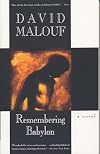
REMEMBERING BABYLON, by David Malouf.
My second Malouf novel. I was very impressed with his THE GREAT WORLD, and this one, while not quite as ambitious, is nearly as good, with its depiction of 19th century Australia, up in the undeveloped 'sticks' above Brisbane, when that town was little more than a glorified 'village.' Malouf again creates some memorable characters and manages to weave a lesson of predjudice and fear into this tale set on the outer fringes of a tenuous civilization. Gemmy, show more an illiterate and much abused white British orphan, who spent sixteen years in a tribe of aborigines after being pitched overboard from his ship, rejoins a rough-edged white society, which turns out to be less tolerant than that of the so-called 'savages.' You get thumbnail lives of not just Gemmy, but of the brave white family that takes him in, as well as the local preacher, school teacher and others. And the fear, hate and loathing that follows Gemmy rears its ugly head again fifty years later as Australia enters WWII and turns on some German emigrant citizens. For a book of barely two hundred pages, Malouf's story packs a powerful punch. Highly recommended, especially if you enjoy Australian fiction. show less
My second Malouf novel. I was very impressed with his THE GREAT WORLD, and this one, while not quite as ambitious, is nearly as good, with its depiction of 19th century Australia, up in the undeveloped 'sticks' above Brisbane, when that town was little more than a glorified 'village.' Malouf again creates some memorable characters and manages to weave a lesson of predjudice and fear into this tale set on the outer fringes of a tenuous civilization. Gemmy, show more an illiterate and much abused white British orphan, who spent sixteen years in a tribe of aborigines after being pitched overboard from his ship, rejoins a rough-edged white society, which turns out to be less tolerant than that of the so-called 'savages.' You get thumbnail lives of not just Gemmy, but of the brave white family that takes him in, as well as the local preacher, school teacher and others. And the fear, hate and loathing that follows Gemmy rears its ugly head again fifty years later as Australia enters WWII and turns on some German emigrant citizens. For a book of barely two hundred pages, Malouf's story packs a powerful punch. Highly recommended, especially if you enjoy Australian fiction. show less

I love Malouf's writing. It is so simple, direct, honest and sympathetic.
"Dante" and Johnno--the one relatively steady and conservative in outlook, the other a spirited, irreverent (in so many ways) force of nature--are children together in 30s/40s Brisbane. Their lives entwine for some time and David Malouf shares their relationship with us. Johnno is a rebellious child who becomes a fairly unpleasant young man. Even so, he is strangely "attractive". Perhaps it is because he seems like show more something different: he's almost a sprite, or one of those Greek/Roman minor gods of the sulky and slightly malicious variety.
The thing that really attracted me about this book (aside from Malouf's beautiful writing), was not, however, the spirited Johnno (I can't say "free-spirited", as he spent his life seeking something, perhaps some extra thrill or risk that would make him really BE, so he was never actually "free") but rather the relationship of both young men with the changing face of their home town of Brisbane. Similar to Perth in so many ways, the charting of the changes and how they effected the lives of these young men for whom its landscape was the landscape of their youth struck a deep chord with me.
In particular, the following passage made me question my limpet-like attachment to Perth, a city which has become over time, since my birth in the early 1970s, a place whose urban landscape and societal values I actively dislike almost without exception. Like Dante, I have to ask myself, am I in a sort of state of suspended animation here? Have I never really "grown-up"?
"Brisbane, where I sometimes thought of myself as having 'grown-up', was a place where I seemed never to have changed. Just turning a corner sometimes on a familiar view, or a familiar sign [...] made me step back years and become the fourteen-year-old, or worse still, the twenty-year-old I once was, helpless before emotions I thought I had outgrown but had merely repressed. All my assurance, all my sophistication about foreign places and performances and food, like the growing heaviness round the shoulders, was a disguise that might fool others but could never fool me. Elsewhere I might pass for a serious adult. Here, I knew, I would always be an aging child. I might grow old in Brisbane but I would never grow up."
Unsettling thoughts. show less
"Dante" and Johnno--the one relatively steady and conservative in outlook, the other a spirited, irreverent (in so many ways) force of nature--are children together in 30s/40s Brisbane. Their lives entwine for some time and David Malouf shares their relationship with us. Johnno is a rebellious child who becomes a fairly unpleasant young man. Even so, he is strangely "attractive". Perhaps it is because he seems like show more something different: he's almost a sprite, or one of those Greek/Roman minor gods of the sulky and slightly malicious variety.
The thing that really attracted me about this book (aside from Malouf's beautiful writing), was not, however, the spirited Johnno (I can't say "free-spirited", as he spent his life seeking something, perhaps some extra thrill or risk that would make him really BE, so he was never actually "free") but rather the relationship of both young men with the changing face of their home town of Brisbane. Similar to Perth in so many ways, the charting of the changes and how they effected the lives of these young men for whom its landscape was the landscape of their youth struck a deep chord with me.
In particular, the following passage made me question my limpet-like attachment to Perth, a city which has become over time, since my birth in the early 1970s, a place whose urban landscape and societal values I actively dislike almost without exception. Like Dante, I have to ask myself, am I in a sort of state of suspended animation here? Have I never really "grown-up"?
"Brisbane, where I sometimes thought of myself as having 'grown-up', was a place where I seemed never to have changed. Just turning a corner sometimes on a familiar view, or a familiar sign [...] made me step back years and become the fourteen-year-old, or worse still, the twenty-year-old I once was, helpless before emotions I thought I had outgrown but had merely repressed. All my assurance, all my sophistication about foreign places and performances and food, like the growing heaviness round the shoulders, was a disguise that might fool others but could never fool me. Elsewhere I might pass for a serious adult. Here, I knew, I would always be an aging child. I might grow old in Brisbane but I would never grow up."
Unsettling thoughts. show less

Wonderful book especially the second time I read it. It is compassionate in tone, showing reverence for growing up in straitened circumstance and the mysteries surrounding that early experience of making sense of one's life. The reader is lead to sharing in sympathy with characters who are all flawed or damaged through accidents that struck them.
This is one of my favourite Australian novels. Malouf is full of love for characters, in the same way that Harland is driven by his love for his show more family, one broken by accident and bad luck. show less
This is one of my favourite Australian novels. Malouf is full of love for characters, in the same way that Harland is driven by his love for his show more family, one broken by accident and bad luck. show less
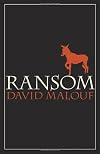
Perhaps I sold this book short by reading it swiftly and thus superficially. Nonetheless, like every other book I’ve read based on [b:The Iliad|1371|The Iliad|Homer|https://images.gr-assets.com/books/1388188509s/1371.jpg|3293141] ([b:The Song of Achilles|11250317|The Song of Achilles|Madeline Miller|https://images.gr-assets.com/books/1331154660s/11250317.jpg|16176791], [b:The Rage of Achilles|7037030|The Rage of Achilles|Terence show more Hawkins|https://images.gr-assets.com/books/1347494613s/7037030.jpg|7285693], [b:Ilium|3973|Ilium (Ilium, #1)|Dan Simmons|https://images.gr-assets.com/books/1390894862s/3973.jpg|3185401], etc) it mostly awoke the desire to re-read the Iliad again. I was introduced to Homer’s poem at school when I was 16 and I loved it. (To some extent I think that’s a tribute to my teacher, as another class successfully put me off Shakespeare for many years.) No modern re-telling has ever quite captured the magic I find in the original. For one thing, modern re-tellings never seem to be long enough.
This one effectively concentrates on a single key incident: King Priam travelling to the Achaean camp to retrieve the body of his son Hector, killed by Achilles and dragged around Troy by chariot. The account of Priam’s decision to risk an appeal to Achilles and his journey there and back is beautifully told. The writing is lyrical and flows elegantly. My favourite element was the meditation on Priam’s role as a symbol (in fact, it reminded me of all the Lacanian stuff in [b:Living in the End Times|7324538|Living in the End Times|Slavoj Žižek|https://images.gr-assets.com/books/1310044208s/7324538.jpg|8913774] about the Symbolic and the Real). The intervention of gods was also well depicted. Overall, though, it is a pretty little book dwarfed by the poem it pays tribute to. Quite possibly this is deliberate and Malouf is trying to humanise an epic tale by focusing on it in microcosm. There is probably a reason why I find such re-tellings strangely forgettable, though. show less
This one effectively concentrates on a single key incident: King Priam travelling to the Achaean camp to retrieve the body of his son Hector, killed by Achilles and dragged around Troy by chariot. The account of Priam’s decision to risk an appeal to Achilles and his journey there and back is beautifully told. The writing is lyrical and flows elegantly. My favourite element was the meditation on Priam’s role as a symbol (in fact, it reminded me of all the Lacanian stuff in [b:Living in the End Times|7324538|Living in the End Times|Slavoj Žižek|https://images.gr-assets.com/books/1310044208s/7324538.jpg|8913774] about the Symbolic and the Real). The intervention of gods was also well depicted. Overall, though, it is a pretty little book dwarfed by the poem it pays tribute to. Quite possibly this is deliberate and Malouf is trying to humanise an epic tale by focusing on it in microcosm. There is probably a reason why I find such re-tellings strangely forgettable, though. show less
Lists
Awards


You May Also Like


Associated Authors
Statistics
- Works
- 69
- Also by
- 31
- Members
- 5,964
- Popularity
- #4,138
- Rating
- 3.9
- Reviews
- 161
- ISBNs
- 296
- Languages
- 12
- Favorited
- 21