
Peter Carey (1) (1943–)
Author of True History of the Kelly Gang
For other authors named Peter Carey, see the disambiguation page.
About the Author
Peter Carey was born on May 7, 1943 in Bacchus Marsh, Victoria, Australia. His first two books, The Fat Man in History (1974) and War Crimes (1979), were short story collections. His first novel, Bliss, was published in 1982. At the time he was balancing his writing career with the operation of an show more advertising agency in Sydney, and his books were not generally known outside of Australia. He began to receive international attention when Illywhacker was published in 1985. He won the Booker Prize in 1988 for Oscar and Lucinda and in 2001 for True History of the Kelly Gang. His other works include The Tax Inspector, Parrot and Olivier in America, and The Chemistry of Tears. He also won the Miles Franklin Award three times. In 2015 he made the Australian Book Designers Association Award shortlist for his title Amnesia. This title also made the 2015 Prime Minister's Literary Awards shortlist. (Bowker Author Biography) show less
Image credit: Peter Carey on 2014
Works by Peter Carey
Oscar and Lucinda, True History of the Kelly Gang: Introduction by Paul Giles (Everyman's Library Contemporary Classics Series) (2019) 52 copies, 2 reviews
The Chance 4 copies
Thirteen moons 1 copy
Peeling [short story] 1 copy
Close to the Sun 1 copy
Joe (in Collected Stories) 1 copy
Conversations with Unicorns 1 copy
Associated Works
The Art of the Story: An International Anthology of Contemporary Short Stories (1999) — Contributor — 394 copies, 5 reviews
Know the Past, Find the Future: The New York Public Library at 100 (2011) — Contributor — 133 copies, 4 reviews
A World of Difference: An Anthology of Short Stories from Five Continents (2008) — Contributor — 112 copies, 1 review
Australian Literature: An Anthology of Writing from the Land Down Under (1993) — Contributor — 29 copies, 1 review
Oscar and Lucinda [1997 film] — Original book — 27 copies
Tagged
Common Knowledge
- Legal name
- Carey, Peter Philip
- Birthdate
- 1943-05-07
- Gender
- male
- Education
- Geelong Grammar School
Monash University - Occupations
- short story writer
novelist
advertising copywriter
creative writing teacher (New York University)
writing instructor (Princeton University)
director of MFA program (Hunter College) - Organizations
- American Academy of Arts and Letters (2016)
Order of Australia - Awards and honors
- Royal Society of Literature (Fellow, 1989)
Australian Academy of Humanities (Fellow)
American Academy of Arts and Sciences (Fellow) - Agent
- Amanda Urban (ICM)
- Short biography
- Peter Carey is an Australian novelist. Carey has won the Miles Franklin Award three times and is frequently named as Australia's next contender for the Nobel Prize in Literature. Carey won his first Booker Prize in 1988 for Oscar and Lucinda, and won for the second time in 2001 with True History of the Kelly Gang. In May 2008 he was nominated for the Best of the Booker Prize. In addition to writing fiction, he collaborated on the screenplay of the film Until the End of the World with Wim Wenders and is executive director of the Master of Fine Arts in Creative Writing program at Hunter College, part of the City University of New York.
- Nationality
- Australia
- Birthplace
- Bacchus Marsh, Victoria, Australia
- Places of residence
- Bacchus Marsh, Victoria, Australia
Melbourne, Victoria, Australia
Sydney, New South Wales, Australia
Queensland, Australia
London, Middlesex, England, UK
New York, New York, USA (show all 7)
Bellingen, New South Wales, Australia - Associated Place (for map)
- Australia
Members
Discussions
November 2015: Peter Carey in Monthly Author Reads (January 2022)
Peter Carey's "Wrong About Japan" in Japanese Culture (February 2010)
Reviews
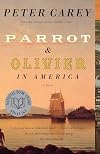
I liked this very much. It's a slow read, which suits me as a slow reader—but not a draggy or boring one at all. There are a lot of layers here underneath Carey's extravagant language: political, psychological, historical. It's not very plot-driven, but rather all atmosphere and early 19th-century mores. Actually I think the political component was my favorite, as it drove everything else along neatly without being didactic.
Not sure if it would have helped to have read de Tocqueville show more first—he's the basis for Olivier, and this is the imagined story of his writings on America—but it's to Carey's credit that I didn't feel too strongly that I was missing something because I haven't. Even more so, now I'm interested in taking a look at the real thing, having been softened up by this very deliciously detailed scenario. Just fun reading all the way through, worth taking the time for and cogitating on a bit as I went along, and I don't begrudge it the book the time it took one bit.
Time to dust off my abandoned bedside copy of Simon Schama's [book: Citizens|20917785] and get back to my reading about the French Revolution. show less
Not sure if it would have helped to have read de Tocqueville show more first—he's the basis for Olivier, and this is the imagined story of his writings on America—but it's to Carey's credit that I didn't feel too strongly that I was missing something because I haven't. Even more so, now I'm interested in taking a look at the real thing, having been softened up by this very deliciously detailed scenario. Just fun reading all the way through, worth taking the time for and cogitating on a bit as I went along, and I don't begrudge it the book the time it took one bit.
Time to dust off my abandoned bedside copy of Simon Schama's [book: Citizens|20917785] and get back to my reading about the French Revolution. show less
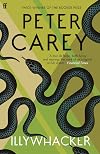
My previous experiences of Carey have been mixed. I really enjoyed [b:True History of the Kelly Gang|110090|True History of the Kelly Gang|Peter Carey|https://images.gr-assets.com/books/1440509588s/110090.jpg|2134852], but found both [b:Oscar and Lucinda|316496|Oscar and Lucinda|Peter Carey|https://images.gr-assets.com/books/1173712561s/316496.jpg|2304710] and [b:Parrot and Olivier in America|6632372|Parrot and Olivier in America|Peter show more Carey|https://images.gr-assets.com/books/1250737303s/6632372.jpg|6826746] over-long and a little tedious, though both had their moments and were funny at times. When I saw the size of this one and the density of the print, I feared more of the same, and for roughly half of the book, that expectation seemed to be confirmed.
Then something clicked, and I found myself enjoying the second half much more, allowing myself to be carried away by the chutzpah and exuberance of Carey's storytelling.
From the start we know that we have an unreliable narrator:
"My name is Herbert Bargery. I am a hundred and thirty-nine years old and something of a celebrity...
I am a terrible liar and I have always been a liar. I say this early to set things straight. Caveat emptor. "
We are soon pitched back to 1919, where Herbert lands his small plane in a field in rural Victoria and charms the McGrath family who are picnicking there. He moves into their house and persuades his host to invest in what would be Australia's first aircraft factory, and the 17 year old daughter Phoebe soon falls for him.
This is just the start of a wild, funny and often bawdy picaresque fantasy cum family story that blends social history and magic realism, populated by an array of memorable characters.
So yes, it could have been shorter, but in the end I enjoyed the journey. show less
Then something clicked, and I found myself enjoying the second half much more, allowing myself to be carried away by the chutzpah and exuberance of Carey's storytelling.
From the start we know that we have an unreliable narrator:
"My name is Herbert Bargery. I am a hundred and thirty-nine years old and something of a celebrity...
I am a terrible liar and I have always been a liar. I say this early to set things straight. Caveat emptor. "
We are soon pitched back to 1919, where Herbert lands his small plane in a field in rural Victoria and charms the McGrath family who are picnicking there. He moves into their house and persuades his host to invest in what would be Australia's first aircraft factory, and the 17 year old daughter Phoebe soon falls for him.
This is just the start of a wild, funny and often bawdy picaresque fantasy cum family story that blends social history and magic realism, populated by an array of memorable characters.
So yes, it could have been shorter, but in the end I enjoyed the journey. show less
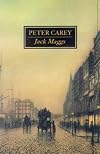
On a drizzly spring evening in 1837, the mysterious figure known as Jack Maggs makes his long-awaited return to London. Where he has been and why he has returned we do not know yet, but the first few pages of Jack Maggs are a delight to read, capturing the sights, sounds and smells of Dickensian London, and Maggs’ disorientation as he returns to a city he does not recognise, lit now with gas light: “The city had become a fairground, and as the coach crossed the river at Westminster the show more stranger saw that even the bridges of the Thames were illuminated.”
‘Dickensian’ is usually used alongside ‘Victorian’ to describe a particular era of the 19th century, but here it’s even more appropriate: Jack Maggs is a reimagining of Dickens’ novel Great Expectations, with Maggs being a version of the convict character Magwitch. He has escaped from New South Wales to find his beloved Henry Phipps (Pip) and tell him his story – but Phipps may not want to be found.
It’s a common trait, I think, for people to partition history into segments, and also think back on the history of particular places as being self-contained. We know that 18th century Britain gave birth to the convict colonies of Australia, but the idea of them existing at the same time – for them being anything other than a one-way dumping ground – is fuzzy. And so it’s always a pleasure, I find, particularly in Peter Carey’s writing, to see the two worlds collide. Australia sheds its image (in my mind and many other Australians’ minds) as a dull and unimportant backwater and instead becomes a mysterious, exotic place. Most of the novel takes place in the upper-class dining rooms and parlours of Covent Garden and Bloomsbury, and it’s always pleasingly strange when Carey calls Maggs “the Australian” or mentions memories of Maggs’ time there – pelicans and parrots, his reliable old boots from a cobbler in Parramatta, or the dreaded prison at Morton Bay.
I haven’t read any Dickens at all, but it’s a mark of Carey’s brilliance as a writer that he can revisit old stories and classics and reimagine them without alienating an uninformed reader. You don’t need to have read Great Expectations to enjoy Jack Maggs, just as you don’t need to know anything about Ned Kelly to enjoy True History of the Kelly Gang or (I imagine) be familiar with the writings of Tocqueville to enjoy Parrot and Olivier in America.
I didn’t enjoy Bliss, I originally said True History of the Kelly Gang was “the product of a slow year for the Booker Prize” only to have it grow stronger in retrospect, and I was sometimes bored during Oscar and Lucinda but knew upon completing it that it was a great novel. Jack Maggs was a novel I thoroughly enjoyed (though it lacks the overall, retrospective solidity of Carey’s two Booker Prize winners), and I think Carey is fast becoming one of my favourite authors. I’d certainly agree with those who call him Australia’s greatest living writer. show less
‘Dickensian’ is usually used alongside ‘Victorian’ to describe a particular era of the 19th century, but here it’s even more appropriate: Jack Maggs is a reimagining of Dickens’ novel Great Expectations, with Maggs being a version of the convict character Magwitch. He has escaped from New South Wales to find his beloved Henry Phipps (Pip) and tell him his story – but Phipps may not want to be found.
It’s a common trait, I think, for people to partition history into segments, and also think back on the history of particular places as being self-contained. We know that 18th century Britain gave birth to the convict colonies of Australia, but the idea of them existing at the same time – for them being anything other than a one-way dumping ground – is fuzzy. And so it’s always a pleasure, I find, particularly in Peter Carey’s writing, to see the two worlds collide. Australia sheds its image (in my mind and many other Australians’ minds) as a dull and unimportant backwater and instead becomes a mysterious, exotic place. Most of the novel takes place in the upper-class dining rooms and parlours of Covent Garden and Bloomsbury, and it’s always pleasingly strange when Carey calls Maggs “the Australian” or mentions memories of Maggs’ time there – pelicans and parrots, his reliable old boots from a cobbler in Parramatta, or the dreaded prison at Morton Bay.
I haven’t read any Dickens at all, but it’s a mark of Carey’s brilliance as a writer that he can revisit old stories and classics and reimagine them without alienating an uninformed reader. You don’t need to have read Great Expectations to enjoy Jack Maggs, just as you don’t need to know anything about Ned Kelly to enjoy True History of the Kelly Gang or (I imagine) be familiar with the writings of Tocqueville to enjoy Parrot and Olivier in America.
I didn’t enjoy Bliss, I originally said True History of the Kelly Gang was “the product of a slow year for the Booker Prize” only to have it grow stronger in retrospect, and I was sometimes bored during Oscar and Lucinda but knew upon completing it that it was a great novel. Jack Maggs was a novel I thoroughly enjoyed (though it lacks the overall, retrospective solidity of Carey’s two Booker Prize winners), and I think Carey is fast becoming one of my favourite authors. I’d certainly agree with those who call him Australia’s greatest living writer. show less
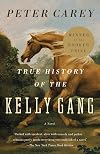
Most of the events of the 1800s involving Ned Kelly & his gang described are true, but the author says he tried to add the texture, the possible why’s for what Ned Kelly did. It’s a tremendous success. The Irish were treated so poorly by the English in Australia, with no legal rights & often abused by the wealthy elite, continuing to punish this convict class—descendants of those delivered here for their punishment—for the sins of their ancestors. The author portrays Kelly as a Robin show more Hood, beloved and protected by the abused masses against an intolerable ruling class. Told from Kelly’s “diaries” written to his unknown daughter, Kelly uses the word “adjectival” for the f-word, and I’ll probably think of that word often in the narrator’s Australian accent for a long time. I can see why it won the Booker. An excellent book. show less
Lists
Favourite Books (1)
2000s decade (1)
el (1)
First Novels (1)
Victorian Period (1)
Shaking a Leg (1)
METAfiction (1)
to get (1)
Folio Society (1)
Five star books (1)
Booker Prize (5)
My TBR (1)
Unread books (2)
Franklit (2)
A Novel Cure (3)
To Read (1)
Parallel Novels (1)
Review 1 (1)
Awards


You May Also Like


Associated Authors
Statistics
- Works
- 42
- Also by
- 19
- Members
- 24,688
- Popularity
- #849
- Rating
- 3.7
- Reviews
- 554
- ISBNs
- 789
- Languages
- 27
- Favorited
- 75
