
Ahmed Rashid
Author of Taliban: Militant Islam, Oil and Fundamentalism in Central Asia
About the Author
Pakistani journalist and bestselling author Ahmed Rashid was born in Rawalpindi in 1948. He was educated at Malvern College in England, Government College in Lahore, and Fitzwilliam College in Cambridge. He works as a correspondent for the Far Eastern Economic Review and the Daily Telegraph and show more writes for the Wall Street Journal, The Nation, and academic journals. His titles include Taliban: Militant Islam, Oil and Fundamentalism in Central Asia, Jihad: The Rise of Militant Islam in Central Asia, and Descent into Chaos. (Bowker Author Biography) show less
Works by Ahmed Rashid
Descent into Chaos: The U.S. and the Disaster in Pakistan, Afghanistan, and Central Asia (2008) 675 copies, 8 reviews
Pakistan on the Brink: The Future of America, Pakistan, and Afghanistan (2012) 169 copies, 8 reviews
Associated Works
Silk Road to Ruin: Is Central Asia the New Middle East? (2006) — Introduction — 77 copies, 2 reviews
Power Trip: U.S. Unilateralism and Global Strategy After September 11 (2003) — Contributor — 22 copies, 1 review
Tagged
Common Knowledge
- Other names
- احمد رشید
- Birthdate
- 1948-06-09
- Gender
- male
- Education
- Fitzwilliam College, Cambridge, England
Government College, Lahore, Pakistan
Malvern College, Malvern, Worcestershire, England (Public school) - Occupations
- journalist
author - Organizations
- Daily Telegraph
Far Eastern Economic Review - Nationality
- Pakistan
- Birthplace
- Rawalpindi, Pakistan
- Map Location
- Pakistan
Members
Reviews

A detailed look at the Taliban's origins, history, and policies up to 2000. (Note: This is a review of the first edition; the second edition adds an updated chapter on additional developments 2000–2009.)
The first section of the book covers the history of the movement and how the Taliban came to control most of Afghanistan's territory by 2000. The second section covers the movement's internal policies, including its interpretation of Islam, treatment of women, drug policy, and connections show more to Bin Laden. The last section focuses on the Taliban's relations with its regional neighbors and other countries with an interest in the region.
Overall I found this an interesting and very informative book. Some parts were a little dry, such as the two chapters describing international oil companies' efforts to build an oil pipeline through Afghanistan. Also, the index had a few errors and omissions, which was occasionally frustrating when trying to refer back to previous information about a given person or faction. But apart from these minor flaws, this is a fascinating, well-organized, and comprehensive treatment of its subject matter. show less
The first section of the book covers the history of the movement and how the Taliban came to control most of Afghanistan's territory by 2000. The second section covers the movement's internal policies, including its interpretation of Islam, treatment of women, drug policy, and connections show more to Bin Laden. The last section focuses on the Taliban's relations with its regional neighbors and other countries with an interest in the region.
Overall I found this an interesting and very informative book. Some parts were a little dry, such as the two chapters describing international oil companies' efforts to build an oil pipeline through Afghanistan. Also, the index had a few errors and omissions, which was occasionally frustrating when trying to refer back to previous information about a given person or faction. But apart from these minor flaws, this is a fascinating, well-organized, and comprehensive treatment of its subject matter. show less
Descent into Chaos: How the War Against Islamic Extremism Is Being Lost in Pakistan, Afghanistan and Central Asia by Ahmed Rashid
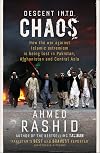
An important book - the first to document the "war on terror", its successes (or in this case its failures) in Central Asia, Afghanistan and Pakistan. As Rashid chronicles, this area was woefully neglected at the expense of the Bush administration's Iraq adventure and this neglect is now coming back to haunt the world.
Rashid spares few in this work. There's plenty of blame to be apportioned. Of particular interest is the hash that the Musharraf regime made of its Taliban/Jihadi policy, show more trying to carry out a balancing act of cracking down on Al-Qaeda while supporting the Taliban and the Pakistani military's hand-reared Jihadi groups - a policy that blew up (pardon the macabre pun) in the military regime's faces in 2006-07.
Ahmed Rashid has been one of the foremost commentators on the Taliban for years. I find this an informative and important work, but at the same time somewhat limited. He is a good reporter, but as an analyst he sometimes doesn't seem to follow things through. For example he views the removal of Musharraf and the introduction of a democratic government as a key step in combating militant Islamism in Pakistan-Afghanistan. But he doesn't delve into the mechanics of how this would happen, particularly when, as he himself chronicles, the military establishment's involvement with Jihadi groups is so entrenched.
Furthermore he repeatedly stresses the need for Hamid Karzai to side with the reformers in the Afghan government against the warlords, but I suspect the division of reformer/warlord is not as clear-cut as he makes it out to be.
Despite these, and other misgivings, this is the best book on this particular subject matter out there and needs to be widely read and its contents and conclusions thoroughly debated. show less
Rashid spares few in this work. There's plenty of blame to be apportioned. Of particular interest is the hash that the Musharraf regime made of its Taliban/Jihadi policy, show more trying to carry out a balancing act of cracking down on Al-Qaeda while supporting the Taliban and the Pakistani military's hand-reared Jihadi groups - a policy that blew up (pardon the macabre pun) in the military regime's faces in 2006-07.
Ahmed Rashid has been one of the foremost commentators on the Taliban for years. I find this an informative and important work, but at the same time somewhat limited. He is a good reporter, but as an analyst he sometimes doesn't seem to follow things through. For example he views the removal of Musharraf and the introduction of a democratic government as a key step in combating militant Islamism in Pakistan-Afghanistan. But he doesn't delve into the mechanics of how this would happen, particularly when, as he himself chronicles, the military establishment's involvement with Jihadi groups is so entrenched.
Furthermore he repeatedly stresses the need for Hamid Karzai to side with the reformers in the Afghan government against the warlords, but I suspect the division of reformer/warlord is not as clear-cut as he makes it out to be.
Despite these, and other misgivings, this is the best book on this particular subject matter out there and needs to be widely read and its contents and conclusions thoroughly debated. show less
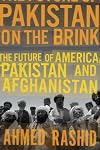
After the death of OBL last year and the recent disasters and frayed nerves and massacres of the recent campaign, there is often talk of a total withdrawal from Afghanistan, and a re-evaluation of the incredibly shaky relationship the US has with Pakistan.
This excellent supplement to "Pakistan: A Hard Country" and part of a trilogy (which I must read!) shows how muddled the whole situation has become, in clear and analytical sections. It has a solid journalistic tone, and moves relentlessly show more forward.
The United States, which had made some progress on a military front, has become further entangled with trying to maintain an economic and social basis for the Afghan state. The contradictory and tangled policies have improved little from the Bush quagmire. Although some promising policy documents have circulated, the hawks of the military continue to dominate the political discussion, and the President either has agreed to, or is unable to resist them.
Afghanistan had brief hopes of peace in 2002-3 (after the fall of the Taliban), and 2011 (after the death of OBL), but the Taliban has stubbornly clung on to rural areas, forming a shadow government, and is a feared opposition. Karzai has to balance between international opinion, and the strong forces of the US and Taliban opposition.
Pakistan is tottering, perhaps becoming too close to being a failed state. The four main ethnic groups (Pashtun-Kashmir-Sind-Baluchi), the military, the ISI, and the political parties are all at odds. The economy is frayed and dependent on World Bank/IMF income, and the national defense strategy is more focused against India (which the US is focusing greater diplomatic efforts on), and the FATA (Federally Administrated Tribal Area) is collapsing under poverty, illiteracy, and the hotbeds of extremism. The state is no total weakling, though - as their nuclear capacity has demonstrated.
Simply put, it's a mess. The author lists some very helpful and promising political and diplomatic changes, some of which have been implemented piece-meal, in both Pakistan and the US. But one finds here that the author is trying simply to keep his hopes up, that he is a hair's breath away from throwing up his hands in despair. But one has to keep trying, and hope that someday, people will learn from the past.
A frightening and necessary document. show less
This excellent supplement to "Pakistan: A Hard Country" and part of a trilogy (which I must read!) shows how muddled the whole situation has become, in clear and analytical sections. It has a solid journalistic tone, and moves relentlessly show more forward.
The United States, which had made some progress on a military front, has become further entangled with trying to maintain an economic and social basis for the Afghan state. The contradictory and tangled policies have improved little from the Bush quagmire. Although some promising policy documents have circulated, the hawks of the military continue to dominate the political discussion, and the President either has agreed to, or is unable to resist them.
Afghanistan had brief hopes of peace in 2002-3 (after the fall of the Taliban), and 2011 (after the death of OBL), but the Taliban has stubbornly clung on to rural areas, forming a shadow government, and is a feared opposition. Karzai has to balance between international opinion, and the strong forces of the US and Taliban opposition.
Pakistan is tottering, perhaps becoming too close to being a failed state. The four main ethnic groups (Pashtun-Kashmir-Sind-Baluchi), the military, the ISI, and the political parties are all at odds. The economy is frayed and dependent on World Bank/IMF income, and the national defense strategy is more focused against India (which the US is focusing greater diplomatic efforts on), and the FATA (Federally Administrated Tribal Area) is collapsing under poverty, illiteracy, and the hotbeds of extremism. The state is no total weakling, though - as their nuclear capacity has demonstrated.
Simply put, it's a mess. The author lists some very helpful and promising political and diplomatic changes, some of which have been implemented piece-meal, in both Pakistan and the US. But one finds here that the author is trying simply to keep his hopes up, that he is a hair's breath away from throwing up his hands in despair. But one has to keep trying, and hope that someday, people will learn from the past.
A frightening and necessary document. show less
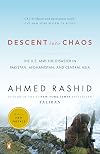
Required reading for anyone who wishes to have an informed opinion on the Afghan war.
Rashid's earlier book on the Taliban was a real bolt from the blue. _Taliban_ did more than any other book to dispel the mystery around the movement and make it clear who they were and are.
In this book he is more concerned with events that have been transpiring in plain sight, so to speak, so it does not quite have the same oomph. But it is a comprehensive and trustworthy guide to the complexities of the show more Pakistan-Afghanistan relationship from which has come so much of the present struggle.
Rashid is forthright about his friendship with Hamid Karzai, a relationship that does not seem to keep him from levelling the odd criticism. I think it fair to say that this insider status has expanded rather than limited this book's perspective. show less
Rashid's earlier book on the Taliban was a real bolt from the blue. _Taliban_ did more than any other book to dispel the mystery around the movement and make it clear who they were and are.
In this book he is more concerned with events that have been transpiring in plain sight, so to speak, so it does not quite have the same oomph. But it is a comprehensive and trustworthy guide to the complexities of the show more Pakistan-Afghanistan relationship from which has come so much of the present struggle.
Rashid is forthright about his friendship with Hamid Karzai, a relationship that does not seem to keep him from levelling the odd criticism. I think it fair to say that this insider status has expanded rather than limited this book's perspective. show less
Lists
Awards


You May Also Like


Associated Authors
Statistics
- Works
- 15
- Also by
- 3
- Members
- 2,913
- Popularity
- #8,789
- Rating
- 3.9
- Reviews
- 39
- ISBNs
- 116
- Languages
- 12
- Favorited
- 4
