
Sarah Chayes
Author of The Punishment of Virtue: Inside Afghanistan After the Taliban
About the Author
An award-winning former NPR correspondent, defense official and social entrepreneur with ten years' experience; in Afghanistan, Sarah Chayes is a senior associate at the Carnegie Endowment and the author of The Punishment of Virtue. She lives in Washington, DC.
Works by Sarah Chayes
Associated Works
Tagged
Common Knowledge
- Birthdate
- 1962-03-05
- Gender
- female
- Education
- Harvard University
Phillips Academy, Andover, Massachusetts, USA - Occupations
- journalist
author - Organizations
- Carnegie Endowment for International Peace
- Nationality
- USA
- Birthplace
- Washington, D.C., USA
- Places of residence
- Kandahar, Afghanistan
Paris, France
Washington, D.C., USA - Associated Place (for map)
- Washington, D.C., USA
Members
Reviews

Chayes went to Afghanistan after 9/11 as an NPR reporter, and stayed to work on democratization/reconstruction initiatives. She offers an account of Afghanistan’s history of being conquered and then throwing off the conquerors, mainly by resisting any central governance, though she argues that the Russian invasion changed things by being so widespread and bloody that PTSD is a dominant factor in subsequent events. She also suggests (sometimes by her own example) how American assumptions show more and lack of knowledge interacted with Afghan cultural practices in the worst possible way—Americans listened to the words, while Afghans looked to see who was sitting with whom, and when Americans made common cause with warlords, that spoke for itself. She blames Pakistani interference, and American unwillingness to recognize that their supposed allies were acting against them, for a lot of the chaos. She also details exactly what it meant for American attention to leave Afghanistan for the new Iraq war, though things weren’t exactly going swimmingly before then. The narrative ends in 2006, but you can see why the next fifteen years didn’t improve. show less
Sarah Chayes was an NPR reporter started reporting from Afghanistan in 2001. Eventually she quit her job to help found an NGO which ran development projects in Kandahar (the so-called 'capital' of the Taliban). Eventually, as the Taliban insurgency against the NATO-supported govt. began to pick up and reporters and journalists retreated "behind the wire" she became virtually the only American living in Kandahar itself. This is a chronicle of her time there between 2001 and 2005 and her show more assessment of what went wrong. The story starts with a funeral - that of her friend, the chief of police in Kandahar - and the author's determination to figure our how exactly he died and who killed him.
This is an outstanding book and probably the best look at what went wrong in the American-led occupation of Afghanistan from the ground level. Sarah Chayes herself comes across as tough, highly independent-minded, deeply sympathetic to the plight of the ordinary Afghan. Its an extraordinary book by an extraordinary person. show less
This is an outstanding book and probably the best look at what went wrong in the American-led occupation of Afghanistan from the ground level. Sarah Chayes herself comes across as tough, highly independent-minded, deeply sympathetic to the plight of the ordinary Afghan. Its an extraordinary book by an extraordinary person. show less
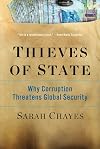
Fascinating book about the terrible costs of corruption in developing nations, and also about the costs to America of supporting corrupt regimes and systems in the name of stability (and patronizing assumptions that the citizens of those regimes are inured to corruption so it’s not a big deal). Chayes has extensive experience in Afghanistan, but also discusses various Middle Eastern countries where she identifies similar dynamics, and says that other experts saw similarities with show more narcoterrorism etc. in other afflicted countries. The basic argument: when corruption reaches down into citizens’ everyday lives, such that they can’t plan on going to market or getting a business license without paying a bribe—and maybe without even any certainty about how much the officials/police will take—they are outraged, and willing to listen to radicals who promise that only strict religious control can fix the worldly corruption in government. Corrupt regimes then use the threat of religious extremists and separatists to extract more support from the US, which support they use to strengthen their power networks and to validate their legitimacy. Chayes tells a terrifically depressing story of American officials who were either ignorant of the corruption going on in their names (as she initially was) or indifferent, not understanding corruption’s devastating long-term effects on security. It’s hard not to read books like this and think that we should really just get the hell out, and not just militarily; Chayes has suggestions for constructive engagement that pushes in the direction of reform, but her experience indicates that the political will to implement tough stances against corrupt officials is generally lacking in American representatives abroad. show less

While others diagnose our key political problem as monopoly, Chayes thinks that it’s corruption—which both aids and is aided by monopoly. With fewer specifics than I might have hoped for, Chayes draws connections between the US past, the US present, and the present of other countries. For example, in comparing the US Gilded Age and Afghanistan: “Beneath what is usually framed in economic terms as corporate consolidation, I saw clusters of people sorting themselves out into relatively show more stable, rival—yet often allied—corruption networks.” And she finds continuities among the corrupt. “Every kleptocratic network that I have investigated, from Afghanistan to Honduras to Central Asian or African countries, has included a skein of outright criminals.” Personal relationships through marriage and kinship might not be as vital in the US as in other places [though see Trump] because other US institutions are stronger—colleges, the Koch network, and money, “that leveler.”
The most common and most effective tactic to deploy against anticorruption is to exploit and inflame ethnic or similar identity divisions. The solutions or natural reactions to corruption come from the labor movement or, if alternatives seem useless, violent extremism; widespread disasters like WWII offer the opportunity for reform. Chayes suggests redefined and expanded criminal prohibitions on bribery and enforcement thereof; also there is no alternative to civic education and continued activism. show less
The most common and most effective tactic to deploy against anticorruption is to exploit and inflame ethnic or similar identity divisions. The solutions or natural reactions to corruption come from the labor movement or, if alternatives seem useless, violent extremism; widespread disasters like WWII offer the opportunity for reform. Chayes suggests redefined and expanded criminal prohibitions on bribery and enforcement thereof; also there is no alternative to civic education and continued activism. show less
Lists
Awards


You May Also Like


Associated Authors
Statistics
- Works
- 6
- Also by
- 1
- Members
- 575
- Popularity
- #43,588
- Rating
- 3.9
- Reviews
- 14
- ISBNs
- 23
- Languages
- 1