
P. J. O'Rourke (1947–2022)
Author of Parliament of Whores: A Lone Humorist Attempts to Explain the Entire U.S. Government
About the Author
P. J. O'Rourke was born in Toledo, Ohio on November 14, 1947. He received a B. A. from Miami University in Oxford, Ohio and a M.A. in English from Johns Hopkins University. He worked for the magazine National Lampoon, eventually becoming editor-in-chief. He received a writing credit for National show more Lampoon's Lemmings which helped launch the careers of John Belushi and Chevy Chase. In 1981, he left the magazine to write screenplays including Rodney Dangerfield's Easy Money. He contributes regularly to several magazines including Playboy, Esquire, Vanity Fair, The American Spectator, The New Republic, The Atlantic Monthly, The Weekly Standard, and Rolling Stone. He is the author of 20 books including Parliament of Whores, Give War a Chance, All the Troubles in the World, Don't Vote! - It Just Encourages the Bastards, and How It Got That Way (And It Wasn't My Fault) (And I'll Never Do It Again). (Bowker Author Biography) show less
Image credit: P.J. O'Rourke [credit: Cato Institute]
Works by P. J. O'Rourke
Parliament of Whores: A Lone Humorist Attempts to Explain the Entire U.S. Government (1991) 1,646 copies, 21 reviews
Age and Guile Beat Youth, Innocence, and a Bad Haircut: Twenty-Five Years of P. J. O'Rourke (1995) 788 copies, 7 reviews
The Bachelor Home Companion : A Practical Guide to Keeping House Like a Pig (1987) 421 copies, 4 reviews
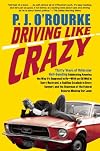
Driving Like Crazy: Thirty Years of Vehicular Hell-Bending Celebrating America the Way It's Supposed to Be—With an Oil Well in Every Backyard, a Cadillac Escalade in Every… (2009) 229 copies, 7 reviews
American Spectator's Enemies List: A Vigilant Journalist's Plea for a Renewed Red Scare (1996) 150 copies, 3 reviews
The Baby Boom: How It Got That Way (And It Wasn’t My Fault) (And I’ll Never Do It Again) (2014) 121 copies, 7 reviews
The Funny Stuff: The Official P. J. O’Rourke Quotationary and Riffapedia (2022) 11 copies, 3 reviews
Eight little civics lessons 1 copy
Speed fast reading 1 copy
25 Years of P. J. O'Rourke 1 copy
The New Enemies List 1 copy
Associated Works
For the Love of Books: 115 Celebrated Writers on the Books They Love Most (1999) — Contributor — 478 copies, 4 reviews
There's No Toilet Paper on the Road Less Traveled: The Best of Travel Humor and Misadventure (1998) — Contributor — 217 copies, 5 reviews
Writers on Writing, 2: More Collected Essays from the New York Times (2003) — Contributor — 200 copies, 3 reviews
Backward Ran Sentences: The Best of Wolcott Gibbs from the New Yorker (2011) — Foreword — 85 copies, 12 reviews
National Lampoon 1964 High School Yearbook: 39th Reunion Edition (2003) — Contributor — 82 copies, 1 review
Wait Wait...Don't Tell Me! The Oddly Informative News Quiz (2002) — Contributor — 78 copies, 2 reviews
Very seventies : a cultural history of the 1970s, from the pages of Crawdaddy (1995) — Contributor — 27 copies
Rolling Stone Australia #534 — some editions — 1 copy
Tagged
Common Knowledge
- Canonical name
- O'Rourke, P. J.
- Legal name
- O'Rourke, Patrick Jake
- Birthdate
- 1947-11-14
- Date of death
- 2022-02-15
- Gender
- male
- Education
- Miami University (B.A.|1969)
Johns Hopkins University (MA ∙ 1970) - Occupations
- editor
journalist - Organizations
- National Lampoon
Rolling Stone
Cato Institute
The Atlantic Monthly
The Weekly Standard
The Daily Beast - Relationships
- O'Rourke, Tina (wife)
- Cause of death
- cancer (lung, complications)
- Nationality
- USA
- Birthplace
- Toledo, Ohio, USA
- Places of residence
- Sharon, New Hampshire, USA
Washington, D.C., USA - Place of death
- Sharon, New Hampshire, USA
- Associated Place (for map)
- USA
Members
Reviews
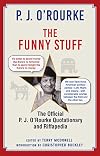
In his introduction to P.J. O'Rourke's “The Funny Stuff,” a collection of brief excerpts from O'Rourke's writings, Christopher Buckley describes the selection of these quotations as being like plucking "one low-hanging fruit after another." In other words, what could be easier than finding funny things P.J. O'Rourke wrote?
When I read that, I agreed with it, for I have read a number of O'Rourke books and laughed my way through each of them. Yet after finishing this book, I found that I show more disagreed. So what went wrong?
The main problem, I think, is that O'Rourke's lines are funnier in context than standing alone. There are exceptions, of course:
"There is only one hard-and-fast rule about the place to have a party: someone else's place."
"If you run more than twenty miles a week, try not to die young, It will make people snigger."
"El Salvador has the scenery of northern California and the climate of southern California plus — and this was a relief — no Californians."
"Freedom of speech is important — if you have anything to say. I've checked the Internet; nobody does."
Yet so many of the lines quoted were, I'm sure, much more amusing in the context of the book or article in which they are found. They are like the punch lines without the jokes.
And many of the excerpts collected by Terry McDonell, the editor, are not really funny at all, but just good examples of clever writing, even witty writing, but not knee-slapping stuff. Here is a sample about Tanzania" "Probably every child whose parents weren't rich enough has been told, 'We're rich in other ways.' Tanzania is fabulously rich in other ways." That's a great line, but I wouldn't call it funny.
I enjoyed “The Funny Stuff” very much, but I think I would have called it “The Good Stuff.” show less
When I read that, I agreed with it, for I have read a number of O'Rourke books and laughed my way through each of them. Yet after finishing this book, I found that I show more disagreed. So what went wrong?
The main problem, I think, is that O'Rourke's lines are funnier in context than standing alone. There are exceptions, of course:
"There is only one hard-and-fast rule about the place to have a party: someone else's place."
"If you run more than twenty miles a week, try not to die young, It will make people snigger."
"El Salvador has the scenery of northern California and the climate of southern California plus — and this was a relief — no Californians."
"Freedom of speech is important — if you have anything to say. I've checked the Internet; nobody does."
Yet so many of the lines quoted were, I'm sure, much more amusing in the context of the book or article in which they are found. They are like the punch lines without the jokes.
And many of the excerpts collected by Terry McDonell, the editor, are not really funny at all, but just good examples of clever writing, even witty writing, but not knee-slapping stuff. Here is a sample about Tanzania" "Probably every child whose parents weren't rich enough has been told, 'We're rich in other ways.' Tanzania is fabulously rich in other ways." That's a great line, but I wouldn't call it funny.
I enjoyed “The Funny Stuff” very much, but I think I would have called it “The Good Stuff.” show less
P J O'Rourke - he of Republican Party Reptile - is a gifted, witty and acerbic writer but one whose views, even when on his mettle, one should take wth a pinch of salt: more useful as an antidote to loony-tunes leftie thinking than as a properly constructive conservative alternative. As with all politically committed writers, left or right, his core analysis tends to be glib: the brushstrokes with which he paints the world are vigorous but, like many paintings that look good at a distance, show more they don't always bear close examination.
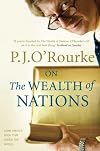
Expounding on Adam Smith's classic The Wealth of Nations, then, O'Rourke both is and isn't on home turf. *Is* in that, superficially, Smith is the godfather of O'Rourke's libertarian, optimistic, Republican brand of economics in observing that the natural opposition of interests of buyers and sellers is a functional tension such that folks left to their own devices will, quite without meaning to, generally act is a way which is constructive and efficient in its allocation of resources. *Isn't* in that O'Rourke is a journalist and a polemicist not an economist, much less a moral philosopher (though to give him credit he makes no bones whatever about that) and Smith's 900 page tome is a far more nuanced volume than its hackneyed headline about the invisible hand - which is all most of us know about it: hence O'Rourke's book - suggests.
To his credit, also, O'Rourke has also spent time assimlating Smith's companion (and much less well known) volume A Theory of Moral Sentiments, and does some good work to contextualise Wealth of Nations by reference to it.
All the same, O'Rourke's simplistic economic viewpoint - and sardonic air - remain untroubled by Smith's nuance, and at times this entry drifts closer to representing O'Rourke's own theory of the Wealth of Nations rather than considering Smith's. Most readers will have far less interest in that, no matter how funny it might be, particularly as O'Rourke has had a go at that book already, a decade ago, in Eat the Rich: A Treatise on Economics, and more particularly because on this outing O'Rourke's wit isn't as sharp, nor his insight as valuable, as it can be.
In any case you can be sure that P J O'Rourke wouldn't need 900 pages to expound his theory. You could write it on a cocktail napkin (Eat The Rich notwithstanding), and for all his praise of Adam Smith's pragmatism in the face of ideologically driven idealism (anachronistic though it may be, at the time of publication the dread socialism being still a good century and more hence) O'Rourke's laissez-faire view of the world is as idealistic as any, supposing as it does perfectly rational actors, a complete absence of government, ubiquity of perfect information and an omnipresent infinity of buyers and sellers, and (as we can now say in November 2008 with 20:20 hindsight) just as flawed: there are, we know know, times where even perfectly rational actors simply won't act and in these times the invisible hand without so much as a by-your-leave vanishes altogether and the only credible mechanic left to deal with the black swans carousing about is good old nanny state. And Warren Buffett.
This is by no means a bad book, and for those interested in a *somewhat* deeper reading of The Wealth Of Nations, more pleasant than the one that can be had by actually reading it, step forward - but bring that salt cellar. For this P J O'Rourke book more than any, you'll be needing it. show less
Expounding on Adam Smith's classic The Wealth of Nations, then, O'Rourke both is and isn't on home turf. *Is* in that, superficially, Smith is the godfather of O'Rourke's libertarian, optimistic, Republican brand of economics in observing that the natural opposition of interests of buyers and sellers is a functional tension such that folks left to their own devices will, quite without meaning to, generally act is a way which is constructive and efficient in its allocation of resources. *Isn't* in that O'Rourke is a journalist and a polemicist not an economist, much less a moral philosopher (though to give him credit he makes no bones whatever about that) and Smith's 900 page tome is a far more nuanced volume than its hackneyed headline about the invisible hand - which is all most of us know about it: hence O'Rourke's book - suggests.
To his credit, also, O'Rourke has also spent time assimlating Smith's companion (and much less well known) volume A Theory of Moral Sentiments, and does some good work to contextualise Wealth of Nations by reference to it.
All the same, O'Rourke's simplistic economic viewpoint - and sardonic air - remain untroubled by Smith's nuance, and at times this entry drifts closer to representing O'Rourke's own theory of the Wealth of Nations rather than considering Smith's. Most readers will have far less interest in that, no matter how funny it might be, particularly as O'Rourke has had a go at that book already, a decade ago, in Eat the Rich: A Treatise on Economics, and more particularly because on this outing O'Rourke's wit isn't as sharp, nor his insight as valuable, as it can be.
In any case you can be sure that P J O'Rourke wouldn't need 900 pages to expound his theory. You could write it on a cocktail napkin (Eat The Rich notwithstanding), and for all his praise of Adam Smith's pragmatism in the face of ideologically driven idealism (anachronistic though it may be, at the time of publication the dread socialism being still a good century and more hence) O'Rourke's laissez-faire view of the world is as idealistic as any, supposing as it does perfectly rational actors, a complete absence of government, ubiquity of perfect information and an omnipresent infinity of buyers and sellers, and (as we can now say in November 2008 with 20:20 hindsight) just as flawed: there are, we know know, times where even perfectly rational actors simply won't act and in these times the invisible hand without so much as a by-your-leave vanishes altogether and the only credible mechanic left to deal with the black swans carousing about is good old nanny state. And Warren Buffett.
This is by no means a bad book, and for those interested in a *somewhat* deeper reading of The Wealth Of Nations, more pleasant than the one that can be had by actually reading it, step forward - but bring that salt cellar. For this P J O'Rourke book more than any, you'll be needing it. show less
Driving Like Crazy: Thirty Years of Vehicular Hell-Bending, Celebrating America the Way It's Supposed To Be - With an Oil Well in Every Backyard, a ... of the Federal Reserve Mowing Our Lawn by P. J. O'Rourke
“Fun saves us from political dictatorship.” — P.J. O'Rourke, “Driving Like Crazy”
Conservative political humorist P.J. O'Rourke has always regarded cars in general and driving cars in particular as fun. Thus the above line from his 2009 book “Driving Like Crazy” nicely combines two of the main themes of his writing life into one pithy declaration.
Although the book includes a few digs at the likes of Sarah Palin, Barack Obama and the Bushes, his main focus throughout is cars and show more how much fun they are.
Besides being a political writer, O'Rourke has also written frequently for car magazines and for other magazines on the subject of cars. Most of the chapters in his book originally appeared as magazine articles or are based on articles he has written. He gives readers no notice of this beforehand, which could cause some readers to get no further than the first chapter, a celebration of the youthful pleasures of driving fast while drinking to excess, doing drugs and having wild sex. This is a satire he wrote years ago for National Lampoon, but he doesn't tell us this until later.
Most chapters concern test drives or endurance races through difficult areas, such as India and Baja California. In each case there are problems aplenty, sometimes mechanical and sometimes not, and there would be a sameness to these accounts except that O'Rourke's jokes are always different. And if O'Rourke drives cars for fun, we read his books for fun.
Here's a sample of his wit about the Jeep: "My personal theory about the visceral appeal of the Jeep is that it is purposeful-looking while having no clear purpose. The Jeep is inadequate as a pickup, drafty as a sedan, oversized as an ATV, and lacks sufficient cargo space to be an SUV. True, Jeeps will go almost everyplace but, if you think about it, Jeeps mostly go everyplace there's no reason to go."
Then there's this comment he makes, in an interview at the end of the book, about the federal government subsidizing General Motors: "Governments have monopolies on certain things, like eminent domain and deadly force. What's another example of an organization that gets into the same business that you're in, except that their guys have got guns? That would be the Mob."
There he goes again. Cars and politics. show less
Conservative political humorist P.J. O'Rourke has always regarded cars in general and driving cars in particular as fun. Thus the above line from his 2009 book “Driving Like Crazy” nicely combines two of the main themes of his writing life into one pithy declaration.
Although the book includes a few digs at the likes of Sarah Palin, Barack Obama and the Bushes, his main focus throughout is cars and show more how much fun they are.
Besides being a political writer, O'Rourke has also written frequently for car magazines and for other magazines on the subject of cars. Most of the chapters in his book originally appeared as magazine articles or are based on articles he has written. He gives readers no notice of this beforehand, which could cause some readers to get no further than the first chapter, a celebration of the youthful pleasures of driving fast while drinking to excess, doing drugs and having wild sex. This is a satire he wrote years ago for National Lampoon, but he doesn't tell us this until later.
Most chapters concern test drives or endurance races through difficult areas, such as India and Baja California. In each case there are problems aplenty, sometimes mechanical and sometimes not, and there would be a sameness to these accounts except that O'Rourke's jokes are always different. And if O'Rourke drives cars for fun, we read his books for fun.
Here's a sample of his wit about the Jeep: "My personal theory about the visceral appeal of the Jeep is that it is purposeful-looking while having no clear purpose. The Jeep is inadequate as a pickup, drafty as a sedan, oversized as an ATV, and lacks sufficient cargo space to be an SUV. True, Jeeps will go almost everyplace but, if you think about it, Jeeps mostly go everyplace there's no reason to go."
Then there's this comment he makes, in an interview at the end of the book, about the federal government subsidizing General Motors: "Governments have monopolies on certain things, like eminent domain and deadly force. What's another example of an organization that gets into the same business that you're in, except that their guys have got guns? That would be the Mob."
There he goes again. Cars and politics. show less
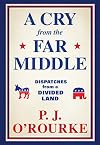
The change from the Trump to Biden presidency was the perfect time to read this book. It was written before the 2020 election and, true to O'Rourke, he points out the ridiculousness in both candidates, parties, and the system. He is fair about what does work (little) and even finds a bright side to the partisan bickering. The discussion of Coastals vs. Heartlanders is spot on and his explanation of the Electoral College is spot on. The discussion of Patriotism vs. Nationalism should be show more included in civics books. The social media analysis is unapologetically "Ok Boomer" and his analysis of socialism reflects the wisdom of a journalist who has visited the socialist "ideals" in their prime and afterwards. O'Rourke's writing style is witty, insightful, and filled with so many literary and cultural references that provide an extra reward for the reader. show less
Lists
Awards


You May Also Like


Associated Authors
Statistics
- Works
- 46
- Also by
- 22
- Members
- 12,030
- Popularity
- #1,951
- Rating
- 3.6
- Reviews
- 179
- ISBNs
- 304
- Languages
- 11
- Favorited
- 43
