
Al Franken
Author of Lies and the Lying Liars Who Tell Them: A Fair and Balanced Look at the Right
About the Author
Al Franken was born in 1951 and grew up in Minnesota. He got his start in show business in high school, when he began performing stand-up comedy. He attended Harvard University, but his comic talent went unrecognized by the school's famous Harvard Lampoon, which rejected him. Undaunted, Franken show more continued to do stand-up with a friend from high school, Tom Davis. Franken and Davis became celebrities when Lorne Michaels discovered their act and hired them for his new show, Saturday Night Live. In addition to doing the stand-up, Franken wrote many funny skits, including Chevy Chase's famous Gerald Ford bits, and created memorable characters like Stuart Smalley. Franken's ability to write comedy translated into a best-selling success with his political satire, Rush Limbaugh is a Big Fat Idiot. The book has sold almost one million copies. His other books include The Truth (with jokes), and Al Franken, Giant of the Senate. Franken was elected to the U. S. Senate representing Minnesota in 2009. (Bowker Author Biography) show less
Works by Al Franken
Lies and the Lying Liars Who Tell Them: A Fair and Balanced Look at the Right (2003) 4,721 copies, 68 reviews
Why Not Me?: The Inside Story of the Making and Unmaking of the Franken Presidency (1999) 450 copies, 5 reviews
I'm Good Enough, I'm Smart Enough, and Doggone It, People Like Me!: Daily Affirmations By Stuart Smalley (1992) 136 copies, 2 reviews
Associated Works
This Is My Best: Great Writers Share Their Favorite Work (2004) — Contributor — 175 copies, 3 reviews
Thirty-Nine Years of Short-Term Memory Loss: The Early Days of SNL from Someone Who Was There (2009) — Foreword — 84 copies, 3 reviews
Still More George W. Bushisms: Neither in French, Nor in English, Nor in Mexican (2003) — Foreword — 78 copies
Air America: The Playbook: What a Bunch of Left Wing Media Types have to Say about a World Gone Right (2006) — Introduction; Contributor — 44 copies, 2 reviews
The Raw Deal: How the Bush Republicans Plan to Destroy Social Security and the Legacy of the New Deal (2005) — Foreword — 23 copies, 1 review
Tagged
Common Knowledge
- Canonical name
- Franken, Al
- Legal name
- Franken, Alan Stuart
- Birthdate
- 1951-05-21
- Gender
- male
- Education
- Harvard University (BA|General Studies|1973)
- Occupations
- comedian
actor
screenwriter
U.S. Senator (Minnesota ∙ 2008- ∙ Democrat)
essayist
politician - Organizations
- U.S. Senate
Air America - Nationality
- USA
- Birthplace
- New York, New York, USA
- Places of residence
- New York, New York, USA (birth)
St. Louis Park, Minnesota, USA - Map Location
- New York, USA
Members
Discussions
Alec Baldwin and Al Franken in Pro and Con (July 2019)
Franken awarded victory in Minnesota in Pro and Con (July 2009)
Reviews
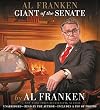
There is absolutely only one way to read Al Franken, Giant of the Senate, and that is in audiobook form, read by The Honorable Alan Stuart Franken himself. As anyone who’s ever read Rush Limbaugh Is a Big Fat Idiot: And Other Observations or Lies: And the Lying Liars Who Tell Them: A Fair and Balanced Look at the Right already knows, the book is, of course, hilarious. But, more importantly, Franken gives a mostly unvarnished look at what it’s like to run for office and to toil in the show more Senate. Even those who aren’t policy wonks will enjoy this one. show less
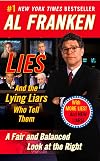
"Grown-up love means actually understanding what you love, taking the good with the bad and helping your loved one grow.”
― Al Franken, Lies & the Lying Liars Who Tell Them: A Fair & Balanced Look at the Right
4.5 stars.
I guess one's enjoyment of this depends on how much they like Al Franken.
This was the first book I’ve read by him and I found it to be a warm, human and utterly hilarious read. Al takes on FOX News in this this book, in particular Bill O’Reilly.
This book has a very show more interesting back story as supposedly Fox News sued Franken in court over the words "Fair and Balanced" which I find to be utterly hysterical. And yes it is discussed in the book.
I suppose I can see why conservatives might get pissed off at this book but even if you’re not an ultra liberal this does make for fun reading.
Franken brings up a lot of things that are really on point. George Bush was president when this came out. Franken brings his wit through the book, to be sure, but the thing is: lots of stuff in this book make so much sense. I loved his "Lawyer and the waitress" story.
I personally love reading political nonfiction books to get all viewpoints and I happen to be a fan of Franken. If you are seeking a good political Non Fiction book, this is a great one AND there is nothing about Trump because he was a long way from being president when this came out. (Sigh..resisting the urge to say something Snarky about now).
Whatever your views on Franken, he is not and never has been, boring. And he just makes one laugh while at the same time making you think. I would give this 4.5 stars. Highly recommended. show less
― Al Franken, Lies & the Lying Liars Who Tell Them: A Fair & Balanced Look at the Right
4.5 stars.
I guess one's enjoyment of this depends on how much they like Al Franken.
This was the first book I’ve read by him and I found it to be a warm, human and utterly hilarious read. Al takes on FOX News in this this book, in particular Bill O’Reilly.
This book has a very show more interesting back story as supposedly Fox News sued Franken in court over the words "Fair and Balanced" which I find to be utterly hysterical. And yes it is discussed in the book.
I suppose I can see why conservatives might get pissed off at this book but even if you’re not an ultra liberal this does make for fun reading.
Franken brings up a lot of things that are really on point. George Bush was president when this came out. Franken brings his wit through the book, to be sure, but the thing is: lots of stuff in this book make so much sense. I loved his "Lawyer and the waitress" story.
I personally love reading political nonfiction books to get all viewpoints and I happen to be a fan of Franken. If you are seeking a good political Non Fiction book, this is a great one AND there is nothing about Trump because he was a long way from being president when this came out. (Sigh..resisting the urge to say something Snarky about now).
Whatever your views on Franken, he is not and never has been, boring. And he just makes one laugh while at the same time making you think. I would give this 4.5 stars. Highly recommended. show less
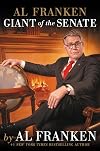
It is terribly important that the most trusted figures in American politics right now are comedians: Al Franken, Jon Stewart, Stephen Colbert. It is important that our newest president has only ever actually been professionally successful as a television character.
Don't get me wrong: I don't think actors, performers, and certainly not writers are somehow less valid as elected officials. While the primary business of senators and congress people is lawmaking, I recognize that they themselves show more don't (possibly ever anymore) write the laws; federal laws are written by interested parties, think tanks, and congressional staff. So it isn't necessary to be a lawyer in order to shape laws. What is necessary: I think a broad, general interest is good; literacy is useful; the ability to listen is huge; one has to judge sources, because I'm sure there's never less than two sides to any issue, and all of them purport to have data backing them up, of which some must be less valid or useful than others; a willingness to admit ignorance and to learn is key, because no one is an expert in everything, and hastily-formed judgements are unlikely to result in successful solutions to complex problems. And of course, one has to be able to work with many difficult people, but that's true of all work, isn't it? That list of qualities leaves previous work experience pretty open.
It's important that our emperor is naked, and that as many people as possible are pointing at the bare ass he's waggling at us, and laughing. It's not possible to bring him down by arguing with him or fact-checking him: he's a shameless liar, he just makes shit up, most of his shtick is just childish insults. You can't argue with him. He doesn't believe in the idea of a fair fight. But you can point and laugh: he has no defense against mockery.
Franken is a mensch. I would give that man an organ I can't spare, secure in the knowledge that he would use it only for good. He is everything one could hope for in an elected representative, just once I would like to vote for someone who was so progressive and also so pragmatic. Harvard has gone up in my esteem by being Franken's alma mater. If you've never read any of Franken's political books you're in for a treat.
Library copy show less
Don't get me wrong: I don't think actors, performers, and certainly not writers are somehow less valid as elected officials. While the primary business of senators and congress people is lawmaking, I recognize that they themselves show more don't (possibly ever anymore) write the laws; federal laws are written by interested parties, think tanks, and congressional staff. So it isn't necessary to be a lawyer in order to shape laws. What is necessary: I think a broad, general interest is good; literacy is useful; the ability to listen is huge; one has to judge sources, because I'm sure there's never less than two sides to any issue, and all of them purport to have data backing them up, of which some must be less valid or useful than others; a willingness to admit ignorance and to learn is key, because no one is an expert in everything, and hastily-formed judgements are unlikely to result in successful solutions to complex problems. And of course, one has to be able to work with many difficult people, but that's true of all work, isn't it? That list of qualities leaves previous work experience pretty open.
It's important that our emperor is naked, and that as many people as possible are pointing at the bare ass he's waggling at us, and laughing. It's not possible to bring him down by arguing with him or fact-checking him: he's a shameless liar, he just makes shit up, most of his shtick is just childish insults. You can't argue with him. He doesn't believe in the idea of a fair fight. But you can point and laugh: he has no defense against mockery.
Franken is a mensch. I would give that man an organ I can't spare, secure in the knowledge that he would use it only for good. He is everything one could hope for in an elected representative, just once I would like to vote for someone who was so progressive and also so pragmatic. Harvard has gone up in my esteem by being Franken's alma mater. If you've never read any of Franken's political books you're in for a treat.
Library copy show less
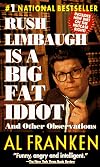
Some political humor does not age well, especially when it focuses strongly on specific individuals. That is not the case here. This book is as fresh and relevant as ever, and to me, funnier than when I first read it- although that has a lot to do with the fact that when it was new, I was 13 and only reading it because I knew Franken's name from SNL. Not only Rush but many others in this book are still prominent and still as deserving of mockery as ever, including but not limited to Newt, show more Pat Buchannan, and the now-Governor of Ohio Kasich. The only part of this book that feels dated is when Franken says he could never go into politics (due to his inability to write a good sports metaphor). show less
Lists
Awards


You May Also Like


Associated Authors
Statistics
- Works
- 16
- Also by
- 12
- Members
- 10,383
- Popularity
- #2,290
- Rating
- 3.8
- Reviews
- 203
- ISBNs
- 100
- Languages
- 7
- Favorited
- 23


