
John Keay
Author of India: A History
About the Author
John Keay is a historian write, and world-downed South Asia expert. He is the author of nineteen books, including Into India, India Discovered, and China: A History.
Disambiguation Notice:
(fl. 1941-2022).
Series
Works by John Keay
The Great Arc: The Dramatic Tale of How India Was Mapped and Everest Was Named (2000) 411 copies, 11 reviews
When Men and Mountains Meet: The Explorers of the Western Himalayas 1820-1875 (1977) 81 copies, 2 reviews
Eccentric Travellers: Excursions with Seven Extraordinary Figures from the Eighteenth and Nineteenth Centuries (1982) — Author — 66 copies
Giant Book of Exploration 4 copies
India: A History Volume II 1 copy
India: A History Volume I 1 copy
The Mammoth Book of Travel in Dangerous Places: Siberia and Alaska (Mammoth Books 352) (2012) 1 copy
História da Índia 1 copy
The Silk Road 1 copy
Associated Works
Tagged
Common Knowledge
- Birthdate
- 1941-09-18
- Gender
- male
- Education
- University of Oxford (Modern History)
Ampleforth College - Occupations
- journalist (The Economist ∙ 1966-1971)
author
broadcaster - Awards and honors
- Sir Percy Sykes Memorial Medal (2009)
Royal Geographical Society (fellow) - Relationships
- Keay, Julia (wife)
Keay, Anna (daughter) - Short biography
- Born in 1941 in Devon, England, Keay was educated at Ampleforth College, York and Magdalen College, Oxford, where he was a demy (scholar) in Modern History. His tutors included the historian A J P Taylor and the playwright Alan Bennett. He first visited India in 1965 and has been returning there about every two years ever since. After a brief spell as a political correspondent (The Economist), he assisted in the revision of the last edition of John Murray's Handbook to India, Pakistan, Nepal, Bangladesh and Sri Lanka (1975) and wrote Into India, his first book.
- Nationality
- UK
- Birthplace
- Barnstaple, Devon, England, UK
- Places of residence
- Barnstaple, Devon, England, UK (birth)
China
Scotland, UK - Disambiguation notice
- (fl. 1941-2022).
- Associated Place (for map)
- UK
Members
Discussions
Folio Archives 318: The Spice Route by John Keay 2005 in Folio Society Devotees (April 2023)
Keay’s China in Folio Society Devotees (October 2021)
Reviews
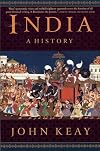
This was a bloated read. Even for a History book. This is a subject that needs to be broken down much more that what the author put out. It seems there was way too much random meandering. On the positive side. It is informative and detailed. I walked away from it knowing more than when I started...and after all that is the point of reading books such as this. It is ironic how the author states that Alexander is just a footnote to the History of India from their own point of view. But show more nevertheless his presence and the fact that he was there made a huge difference. The roads he opened up, wherever he went, became integral to the future of said places. show less
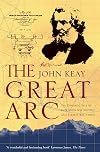
I whizzed through this in about two nights and didn't find it at all dry. Now I'm a sucker for Georgian technology and especially surveying, but this should appeal to anyone interested in map making, Ripping Yarns, or just the history of India. Whether it was from losing surveyors to fevers, to Fear Of Tigers, or to the bullying of the project manager, this was a difficult and impressive achievement. While reading it I realised that I already knew a lot about the surveying (personally I'd show more have enjoyed a book twice this size, with more technical detail), but so little about Indian geography and its colonisation by the British. Another gap to fill, so I should find a copy of Keay's 'History of India'.
And then there's Eve-rest himself. One of the least known figures to have such a massive geographical feature named after him. One can hardly take to the chap though, and Lambton surely deserves an equal memorial. show less
And then there's Eve-rest himself. One of the least known figures to have such a massive geographical feature named after him. One can hardly take to the chap though, and Lambton surely deserves an equal memorial. show less
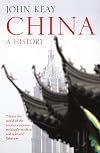
Definitely from the one damned thing after another school of history the author concentrates solely on the dynastic succession and military struggles accompanying it. I don't blame him since that reflects the sources available. Still, he's quite happy to report fiction, albeit with numerous and copious amounts of caveats. Fate of common people is hardly even a backdrop for these dynastic shenanigans at the top. How about offering some informed guesses if fictional accounts are enough for the show more dynastic history? There is also an assumption you are already familiar with the culture, geography and basic history of China. show less
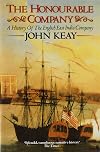
This is a marvellous book, detailing the history of a company that can be said to have changed world history. As John Keay has remarked, without the Honourable Company, there probably would have been no British Raj.
It is indeed a complex history, and he does a remarkable job in deftly pulling all the strings together to create a coherent story.
It is indeed amazing that a group of traders made their way into Asia, set up trading stations, and slowly started to create strong bases for show more themselves. From these stations, they went on to create armies to protect their bases, and then used these armies to gain power.
There is a lot of glory here, a lot of intrigue, a lot of power play. While we can criticise the East India Company, in retrospect, there can be no doubt that they were a bunch of pioneering men who came to Asia to create bastions of trade and power.
The breakup was inevitable, and John Keay clealy writes about how the mandate that the company received was slowly reduced and eventually taken away, and that the territories soon became a part of the Raj.
A brilliant story, well written. show less
It is indeed a complex history, and he does a remarkable job in deftly pulling all the strings together to create a coherent story.
It is indeed amazing that a group of traders made their way into Asia, set up trading stations, and slowly started to create strong bases for show more themselves. From these stations, they went on to create armies to protect their bases, and then used these armies to gain power.
There is a lot of glory here, a lot of intrigue, a lot of power play. While we can criticise the East India Company, in retrospect, there can be no doubt that they were a bunch of pioneering men who came to Asia to create bastions of trade and power.
The breakup was inevitable, and John Keay clealy writes about how the mandate that the company received was slowly reduced and eventually taken away, and that the territories soon became a part of the Raj.
A brilliant story, well written. show less
Lists
Awards


You May Also Like


Associated Authors
Statistics
- Works
- 38
- Also by
- 8
- Members
- 4,933
- Popularity
- #5,093
- Rating
- 3.8
- Reviews
- 66
- ISBNs
- 158
- Languages
- 7
- Favorited
- 2

