
Patrick French (1966–2023)
Author of The World Is What It Is: The Authorized Biography of V. S. Naipaul
About the Author
Works by Patrick French
Epic Of Mount Everest 2 copies
Tibet,Tibet 1 copy
Associated Works
Tagged
Common Knowledge
- Birthdate
- 1966-03-05
- Date of death
- 2023-03-16
- Gender
- male
- Education
- University of Edinburgh (literature)
- Occupations
- historian
biographer
academic - Cause of death
- cancer
- Nationality
- UK
- Associated Place (for map)
- UK
Members
Reviews
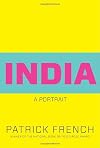
India: A Portrait by Patrick French
This has sat on my shelf for a couple of years for reasons that I can't entirely explain. Having now completed it (in audiobook form from the library) it should not have sat as long as it did. I acquired the book based on French's excellent biography of Younghusband, one of those classic British Imperial explorers who filled in the dark corners of the map and risked life and limb to do so.
India: A Portrait is a deep dive into modern India. The book was show more published in 2011 and traces India from partition forward to the most recent elections. The political diversity of India is staggering. French does an excellent job of tracking down and interviewing Indians from wildly divergent lives and locales. For example, French interviews some of the leaders of India's Maoist party that has been fighting a guerrilla war against the Indian state for decades. Prior to reading this book I had no idea about this insurgency much less about the obscure connection to Maoism and how the Indian insurgents persist in their veneration of Mao's principals even though they have been long discarded by the Chinese.
French does an excellent job of connecting modern political thought in India with the experience of the country. Whether it the impact of partition on various refugee groups, the rise of puritan Islam in Pakistan at the expense of traditional Sufism, or the impact of caste post constitution attempts to abolish the caste system, French provides the history, the evolution and the modern expression of these influences. In doing so, he gives the reader a broad but detailed overview of present day India.
Most books that I have read about India have dealt more with historical India than modern India. I think it is useful to have a solid understanding of historical India, particularly the Raj as it had an outsized impact on modern India, and you get only glimpses of that history from this book. This is not a criticism per se - had French included that information it would have made for a massive tome that distracted from its primary goal of examining modern India. As written India: A Portrait is the best book about modern day India that I have read. Well worth the read if you have an interest in where India is today and where it is likely to go in the future.
Edit | More show less
This has sat on my shelf for a couple of years for reasons that I can't entirely explain. Having now completed it (in audiobook form from the library) it should not have sat as long as it did. I acquired the book based on French's excellent biography of Younghusband, one of those classic British Imperial explorers who filled in the dark corners of the map and risked life and limb to do so.
India: A Portrait is a deep dive into modern India. The book was show more published in 2011 and traces India from partition forward to the most recent elections. The political diversity of India is staggering. French does an excellent job of tracking down and interviewing Indians from wildly divergent lives and locales. For example, French interviews some of the leaders of India's Maoist party that has been fighting a guerrilla war against the Indian state for decades. Prior to reading this book I had no idea about this insurgency much less about the obscure connection to Maoism and how the Indian insurgents persist in their veneration of Mao's principals even though they have been long discarded by the Chinese.
French does an excellent job of connecting modern political thought in India with the experience of the country. Whether it the impact of partition on various refugee groups, the rise of puritan Islam in Pakistan at the expense of traditional Sufism, or the impact of caste post constitution attempts to abolish the caste system, French provides the history, the evolution and the modern expression of these influences. In doing so, he gives the reader a broad but detailed overview of present day India.
Most books that I have read about India have dealt more with historical India than modern India. I think it is useful to have a solid understanding of historical India, particularly the Raj as it had an outsized impact on modern India, and you get only glimpses of that history from this book. This is not a criticism per se - had French included that information it would have made for a massive tome that distracted from its primary goal of examining modern India. As written India: A Portrait is the best book about modern day India that I have read. Well worth the read if you have an interest in where India is today and where it is likely to go in the future.
Edit | More show less

Great writers are not always great men. In fact, it has been claimed that The world is what it is. The authorized biography of V.S. Naipaul "reveals the true monster in V. S. Naipaul". Indeed, reading this biography you will experience a staggering mount of surprise, as you gradually realize what an awful person V. S. Naipaul obviously is. His abominable behaviour is described in so much detail and at such length, that one wonders whether or not Naipaul has ever considered retracting his show more authorization. The facts about the personal life of V. S. Naipaul that are revealed are truly shocking.
Patrick French has written an excellent biography of V. S. Naipaul. It is all there, for all to see. Without any moralizing comments, which essentially shows that the biographer is a man of his time. Perhaps that is what appealed to V. S. Naipaul in working with Patrick French as his biographer, as it is clearly not only a display of great skill, but also of great courage, for a relatively young biographer to write such a daring book about a Nobel Prize winner.
It is obvious, that V. S. Naipaul, the man, has a very unpleasant side to his character. He is shown to drop his friends, even claim they never were his friends, or speak evil about the behind their backs, while his relations with women raise eyebrows in most observers. The biographer neither comments, nor asks the women for their point of view. To a very large extent, Naipaul is described as an essentially very selfish, and self-centred personality, but the biography also shows that perhaps that was needed for the worm to crawl out of the mud. The women he used, after all, gave themselves to him. It is almost as if Naipaul is never out of the role of the author, and that both in his work and in the world he is the creator. For a better understanding of this contradiction, it may be useful to read Naipaul's A writer's people. Ways of looking and feeling, a collection of autobiographical essays, which came out in the same year as the biography.
The history of Naipaul's authorship, from the humble beginnings, coming to London and start plodding at a career in writing are all meticulously described, in the right amount of detail for the reader to remain fully engaged. Coming from the perifery of empire, Naipaul had a difficult start to find his niche in British literature, and from thence develop into a world class writer. This was possible, as he gradually realized and turned towards his Indian roots, and wrote his first book about India, An Area of Darkness. This book is a very direct, frontal attack on India, describing the country in such negative terms that it was banned.
According to French, the great strength of Naipaul is that he developed an entirely personal style, and with forceful callousness vent his opinion or view on anything, particularly in racial and post-colonial matters. Thus, Naipaul made himself eyed suspiciously by people from developing countries all over the world, as he bluntly exposed the way many immigrants, and former colonial people pay lip service to independence, but blame former colonizers for their own weaknesses and corruption, relinquishing their responsibility behind a smoke screen of victimhood. This was an unheard of view, particularly in the 1960s, when academia began embracing and pampering all abused minorities.
Long before the desastrous developments at the turn of the century, V.S. Naipaul turned to study Islam, and noticed the sprouting of Moslem fundamentalism, in several travelogues he wrote, exploring the Moslem diaspora in South and Southeast Asia.
Readers who can separate the man from his work, will find The world is what it is. The authorized biography of V.S. Naipaul a very biography. The description of the development of his literary oevre, shows Naipaul as a visionary, in terms of authorship, a man ahead of his time, perhaps even by such a great measure that the ultimate significance of his work is still not clear to contemporary readers. show less
Patrick French has written an excellent biography of V. S. Naipaul. It is all there, for all to see. Without any moralizing comments, which essentially shows that the biographer is a man of his time. Perhaps that is what appealed to V. S. Naipaul in working with Patrick French as his biographer, as it is clearly not only a display of great skill, but also of great courage, for a relatively young biographer to write such a daring book about a Nobel Prize winner.
It is obvious, that V. S. Naipaul, the man, has a very unpleasant side to his character. He is shown to drop his friends, even claim they never were his friends, or speak evil about the behind their backs, while his relations with women raise eyebrows in most observers. The biographer neither comments, nor asks the women for their point of view. To a very large extent, Naipaul is described as an essentially very selfish, and self-centred personality, but the biography also shows that perhaps that was needed for the worm to crawl out of the mud. The women he used, after all, gave themselves to him. It is almost as if Naipaul is never out of the role of the author, and that both in his work and in the world he is the creator. For a better understanding of this contradiction, it may be useful to read Naipaul's A writer's people. Ways of looking and feeling, a collection of autobiographical essays, which came out in the same year as the biography.
The history of Naipaul's authorship, from the humble beginnings, coming to London and start plodding at a career in writing are all meticulously described, in the right amount of detail for the reader to remain fully engaged. Coming from the perifery of empire, Naipaul had a difficult start to find his niche in British literature, and from thence develop into a world class writer. This was possible, as he gradually realized and turned towards his Indian roots, and wrote his first book about India, An Area of Darkness. This book is a very direct, frontal attack on India, describing the country in such negative terms that it was banned.
According to French, the great strength of Naipaul is that he developed an entirely personal style, and with forceful callousness vent his opinion or view on anything, particularly in racial and post-colonial matters. Thus, Naipaul made himself eyed suspiciously by people from developing countries all over the world, as he bluntly exposed the way many immigrants, and former colonial people pay lip service to independence, but blame former colonizers for their own weaknesses and corruption, relinquishing their responsibility behind a smoke screen of victimhood. This was an unheard of view, particularly in the 1960s, when academia began embracing and pampering all abused minorities.
Long before the desastrous developments at the turn of the century, V.S. Naipaul turned to study Islam, and noticed the sprouting of Moslem fundamentalism, in several travelogues he wrote, exploring the Moslem diaspora in South and Southeast Asia.
Readers who can separate the man from his work, will find The world is what it is. The authorized biography of V.S. Naipaul a very biography. The description of the development of his literary oevre, shows Naipaul as a visionary, in terms of authorship, a man ahead of his time, perhaps even by such a great measure that the ultimate significance of his work is still not clear to contemporary readers. show less

Lieutenant Francis Younghusband stared forlornly over the edge of the frozen cliff. Wali, mistaking this solemnity for stoicism, began to edge his way out onto an ice ledge. It had not occurred to him to turn back. With a grim ardour, Wali 'hewed steps across the ice slope which led to the precipice,' Younghusband wrote afterwards in a private letter. Without boots, ropes, ice-axes or crampons, Wali was trying to descend an ice precipice. Younghusband decided to follow him. 'I freely confess show more that I myself could never have attempted the descent and that I - an Englishman - was afraid to go first.'
The descent of the Mustagh Pass was to assume a mythic importance in Younghusband's career. I noticed that in old age, his daughter Eileen referred to a crucial turning point in her own life as 'my Mustagh Pass'. This rite of passage, the crossing of the watershed, the baptism of fire, the epiphany of ice, convinced him that he had a special purpose in the world, and was a key moment in the development of his own ambition; he was now an explorer.
Patrick French's travels in Younghusband's footsteps don't intrude too much on the biography, and he successfully conveys how exciting it was to travel through the borderlands of Central Asia in the late 19th century. I can well understand how Younghusband was so keen on wangling himself an exciting role as an explorer, map-maker and spy rather than the more restricted role of a junior army officer.
Younghusband flitted between military and civilian postings and expeditions, which had a deletorious on his career, although his friendship with Lord Curzon the Viceroy of India, meant that he was given some good postings, including the residency of Kashmir late on in his career, even though his actions during the invasion of Tibet had confirmed his reputation in government circles as a loose cannon.
But the main reason that this book is so interesting is that Younghusband never stopped changing. Once he was back in England he didn't sink in to middle age, but became president of the Royal Geographical Society, organised the Everest expeditions of the early 1920s, and was a prolific author of books about both Asia and mysticism. This soldier and explorer, brought up as an Evangelical Protestant, became a mystic after two experiences earlier in his life, and set up the Word Congress of Faiths, was interested in world peace (although never a pacifist), and came to believe strongly in the necessity for Indian Independence.
A fascinating book about a fascinating man, who I'd only vaguely heard of before. show less
The descent of the Mustagh Pass was to assume a mythic importance in Younghusband's career. I noticed that in old age, his daughter Eileen referred to a crucial turning point in her own life as 'my Mustagh Pass'. This rite of passage, the crossing of the watershed, the baptism of fire, the epiphany of ice, convinced him that he had a special purpose in the world, and was a key moment in the development of his own ambition; he was now an explorer.
Patrick French's travels in Younghusband's footsteps don't intrude too much on the biography, and he successfully conveys how exciting it was to travel through the borderlands of Central Asia in the late 19th century. I can well understand how Younghusband was so keen on wangling himself an exciting role as an explorer, map-maker and spy rather than the more restricted role of a junior army officer.
Younghusband flitted between military and civilian postings and expeditions, which had a deletorious on his career, although his friendship with Lord Curzon the Viceroy of India, meant that he was given some good postings, including the residency of Kashmir late on in his career, even though his actions during the invasion of Tibet had confirmed his reputation in government circles as a loose cannon.
But the main reason that this book is so interesting is that Younghusband never stopped changing. Once he was back in England he didn't sink in to middle age, but became president of the Royal Geographical Society, organised the Everest expeditions of the early 1920s, and was a prolific author of books about both Asia and mysticism. This soldier and explorer, brought up as an Evangelical Protestant, became a mystic after two experiences earlier in his life, and set up the Word Congress of Faiths, was interested in world peace (although never a pacifist), and came to believe strongly in the necessity for Indian Independence.
A fascinating book about a fascinating man, who I'd only vaguely heard of before. show less
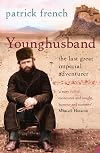
Truth is stranger than fiction... this book is good evidence! He could pack in the crowds in his day, telling yarns of his exploits in remote Central Asia. Not really a household name any more! Sic transit...
The basic puzzle this book works to solve is: how to mesh the early part of Younghusband's life to the later part. In the early part, he was an imperial adventurer, carry the British flag to remote places, along with enough troops to keep it flying. The weak Asiatic races should be happy show more to be ruled by the robust White Man. In the later part, Younghusband is praising Ramakrishna, providing a speaking platform to Suzuki, and recommending that Britain exit India ASAP.
Younghusband had a couple mystical experiences that signaled his transition. But he was traveling everywhere, meeting everyone. Maybe the mystical experiences were simply a way to integrate these experiences into a fresh outlook.
Emerson's slogan "A foolish consistency is the hobgoblin of little minds" fits here, for sure. Younghusband kept moving and never looked back.
One facet of his life... he was practically bankrupt in his later years... well, in his earlier years, too! But that hardly got in his way.
We read here about Charles Lindbergh flying Younghusband around in India. The whole book is like that. Unbelievable but true! show less
The basic puzzle this book works to solve is: how to mesh the early part of Younghusband's life to the later part. In the early part, he was an imperial adventurer, carry the British flag to remote places, along with enough troops to keep it flying. The weak Asiatic races should be happy show more to be ruled by the robust White Man. In the later part, Younghusband is praising Ramakrishna, providing a speaking platform to Suzuki, and recommending that Britain exit India ASAP.
Younghusband had a couple mystical experiences that signaled his transition. But he was traveling everywhere, meeting everyone. Maybe the mystical experiences were simply a way to integrate these experiences into a fresh outlook.
Emerson's slogan "A foolish consistency is the hobgoblin of little minds" fits here, for sure. Younghusband kept moving and never looked back.
One facet of his life... he was practically bankrupt in his later years... well, in his earlier years, too! But that hardly got in his way.
We read here about Charles Lindbergh flying Younghusband around in India. The whole book is like that. Unbelievable but true! show less
Lists
Awards


You May Also Like


Associated Authors
Statistics
- Works
- 9
- Also by
- 3
- Members
- 1,180
- Popularity
- #21,784
- Rating
- 3.8
- Reviews
- 26
- ISBNs
- 53
- Languages
- 9
- Favorited
- 2