
Salman Rushdie
Author of Midnight's Children
About the Author
Salman Rushdie was born in India on June 19, 1947. He was raised in Pakistan and educated in England. His novels include Grimus, Shame, The Satanic Verses, Haroun and the Sea of Stories, The Moor's Last Sigh, The Ground Beneath Her Feet, Fury, Shalimar the Clown, The Enchantress of Florence, Luka show more and the Fire of Life, and The Golden House. His non-fiction works include Joseph Anton, Imaginary Homelands, The Jaguar Smile, and Step across This Line. He also wrote a collection of short stories entitled East, West. He has received numerous awards including the Whitbread Prize for Best Novel twice, the James Tait Black Prize, the French Prix du Meilleur Livre Étranger, the Booker Prize in 1981 for Midnight's Children, and the 2014 PEN/Pinter Prize. (Bowker Author Biography) show less
Image credit: Salman Rushdie en 2014
Series
Works by Salman Rushdie
An Indian Dynasty: The Story of the Nehru-Gandhi Family (1985) — Introduction — 119 copies, 1 review
Salman Rushdie's Haroun and the Sea of Stories (Faber Plays) (1998) — Author; original story — 25 copies
A Very Indian Christmas: The Greatest Indian Holiday Stories of All Time (2024) — Contributor — 4 copies
Kometa 5 - Rire, pour résister 2 copies
Mes 2 copies
Salman Rushdie at the 92nd Street Y 2 copies
العار 1 copy
I god tro & Er intet helligt 1 copy
Το νησί της αθανασίας 1 copy
Midnight's Fiction 1 copy
El valor de la palabra 1 copy
What Rushdie Says About the British — Contributor — 1 copy
Dzieci pl̤nocy 1 copy
අඳුන් දිවි හිනාව 1 copy
Christopher Columbus and Queen Isabella of Spain Consummate Their Relationship (Santa Fe, AD 1492) [short fiction] (1991) 1 copy
Gorod pobedy 1 copy
Associated Works
Burning Your Boats: The Collected Short Stories (1995) — Introduction, some editions — 1,367 copies, 17 reviews
The Story and Its Writer: An Introduction to Short Fiction (1976) — Contributor — 1,216 copies, 3 reviews
The Art of the Story: An International Anthology of Contemporary Short Stories (1999) — Contributor — 394 copies, 5 reviews
Fight of the Century: Writers Reflect on 100 Years of Landmark ACLU Cases (2020) — Contributor — 261 copies, 5 reviews
Burn This Book: PEN Writers Speak Out on the Power of the Word (2009) — Contributor — 217 copies, 3 reviews
Novels II of Samuel Beckett: Volume II of The Grove Centenary Editions (Works of Samuel Beckett the Grove Centenary Editions) (2006) — Introduction — 177 copies
An American Album: One Hundred and Fifty Years of Harper's Magazine (2000) — Contributor — 145 copies, 1 review
An American Index of the Hidden and Unfamiliar (2007) — Foreword, some editions — 131 copies, 1 review
The Penguin Book of Migration Literature: Departures, Arrivals, Generations, Returns (2019) — Contributor — 96 copies
Lunatics, Lovers and Poets: Twelve Stories after Cervantes and Shakespeare (2016) — Introduction — 37 copies
Soldiers Three and In Black and White (Penguin Twentieth-Century Classics) (1993) — Introduction, some editions — 33 copies
Fotspår : noveller ur Sveriges radio P1:s serie Författarskap på fötter (2003) — Contributor — 5 copies
Tagged
Common Knowledge
- Canonical name
- Rushdie, Salman
- Legal name
- Rushdie, Ahmed Salman
- Birthdate
- 1947-06-19
- Gender
- male
- Education
- King's College, Cambridge
- Occupations
- novelist
editor - Organizations
- PEN American Center
- Awards and honors
- German Author of the Year (1989)
Austrian State Prize for European Literature (1992)
Kurt Tucholsky Prize (1992)
Prix Colette (1993)
Mantova Literary Prize (1997)
Budapest Grand Prize for Literature (1988) (show all 23)
Order of the British Empire (2007)
fatwa by Ayatollah Ruhollah Khomeini (1989)
Granta's Best of Young British Novelists (1983)
Freedom of the City, Mexico City (1999)
Ordre des Arts et des Lettres (Commandeur, 1999)
Aristeion Literary Prize (1996)
Arts Council Writers' Award (1981)
Royal Society of Literature (Fellow, 1983)
Man Booker International Prize Finalist (2007)
Outstanding Lifetime Achievement in Cultural Humanism, Harvard University (2007)
PEN/Pinter prize (2014)
H.C. Andersens litteraturpris (2014)
Knighthood (2022)
Carl Sandburg Literary Award (2009)
Halldor Laxness International Literary Prize (2024)
Writer in the World Prize (2025)
Companion of Honour - Relationships
- Wiggins, Marianne (2nd spouse)
Lakshmi, Padma (4th spouse) - Nationality
- India
UK
USA - Birthplace
- Mumbai, India
- Places of residence
- London, England, UK
New York, New York, USA - Map Location
- India
Members
Discussions
Salman Rushdie and The Satanic Verses in Banned Books (August 2023)
The Satanic Verses in Book talk (August 2023)
Found: Books alluded to in "Quichotte" by Salman Rushdie in Name that Book (August 2023)
Salman Rushdie attacked on stage, New York in Book talk (October 2022)
Group Read, September 2022: The Satanic Verses in 1001 Books to read before you die (September 2022)
BRITISH AUTHOR CHALLENGE SEPTEMBER 2015 - LEVY & RUSHDIE in 75 Books Challenge for 2015 (October 2015)
1001 Group Read: The Satanic Verses in 1001 Books to read before you die (January 2011)
**Group Read: Midnight's Children General Thread** in 75 Books Challenge for 2010 (April 2010)
Reviews

"I don't believe it has, or should, or will, impact my writing style in any way at all… I don't see what an act of violence such as the one I experienced has to contribute to art." (pg. 199)
I've been struggling to think of a way to begin this review, so let me just say: This is not a good book. I went into it expecting something of a tour de force, some heartening or insightful "meditations on the attempted murder" of author Salman Rushdie, as the book's subtitle has it, but I was show more surprised at how banal it was. How could a book titled Knife be so lacking in penetration? Even after I scaled down my expectations (I laboured through this slight volume over more than a week, which is slow by my standards), I could only conclude that the book was a poor construction.
I did not want this to be the case; as with The Satanic Verses before it, I wanted to be able to wear it as a badge of honour in support of its author's plight. A writer, I thought – a person known, almost by definition, for their powers of sensory observation and ability to articulate them – who experiences an intense and unique horror and lives to tell the tale… how could the resultant piece of writing fail to be anything other than engrossing and important? But Knife, Rushdie's memoir of the 2022 attempt on his life and his subsequent recovery, proved to be unambitious, unreflective and...
The devil on my shoulder wants me to say 'disingenuous'. This was the charge laid against Rushdie's character by his attacker (unnamed in the book); the word and motive given for his attempted murder. It's not an especially strong word, though Rushdie appears piqued by it, and if not disingenuous in Knife he is at least lacking rigour in his reflections. On far too many occasions I noticed the author trying to have his cake and eat it; deliver a lazy cliché to the reader while simultaneously qualifying his disdain for lazy clichés:
"I sat up in bed, shaken by the dream's vividness and violence. It felt like a premonition (even though premonitions are things in which I don't believe)." (pg. 7)
"I don't usually think of my books as prophecies. I've had some trouble with prophets in my life, and I'm not applying for the job. But it's hard, thinking back to the genesis of that novel, not to see the image as – at the very least – a foreshadowing." (pg. 22)
"I don't believe in miracles, but my survival is miraculous." (pg. 63)
"These things did not give me 'closure', whatever that was… but they did mean that the assault weighed less heavily on me than before." (pg. 194)
"I don't like to think of writing as therapy – writing is writing, and therapy is therapy – but there was a good chance that telling the story as I saw it might make me feel better." (pg. 129)
This sort of equivocation is alarming in a writer of Rushdie's stature, and shows an author struggling against limitations of inspiration and skill that arrived far sooner than they ought to have done. At one point, Rushdie seems to want to tackle this flaw, declaring himself keen to think about "the irruption of the miraculous into the life of someone who didn't believe that the miraculous existed" (pg. 60), but this level of self-reflection is not expanded upon beyond that single line.
And it is this which makes me feel rather shabby in writing a critical review of Knife. One of Rushdie's main 'gotcha's against his attempted murderer is in quoting Socrates: "the unexamined life is not worth living". It is Rushdie's way of biting back at the man who knifed him, making him lesser. Fair enough – the man took his eye, after all – but on the major points of Knife, Rushdie leaves his own story unexamined. His recollections of the attack are flavourless and lack insight, aside from one decent passage on page 16 about how there was no out-of-body experience; "In fact, I have rarely felt so strongly connected to my body. My body was dying and it was taking me with it." Rushdie is dismissive when discussing the actual events of the day (such as why there was no security) and completely uninterested in the history or psychological makeup of his attacker. He admits he has made no attempt to research the man, which makes his invented 'confrontation' dialogue with the man in Chapter Six an ill-advised embarrassment. It is a clumsy sequence of stilted and unnatural dialogue, in which Rushdie has his own unopposed wit and intellect skewer the incel straw man he has created in place of the real Hadi Matar. It's some of the worst dialogue I've ever read.
The attack over, Rushdie devotes the rest of the book to his recovery efforts. Again, I feel shabby for saying so, for no doubt Rushdie showed great character in coming through his trials, but it is written without any enthusiasm or reflection. His doubts and mental hurdles are summarised, and the loving relationship between him and his wife is communicated through sickly clichés and rote exultations about her being 'beautiful' and a 'rock'. (Rushdie also quotes Star Wars – "As the Mandalorian of love would say: This is the way" (pg. 27) – a line so lame I had to read it again to make sure I hadn't imagined it.)
Elsewhere, Rushdie reproduces verbatim the good wishes which came in from around the world, from President Biden's limp, cut-and-paste 'thoughts and prayers' message to various random comments left on his Instagram page. His response to the attack is to seek refuge in yet more cliché: to profess that love triumphs over hate, that life triumphs over death. Those who helped him after the attack are 'heroes' (I think a venerated writer should not eat from the same word trough as a tabloid hack). He will write "the next chapter in the book of life" (pg. 195). And, of course, "love is a force, that in its most potent form it can move mountains. It can change the world" (pg. 56). The book quickly becomes cloying, dull and complacent.
It was remarkable that this was the case; as I wrote earlier, surely a book by a supposedly 'great' writer about a unique and raw event could not fail so completely? There are a few moments of spirit, including one genuine moment of wit when Rushdie remarks on the fact that his attacker brought a whole bag of knives to the event, rather than just one: "Did he think he might pass them out to the audience and invite them to join in?" (pp194-5). And I don't doubt that Rushdie's trials, and his thoughts and responses to them, are genuine. Only that the final work, Knife, does not suggest a writer on form, or even trying to be.
There's a distinct lack of ambition in Knife. Perhaps Rushdie is not yet fully recovered, but then again perhaps he is merely deflated that, after 30 years, he is yet again "defined by the knife", dragged back into discussing the Satanic Verses controversy (pg. 132). I wrote in my review of that fateful novel that it probably seems a curse to him to be forever known for his lesser work (I also wrote that I found The Satanic Verses crude rather than insightful, an impression of the author that has been reconfirmed by Knife). With this in mind, one can sense a reluctance on Rushdie's part to write or talk about this. Incredibly, early on in the book he twists the fact that his attacker had not even read his controversial novel to claim that "whatever the attack was about, it wasn't about The Satanic Verses" (pg. 5). It may initially appear an act of casuistry and perhaps – yes – disingenuous, but it's more like a writer trying to cobble something together to cope with a situation that he does not want, and escape a shadow which, he thinks, obscures appreciation of his writing.
For this undeserved curse, the author has my sympathy, but it doesn't change the final conclusion about the worth of Knife itself. For a book with a unique opportunity and potential, it is a great shame that it is banal, clichéd and lacking in real ambition or originality. Genuine insight, or even an original narration of events, is scarce, as is candour, use of language and wit. Rushdie is more concerned with just delivering whatever is on his mind, justifying it as "free association", whether that is listing other famous people who go by their middle names, other books that involve knives, or his unexamined political prejudices. Because of climate change, fish boil in the sea, apparently (pg. 193) and "white supremacy" lays claim to "Black bodies" and "women's bodies too" (pg. 180). A late attempt to fulfil his anointed role as free-speech spokesman sees him deliver a summary of the history of liberalism that could have been culled from SparkNotes (pg. 182). Remarkably for a book about a man targeted by Islamic extremism, Donald Trump and Boris Johnson are the figures who receive the most ire (and, as far as I can see, for nothing more than representing nascent political movements that Rushdie personally disagrees with). At one of the book's nadirs, Rushdie casually lumps Trump and Boris in with the Nazi war criminal Adolf Eichmann (pg. 94), a lack of care and proportion which shows him not to be the measured thinker he needs to be, particularly as those two men would also be at risk of violence when such ridiculous statements are taken to heart by the Hadi Matars of this world.
The battlelines drawn up around Salman Rushdie are fascinating, as is the defence of the principles at stake; the man's actual work less so. So underwhelming have been my reading experiences of Knife and The Satanic Verses that I would be quite content not to think of the author or read anything of his work again, leaving it only to those few who genuinely like that kind of writing. Now if only his opponents in the Islamic world would do the same, I don't think Rushdie would mind this conclusion.
"Truthfully, I would be happy never to speak about The Satanic Verses again." (pg. 99) show less
I've been struggling to think of a way to begin this review, so let me just say: This is not a good book. I went into it expecting something of a tour de force, some heartening or insightful "meditations on the attempted murder" of author Salman Rushdie, as the book's subtitle has it, but I was show more surprised at how banal it was. How could a book titled Knife be so lacking in penetration? Even after I scaled down my expectations (I laboured through this slight volume over more than a week, which is slow by my standards), I could only conclude that the book was a poor construction.
I did not want this to be the case; as with The Satanic Verses before it, I wanted to be able to wear it as a badge of honour in support of its author's plight. A writer, I thought – a person known, almost by definition, for their powers of sensory observation and ability to articulate them – who experiences an intense and unique horror and lives to tell the tale… how could the resultant piece of writing fail to be anything other than engrossing and important? But Knife, Rushdie's memoir of the 2022 attempt on his life and his subsequent recovery, proved to be unambitious, unreflective and...
The devil on my shoulder wants me to say 'disingenuous'. This was the charge laid against Rushdie's character by his attacker (unnamed in the book); the word and motive given for his attempted murder. It's not an especially strong word, though Rushdie appears piqued by it, and if not disingenuous in Knife he is at least lacking rigour in his reflections. On far too many occasions I noticed the author trying to have his cake and eat it; deliver a lazy cliché to the reader while simultaneously qualifying his disdain for lazy clichés:
"I sat up in bed, shaken by the dream's vividness and violence. It felt like a premonition (even though premonitions are things in which I don't believe)." (pg. 7)
"I don't usually think of my books as prophecies. I've had some trouble with prophets in my life, and I'm not applying for the job. But it's hard, thinking back to the genesis of that novel, not to see the image as – at the very least – a foreshadowing." (pg. 22)
"I don't believe in miracles, but my survival is miraculous." (pg. 63)
"These things did not give me 'closure', whatever that was… but they did mean that the assault weighed less heavily on me than before." (pg. 194)
"I don't like to think of writing as therapy – writing is writing, and therapy is therapy – but there was a good chance that telling the story as I saw it might make me feel better." (pg. 129)
This sort of equivocation is alarming in a writer of Rushdie's stature, and shows an author struggling against limitations of inspiration and skill that arrived far sooner than they ought to have done. At one point, Rushdie seems to want to tackle this flaw, declaring himself keen to think about "the irruption of the miraculous into the life of someone who didn't believe that the miraculous existed" (pg. 60), but this level of self-reflection is not expanded upon beyond that single line.
And it is this which makes me feel rather shabby in writing a critical review of Knife. One of Rushdie's main 'gotcha's against his attempted murderer is in quoting Socrates: "the unexamined life is not worth living". It is Rushdie's way of biting back at the man who knifed him, making him lesser. Fair enough – the man took his eye, after all – but on the major points of Knife, Rushdie leaves his own story unexamined. His recollections of the attack are flavourless and lack insight, aside from one decent passage on page 16 about how there was no out-of-body experience; "In fact, I have rarely felt so strongly connected to my body. My body was dying and it was taking me with it." Rushdie is dismissive when discussing the actual events of the day (such as why there was no security) and completely uninterested in the history or psychological makeup of his attacker. He admits he has made no attempt to research the man, which makes his invented 'confrontation' dialogue with the man in Chapter Six an ill-advised embarrassment. It is a clumsy sequence of stilted and unnatural dialogue, in which Rushdie has his own unopposed wit and intellect skewer the incel straw man he has created in place of the real Hadi Matar. It's some of the worst dialogue I've ever read.
The attack over, Rushdie devotes the rest of the book to his recovery efforts. Again, I feel shabby for saying so, for no doubt Rushdie showed great character in coming through his trials, but it is written without any enthusiasm or reflection. His doubts and mental hurdles are summarised, and the loving relationship between him and his wife is communicated through sickly clichés and rote exultations about her being 'beautiful' and a 'rock'. (Rushdie also quotes Star Wars – "As the Mandalorian of love would say: This is the way" (pg. 27) – a line so lame I had to read it again to make sure I hadn't imagined it.)
Elsewhere, Rushdie reproduces verbatim the good wishes which came in from around the world, from President Biden's limp, cut-and-paste 'thoughts and prayers' message to various random comments left on his Instagram page. His response to the attack is to seek refuge in yet more cliché: to profess that love triumphs over hate, that life triumphs over death. Those who helped him after the attack are 'heroes' (I think a venerated writer should not eat from the same word trough as a tabloid hack). He will write "the next chapter in the book of life" (pg. 195). And, of course, "love is a force, that in its most potent form it can move mountains. It can change the world" (pg. 56). The book quickly becomes cloying, dull and complacent.
It was remarkable that this was the case; as I wrote earlier, surely a book by a supposedly 'great' writer about a unique and raw event could not fail so completely? There are a few moments of spirit, including one genuine moment of wit when Rushdie remarks on the fact that his attacker brought a whole bag of knives to the event, rather than just one: "Did he think he might pass them out to the audience and invite them to join in?" (pp194-5). And I don't doubt that Rushdie's trials, and his thoughts and responses to them, are genuine. Only that the final work, Knife, does not suggest a writer on form, or even trying to be.
There's a distinct lack of ambition in Knife. Perhaps Rushdie is not yet fully recovered, but then again perhaps he is merely deflated that, after 30 years, he is yet again "defined by the knife", dragged back into discussing the Satanic Verses controversy (pg. 132). I wrote in my review of that fateful novel that it probably seems a curse to him to be forever known for his lesser work (I also wrote that I found The Satanic Verses crude rather than insightful, an impression of the author that has been reconfirmed by Knife). With this in mind, one can sense a reluctance on Rushdie's part to write or talk about this. Incredibly, early on in the book he twists the fact that his attacker had not even read his controversial novel to claim that "whatever the attack was about, it wasn't about The Satanic Verses" (pg. 5). It may initially appear an act of casuistry and perhaps – yes – disingenuous, but it's more like a writer trying to cobble something together to cope with a situation that he does not want, and escape a shadow which, he thinks, obscures appreciation of his writing.
For this undeserved curse, the author has my sympathy, but it doesn't change the final conclusion about the worth of Knife itself. For a book with a unique opportunity and potential, it is a great shame that it is banal, clichéd and lacking in real ambition or originality. Genuine insight, or even an original narration of events, is scarce, as is candour, use of language and wit. Rushdie is more concerned with just delivering whatever is on his mind, justifying it as "free association", whether that is listing other famous people who go by their middle names, other books that involve knives, or his unexamined political prejudices. Because of climate change, fish boil in the sea, apparently (pg. 193) and "white supremacy" lays claim to "Black bodies" and "women's bodies too" (pg. 180). A late attempt to fulfil his anointed role as free-speech spokesman sees him deliver a summary of the history of liberalism that could have been culled from SparkNotes (pg. 182). Remarkably for a book about a man targeted by Islamic extremism, Donald Trump and Boris Johnson are the figures who receive the most ire (and, as far as I can see, for nothing more than representing nascent political movements that Rushdie personally disagrees with). At one of the book's nadirs, Rushdie casually lumps Trump and Boris in with the Nazi war criminal Adolf Eichmann (pg. 94), a lack of care and proportion which shows him not to be the measured thinker he needs to be, particularly as those two men would also be at risk of violence when such ridiculous statements are taken to heart by the Hadi Matars of this world.
The battlelines drawn up around Salman Rushdie are fascinating, as is the defence of the principles at stake; the man's actual work less so. So underwhelming have been my reading experiences of Knife and The Satanic Verses that I would be quite content not to think of the author or read anything of his work again, leaving it only to those few who genuinely like that kind of writing. Now if only his opponents in the Islamic world would do the same, I don't think Rushdie would mind this conclusion.
"Truthfully, I would be happy never to speak about The Satanic Verses again." (pg. 99) show less
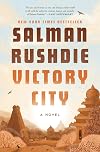
Pampa Kampana watches her mother and all the women of her village self-immolate in protest of war when their husbands are killed in battle. Pampa makes a deal with a goddess that gives her unnaturally long life, along with other mystical powers. She grows a city from some from a few simple seeds, and weaved the population's memories through a whispering prayer. Her goal is to create a place of love and art, egalitarian in all ways. But her creation exercises its free will, as is human show more nature. Over centuries, Tampa tries to right the ship, every action resulting in unforeseen, and sometimes seen, consequences to thwart her vision.
Rushdie's newest story is reminiscent of Allende and Shafak in his meticulous world building. But he alone can infect a narrative with such a playful tone that the reader doesn't see him proselytizing. A delight to read.
5 bones!!!!!
Highly Recommended show less
Rushdie's newest story is reminiscent of Allende and Shafak in his meticulous world building. But he alone can infect a narrative with such a playful tone that the reader doesn't see him proselytizing. A delight to read.
5 bones!!!!!
Highly Recommended show less
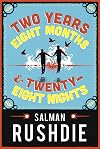
"All our stories contain the stories of others and are themselves contained within larger, grander narratives."
As a first draft, this playful adult fairytale of high jinx and low jinn promises much.
As a finished novel, it’s as capricious and shape-shifting as the jinn therein.
Enjoyable at first, but progressively less so.
I was glad when I closed the pages for the last time, with the hopeful finality of stuffing a jinn in a tightly sealed bottle.
“The subject kept changing, and how show more could anyone live in a crazy situation in which nothing remained the same for five minutes and no narrative was ever driven through to its conclusion, there could be no meaning… only absurdity.”
Image: Cartoon of cat rubbing against jinn’s lamp (Source.)
Magical Realist Comic Book Fairytale Philosophy
The book explores the inherent contradiction of its magical realism genre: the eternal battle of faith versus fact, especially the 12th century feud about the incoherence of philosophers between rationalist Ibn Rushd (aka Averroes), and Islamic theologian Al Ghazali. Its emphasis on the power of stories to understand our world elevates it beyond the “religion is bad, science is good” binary. The spoonful of sugar to make the philosophy go down includes jinn, giants, transformations, reincarnation, possession, levitation, lightning, jewels, fights, wishes, love, betrayal, and sex.
The main story is mostly in and around contemporary New York, and covers 1001 nights during which the slits between our world and Peristan/Fairyland reopen, and “strangeness” becomes commonplace.
The new strangeness is different from the general types “of American crazy” that include gun crazy, knife crazy, drug crazy, Westbro Baptist Church crazy, and (in 2015!) “Trump crazy”. Now, people become detached from places, beliefs, countries, language, honour, truth, and the ground, and there is separation between author and subject, cause and effect, rich and poor, words and meanings.
At first, the jinn just tinker with reality for their own amusement, but then the dark ones start the War of the World to rid the planet of humans. Dunia, a jinnia princess and mother of dozens of children with Ibn Rushd 800 years earlier, wants to save their descendants, so arouses dormant powers in a handful so they can help.
Image: Ibn Rushd in a detail from The Triumph of Saint Thomas Aquinas by Benozzo Gozzoli. (Source.)
Ingredients and Indigestion
It’s narrated by our descendants (anonymous plural “we”), 1001 years in the future:
“A history infused with and perhaps overwhelmed by legend”.
There are stories within stories of the numerous characters (human, jinn, and mixed heritage, as well as comic book superheroes), and the stories they tell.
Exposition is unsubtle. Some sections read like entries from a badly written encyclopaedia of mythology:
"... our ancestors, for whom the arrival in the midst of their everyday life of the implacable forces of the metamorphic, the descending avatars of transformation, represented a shocking disruption in the fabric of the real...."
And that’s just part of the sentence!
Muslims, Christians, and Jews feature, and although it’s clear Rushdie dislikes all those religions, characters’ Jewishness is always mentioned. It felt increasingly othering.
It’s a very male-dominated story and even the main female character is fairly masculine in all but name and pronouns.
The frequent pop culture references are rarely relevant; just an old man name-dropping to sound cool and funny. They may also mean the book won’t age well.
How puerile is our literary knight? Jinn have lots of sex. “Bodiless sex.” Fine. But the tittering way Rushdie repeatedly bangs on about it, mostly with no need, nor detail, is childish - and unerotic.
Image: A jinn of fire and jinnia of smoke: the seductive cover of a Spanish edition.
Treasure?
Important issues peek through the chaos:
• Are faith and reason fundamentally incompatible?
Is that question part of the appeal of fairy tales and magical realism?
How are secular stories different from religious ones?
• "In the end, rage, no matter how profoundly justified, destroys the enraged. Just as we are created anew by what we love, so we are reduced and unmade by what we hate."
That’s an important lesson for the world right now, and always has been. But even as an atheist, I don’t think all hate comes from religion, though it’s certainly effective at stoking the fires.
• Does fear inevitably drive people to religion and/or drink? (I would add war as another common consequence.)
If we can overcome fear, will religion die out?
Is religion inherently, irrevocably less of a force for good than ill?
• What price freedom? What price peace? What price the ability to dream?
Image: "Golconda" by Magritte: are men levitating like Mr Geronimo, falling, or static? (Source.)
Quotes
There are some nicely polished phrases:
• “His treasure and his curse. To be thin-skinned, far-sighted and loose-tongued.”
• “The garden was the outward expression of inner truth” [the Christian definition of a sacrament], and “the garden could also be a metaphor”, as in Hieronymus Bosch’s “Garden of Earthly Delights”.
• “She has looked a little smudged at the edges, as if she were drawn in soft charcoal. Or smoke.”
• “The mendacious artifice that presented itself as actuality.” No, not magical realism; reality TV.
• “His smile was a thing of menacing, almost feral sweetness.”
• “The fairy world is real… but it does not follow that God exists.”
• “The jinn were uninterested in fiction, and obsessed with realism… Fire burned paper. There were no books in Fairyland.”
• “To recount a fantasy, a story of the imaginary, is also a way of recounting a tale about the actual.”
• “Terrorism was always of particular attraction to male individuals who were either virgins or unable to find a sexual partner… Death, being readily available everywhere, was often an alternative pursuit.”
• “Setting the chessboard in such a fashion that Word War III becomes a one hundred per cent sure thing... The US and Israel we got cranking up to go to war with China and Russia... the apparent cause, that's Syria and Iran... the actual, being the preservation of the value of the petrodollar… Soon we will initiate a false-flag event which will culminate in the abolition of the presidency...the imposition of martial law, and the elimination of all opposition to the coming apocalypse.”
I read that passage the day WW3 was trending on Twitter because Iran's General Suleimani had just been assassinated by the Trump regime.
Better Rushdies
This was 2.5* for me, but I rounded down because it was like a dulled echo, or fan-fic, of the two others I’ve read, both 4*:
• This has a huge cast of characters like Midnight’s Children, which I reviewed HERE, but is more accessible because it’s not so rooted in the country and culture of India. Nevertheless, I’m sure there’s plenty that went over my head.
• This is more sexual (but not sexy) and more violent than the YA Haroun and the Sea of Stories, which I reviewed HERE. Both stress the importance of stories and free speech/thinking, and both namecheck other writers. show less
As a first draft, this playful adult fairytale of high jinx and low jinn promises much.
As a finished novel, it’s as capricious and shape-shifting as the jinn therein.
Enjoyable at first, but progressively less so.
I was glad when I closed the pages for the last time, with the hopeful finality of stuffing a jinn in a tightly sealed bottle.
“The subject kept changing, and how show more could anyone live in a crazy situation in which nothing remained the same for five minutes and no narrative was ever driven through to its conclusion, there could be no meaning… only absurdity.”
Image: Cartoon of cat rubbing against jinn’s lamp (Source.)
Magical Realist Comic Book Fairytale Philosophy
The book explores the inherent contradiction of its magical realism genre: the eternal battle of faith versus fact, especially the 12th century feud about the incoherence of philosophers between rationalist Ibn Rushd (aka Averroes), and Islamic theologian Al Ghazali. Its emphasis on the power of stories to understand our world elevates it beyond the “religion is bad, science is good” binary. The spoonful of sugar to make the philosophy go down includes jinn, giants, transformations, reincarnation, possession, levitation, lightning, jewels, fights, wishes, love, betrayal, and sex.
The main story is mostly in and around contemporary New York, and covers 1001 nights during which the slits between our world and Peristan/Fairyland reopen, and “strangeness” becomes commonplace.
The new strangeness is different from the general types “of American crazy” that include gun crazy, knife crazy, drug crazy, Westbro Baptist Church crazy, and (in 2015!) “Trump crazy”. Now, people become detached from places, beliefs, countries, language, honour, truth, and the ground, and there is separation between author and subject, cause and effect, rich and poor, words and meanings.
At first, the jinn just tinker with reality for their own amusement, but then the dark ones start the War of the World to rid the planet of humans. Dunia, a jinnia princess and mother of dozens of children with Ibn Rushd 800 years earlier, wants to save their descendants, so arouses dormant powers in a handful so they can help.
Image: Ibn Rushd in a detail from The Triumph of Saint Thomas Aquinas by Benozzo Gozzoli. (Source.)
Ingredients and Indigestion
It’s narrated by our descendants (anonymous plural “we”), 1001 years in the future:
“A history infused with and perhaps overwhelmed by legend”.
There are stories within stories of the numerous characters (human, jinn, and mixed heritage, as well as comic book superheroes), and the stories they tell.
Exposition is unsubtle. Some sections read like entries from a badly written encyclopaedia of mythology:
"... our ancestors, for whom the arrival in the midst of their everyday life of the implacable forces of the metamorphic, the descending avatars of transformation, represented a shocking disruption in the fabric of the real...."
And that’s just part of the sentence!
Muslims, Christians, and Jews feature, and although it’s clear Rushdie dislikes all those religions, characters’ Jewishness is always mentioned. It felt increasingly othering.
It’s a very male-dominated story and even the main female character is fairly masculine in all but name and pronouns.
The frequent pop culture references are rarely relevant; just an old man name-dropping to sound cool and funny. They may also mean the book won’t age well.
How puerile is our literary knight? Jinn have lots of sex. “Bodiless sex.” Fine. But the tittering way Rushdie repeatedly bangs on about it, mostly with no need, nor detail, is childish - and unerotic.
Image: A jinn of fire and jinnia of smoke: the seductive cover of a Spanish edition.
Treasure?
Important issues peek through the chaos:
• Are faith and reason fundamentally incompatible?
Is that question part of the appeal of fairy tales and magical realism?
How are secular stories different from religious ones?
• "In the end, rage, no matter how profoundly justified, destroys the enraged. Just as we are created anew by what we love, so we are reduced and unmade by what we hate."
That’s an important lesson for the world right now, and always has been. But even as an atheist, I don’t think all hate comes from religion, though it’s certainly effective at stoking the fires.
• Does fear inevitably drive people to religion and/or drink? (I would add war as another common consequence.)
If we can overcome fear, will religion die out?
Is religion inherently, irrevocably less of a force for good than ill?
• What price freedom? What price peace? What price the ability to dream?
Image: "Golconda" by Magritte: are men levitating like Mr Geronimo, falling, or static? (Source.)
Quotes
There are some nicely polished phrases:
• “His treasure and his curse. To be thin-skinned, far-sighted and loose-tongued.”
• “The garden was the outward expression of inner truth” [the Christian definition of a sacrament], and “the garden could also be a metaphor”, as in Hieronymus Bosch’s “Garden of Earthly Delights”.
• “She has looked a little smudged at the edges, as if she were drawn in soft charcoal. Or smoke.”
• “The mendacious artifice that presented itself as actuality.” No, not magical realism; reality TV.
• “His smile was a thing of menacing, almost feral sweetness.”
• “The fairy world is real… but it does not follow that God exists.”
• “The jinn were uninterested in fiction, and obsessed with realism… Fire burned paper. There were no books in Fairyland.”
• “To recount a fantasy, a story of the imaginary, is also a way of recounting a tale about the actual.”
• “Terrorism was always of particular attraction to male individuals who were either virgins or unable to find a sexual partner… Death, being readily available everywhere, was often an alternative pursuit.”
• “Setting the chessboard in such a fashion that Word War III becomes a one hundred per cent sure thing... The US and Israel we got cranking up to go to war with China and Russia... the apparent cause, that's Syria and Iran... the actual, being the preservation of the value of the petrodollar… Soon we will initiate a false-flag event which will culminate in the abolition of the presidency...the imposition of martial law, and the elimination of all opposition to the coming apocalypse.”
I read that passage the day WW3 was trending on Twitter because Iran's General Suleimani had just been assassinated by the Trump regime.
Better Rushdies
This was 2.5* for me, but I rounded down because it was like a dulled echo, or fan-fic, of the two others I’ve read, both 4*:
• This has a huge cast of characters like Midnight’s Children, which I reviewed HERE, but is more accessible because it’s not so rooted in the country and culture of India. Nevertheless, I’m sure there’s plenty that went over my head.
• This is more sexual (but not sexy) and more violent than the YA Haroun and the Sea of Stories, which I reviewed HERE. Both stress the importance of stories and free speech/thinking, and both namecheck other writers. show less
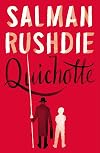
Having read a few of Rushdie's books, Quichotte is by far the best! Blending whimsy with a contemporary spin on Don Quixote he takes the reader on a journey into the mind Sam DuChamp, an author writing the Quichotte story toggling back and forth between his life and the characters. Adding contemporary political, economic and social elements along with subtle racial overtones the plot causes the reader to pay close attention. Rushdie has used some unusual naming, storytelling and character show more ideas blending them together like a cake batter! His sense of humor and sarcasm shines in this book, a quality I hadn't experienced with his other stories. Highly recommended for those who enjoy great storytelling that at times will throw you due to rapid switchbacks between Quichotte and DuChamp. I actually rate this 4.5 stars since it's unique in all ways! show less
Lists
1990s (1)
. (1)
SFFCat 2015 (1)
Witchy Fiction (1)
Magical Realism (1)
Indian Diaspora (1)
BitLife (1)
Big Jubilee List (1)
Banned Books (1)
Obama Reads (1)
Folio Society (1)
Shaking a Leg (1)
READ in 2024 (1)
. (1)
Revolutions (1)
Read These Too (1)
Best First Lines (1)
1960s (1)
BBC Big Read (1)
Franklit (1)
2022 (1)
FAB 2024 (1)
BBC Big Read (1)
Overdue Podcast (1)
Booker Prize (7)
Favourite Books (2)
Asia (2)
Yet another list (2)
hopes (2)
AP Lit (2)
Central America (1)
Magic Realism (5)
All Things India (4)
Unread books (4)
Five star books (3)
A Novel Cure (3)
1980s (2)
Elegant Prose (1)
Didactic Fiction (1)
Best Satire (1)
Writers at Risk (1)
BBC Top Books (1)
Devilish Books (1)
Books I Loved (1)
Awards


You May Also Like


Associated Authors
Statistics
- Works
- 85
- Also by
- 45
- Members
- 70,005
- Popularity
- #186
- Rating
- 3.9
- Reviews
- 1,235
- ISBNs
- 1,344
- Languages
- 39
- Favorited
- 318


