
Arundhati Roy
Author of The God of Small Things
About the Author
Suzanna Arundhati Roy, 1961 - Suzanna Roy was born November 24, 1961. Her parents divorced and she lived with her mother Mary Roy, a social activist, in Aymanam. Her mother ran an informal school named Corpus Christi and it was there Roy developed her intellectual abilities, free from the rules of show more formal education. At the age of 16, she left home and lived on her own in a squatter's colony in Delhi. She went six years without seeing her mother. She attended Delhi School of Architecture where she met and married fellow student Gerard Da Cunha. Neither had a great interest in architecture so they quit school and went to Goa. They stayed there for seven months and returned broke. Their marriage lasted only four years. Roy had taken a job at the National Institute of Urban Affairs and, while cycling down a road; film director Pradeep Krishen offered her a small role as a tribal bimbo in Massey Saab. She then received a scholarship to study the restoration of monuments in Italy. During her eight months in Italy, she realized she was a writer. Now married to Krishen, they planned a 26-episode television epic called Banyan Tree. They didn't shoot enough footage for more than four episodes so the serial was scrapped. She wrote the screenplay for the film In Which Annie Gives It Those Ones and Electric Moon. Her next piece caused controversy. It was an article that criticized Shekar Kapur's film Bandit Queen, which was about Phoolan Devi. She accused Kapur of misrepresenting Devi and it eventually became a court case. Afterwards, finished with film, she concentrated on her writing, which became the novel "A God of Small Things." It is based on what it was like growing up in Kerala. The novel contains mild eroticism and again, controversy found Roy having a public interest petition filed to remove the last chapter because of the description of a sexual act. It took Roy five years to write "A God of Small Things" and was released April 4, 1997 in Delhi. It received the Booker prize in London in 1997 and has topped the best-seller lists around the world. Roy is the first non-expatriate Indian author and the first Indian woman to win the Booker prize. (Bowker Author Biography) show less
Image credit: Flickr user plataforma (2006), cropped
Works by Arundhati Roy
The Hanging of Afzal Guru and the Strange Case of the Attack on the Indian Parliament (2016) 21 copies
Au-devant des périls: La marche en avant de la nation hindoue (Tracts) (French Edition) (2020) 3 copies
La speranza, nel frattempo. Una conversazione tra Arundhat Roy, John Berger e Maria Nadotti (2010) 2 copies
Globalization and Terrorism 1 copy
Associated Works
Stop the Next War Now: Effective Responses to Violence and Terrorism (2005) — Introduction — 116 copies, 2 reviews
Democracy in Print: The best of the Progressive Magazine, 1909-2009 (2009) — Contributor — 14 copies
Inspired Lives: The Best of Real Life Yoga from Ascent Magazine (2005) — Contributor, some editions — 10 copies
Tagged
Common Knowledge
- Canonical name
- Roy, Arundhati
- Legal name
- Roy, Suzanna Arundhati
- Birthdate
- 1961-11-24
- Gender
- female
- Education
- School of Planning and Architecture, New Delhi (B.Arch.)
- Occupations
- novelist
actor
screenwriter - Awards and honors
- Lannan Cultural Freedom Prize (2002)
Sydney Peace Prize (2004)
Man Booker Prize for Fiction (1997)
Norman Mailer Prize (2011)
National Film Award for Best Screenplay (1989)
Orwell Award (2004) (show all 7)
Sahitya Akademi Award (2006) - Relationships
- Roy, Mary (mother)
Roy, Prannoy (cousin)
Krishen, Pradip (spouse) - Nationality
- India
- Birthplace
- Shillong, Meghalaya, India
- Places of residence
- Kerala, India
Delhi, India - Map Location
- India
Members
Reviews
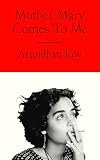
Mother Mary Comes to Me is a memoir by the Indian writer and activist Arundhati Roy, best known for her 1997 novel The God of Small Things. Arundhati's compelling account of her own life, work and development as a writer and activist is constructed around a moving account of her complicated and difficult relationship with her mother Mary Roy, a formidable presence throughout the book's pages, a woman who never said Let it Be (the author's Dedication).
Mary Roy was from a highly educated show more Syrian Christian family in southern India. She had a university degree in education, her aunt had been a college teacher, and her brother had been a Rhodes Scholar in Oxford, England. She left her alcoholic husband and returned to southern India, where she worked as a teacher before setting up her own school, which her daughter describes as definitely her favourite child. All this was far from easy - Mary Roy had several legal battles with her family over property and inheritance rights, eventually winning a case in the Supreme Court of India, and overturning a law that denied women the right to inherit.
This is just some of the background to the development of a formidable woman, with a commitment to a mixture of strong but sometimes contradictory values and principles, an inheritance that she definitely passed on to her daughter, herself evidently a strong, contentious character. Often when reading this, I thought that Mary Roy was a monster, and Arundhati and her mother were estranged for many years after some outrageous and dramatic scenes, but Arundhati's love of and respect for her mother also come through very clearly.
Arundhati Roy and her brother were pupils at their mother's school, Corpus Christi, before being sent away to boarding school, but could expect no favouritism, rather the opposite. Mrs Roy, as they were expected to address her, was both very demanding and harshly critical of Arundhati as her daughter and student, rarely acknowledging her daughter's efforts to please her, her commitment as a young carer when she was seriously ill, dismissing her early efforts at writing as terrible.
In her memoir, Arundhati Roy also details her work, all kinds of odd jobs to fund herself through her education, work as an architect and draughtsman, her relationships, her move into writing scripts and making films, dealing with all the creative, practical and financial aspects. While as a young woman she said she would never return home, and was estranged from her mother for some time, her description of Mrs Roy's response to her novel The God of Small Things, which included praise and pride along with some thought provoking questions, is very revealing - her mother's response never ceased to matter to Arundhati, and I think she was important to her mother too.
I also enjoyed Roy's accounts of her other writing and creative work and of her other relationships, of the social and political response to her famous novel and the ensuing legal battles, and of some of her political activism. I would like to read some of her non fiction/political writings now, as well as rereading her two novels and this memoir.
Finally, Roy writes about the end of her mother's long life, and the strength of her reaction, prompting her to start writing this memoir, a compelling, intimate and emotional account of how a mother-daughter relationship can shape the lives of both women.
I am now wondering what my own mother would have thought of this book - I am not sure whether she ever read The God of Small Things but I think she might have preferred Mother Mary Comes to Me. I will never know but this is the sort of book that makes me wish I could discuss it with her. show less
Mary Roy was from a highly educated show more Syrian Christian family in southern India. She had a university degree in education, her aunt had been a college teacher, and her brother had been a Rhodes Scholar in Oxford, England. She left her alcoholic husband and returned to southern India, where she worked as a teacher before setting up her own school, which her daughter describes as definitely her favourite child. All this was far from easy - Mary Roy had several legal battles with her family over property and inheritance rights, eventually winning a case in the Supreme Court of India, and overturning a law that denied women the right to inherit.
This is just some of the background to the development of a formidable woman, with a commitment to a mixture of strong but sometimes contradictory values and principles, an inheritance that she definitely passed on to her daughter, herself evidently a strong, contentious character. Often when reading this, I thought that Mary Roy was a monster, and Arundhati and her mother were estranged for many years after some outrageous and dramatic scenes, but Arundhati's love of and respect for her mother also come through very clearly.
Arundhati Roy and her brother were pupils at their mother's school, Corpus Christi, before being sent away to boarding school, but could expect no favouritism, rather the opposite. Mrs Roy, as they were expected to address her, was both very demanding and harshly critical of Arundhati as her daughter and student, rarely acknowledging her daughter's efforts to please her, her commitment as a young carer when she was seriously ill, dismissing her early efforts at writing as terrible.
In her memoir, Arundhati Roy also details her work, all kinds of odd jobs to fund herself through her education, work as an architect and draughtsman, her relationships, her move into writing scripts and making films, dealing with all the creative, practical and financial aspects. While as a young woman she said she would never return home, and was estranged from her mother for some time, her description of Mrs Roy's response to her novel The God of Small Things, which included praise and pride along with some thought provoking questions, is very revealing - her mother's response never ceased to matter to Arundhati, and I think she was important to her mother too.
I also enjoyed Roy's accounts of her other writing and creative work and of her other relationships, of the social and political response to her famous novel and the ensuing legal battles, and of some of her political activism. I would like to read some of her non fiction/political writings now, as well as rereading her two novels and this memoir.
Finally, Roy writes about the end of her mother's long life, and the strength of her reaction, prompting her to start writing this memoir, a compelling, intimate and emotional account of how a mother-daughter relationship can shape the lives of both women.
I am now wondering what my own mother would have thought of this book - I am not sure whether she ever read The God of Small Things but I think she might have preferred Mother Mary Comes to Me. I will never know but this is the sort of book that makes me wish I could discuss it with her. show less
A marvelous and disturbing book about a family in rural India, headed by difficult women, and deeply affected by contact with the non-Indian world. The story focuses on twins born to a woman who returns home after divorcing her husband, how they bond with each other, how they interpret the world and its accidents. It also focuses on the caste system which was supposedly abolished but still controls the social structures of this society. And it is about the Love Laws, "The laws that lay down show more who should be loved, and how".
The writing is lyrical, fascinating. Roy often writes of how the twins as children make up their own language and interpretation, even talking backwards. Speaking of the precipitating events of the past, she writes "It was the kind of time in the life of a family when something happens to nudge its hidden morality from its resting place and make it bubble to the surface and float for a while. In clear view. For everyone to see."
The story unfolds in the past and present, and the timeline is sometimes not distinct. But that's the way memory works, and it serve this book well. show less
The writing is lyrical, fascinating. Roy often writes of how the twins as children make up their own language and interpretation, even talking backwards. Speaking of the precipitating events of the past, she writes "It was the kind of time in the life of a family when something happens to nudge its hidden morality from its resting place and make it bubble to the surface and float for a while. In clear view. For everyone to see."
The story unfolds in the past and present, and the timeline is sometimes not distinct. But that's the way memory works, and it serve this book well. show less
This novel is masterful. Roy's prose is poetry, or near as. With coinages, imagery, and heartbreaking emotion, she transports you to rural Kerala and places you among the cast of the novel across the generations they span. I've just put the book down, and am attempting to extinguish the lingering feeling of oppressive, impending doom that has sat with me throughout the book. More incredibly to me, I enjoyed it, as someone who tends to avoid doom and its impending arrival at as many show more opportunities as possible. Roy boldly tells you what is going to happen in the very first pages, and unfolds the path to get there beautifully, keeping you entranced not by suspense but with the weight of inevitability. I didn't think it would work until I read it.
Inevitability is not just the feeling of the book, it's also a theme. There is history, and there is History. We might take the former as a set of facts, and the latter as facts personified, empowered to affect the ways in which we live. The titular God of Small Things is a the personal tragedies that fall victim to History, when the things we want and need are unreachable because of History's designs and strictures. How free are we, when we live amidst ideology, tradition, family, society? Are we free to live, to love? I won't say this novel gives me hope that we are. I don't even think it makes it clear that we will be; this is a tragedy and History can be ruthless with those that rebel against it. What it does do, is remind me that we should be, because the cost of living constrained thus is far too high a price to pay. show less
Inevitability is not just the feeling of the book, it's also a theme. There is history, and there is History. We might take the former as a set of facts, and the latter as facts personified, empowered to affect the ways in which we live. The titular God of Small Things is a the personal tragedies that fall victim to History, when the things we want and need are unreachable because of History's designs and strictures. How free are we, when we live amidst ideology, tradition, family, society? Are we free to live, to love? I won't say this novel gives me hope that we are. I don't even think it makes it clear that we will be; this is a tragedy and History can be ruthless with those that rebel against it. What it does do, is remind me that we should be, because the cost of living constrained thus is far too high a price to pay. show less

My first by this author, selected because memoirs are a good fit for on audio, and because Arundhati Roy has a wonderful reader voice that struck me powerfully in my audible sample.
I knew of Roy's novels and of her passionate speeches shared on leftwing media sites, like DemocracyNow, back when I listened to that. I had envisioned an overly dramatic personality. But that's not what comes across here. She has been a free spirit her whole life who defied any kind of constrictions, whether show more parents, money, men or even fame, and made a point to find ways to do something meaningful, whatever the personal risks. This personal memoir, titled as if on her mother but really about her, tells about her childhood under an oddly stern and explosive single mother who would founded her own school without any money in the Indian state of Kerala, in a largely Christian community. Mom's love was rough love. Roy would roam the natural world and then suffer in this school, which was also her home. Both her and her brother would go away to college, and conclude they needed to stay away from home, and both did for a long time.
So, we get Roy's story of growing up, her college experience in Dehli with no parental support, her odd success as partner, and lover, of a small film maker, where her scripts would generate the sponsorship and awards. Her experience writing the [God of Small Things], it's unexpected success. The mostly unknown Arundhatti Roy got a $1 million advance before it was published and won the Booker Prize. Never one to dwell on money, the newly well-funded Roy was determined not be controlled by her money or sudden fame. She used her money to criticize the government in provocative ways, both for environmentally destructive policies and for government sanctioned violence against Muslims in Kashmir and Gujarat - this while India was run by the right-wing extreme-nationalist BJP party, a 1990's phenom when multi-cultural Indian turned Hindi-centric India, and the current Indian government today. She spent a day in jail for these actions, and won countless death threats, including from prominent media figures on the air.
This rightwing swing in India is the same thing Salman Rushdie was trying to condemn in [The Moor's Last Sigh], a book with several odd parallels to Roy's real life. Rushdie has a prominent Christian character from Kerala, toys with chutney production, an industry part of Roy's family was involved in, and of course, dreaded and deeply criticized maga-like India. But his name doesn't come up here. One of the oddities to me was that very few names come up. We are left with the impression that Arundhatti Roy really came out of nowhere with [The God of Small Things]. Which is fascinating. The only literary name that gets any real prominence is John Berger, who befriended Roy late in his life.
Right, the book. It's a thoroughly enjoyable, fascinating and inspiring memoir. Roy fans and the Roy-curious (like me), and memoir readers will enjoy this a lot.
2026
https://www.librarything.com/topic/384249#9203201 show less
I knew of Roy's novels and of her passionate speeches shared on leftwing media sites, like DemocracyNow, back when I listened to that. I had envisioned an overly dramatic personality. But that's not what comes across here. She has been a free spirit her whole life who defied any kind of constrictions, whether show more parents, money, men or even fame, and made a point to find ways to do something meaningful, whatever the personal risks. This personal memoir, titled as if on her mother but really about her, tells about her childhood under an oddly stern and explosive single mother who would founded her own school without any money in the Indian state of Kerala, in a largely Christian community. Mom's love was rough love. Roy would roam the natural world and then suffer in this school, which was also her home. Both her and her brother would go away to college, and conclude they needed to stay away from home, and both did for a long time.
So, we get Roy's story of growing up, her college experience in Dehli with no parental support, her odd success as partner, and lover, of a small film maker, where her scripts would generate the sponsorship and awards. Her experience writing the [God of Small Things], it's unexpected success. The mostly unknown Arundhatti Roy got a $1 million advance before it was published and won the Booker Prize. Never one to dwell on money, the newly well-funded Roy was determined not be controlled by her money or sudden fame. She used her money to criticize the government in provocative ways, both for environmentally destructive policies and for government sanctioned violence against Muslims in Kashmir and Gujarat - this while India was run by the right-wing extreme-nationalist BJP party, a 1990's phenom when multi-cultural Indian turned Hindi-centric India, and the current Indian government today. She spent a day in jail for these actions, and won countless death threats, including from prominent media figures on the air.
This rightwing swing in India is the same thing Salman Rushdie was trying to condemn in [The Moor's Last Sigh], a book with several odd parallels to Roy's real life. Rushdie has a prominent Christian character from Kerala, toys with chutney production, an industry part of Roy's family was involved in, and of course, dreaded and deeply criticized maga-like India. But his name doesn't come up here. One of the oddities to me was that very few names come up. We are left with the impression that Arundhatti Roy really came out of nowhere with [The God of Small Things]. Which is fascinating. The only literary name that gets any real prominence is John Berger, who befriended Roy late in his life.
Right, the book. It's a thoroughly enjoyable, fascinating and inspiring memoir. Roy fans and the Roy-curious (like me), and memoir readers will enjoy this a lot.
2026
https://www.librarything.com/topic/384249#9203201 show less
Lists
Booker Prize (2)
Books with Twins (1)
Female Author (1)
AP Lit (1)
Reading Globally (1)
Magic Realism (1)
Haymarket Books (1)
All Things India (1)
Unread books (1)
el (1)
1990s (1)
. (1)
Big Jubilee List (1)
Favourite Books (1)
To Read (1)
Secrets Books (1)
BBC Big Read (1)
Asia (1)
History: Asia (1)
South End Press (2)
Overdue Podcast (1)
First Novels (1)
Carole's List (1)
Awards


You May Also Like


Associated Authors
Statistics
- Works
- 59
- Also by
- 5
- Members
- 29,453
- Popularity
- #680
- Rating
- 3.9
- Reviews
- 566
- ISBNs
- 480
- Languages
- 36
- Favorited
- 81


