
Chalmers Johnson (1931–2010)
Author of Blowback: The Costs and Consequences of American Empire
About the Author
Chalmers Johnson, president of the Japan Policy Research Institute & professor emeritus at the University of California, San Diego, has written numerous books on Japan & Asia including his classic "Miti & the Japanese Miracle" & "Japan: Who Governs?" He lives near San Diego. (Bowker Author show more Biography) show less
Image credit: Photo courtesy of Chalmers Johnson
Works by Chalmers Johnson
The Sorrows of Empire: Militarism, Secrecy, and the End of the Republic (2003) 835 copies, 7 reviews
MITI and the Japanese Miracle: The Growth of Industrial Policy, 1925-1975 (1982) 115 copies, 2 reviews
Peasant Nationalism and Communist Power: The Emergence of Revolutionary China, 1937-1945 (1962) 51 copies, 1 review
Ideology and Politics in Contemporary China (Studies in Chinese government and politics) (1973) 8 copies, 1 review
Revolution and the social system 3 copies
Associated Works
Cold War Triumphalism: The Misuse of History After the Fall of Communism (2004) — Contributor — 41 copies
The World According to Tomdispatch: America In The New Age of Empire (2008) — Contributor — 30 copies
Tagged
Common Knowledge
- Legal name
- Johnson, Chalmers Ashby
- Birthdate
- 1931-08-06
- Date of death
- 2010-11-20
- Gender
- male
- Education
- University of California, Berkeley (MA | 1957 | Political Science)
University of California, Berkeley (Ph.D | 1961 | Political Science) - Occupations
- Communications Officer (US Navy)
professor (University of California ∙ 1962)
director (Center for Chinese Studies ∙ University of California ∙ 1967)
Department Chair (University of California ∙ Berkeley ∙ Political Science) - Organizations
- United States Navy
University of California, Berkeley
University of California, San Diego - Awards and honors
- American Academy of Arts and Sciences (Fellow | 1976)
- Nationality
- USA
- Birthplace
- Phoenix, Arizona, USA
- Places of residence
- Phoenix, Arizona, USA (birth)
Cardiff, California, USA - Place of death
- Cardiff-by-the-Sea, California, USA
- Associated Place (for map)
- California, USA
Members
Reviews
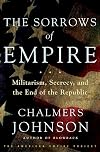
I felt pretty beat up by the end of this book. That it was published in 2004! How is it that I have fond memories of G. W. Bush? Oh, yeah, that's why... that the horrific trends that Johnson outlines could have continued, have accelerated, as they have? Oh, the times!
Johnson runs through a list of foreign bases here, in places like Kosovo and Qatar. The satellite images on Google maps ... I bet I got myself on some CIA watch lists, but wow. Spot-checking Johnson... he's not making this stuff show more up!
It's all bleak until the last paragraph. Can the American people take back their government? From 2004 to 2018, we sure didn't move in any encouraging direction! Well, to fix a problem, surely one should understand the problem. Johnson does a very good job outlining at least a few dimensions of the situation. There's no climate change in here! Whew! show less
Johnson runs through a list of foreign bases here, in places like Kosovo and Qatar. The satellite images on Google maps ... I bet I got myself on some CIA watch lists, but wow. Spot-checking Johnson... he's not making this stuff show more up!
It's all bleak until the last paragraph. Can the American people take back their government? From 2004 to 2018, we sure didn't move in any encouraging direction! Well, to fix a problem, surely one should understand the problem. Johnson does a very good job outlining at least a few dimensions of the situation. There's no climate change in here! Whew! show less
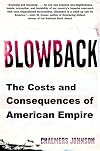
This book is pretty damned prescient. It’s all about the bad and mostly unintended consequences that have arisen due to American military interference around the world in the past thirty years. Think of it as a rational, national-interest-based argument against American expansionism and empire. It’ll also teach you a few things about Korea and our other activities in Asia over the last fifty years, and about the mostly unintentional, but still very important effects that the behavior of show more our forces stationed all over the world, and the message that the very presence of these forces sends, tend to have on world public opinion of us as a nation. show less
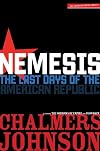
If you want a book that deeply explores why America seems to be (I'm being hopeful) headed down the wrong river, this is it -- with discussions on the rise of militarism; a comparison of Rome, Britain & America; the sordid history of the CIA; the basing of soldiers anywhere on the globe America pleases; the drive to militarize outer space; and more. To really get the full impact of what Chalmers Johnson is saying (and warning us all about), you should read the whole trilogy: "The Sorrows of show more Empire", "Blowback", and then "Nemesis".And Nemesis is definitely the most appropriate metaphor to use for the continuing fall from grace that America is blindly and arrogantly treading: the Greek goddess of divine justice and retribution, it's in our (American citizens') best interest to use her as a mirror of ourselves. As Johnson says, "We are on the cusp of losing our democracy for the sake of keeping our empire [versus the opposite path as Britain took, for instance:]. Once a nation is started down that path, the dynamics that apply to all empires come into play -- isolation, overstretch, the uniting of forces opposed to imperialism, and bankruptcy. Nemesis stalks our life as a free nation."I especially like a quote by Harry Browne starting the last chapter... "When America is no longer a threat to the world, the world will no longer threaten us." No truer words could be said about the dire necessity for America to learn once again how to become a respected member of the world community rather than its bully and self-appointed master.America's path can be corrected, but we, her people, must become more aware, and then take action. Chalmers' "Nemesis" is a clarion call for us all to act, before it's too late.Originally written on May 12, 2008 at 04:49PM show less
Chalmers Johnson's third book about the pernicious influence of militarism on our country is excellent. I was a participant in or observer of many of the incidents Dr. Johnson discussed in his first book, "Blowback", and worked with him when I was the US Information Agency's Japan desk officer from mid-1985 through mid-1987. Dr. Johnson, a patriotic, Republican economist with extensive international experience, raises interesting questions about the extent to which "the military-industrial show more complex" has jeopardized our domestic political system and Constitution while damaging our long-term interests and standing abroad. He makes his points with readable prose and ample evidence. Reading this book while the news that our vice president considers himself exempt from all laws when it suits his ends made an interesting real world, real time illustration of Johnson's argument. show less
Awards


You May Also Like


Associated Authors
Statistics
- Works
- 30
- Also by
- 3
- Members
- 2,940
- Popularity
- #8,708
- Rating
- 4.0
- Reviews
- 46
- ISBNs
- 103
- Languages
- 6
- Favorited
- 14


