
Haruki Murakami
Author of Kafka on the Shore
About the Author
Haruki Murakami was born on January 12, 1949 in Kyoto, Japan and studied at Tokyo's Waseda University. He opened a coffeehouse/jazz bar in the capital called Peter Cat with his wife. He became a full-time author following the publication of his first novel, Hear the Wind Sing, in 1979. He writes show more both fiction and non-fiction works. His fiction works include Norwegian Wood, Colorless Tsukuru Tazaki and His Years of Pilgrimage, The Strange Library, and Men Without Women. Several of his stories have been adapted for the stage and as films. His nonfiction works include What I Talk About When I Talk About Running. He has received numerous literary awards including the Franz Kafka Prize for Kafka on the Shore, the Yomiuri Prize for The Wind-Up Bird Chronicle, and the Jerusalem Prize. He has translated into Japanese literature written by F. Scott Fitzgerald, Raymond Carver, Truman Capote, John Irving, and Paul Theroux. (Bowker Author Biography) show less
Image credit: Haruki Murakami, à Tokyo, en juin 2024
Series
Works by Haruki Murakami
Haruki Murakami Manga Stories 1: Super-Frog Saves Tokyo, Where I'm Likely to Find It, Birthday Girl, The Seventh Man (2023) 119 copies, 3 reviews
Excerpts from The Wind-Up Bird Chronicle 115 copies
Vintage Fantasy: " Alice's Adventures in Wonderland " , " The Wind-up Bird Chronicle " (Vintage Classic Twins) (2008) 14 copies
The Iceman [short story] 12 copies
Scheherazade 5 copies
Cream 5 copies
The Wind Cave 4 copies
The Windup Bird and Tuesday's Women 4 copies
Independent Organ 4 copies
The Folklore of Our Times 4 copies
The Girl from Ipanema 1963/1982 4 copies
Abandoning a Cat: A Personal Story 4 copies
Miraculous cool science 4:The hunting of animal extremely recruits (Chinese edidion) Pinyin: shen qi ku ke xue 4 : dong wu de shou lie jue zhao (1995) 4 copies
Confessions of a Shinagawa Monkey 4 copies
The Mirror (Individual Short Story) 3 copies
A Family Affair 3 copies
A Window 3 copies
Lederhosen 3 copies
The Little Green Monster — Author — 3 copies
Those senior high school students teach my business (Chinese edidion) Pinyin: na xie gao zhong sheng jiao wo de shi (1995) 3 copies
The Zoo Attack 3 copies
حدائق موراكامي 2 copies
(Kafka on the Shore) By Haruki Murakami (Author) Paperback on (May , 2012) (2012) 2 copies, 1 review
The happy end of elephant workhouse (Chinese edidion) Pinyin: xiang gong chang de happy end (2000) 2 copies
The Dancing Dwarf 2 copies
Şehir ve Belirsiz Duvarları 2 copies
The Year of Spaghetti [short story] 2 copies
舞舞舞吧[上] 1 copy
KRONIKA E ZOGUT KURDISËS 1 copy
1Q84. LIBRI I PARË 1 copy
KAFKA NË BREG 1 copy
海辺のカフカ(下) 1 copy
舞舞舞吧[下] 1 copy
人造衛星的情人[上] 1 copy
人造衛星情人[下] 1 copy
Leave for a chinese slow vessel (Chinese edidion) Pinyin: kai wang zhong guo de man chuan (1998) 1 copy
Zuo Pin Ji 作品集 1 copy
The Tale of KAHO 1 copy
騎士団長殺し ―第1部 顕れるイデア編(下)― 1 copy
Three German Fantasies.(Short Story): An article from: The Review of Contemporary Fiction (2002) 1 copy
Les Amants De Spoutnik 1 copy
The Running Novelist 1 copy
What I Talk About When I Talk About Running, Born To Run, Natural Born Heroes 3 Books Collection Set (2019) 1 copy
大萝卜和难挑的鳄梨 1 copy
Haruki Murakami - Asiaweek 1 copy
ラオスにいったい何があるというんですか? 1 copy
As for running (Bangla) 1 copy
Haruki Murakami Collection 3 Books Set (Men Without Women, What I Talk About When I Talk About Running, Norwegian Wood) (2020) 1 copy
Chinmoku 1 copy
Another Way to Die 1 copy
Princeton 1 copy
Portrait in Jazz 2 1 copy
After Dark Seventh Man 1 copy
Racconti inediti 1 copy
The Wind-Up Bird Chronicle a multi-media adaptation of Haruki Murakami's International best seller 1 copy
Agenda 2010 1 copy
අවිඥානයේ ෆැන්ටසිමය අවකාශය 1 copy
La Balade De L' Impossible 1 copy
Sau Dong Dat 1 copy
Rare WIND / PINBALL by Haruki Murakami - 1st/1st HCDJ Knopf 2015 - fine [Hardcover] unknown 1 copy, 1 review
Havet - fyra noveller 1 copy
Sau cơn động đất 1 copy
Những Chuyện Lạ Ở Tokyo 1 copy
Đom đóm 1 copy
Libro 3: Ottobre-dicembre 1 copy
Kafka Dur Le Rivage 1 copy
Yue shu de chang suo : di xia tie shi jian 2 = Yakusokusareta basho de = Underground 2 (2018) 1 copy
Okina Kabu, Muzukashii Abokado : Murakami Rajio 2 (Cun Shang Shou Yin Ji2: Da Wu Jing, Nan Tiao De Luo Li) (Chinese Edition) (2012) 1 copy
A Wild sheep chase, kafka on the shore and wind-up bird chronicle 3 books collection set (2018) 1 copy
Τις μικρές ώρες 1 copy
Norwegian wood 1 copy
Kafka na obali mora 1 copy
Iq84 Tom 2 1 copy
Iq84 Tom 3 1 copy
O sétimo homem e os outros 1 copy
Associated Works
Rashōmon and Seventeen Other Stories (2006) — Introduction, some editions — 1,242 copies, 15 reviews
Alone in the Kitchen with an Eggplant: Confessions of Cooking for One and Dining Alone (2007) — Contributor — 586 copies, 31 reviews
The Penguin Book of Japanese Short Stories (2018) — Introduction; Contributor — 530 copies, 3 reviews
The Art of the Story: An International Anthology of Contemporary Short Stories (1999) — Contributor — 394 copies, 5 reviews
The Year's Best Fantasy and Horror: Sixteenth Annual Collection (2003) — Contributor — 240 copies, 2 reviews
The Vintage Book of Amnesia: An Anthology of Writing on the Subject of Memory Loss (2000) — Contributor — 228 copies, 2 reviews
The Year's Best Fantasy and Horror: Sixth Annual Collection (1993) — Contributor — 219 copies, 1 review
This Is My Best: Great Writers Share Their Favorite Work (2004) — Contributor — 175 copies, 3 reviews
The Graphic Canon, Vol. 3: From Heart of Darkness to Hemingway to Infinite Jest (2013) — Contributor — 162 copies, 1 review
In Translation: Translators on Their Work and What It Means (2013) — Contributor — 55 copies, 7 reviews
Selected Shorts: A Touch of Magic (Selected Shorts: A Celebration of the Short Story) (2009) — Contributor — 25 copies, 4 reviews
Digital Geishas and Talking Frogs: The Best 21st Century Short Stories from Japan (2011) — Contributor — 21 copies
Takashi Saitō's I Can Read It In One Go! Selection of Masterpieces - Middle School (2006) — Contributor — 2 copies
Tagged
Common Knowledge
- Canonical name
- 村上春樹
- Legal name
- 村上春樹
- Other names
- 村上 春樹 (むらかみ はるき)
- Birthdate
- 1949-01-12
- Gender
- male
- Education
- Waseda University (Theater Arts)
- Occupations
- short story writer
novelist
jazz bar owner
translator
essayist - Organizations
- American Academy of Arts and Letters (Honorary member, 2014)
- Awards and honors
- Prix mondial Cinco Del Duca (2022)
America Award in Literature (2018)
Hans Christian Anderson Literary Award (2016)
Orden de las Artes y las Letras de España (2009)
Jerusalem Prize (2009)
Franz Kafka Prize (2006) (show all 17)
Frank O'Connor International Short Story Award (2006)
World Fantasy Award (2006)
Kuwabara Takeo Prize (1999)
Yomiuri Prize for Literature (1995)
Tanizaki Prize (1985)
Noma Literary Prize (1982)
Gunzo Award (1979)
Kiriyama Prize (2007, declined)
International Catalunya Prize (2011)
Welt-Literaturpreis (2014)
Princess of Asturias Award (2023) - Agent
- Amanda Urban (ICM)
- Relationships
- Murakami, Yoko (wife)
- Nationality
- Japan
- Birthplace
- Kyoto, Japan
- Places of residence
- Kyoto, Japan (birth)
Tokyo, Japan
Princeton, New Jersey, USA
Kobe, Hyōgo Prefecture, Japan
Cambridge, Massachusetts, USA
Oiso, Kanagawa Prefecture, Japan - Map Location
- Japan
Members
Discussions
Murakami here I come... in Folio Society Devotees (November 2025)
Haruki Murakami; thoughts on the Folio editions? in Folio Society Devotees (August 2024)
Murakami in Folio Society Devotees (July 2024)
New Murakami Translation in Folio Society Devotees (March 2024)
Murakami anyone? in Book talk (September 2023)
Printing issues in Norwegian Wood in Folio Society Devotees (December 2022)
Science Fiction in Name that Book (January 2018)
Group Read: Wind-Up Bird Chronicle in 75 Books Challenge for 2017 (December 2017)
[Kafka on the Shore] by Haruki Murakami in 75 Books Challenge for 2017 (November 2017)
Asian Author, Unemployed young man, Goes into a Well to relax?escape? in Name that Book (September 2015)
Colorless Tsukuru Tazaki Group Read in 75 Books Challenge for 2014 (November 2014)
December 2013: Haruki Murakami in Monthly Author Reads (March 2014)
1001 Group Read - April, 2013: 1Q84 in 1001 Books to read before you die (May 2013)
1Q84 Group Read in Author Theme Reads (January 2013)
1Q84 Group Read in 75 Books Challenge for 2012 (November 2012)
The Wind-Up Bird Chronicle Group Read: Non-Spoiler Thread in 75 Books Challenge for 2011 (August 2011)
The Wind-Up Bird Chronicle: Week 1 (Spoiler) in 75 Books Challenge for 2011 (August 2011)
Haruki Murakami in Japanese Culture (June 2011)
Norwegian Wood Group Read: General Thread in 75 Books Challenge for 2010 (August 2010)
Norwegian Wood Group Read: Week Two ( Chapters 6-7 ) in 75 Books Challenge for 2010 (May 2010)
Norwegian Wood Group Read: Week 3 ( Chapters 8-11 ) in 75 Books Challenge for 2010 (May 2010)
Norwegian Wood Group Read: Week One ( Chapters 1-5 ) in 75 Books Challenge for 2010 (May 2010)
Group Read: The Wind-Up Bird Chronicle by Haruki Murakami in 1001 Books to read before you die (April 2010)
Reviews
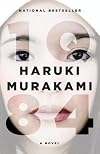
1Q84 is a postmodern masterpiece, rich in intertextuality, literary experimentation, spiritual fanaticism, and a general mistrust for not only society but for reality itself. It proposes the mutual exclusivity of religion, politics, and violence through an air of secrecy and conspiracy behind all the subtle (and progressively less subtle) inconsistencies plaguing the media and even daily life. It is through these inconsistencies, which take place primarily at the most mundane level, that show more Murakami weaves a tale of star-crossed love in the midst of such quiet unease. It is a representation of everyone's own search for an authentic life in an age where the "facts" are rarely straightforward, intimacy is just a means by which to feel alive, and ideologies are thinly veiled justifications to propel the narratives of those most powerful. Murakami teaches us that the most disturbing truths lie just beneath our conscious awareness. show less
"Workin' on mysteries without any clues,
Workin' on our night moves-"
-Bob Seger, "Night Moves"
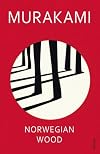
Seemingly a prose retelling of Seger's reminiscence, liberally infused with doses of both "Harold and Maude" and "The Last Picture Show," Murakami stages young Japanese characters and their baggage in a melancholy, sexual, coming-of-age drama drenched with Western pop culture. But for the rather high suicide count, this is thematically familiar stuff (a central issue of choosing living/the future show more over choosing death/irrecoverable past) but made fresh and compelling by Murakami's style which is simultaneously smooth and easy, and yet rich and lyrical. Dialogue is well executed, characters well-defined and imperfect, and place and environment are drafted dead-on, laid out for readers like place settings at a table. This is actually deceptively well-crafted for the story told.
"It was one of those early autumn afternoons when the light is sharp and clear.....the clouds were white and as sharp as bones, the sky wide open and high." show less
Workin' on our night moves-"
-Bob Seger, "Night Moves"
Seemingly a prose retelling of Seger's reminiscence, liberally infused with doses of both "Harold and Maude" and "The Last Picture Show," Murakami stages young Japanese characters and their baggage in a melancholy, sexual, coming-of-age drama drenched with Western pop culture. But for the rather high suicide count, this is thematically familiar stuff (a central issue of choosing living/the future show more over choosing death/irrecoverable past) but made fresh and compelling by Murakami's style which is simultaneously smooth and easy, and yet rich and lyrical. Dialogue is well executed, characters well-defined and imperfect, and place and environment are drafted dead-on, laid out for readers like place settings at a table. This is actually deceptively well-crafted for the story told.
"It was one of those early autumn afternoons when the light is sharp and clear.....the clouds were white and as sharp as bones, the sky wide open and high." show less

As usual, when I read Murakami, I don't understand everything. But this is still a fascinating read with the bizarre and surreal intertwining together with the ordinary. An interesting technique is the use of the lens of a camera to zoom into the lives of the characters. Though the word Tokyo never appeared at all, it is clear that the plot took place in this city, a place that I can't visit now because of Covid. We wonder why Eri Asai fell into a deep sleep. Is it to escape everyday life? show more Perhaps we all wish to be able to do that sometimes. It was not explicitly stated but Eri appears to regain consciousness, which I see as a symbol of hope. The story ends with the approach of dawn. After darkness, there will be light. show less
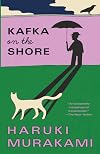
Review: Kafka on the Shore
JUNE 13, 2023 / RTRUBE54 / EDIT
Kafka on the Shore, Haruki Murakami. New York: Vintage International, 2002.
Summary: In two parallel plots Kafka tries to escape a curse and find his mother and sister (and himself) and Nakata tries to recover the part of him lost during a strange school outing incident in his youth.
This represents my first encounter with Murakami, one that left me strangely fascinated. I’ve not always found myself drawn to magical realism, but I show more could not put this down.
The story involves two connected plots, advanced in alternating chapters. The first follows the title character Kafka, a fifteen year old who runs aways from his father, the famous sculptor Koichi Tamura, to search for his mother and sister, who left when he was four. He makes his way to Takamatsu where he meets an accommodating young woman, Sakura, who shelters him when he awakens to find himself covered with blood and no memory of how it got there. His trek eventually takes him to a private library in a former wealthy home administered by Miss Saeki, who many years before had recorded Kafka on the Shore, remembering a young lover lost. He’s welcomed and protected, by Oshima, a transgender man. For a time he lives at the library, and then when in danger of being found by the police, who are seeking him as a material witness in the murder of his father, Oshima shelters him in a cabin deep in a forest in the Kochi Prefecture
The second plot involves Nakata, an aging man who as a child was part of a group of school children who fell unconscious during a school outing during the Second World War. The others recovered to lead normal lives. After several weeks of lying unconscious, Nakata awakened but couldn’t remember anything and could no longer read or write or learn how to do so. He’d led a quiet life, working in a kind of sheltered furniture workshop. He eventually received a government subsidy on which he lived alone. He had a unique ability to understand the language of cats and to find lost ones and restore them to his owners. On one such search, he encounters a sinister character, Johnnie Walker, who has been capturing and beheading cats to make a magic flute. To recover the cat he is seeking, Johnnie Walker tells Nakata that he must either kill Johnnie Walker or he will kill the cat. Nakata, utterly non-violent, eventually does so, returns the cat, and then flees. Hitchhiking, he meets up with Hoshino who takes him to Takamatsu, where they have a variety of strange adventures including an encounter with Colonel Sanders, who is a kind of spirit guide (or concept).
That raises one of the main ideas in the novel–the way spirits leave the body encountering others. Though Kafka has fled his father to evade a kind of Oedipal curse, Kafka’s bloody clothes episode and Nakata’s murder of Johnnie Walker, who turns out to be Koichi Tamura, occur at the same time. Miss Saeki visits the room where Kafka sleeps in the library each night as a fifteen year old girl looking at a painting, eventually having sex with him, as later Miss Saeki herself does.
As I mentioned, there is a kind of Oedipal curse going on with Kafka, murdering his father, and sleeping with both mother (Miss Saeki) and sister (Sakura, in a violent rape dream).
Meanwhile, Nakata is also on a quest of the kind that he knows it when he finds it, trying to the patience of Hoshino, who is also transformed by his time with the old man. He’s only had a thin shadow since the childhood incident. Likewise, Miss Saeki, always at her desk writing…and waiting.
Two people, Nakata and Miss Saeki, trying to find what was lost. Kafka, trying to find himself, in his lost mother and sister. And Oshima? What is his role? Perhaps as a wiser guide than Crow, the alter ego of Kafka (which in Czech means “crow” or “jackdaw”), who just tells him he has to be “the toughest fifteen-year-old in the world.” As the novel concluded, I found myself wondering, what of Oshima?
There is so much more, and I find myself with many questions like this one. It’s a book that invites multiple readings. As one may pick up from this review, there are scenes of violence, a vivid dream of a rape, and descriptions of sexual intimacies, so this may not be for everyone. None of it is gratuitous (well, maybe the scene in which Colonel Sanders fixes up Hoshino with a hooker, although there is something going on with sexual energy here). There is also the compelling power of music, whether it is Miss Saeki’s Kafka on the Shore or Beethoven’s Archduke Trio. I wonder about archetypes, if that is the right word, like Colonel Sanders and Johnnie Walker. This is one of those books I’ve finished but it isn’t finished with me…. show less
JUNE 13, 2023 / RTRUBE54 / EDIT
Kafka on the Shore, Haruki Murakami. New York: Vintage International, 2002.
Summary: In two parallel plots Kafka tries to escape a curse and find his mother and sister (and himself) and Nakata tries to recover the part of him lost during a strange school outing incident in his youth.
This represents my first encounter with Murakami, one that left me strangely fascinated. I’ve not always found myself drawn to magical realism, but I show more could not put this down.
The story involves two connected plots, advanced in alternating chapters. The first follows the title character Kafka, a fifteen year old who runs aways from his father, the famous sculptor Koichi Tamura, to search for his mother and sister, who left when he was four. He makes his way to Takamatsu where he meets an accommodating young woman, Sakura, who shelters him when he awakens to find himself covered with blood and no memory of how it got there. His trek eventually takes him to a private library in a former wealthy home administered by Miss Saeki, who many years before had recorded Kafka on the Shore, remembering a young lover lost. He’s welcomed and protected, by Oshima, a transgender man. For a time he lives at the library, and then when in danger of being found by the police, who are seeking him as a material witness in the murder of his father, Oshima shelters him in a cabin deep in a forest in the Kochi Prefecture
The second plot involves Nakata, an aging man who as a child was part of a group of school children who fell unconscious during a school outing during the Second World War. The others recovered to lead normal lives. After several weeks of lying unconscious, Nakata awakened but couldn’t remember anything and could no longer read or write or learn how to do so. He’d led a quiet life, working in a kind of sheltered furniture workshop. He eventually received a government subsidy on which he lived alone. He had a unique ability to understand the language of cats and to find lost ones and restore them to his owners. On one such search, he encounters a sinister character, Johnnie Walker, who has been capturing and beheading cats to make a magic flute. To recover the cat he is seeking, Johnnie Walker tells Nakata that he must either kill Johnnie Walker or he will kill the cat. Nakata, utterly non-violent, eventually does so, returns the cat, and then flees. Hitchhiking, he meets up with Hoshino who takes him to Takamatsu, where they have a variety of strange adventures including an encounter with Colonel Sanders, who is a kind of spirit guide (or concept).
That raises one of the main ideas in the novel–the way spirits leave the body encountering others. Though Kafka has fled his father to evade a kind of Oedipal curse, Kafka’s bloody clothes episode and Nakata’s murder of Johnnie Walker, who turns out to be Koichi Tamura, occur at the same time. Miss Saeki visits the room where Kafka sleeps in the library each night as a fifteen year old girl looking at a painting, eventually having sex with him, as later Miss Saeki herself does.
As I mentioned, there is a kind of Oedipal curse going on with Kafka, murdering his father, and sleeping with both mother (Miss Saeki) and sister (Sakura, in a violent rape dream).
Meanwhile, Nakata is also on a quest of the kind that he knows it when he finds it, trying to the patience of Hoshino, who is also transformed by his time with the old man. He’s only had a thin shadow since the childhood incident. Likewise, Miss Saeki, always at her desk writing…and waiting.
Two people, Nakata and Miss Saeki, trying to find what was lost. Kafka, trying to find himself, in his lost mother and sister. And Oshima? What is his role? Perhaps as a wiser guide than Crow, the alter ego of Kafka (which in Czech means “crow” or “jackdaw”), who just tells him he has to be “the toughest fifteen-year-old in the world.” As the novel concluded, I found myself wondering, what of Oshima?
There is so much more, and I find myself with many questions like this one. It’s a book that invites multiple readings. As one may pick up from this review, there are scenes of violence, a vivid dream of a rape, and descriptions of sexual intimacies, so this may not be for everyone. None of it is gratuitous (well, maybe the scene in which Colonel Sanders fixes up Hoshino with a hooker, although there is something going on with sexual energy here). There is also the compelling power of music, whether it is Miss Saeki’s Kafka on the Shore or Beethoven’s Archduke Trio. I wonder about archetypes, if that is the right word, like Colonel Sanders and Johnnie Walker. This is one of those books I’ve finished but it isn’t finished with me…. show less
Lists
Japanese Literature (27)
2017 Goal (1)
Best Beach Reads (1)
Yet another list (1)
Metafiction (1)
surrealism (1)
Cult Classics (1)
. (1)
AP Lit (1)
Night-time books (1)
READ IN 2021 (1)
hopes (1)
2023 (1)
Romans (1)
Disaster Books (1)
100 New Classics (1)
Art of Reading (1)
romance (1)
Non-Fiction (1)
2026 (1)
5 Best 5 Years (1)
Magical Realism (1)
sexuality (1)
1990s (1)
BitLife (1)
1980 great books (1)
current (1)
Reading Globally (1)
1980s (3)
Overdue Podcast (3)
BookTok Adult (2)
Favourite Books (5)
Magic Realism (10)
Five star books (5)
Reiny (4)
Unread books (4)
To Read (1)
. (1)
2015 UpROOTed (1)
Sleeplessness (1)
Read in 2016 (1)
Winter Books (1)
100 knjiga (1)
2024 (1)
el (2)
Emo Books (2)
Asia (2)
A Novel Cure (2)
Allie's Wishlist (2)
2020 (1)
Awards


You May Also Like


Associated Authors
Statistics
- Works
- 292
- Also by
- 45
- Members
- 174,802
- Popularity
- #31
- Rating
- 3.9
- Reviews
- 4,387
- ISBNs
- 2,648
- Languages
- 51
- Favorited
- 1,302


