
Yōko Ogawa
Author of The Housekeeper and the Professor
About the Author
Disambiguation Notice:
Surname is Ogawa; personal name is Yōko.
Works by Yōko Ogawa
Yoko Ogawa Coffret en 3 volumes : Hôtel Iris ; L'annulaire ; Le réfectoire un soir et une piscine sous la pluie (2007) 3 copies
文学ムック たべるのがおそい vol.3 1 copy
密やかな結晶 新装版 (講談社文庫) 1 copy
Begalinė lygtis: [romanas] 1 copy
小川洋子と読む 内田百閒アンソロジー (ちくま文庫) 1 copy
博士の愛した数式 1 copy
POLICIA E KUJTESËS 1 copy
A Magia dos Números 1 copy
Ο Παράμεσος 1 copy
Associated Works
Digital Geishas and Talking Frogs: The Best 21st Century Short Stories from Japan (2011) — Contributor — 21 copies
リテラリーゴシック・イン・ジャパン 文学的ゴシック作品選 — Contributor — 1 copy
Tagged
Common Knowledge
- Canonical name
- Ogawa, Yōko
- Legal name
- 小川 洋子
- Other names
- Ogawa Yôko
Hongo, Yôko - Birthdate
- 1962-03-30
- Gender
- female
- Education
- Waseda University
- Occupations
- writer
- Awards and honors
- Prix Kaien (1988)
Prix Akutagawa (1990)
Prix Yomiuri (2004)
Prix Izumi (2004)
Prix Tanizaki (2006) - Agent
- Stein, Anna
- Relationships
- Snyder, Stephen (English translation)
- Short biography
- Yoko Ogawa's fiction has appeared in The New Yorker, A Public Space, and Zoetrope. Since 1988 she has published more than twenty works of fiction and nonfiction, and has won every major Japanese literary award. [retrieved 6/28/2016 from Amazon.com Author Page]
- Nationality
- Japan
- Birthplace
- Okayama, Japan
- Places of residence
- Ashiya, Hyogo, Japan
- Disambiguation notice
- Surname is Ogawa; personal name is Yōko.
- Associated Place (for map)
- Japan
Members
Reviews

This lovely novel ticks off so many of my "what makes a novel enjoyable" checklist.
It's a thrill when a story begins with a premise one can't help but ponder. Oh my, just how would it be to be a housekeeper who must re-introduce herself to the professor every morning due to his short-term memory loss? What must it be like to be the professor, to be able to recall life before his accident but after that only the last 80 minutes?
He struggles every morning to simply re-emerge into the current show more world, decades beyond his last memory in 1975. Luckily he has the love of and excellent mind for numbers to give him continuity. The housekeeper struggles to make a simple living for her and her son and must please the demands of ever-changing homeowners assigned to her by her employment agency. While the professor doesn't care much about housekeeping, instead she must introduce herself and her son to him every day simply to gain entry. Never mind what happened or what was discussed the day before.
Somehow these three vulnerable, struggling people forge a friendship they build anew each morning.
Ogawa creates a world I looked forward to going to, of a run-down cottage in Japan, of walks with cherry blossoms fluttering down, of a thunder storm arriving right at dusk -- all that stuff that I crave. I want novels that are not just about humans blathering at one another, but also about places with weather, trees, and dusty windowsills.
And then the Math! Prime numbers are everywhere and, with Ogawa's deft and lyrical writing, for days I was transported into the wonderment of prime numbers. Near the end there is one special intriguing formula revealed. Squee! What's not to love?
Recently, I read another novel from Japan, my first: Kokoro. These two couldn't be more different. Honestly, I resented almost every minute spent with the unhappy, selfish characters there. When I finished it, I worried Japanese novels were not to my taste.
I'm so very glad I didn't stop there. I have a new book to add to my "Best Loved" shelf. show less
It's a thrill when a story begins with a premise one can't help but ponder. Oh my, just how would it be to be a housekeeper who must re-introduce herself to the professor every morning due to his short-term memory loss? What must it be like to be the professor, to be able to recall life before his accident but after that only the last 80 minutes?
He struggles every morning to simply re-emerge into the current show more world, decades beyond his last memory in 1975. Luckily he has the love of and excellent mind for numbers to give him continuity. The housekeeper struggles to make a simple living for her and her son and must please the demands of ever-changing homeowners assigned to her by her employment agency. While the professor doesn't care much about housekeeping, instead she must introduce herself and her son to him every day simply to gain entry. Never mind what happened or what was discussed the day before.
Somehow these three vulnerable, struggling people forge a friendship they build anew each morning.
Ogawa creates a world I looked forward to going to, of a run-down cottage in Japan, of walks with cherry blossoms fluttering down, of a thunder storm arriving right at dusk -- all that stuff that I crave. I want novels that are not just about humans blathering at one another, but also about places with weather, trees, and dusty windowsills.
And then the Math! Prime numbers are everywhere and, with Ogawa's deft and lyrical writing, for days I was transported into the wonderment of prime numbers. Near the end there is one special intriguing formula revealed. Squee! What's not to love?
Recently, I read another novel from Japan, my first: Kokoro. These two couldn't be more different. Honestly, I resented almost every minute spent with the unhappy, selfish characters there. When I finished it, I worried Japanese novels were not to my taste.
I'm so very glad I didn't stop there. I have a new book to add to my "Best Loved" shelf. show less
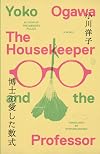
A young single-mother working as a housekeeper is assigned by her agency to take care of an aging professor of mathematics. He is suffering from a peculiar neurological condition which has halted his memory in 1975. Thereafter he has had only short term memory, but only for 80 minutes at a time. [Yes, this can be a real thing!] That makes working for him challenging since she has to re-introduce herself every day. Later the professor meets her 10 year old son whose flat head reminds him of show more the symbol used to signify a square root. He calls the boy “Root,” and makes a note of mother and son that he pins to his suit so that he can discover each time that he has in fact met them previously. A special relationship develops between the three as the professor shares his enthusiasm for the world of numbers and his favourite baseball player and team from back in 1975.
The writing here is gentle and thoughtful. The housekeeper does not suddenly become a math genius or anything, but she does gain an appreciation for how magical the world of numbers can be. And following the professor’s example, she is not afraid to deploy her intuition in her attempts to solve some mathematical problems. For her son, the professor both imparts a love of mathematics but also a model for care, immediate and lasting, for others. Without dwelling inordinately on the professor’s condition, the novel raises questions about what is lasting, what is important, and what is real.
Very easy to recommend. show less
The writing here is gentle and thoughtful. The housekeeper does not suddenly become a math genius or anything, but she does gain an appreciation for how magical the world of numbers can be. And following the professor’s example, she is not afraid to deploy her intuition in her attempts to solve some mathematical problems. For her son, the professor both imparts a love of mathematics but also a model for care, immediate and lasting, for others. Without dwelling inordinately on the professor’s condition, the novel raises questions about what is lasting, what is important, and what is real.
Very easy to recommend. show less
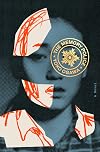
Any work where the main character is also an author stands on a tightrope and threatens to plunge into self-aggrandisement (looking at you [a:Stephen King|3389|Stephen King|https://images.gr-assets.com/authors/1362814142p2/3389.jpg]).
But it works very well here, a novel about what happens when the process of defamiliarization menaces a community like a monster out of a b-movie. Other reviews for Ogawa's novel focus on the arbitrariness of the Memory Police's rules and the political show more connection to cruel and absurd laws today, but to me the fact that nature itself collaborated with the authorities was more horrifying. The authorities were merely agents of some natural force that imposed insane restraints and demanded people recontextualize and relearn through these painful fetters. Anyone who's had music lessons or been to a writer's workshop can sympathize. show less
But it works very well here, a novel about what happens when the process of defamiliarization menaces a community like a monster out of a b-movie. Other reviews for Ogawa's novel focus on the arbitrariness of the Memory Police's rules and the political show more connection to cruel and absurd laws today, but to me the fact that nature itself collaborated with the authorities was more horrifying. The authorities were merely agents of some natural force that imposed insane restraints and demanded people recontextualize and relearn through these painful fetters. Anyone who's had music lessons or been to a writer's workshop can sympathize. show less
How do you feel after waking up? There is disorientation and irritability, and you're trying to remember what you dreamed about - but it all slips away. If you could distil that feeling of disorientation and grudging acceptance that comes when you have awoken and compressed it into a novel - it would be The Memory Police.
There's so much and yet so little to talk about this. You could say that the novel has its own Kafkaesque and Orwellian sense of prose and humour, true, but that would be show more doing it a disservice - Ogawa has her unique brand of melancholy that has to be seen to be believed.
Then again, many questions are left unanswered - how and where does this island exist? How was the technology for selectively discarding people's memories made in an environment where even aeroplanes and mobiles are not present? Why do some people remember everything? What is the moral, if any, of the story-within-a-story? Ogawa doesn't bother answering these questions, and for a good reason - her focus is on the characters more than the setting.
The characters are the fulcrum of the story - but the mute girl and the typing teacher, the Memory Police and the island have a life of their own. I think that is what Ogawa's entire point is, about how inanimate objects and sensations dictate our life. "Hole in the heart" and "hollow soul" are terms that repeatedly pop up when even something like calendars disappear - and I began to wonder if these weren't hyperbolic terms after all.
As a story, The Memory Police is amazing - but as a thought experiment, it is even better - I would rank it amongst the classics of dystopian fiction. Reading this amid a rewriting of history through politics around the world imbued me with a sense of nervous energy I didn't know I had. show less
There's so much and yet so little to talk about this. You could say that the novel has its own Kafkaesque and Orwellian sense of prose and humour, true, but that would be show more doing it a disservice - Ogawa has her unique brand of melancholy that has to be seen to be believed.
Then again, many questions are left unanswered - how and where does this island exist? How was the technology for selectively discarding people's memories made in an environment where even aeroplanes and mobiles are not present? Why do some people remember everything? What is the moral, if any, of the story-within-a-story? Ogawa doesn't bother answering these questions, and for a good reason - her focus is on the characters more than the setting.
The characters are the fulcrum of the story - but the mute girl and the typing teacher, the Memory Police and the island have a life of their own. I think that is what Ogawa's entire point is, about how inanimate objects and sensations dictate our life. "Hole in the heart" and "hollow soul" are terms that repeatedly pop up when even something like calendars disappear - and I began to wonder if these weren't hyperbolic terms after all.
As a story, The Memory Police is amazing - but as a thought experiment, it is even better - I would rank it amongst the classics of dystopian fiction. Reading this amid a rewriting of history through politics around the world imbued me with a sense of nervous energy I didn't know I had. show less
Lists
Best Dystopias (1)
Short and Sweet (1)
Enfants sans (1)
Awards


You May Also Like


Associated Authors
Statistics
- Works
- 60
- Also by
- 9
- Members
- 11,562
- Popularity
- #2,034
- Rating
- 3.8
- Reviews
- 560
- ISBNs
- 343
- Languages
- 23
- Favorited
- 30

