

Ryū Murakami
Author of In the Miso Soup
About the Author
Image credit: Joi Ito
Works by Ryū Murakami
(134) ラッフルズホテル 2 copies
恋はいつも未知なもの 2 copies
半島を出よ 下 = Hanto Wo Deyo 2 2 copies
Monologues sur le plaisir, la lassitude et la mort : Coffret 3 volumes : Ecstasy ; Melancholia ; Thanatos (2013) 1 copy
(137) 限りなく透明に近いブルー 1 copy
Tadanori Yokoo 1 copy
Η Κυόκο στη Νέα Υόρκη 1 copy
Màu xanh trong suốt 1 copy
Whenever I Sit at a Bar Drinking Like This, I Always Think What a Sacred Profession Bartending Is 1 copy
Audition 1 copy
Murder in a lonely country 1 copy
Audición 1 copy
Miso Çorbasında 1 copy
Kyōseichū 1 copy
3 đêm trước Giao thừa 1 copy
Associated Works
Kodansha's Fiction Sampler, Extraordinary Writers from Japan — Contributor — 1 copy
現代詩手帖 1989年 09月号 特集=現代詩の冒険――詩的実験の40年 — Contributor — 1 copy
Tagged
Common Knowledge
- Canonical name
- Murakami, Ryū
- Legal name
- Murakami, Ryūnosuke
- Birthdate
- 1952-02-19
- Gender
- male
- Education
- Musashino Art University
- Occupations
- novelist
filmmaker
drummer
TV talk show host - Organizations
- JMM (editor in chief)
NML (No More Landmine) - Nationality
- Japan
- Birthplace
- Sasebo, Nagasaki, Japan
- Places of residence
- Sasebo, Nagasaki, Japan
Tokyo, Japan
Fussa, Japan - Map Location
- Japan
Members
Discussions
Almost Transparent Blue by Ryū Murakami in Author Theme Reads (September 2012)
Popular Hits of the Showa Era by Ryū Murakami in Author Theme Reads (September 2012)
In the Miso Soup by Ryū Murakami in Author Theme Reads (August 2012)
Piercing by Ryū Murakami in Author Theme Reads (August 2012)
Sixty-Nine by Ryū Murakami in Author Theme Reads (July 2012)
Reviews
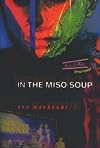
This was a tense, chilling, and creepy book with one section of explosive, very explicit violence. (Definitely not a book for the faint of heart.) Most of the action takes place in a red light district of Tokyo so there is also a lot of discussion of the sex trade, peep shows, etc....
I read a different Ryū Murakami book, Popular Hits of the Showa Era, earlier this year. While Popular Hits also included explosive violence, it also had funny moments and a level of outrageousness that gave show more it... not a levity exactly, but maybe a wink and a nod of acknowledgement that you were participating in a farce just by reading it. In the Miso Soup is more serious and philosophical, making it all the scarier and a much more soul-chilling book. There's quite a bit of commentary on society, materialism, loneliness, and more.
I don't always draw clear pictures in my head of characters (they're usually a vague person shape) but I had very clear pictures of both Kenji and Frank. In fact, I realized this morning that Frank (in my head) looks very much like Philip Seymour Hoffman.
Recommended if you like dark and disturbing books. I'd also recommend reading it in one sitting (which I wasn't able to do due to life circumstances) as I think it keeps you immersed in the tension better. "Liked" is not the right word for this book and I am not sure what word I am groping for; the book is excellent at building tension and is succinctly and skillfully written. show less
I read a different Ryū Murakami book, Popular Hits of the Showa Era, earlier this year. While Popular Hits also included explosive violence, it also had funny moments and a level of outrageousness that gave show more it... not a levity exactly, but maybe a wink and a nod of acknowledgement that you were participating in a farce just by reading it. In the Miso Soup is more serious and philosophical, making it all the scarier and a much more soul-chilling book. There's quite a bit of commentary on society, materialism, loneliness, and more.
I don't always draw clear pictures in my head of characters (they're usually a vague person shape) but I had very clear pictures of both Kenji and Frank. In fact, I realized this morning that Frank (in my head) looks very much like Philip Seymour Hoffman.
Recommended if you like dark and disturbing books. I'd also recommend reading it in one sitting (which I wasn't able to do due to life circumstances) as I think it keeps you immersed in the tension better. "Liked" is not the right word for this book and I am not sure what word I am groping for; the book is excellent at building tension and is succinctly and skillfully written. show less

Ryu Murakami, who bears no relation to the far better known Haruki Murakami, is a Japanese novelist and filmmaker who has written roughly 40 books about contemporary Japanese pop culture, only a few of which have been translated into English to date. Popular Hits of the Showa Era was written in 1994, but was not released in English translation until 2011.
This is an absurd comic novel and cultural satire set just after the completion of the Showa Era, which refers to the reign of Emperor show more Hirohito from 1926-1989. The first set of main characters are six young men, who are each nihilistic misfits that have been largely abandoned by their families and the larger society, but find common ground in each other and a shared interest in mindless violence and an elaborate and somewhat disturbing karaoke ritual. If you can visualize a group of Beavis & Butthead clones on steroids, you've got them pegged. They have little emotional connection to anyone, and they harbor an inexplicably deep hatred of Oba-sans, or aunties, the seemingly ubiquitous dowdy women past their prime period of attractiveness. As one of them says, "They always say that when human beings are extinct, the only living thing left will be the cockroach, but that's bullshit. It's the Oba-san."
One of the young men, filled with unfocused rage and vengeance, approaches an Oba-san who is unknown to him, and murders her in broad daylight. The woman is one of the members of the Midori Society, consisting of six thirtysomething women who all share the same last name and the same fate as unmarried, undesirable, purposeless and unfulfilled women who are equally as nihilistic and amoral as the young men. They learn who the killer is and take their revenge on him, which sets off a war between the two factions that is a cross between a bizarrely funny Looney Tunes cartoon and a mindlessly and increasingly violent B movie.
Despite all of this, I actually enjoyed this novel, which I found to be a biting critique of the nihilism, crassness and commercialization of contemporary Japanese pop culture, one in which its admirers seek instant gratification and bear no concern for the consequences of their behaviors or actions. show less
This is an absurd comic novel and cultural satire set just after the completion of the Showa Era, which refers to the reign of Emperor show more Hirohito from 1926-1989. The first set of main characters are six young men, who are each nihilistic misfits that have been largely abandoned by their families and the larger society, but find common ground in each other and a shared interest in mindless violence and an elaborate and somewhat disturbing karaoke ritual. If you can visualize a group of Beavis & Butthead clones on steroids, you've got them pegged. They have little emotional connection to anyone, and they harbor an inexplicably deep hatred of Oba-sans, or aunties, the seemingly ubiquitous dowdy women past their prime period of attractiveness. As one of them says, "They always say that when human beings are extinct, the only living thing left will be the cockroach, but that's bullshit. It's the Oba-san."
One of the young men, filled with unfocused rage and vengeance, approaches an Oba-san who is unknown to him, and murders her in broad daylight. The woman is one of the members of the Midori Society, consisting of six thirtysomething women who all share the same last name and the same fate as unmarried, undesirable, purposeless and unfulfilled women who are equally as nihilistic and amoral as the young men. They learn who the killer is and take their revenge on him, which sets off a war between the two factions that is a cross between a bizarrely funny Looney Tunes cartoon and a mindlessly and increasingly violent B movie.
Despite all of this, I actually enjoyed this novel, which I found to be a biting critique of the nihilism, crassness and commercialization of contemporary Japanese pop culture, one in which its admirers seek instant gratification and bear no concern for the consequences of their behaviors or actions. show less
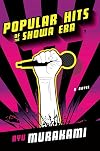
Have you ever seen Don’t Be a Menace to South Central While Drinking Your Juice in the Hood? Probably not. That kind of parody isn’t for everyone. But if you have, you might recall a scene where two main characters, facing off with a rival crew, escalate their confrontation by pulling out increasingly absurd weapons, from handguns to a ballistic missile hidden in a van. That exact progression of absurdity perfectly captures the arc of Ryu Murakami’s Popular Hits of the Showa Era.
At the show more beginning, Murakami introduces us to six men in their late twenties. Not exactly friends, more like aimless acquaintances bound by alcohol, karaoke, and latent sexual frustration. Socially awkward and emotionally stunted, their greatest thrill comes from watching a neighbor undress across the street. An event that happened once, and they keep waiting for the sequel. The absurdity begins to seep in early, but when one of them casually asks, “Does anyone mind if I masturbate?” during the peeping session, you know the ride is just beginning.
As is typical with Ryu Murakami, violence enters the story quickly and sharply. This time, it’s the senseless murder of a woman in her late thirties, a random passerby and a member of an unusual women’s group named Midori per their last names (not related in any way). Divorced, overlooked, and cast aside, these women are invisible to society. The killer is one of the boys, who was at the moment walking around with a hard on, thinking whether to go home and masturbate or have sex with a brand new doll he got.
Her friends, all similarly marginalized, vow revenge, and so begins a satirical war of escalation between two forgotten corners of society, the young disaffected men and the quietly furious women. What follows is a surreal chain of events that snowballs with cartoonish speed, leading to a finale that is both unhinged and brilliant.
And yes, there’s also a female student who sees ghosts. She’s so horrifyingly ugly that both men and women vomit at the sight of her. The narrator shares this tidbit with deadpan precision, in Murakami’s signature tone of grotesque detachment.
Unlike his more famous namesake, Haruki, who writes about dreamlike Japan where cats speak and mysteries unfold in the dead of night, Ryu Murakami dives into the mud, into the parts of Japanese society that are repressed, denied, or simply ignored. His characters aren’t lovable, but they reflect uncomfortable truths. Beneath the outlandish satire lies a harsh critique of societal neglect, rendered with biting clarity. As in Audition and In the Miso Soup, Murakami pulls no punches, neither with his characters nor with his readers, going to the border of taste and then some more.
Popular Hits of the Showa Era could easily sit on the shelf next to American Psycho by Bret Easton Ellis, not in theme, but in form and impact. Both are savage satires, violent and absurd, dissecting a world that pretends not to see its rot. If you’re easily offended, skip this one. But if you enjoy pitch-black humor with razor-sharp edges, Ryu Murakami’s novel might just blow you away. show less
At the show more beginning, Murakami introduces us to six men in their late twenties. Not exactly friends, more like aimless acquaintances bound by alcohol, karaoke, and latent sexual frustration. Socially awkward and emotionally stunted, their greatest thrill comes from watching a neighbor undress across the street. An event that happened once, and they keep waiting for the sequel. The absurdity begins to seep in early, but when one of them casually asks, “Does anyone mind if I masturbate?” during the peeping session, you know the ride is just beginning.
As is typical with Ryu Murakami, violence enters the story quickly and sharply. This time, it’s the senseless murder of a woman in her late thirties, a random passerby and a member of an unusual women’s group named Midori per their last names (not related in any way). Divorced, overlooked, and cast aside, these women are invisible to society. The killer is one of the boys, who was at the moment walking around with a hard on, thinking whether to go home and masturbate or have sex with a brand new doll he got.
Her friends, all similarly marginalized, vow revenge, and so begins a satirical war of escalation between two forgotten corners of society, the young disaffected men and the quietly furious women. What follows is a surreal chain of events that snowballs with cartoonish speed, leading to a finale that is both unhinged and brilliant.
And yes, there’s also a female student who sees ghosts. She’s so horrifyingly ugly that both men and women vomit at the sight of her. The narrator shares this tidbit with deadpan precision, in Murakami’s signature tone of grotesque detachment.
Unlike his more famous namesake, Haruki, who writes about dreamlike Japan where cats speak and mysteries unfold in the dead of night, Ryu Murakami dives into the mud, into the parts of Japanese society that are repressed, denied, or simply ignored. His characters aren’t lovable, but they reflect uncomfortable truths. Beneath the outlandish satire lies a harsh critique of societal neglect, rendered with biting clarity. As in Audition and In the Miso Soup, Murakami pulls no punches, neither with his characters nor with his readers, going to the border of taste and then some more.
Popular Hits of the Showa Era could easily sit on the shelf next to American Psycho by Bret Easton Ellis, not in theme, but in form and impact. Both are savage satires, violent and absurd, dissecting a world that pretends not to see its rot. If you’re easily offended, skip this one. But if you enjoy pitch-black humor with razor-sharp edges, Ryu Murakami’s novel might just blow you away. show less
This book was the quickest read I've gone through in some time. Murakami knows how to write a lean, engrossing novel, albeit a fairly disturbed one.
Popular Hits reminds me an awful lot of a Chuck Palahniuk novel, and it left me feeling pretty disgusted with the human race in much the same way. Murakami has populated this novel with two groups of completely reprehensible characters, solely united by a nihilistic attitude. The closest thing to a sympathetic character in the book is the one show more whose presence makes those around them violently ill.
This is not a nice book, and many people will probably despise it, but if you're at all intrigued by the darker side of human nature I recommend this one highly. show less
Popular Hits reminds me an awful lot of a Chuck Palahniuk novel, and it left me feeling pretty disgusted with the human race in much the same way. Murakami has populated this novel with two groups of completely reprehensible characters, solely united by a nihilistic attitude. The closest thing to a sympathetic character in the book is the one show more whose presence makes those around them violently ill.
This is not a nice book, and many people will probably despise it, but if you're at all intrigued by the darker side of human nature I recommend this one highly. show less
 This review was written for LibraryThing Early Reviewers.
Lists
Awards


You May Also Like


Associated Authors
Statistics
- Works
- 103
- Also by
- 4
- Members
- 7,274
- Popularity
- #3,360
- Rating
- 3.4
- Reviews
- 254
- ISBNs
- 255
- Languages
- 23
- Favorited
- 34

