
Banana Yoshimoto
Author of Kitchen
About the Author
Banana Yoshimoto, 1964 - Novelist Banana Yoshimoto was born Mahoko Yoshimoto on July 24, 1964 in Tokyo, Japan. She is the daughter of poet and commentator Yoshimoto Ryumei, who had an impact on the radical student movement of the late 1960's. She attended Tokyo's Nihon University, where she studied show more creative writing and won a faculty award for her 1987 graduation novel "Moonlight Shadow." While working as a waitress, she took moments out of her day to write a novel and, at the age of 24, the result was "Kitchen" (1988), which is the story of a lonely woman who moves her bed into the kitchen, finding comfort in the humming of the refrigerator. She also wrote "Pineapple Pudding" and "Fruit Basket," which were both bestsellers. Her novel "Lizard" was dedicated to the memory of the late rocker Kurt Cobain and the novel "Long Night of Marika/Bali Dream Diary" (1996) was considered a flop. (Bowker Author Biography) show less
Series
Works by Banana Yoshimoto
1994 1 copy
PARANDJENJË E TRISHTË 1 copy
Un sogno gentile 1 copy
Yoko-yoshimotobanana.com of love 2006 (Mass Market Paperback) (2007) ISBN: 410135930X [Japanese Import] (2007) 1 copy
B Kyū Banana 1 copy
Thằn Lằn 1 copy
Associated Works
The Art of the Story: An International Anthology of Contemporary Short Stories (1999) — Contributor — 394 copies, 5 reviews
Freedom: Stories Celebrating the Universal Declaration of Human Rights (2009) — Contributor — 88 copies, 2 reviews
Tagged
Common Knowledge
- Canonical name
- Yoshimoto, Banana
- Legal name
- Yoshimoto, Mahoko
- Birthdate
- 1964-07-24
- Gender
- female
- Education
- Nihon University (Art College, Literature)
- Occupations
- writer
- Awards and honors
- The 6th Kaien Newcomer Writers Prize (1987)
Umitsubame First Novel Prize - Relationships
- Yoshimoto, Takaaki (father)
- Nationality
- Japan
- Birthplace
- Bunkyo-ku, Tokyo, Japan
- Places of residence
- Tokyo, Japan
- Map Location
- Japan
Members
Reviews
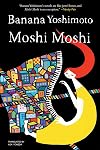
It took me a while to get into this one, for whatever reason, but once I did I was completely immersed. Like many of Yoshimoto’s novels, this is about rebuilding your life after a loss. About mourning, and grief, and all that changes about your life and what you thought it would be. This one in particular is about Yocchan, who is living with her mother after losing her father (and her mother losing her husband) to a murder-suicide with his mistress. So there is a lot going on! The loss of show more a parent or spouse, the secret affair and what that meant to your relationship. Her mother redefining herself outside of the marriage.
And it’s Yoshimoto, so it is all soft, melancholy, almost underwater in a way. These aren’t characters who act out in big noisy ways. Things change, if slowly, until they realize they have ended up somewhere they never imagined.
The afterword about Yoshimoto losing her own father (after writing this book, but before it was through the publication process) makes it even more bitter sweet.
Yoshimoto talks about people criticizing her writing for being unrealistic, but I think this is just the sort of novel I would want to read after a major loss.
This book is also a love song to a neighborhood, the kind with lots of independent little restaurants and shops, where the people who work there also live there, that has its own distinct character even in the middle of a giant city.
A lovely read to start off the year! show less
And it’s Yoshimoto, so it is all soft, melancholy, almost underwater in a way. These aren’t characters who act out in big noisy ways. Things change, if slowly, until they realize they have ended up somewhere they never imagined.
The afterword about Yoshimoto losing her own father (after writing this book, but before it was through the publication process) makes it even more bitter sweet.
Yoshimoto talks about people criticizing her writing for being unrealistic, but I think this is just the sort of novel I would want to read after a major loss.
This book is also a love song to a neighborhood, the kind with lots of independent little restaurants and shops, where the people who work there also live there, that has its own distinct character even in the middle of a giant city.
A lovely read to start off the year! show less

Kitchen consists of a novella and a short story. The novella follows a young woman, Mikage, whose grandmother and last living relative has died. She knows she needs to move to a smaller and less expensive apartment, but grief makes it hard to get anything done. Enter Yuichi, a young man who was friends with her grandmother, who invites her to come live with his mother and him as they have plenty of space. What Mikage is especially drawn to is their well-appointed kitchen, and for awhile they show more form a new family.
In retrospect I realize that fate was a ladder on which, at the time, I could not afford to miss a single rung. To skip out on even one scene would have meant never making it to the top, although it would have been by far the easier choice. What motivated me was probably that little light still left in my half-dead heart, glittering in the darkness. Yet without it, perhaps, I might have slept better.
The short story, Moonlight Shadow, concerns another young woman. After her lover's death, Satsuki is lost in grief, until an encounter with a stranger encourages her to believe that she will enjoy life again.
Both stories concern characters dealing with grief and sudden death, but are both hopeful and even whimsical in tone. This book manages to be charming without being saccharine. Yoshimoto's characters are well-drawn and the stories have an impact despite their brevity. show less
In retrospect I realize that fate was a ladder on which, at the time, I could not afford to miss a single rung. To skip out on even one scene would have meant never making it to the top, although it would have been by far the easier choice. What motivated me was probably that little light still left in my half-dead heart, glittering in the darkness. Yet without it, perhaps, I might have slept better.
The short story, Moonlight Shadow, concerns another young woman. After her lover's death, Satsuki is lost in grief, until an encounter with a stranger encourages her to believe that she will enjoy life again.
Both stories concern characters dealing with grief and sudden death, but are both hopeful and even whimsical in tone. This book manages to be charming without being saccharine. Yoshimoto's characters are well-drawn and the stories have an impact despite their brevity. show less
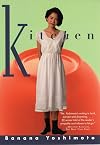
This is a poetry of a book. It's brilliant, it's resplendent. If you have gone through any kind of grief before, you'll find empathy and solace in these pages. She somehow makes it seem that she's writing to me, and the best part is, most who enjoy Mahoko's writing probably feels the same. Her writing seems to personal to many people.
Many dismiss her writing as overly melodramatic, but I think it's a matter of perspective. She doesn't shy away from expressing feelings unambiguously, with a show more generous use of metaphors. I honestly feel sorry for people who cannot enjoy her. Her writing's so beautiful, so heart-wrenching sometimes, I wish other people could experience what I am, at that time.
One other thing I appreciate about Japanese literature, and their media in general is that they stop and look at things. Description of little things like the sunlight glinting through the glass and illuminating the floating dust like beams, or a little kid complaining to her grandmother that she's bored on the bus, the writing feels human, and the vicarious experience seems more real.
A sample of her writing - for context, Mikage had lost her grandmother, her only family, and was kind of adopted by Yuichi and his mom. Yuichi's mom recently passed away, and Mikage, and Yuichi are both grieving, Mikage escaping away on a trip because she's not able to handle the sadness. She calls Yuichi -
"Mikage, is that you? How did you know where I was?". His words sounded far away, travelling over the cable, through the night. I closed my eyes, just listening to that voice I missed so much. I was like lonely waves against the shore.
..... (they talk) ....
"Don't slit your wrists, okay?" I said, joking.
He laughed and said goodbye.
As soon as I hung up, I was hit by a wave of exhaustion. My hand still resting on the receiver, I stared intently at the glass door of the restaurant, listening to the wind rattling outside. People walked past, complaining about the cold. Day had turned to night, and night was passing in the same way all over the world. Now I felt really alone, at the bottom of a deep loneliness no one can touch.
People aren't overcome by situations or outside forces; defeat invades from within, I thought. I had lost my last ounce of strength. before my eyes something was coming to an end, something I didn't want to end, but for which I lacked the energy to suffer, much less fight. There was only a leaden hopelessness in me.
Sorry for writing a huge quote, but my aim with this review is to make more people read her books, because her writing really resonates with me at a very intimate level.
Many dismiss her writing as overly melodramatic, but I think it's a matter of perspective. She doesn't shy away from expressing feelings unambiguously, with a show more generous use of metaphors. I honestly feel sorry for people who cannot enjoy her. Her writing's so beautiful, so heart-wrenching sometimes, I wish other people could experience what I am, at that time.
One other thing I appreciate about Japanese literature, and their media in general is that they stop and look at things. Description of little things like the sunlight glinting through the glass and illuminating the floating dust like beams, or a little kid complaining to her grandmother that she's bored on the bus, the writing feels human, and the vicarious experience seems more real.
A sample of her writing - for context, Mikage had lost her grandmother, her only family, and was kind of adopted by Yuichi and his mom. Yuichi's mom recently passed away, and Mikage, and Yuichi are both grieving, Mikage escaping away on a trip because she's not able to handle the sadness. She calls Yuichi -
"Mikage, is that you? How did you know where I was?". His words sounded far away, travelling over the cable, through the night. I closed my eyes, just listening to that voice I missed so much. I was like lonely waves against the shore.
..... (they talk) ....
"Don't slit your wrists, okay?" I said, joking.
He laughed and said goodbye.
As soon as I hung up, I was hit by a wave of exhaustion. My hand still resting on the receiver, I stared intently at the glass door of the restaurant, listening to the wind rattling outside. People walked past, complaining about the cold. Day had turned to night, and night was passing in the same way all over the world. Now I felt really alone, at the bottom of a deep loneliness no one can touch.
People aren't overcome by situations or outside forces; defeat invades from within, I thought. I had lost my last ounce of strength. before my eyes something was coming to an end, something I didn't want to end, but for which I lacked the energy to suffer, much less fight. There was only a leaden hopelessness in me.
Sorry for writing a huge quote, but my aim with this review is to make more people read her books, because her writing really resonates with me at a very intimate level.
Carpe Diem
🎧
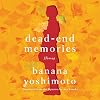
“That time had been a gift from fortune, like a blanket gently laid over me by the heavens. It had been suffused with a rare joy, like if you made a curry and thrown in some leftover yogurt and spices apples, and maybe some extra onion on a whim and ended up in a one in a million chance with a dish that was immeasurably delicious but which you had no chance of creating. It had been an interlude that had shone so brightly because I hadn’t expected anything from anyone; I show more hadn’t needed to accomplish anything. Realizing this only deepened my sadness and gratitude.”
- From the title story of Dead-end Memories.
The six stories of optimism born of sorrow together with the gentle writings of Banana Yoshimoto make for a soothing read in troubled times.
They are very Japanese, very Zen, very gentle. The stories are based on every-day life events where there’s an interruption that leads to an overcoming. Darling buds of May inevitably trounce sorrow, and life goes on in any case.
Daily life centers upon life at work, eating in company restaurants, dating, marriage breakups, childhood - usual life experiences in a Japanese cultural context. But in each story there are disruptions that are overcome and individuals’ inner harmony is strengthened.
In one story there’s a rape and the young woman is able to overcome the trauma, and through her recovery becoming stronger. In another, a woman is poisoned by a disgruntled copy-editor who wanted the writer of the book he was editing, to include him as a co-author. The victim is seriously ill for months but is able to expunge the poison from her body, using the experience to purge herself of inner poison thus making her a better human being.
An adorable child who Budha-like sees beauty in people’s souls is kidnapped by his biological unmarried mother. She had sold him to a wealthy family where he was accepted as the son of the wealthy married man who had seduced her. Regretting her action the mother forcibly takes the boy back, bundling him into a car and speeding away, resulting in a crash where both are killed. But though he left behind sorrow, the child’s absence also left memories of his goodness.
Life goes on, and while reading I couldn’t help but thinking of MontyPython’s song, Always Look on the Bright Side of Life. But there’s more to the book than that. Even I, a cynic was tempted by the optimism of the writer’s characters. Though optimism isn’t quite the word I’m looking for. It’s not that the characters take disruptions and attacks in their stride, nor is it submission, nor the British stiff-upper lip. It’s more about taking what life gives you and finding the goodness that may emerge from bad outcomes. It’s about one’s inner-life rather than external disruptions. It’s about an attitude to living that allows joy to enter one’s life and how happy memories sustain it. show less
🎧
“That time had been a gift from fortune, like a blanket gently laid over me by the heavens. It had been suffused with a rare joy, like if you made a curry and thrown in some leftover yogurt and spices apples, and maybe some extra onion on a whim and ended up in a one in a million chance with a dish that was immeasurably delicious but which you had no chance of creating. It had been an interlude that had shone so brightly because I hadn’t expected anything from anyone; I show more hadn’t needed to accomplish anything. Realizing this only deepened my sadness and gratitude.”
- From the title story of Dead-end Memories.
The six stories of optimism born of sorrow together with the gentle writings of Banana Yoshimoto make for a soothing read in troubled times.
They are very Japanese, very Zen, very gentle. The stories are based on every-day life events where there’s an interruption that leads to an overcoming. Darling buds of May inevitably trounce sorrow, and life goes on in any case.
Daily life centers upon life at work, eating in company restaurants, dating, marriage breakups, childhood - usual life experiences in a Japanese cultural context. But in each story there are disruptions that are overcome and individuals’ inner harmony is strengthened.
In one story there’s a rape and the young woman is able to overcome the trauma, and through her recovery becoming stronger. In another, a woman is poisoned by a disgruntled copy-editor who wanted the writer of the book he was editing, to include him as a co-author. The victim is seriously ill for months but is able to expunge the poison from her body, using the experience to purge herself of inner poison thus making her a better human being.
An adorable child who Budha-like sees beauty in people’s souls is kidnapped by his biological unmarried mother. She had sold him to a wealthy family where he was accepted as the son of the wealthy married man who had seduced her. Regretting her action the mother forcibly takes the boy back, bundling him into a car and speeding away, resulting in a crash where both are killed. But though he left behind sorrow, the child’s absence also left memories of his goodness.
Life goes on, and while reading I couldn’t help but thinking of MontyPython’s song, Always Look on the Bright Side of Life. But there’s more to the book than that. Even I, a cynic was tempted by the optimism of the writer’s characters. Though optimism isn’t quite the word I’m looking for. It’s not that the characters take disruptions and attacks in their stride, nor is it submission, nor the British stiff-upper lip. It’s more about taking what life gives you and finding the goodness that may emerge from bad outcomes. It’s about one’s inner-life rather than external disruptions. It’s about an attitude to living that allows joy to enter one’s life and how happy memories sustain it. show less
Lists
1980s (1)
Schwob Nederland (1)
On the pile (1)
Female Author (1)
Read in 2010 (1)
TBR Insta (1)
Magic Realism (2)
Awards


You May Also Like


Associated Authors
Statistics
- Works
- 98
- Also by
- 7
- Members
- 15,996
- Popularity
- #1,416
- Rating
- 3.6
- Reviews
- 389
- ISBNs
- 474
- Languages
- 28
- Favorited
- 76
